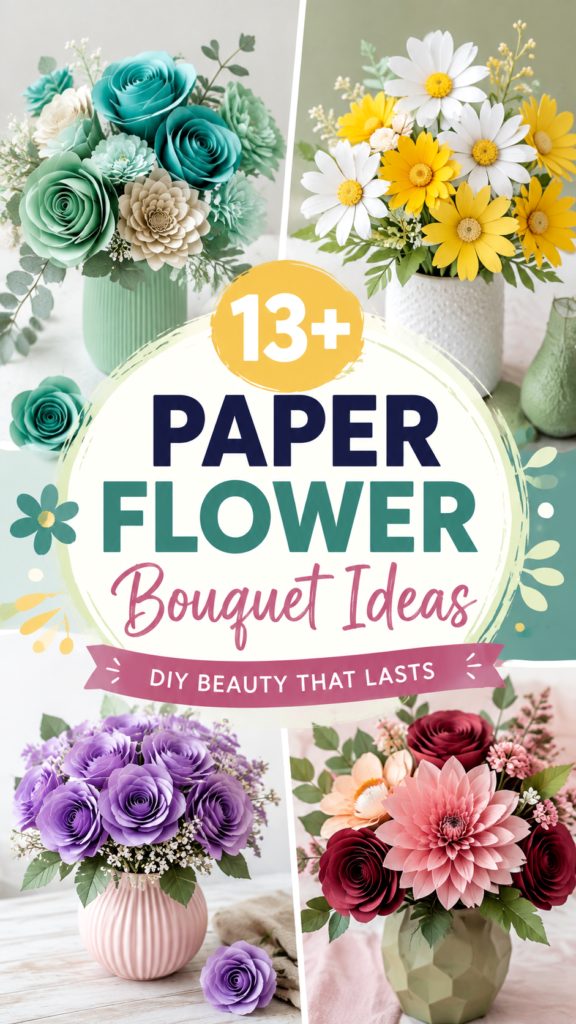
Paper flower bouquets are a beautiful way to bring color, creativity, and a handmade touch into your home without relying on fresh flowers. From soft mint and aqua roses to cheerful yellow daisies, romantic lavender blooms, and dramatic blush-and-burgundy arrangements, paper bouquets can take on almost any style you love. They are especially appealing for crafters who want decorations that can be enjoyed long after a special occasion has passed.
Whether you are completely new to paper flowers or already enjoy making handmade crafts, these paper bouquet DIY ideas offer plenty of inspiration. The secret is not creating every flower perfectly. It is combining different shapes, colors, textures, and greenery so the finished arrangement feels full and intentional.
Key Takeaways
- Paper flowers can create colorful bouquets for everyday decor and special occasions.
- Combining several flower sizes makes a handmade bouquet look fuller and more natural.
- A thoughtful color palette can completely change the mood of your arrangement.
- Paper, wire, glue, scissors, and simple decorative materials are enough to begin.
- Greenery and filler elements help connect individual flowers into one cohesive bouquet.
- Paper bouquets make thoughtful handmade gifts because they can be kept and displayed for a long time.
Why Paper Bouquet DIY Projects Are So Charming
A handmade paper bouquet has a special quality that a store-bought decoration often cannot provide. Every petal reflects your choices, from the paper color to the way each layer is shaped. Even a simple flower becomes more personal when it is arranged by hand into a bouquet.
Paper flowers are also wonderfully versatile. A bouquet can be bright and playful with yellow and white blooms, calm and sophisticated with mint and blue-green flowers, or romantic with lavender, blush, and deep burgundy shades. This flexibility makes paper flower crafts suitable for bedrooms, living rooms, parties, celebrations, handmade gifts, and seasonal displays.
Important: The overall beauty of a paper bouquet comes from the combination of flowers rather than perfection in every individual bloom. Varying the sizes, heights, colors, and shapes will usually create a more interesting arrangement.
13+ Paper Flower Bouquet Ideas to Try
The four featured bouquet styles provide a great starting point for creating your own collection of paper flower arrangements. You can recreate the general feeling of each style while choosing your own paper colors and flower designs.
1. Mint and Aqua Paper Rose Bouquet
For a fresh and calming look, build a bouquet around aqua, teal, mint, and soft cream flowers. Rolled or layered paper roses work beautifully as the focal flowers because their spiral centers naturally draw attention.
Add smaller blossoms in different shades of green and cream around the larger roses. A few paper leaves can fill empty spaces and make the arrangement feel lush without adding too many competing colors. A ribbed or textured vase can complement the handmade appearance of the flowers.
2. Yellow and White Daisy Bouquet
Yellow and white paper daisies create a cheerful bouquet with a completely different personality. This combination feels bright, sunny, and welcoming, making it an excellent choice when you want your craft project to add energy to a room.
Use several flower sizes instead of making every daisy identical. Place taller stems toward the back and allow a few smaller blooms to sit closer to the front. Green paper leaves and tiny filler flowers can soften the spaces between the larger petals.
3. Lavender Paper Rose Arrangement
Lavender paper roses offer a softer, more romantic direction. Different shades of purple can be layered together to create depth while keeping the bouquet within a simple color family.
This style looks especially attractive when the flowers are grouped fairly closely together. A rounded vase can reinforce the gentle appearance, while a few loose stems or an extra paper rose placed beside the arrangement can add a relaxed handmade detail.
4. Blush and Burgundy Statement Bouquet
If you prefer a more dramatic paper bouquet, combine blush, dusty pink, burgundy, peach, and muted green. A large layered flower can serve as the centerpiece while darker rose shapes frame it from either side.
This color combination is particularly effective because the pale central bloom creates contrast against deeper flowers. Keep the greenery relatively natural and understated so the colorful petals remain the focus.
5. Monochromatic Paper Flower Bouquet
Choose one main color and explore several shades of it. For example, a blue-green bouquet can combine pale mint, aqua, teal, and soft sage. A purple bouquet can move from pale lavender to medium violet and deeper purple.
Monochromatic arrangements are useful when you want a coordinated look. The variety comes from the flower shapes and paper textures rather than from a large number of colors.
6. Pastel Mixed Flower Bouquet
Pastel paper flowers are perfect for a soft and playful arrangement. Try combining blush pink, pale yellow, lavender, cream, and light green. The key is keeping the colors relatively gentle so they complement one another instead of competing for attention.
Use one or two larger flowers as focal points, then surround them with smaller blooms and leaves. This simple arrangement technique can make a collection of individual handmade flowers look much more polished.
7. Large Paper Rose Bouquet
For a bold statement, make several oversized paper roses and arrange them at slightly different heights. Large blooms do not need many additional decorations because their scale already creates visual impact.
A few leaves and small filler flowers can help balance the bouquet. Choose a simple vase so the large flowers remain the star of the display.
8. Paper Daisy and Filler Flower Arrangement
Combine large daisies with tiny paper flowers for a relaxed garden-inspired appearance. White, yellow, and soft green create an especially fresh palette, but you can easily substitute your favorite colors.
Let some flowers face different directions rather than arranging every bloom toward the front. This small change can make the bouquet appear more dimensional.
9. Rustic Paper Flower Bouquet
For a rustic look, use muted shades such as cream, dusty pink, sage, tan, and burgundy. Pair the flowers with natural-looking leaves and a simple container. Slight variations in petal shape can actually enhance the handmade character.
This approach works well when you want your paper flower arrangement to blend with cozy home decor rather than look overly bright or formal.
10. Elegant Cream Paper Flower Bouquet
Cream and off-white paper flowers can create a clean and elegant arrangement. Add subtle greenery for contrast and use different flower shapes to prevent the bouquet from looking flat.
A neutral arrangement is also easy to customize. Add a small amount of blush, sage, or pale blue if you want just a hint of color.
11. Colorful Layered Paper Bouquet
Use several bright colors for a cheerful craft project. Choose one dominant shade, two supporting colors, and a neutral such as white or cream. This gives the bouquet variety while keeping the composition visually balanced.
Layer flowers by size, placing larger blooms around the center and smaller flowers toward the outer edges. The result can feel abundant without requiring every available color.
12. Minimalist Paper Flower Arrangement
Minimalism can be just as beautiful as abundance. Select three to five prominent paper flowers and arrange them with a few simple leaves. Leave some open space between the blooms for a clean, airy appearance.
This style works particularly well with modern interiors because the handmade flowers become a subtle decorative feature rather than overwhelming the room.
13. Seasonal Paper Flower Bouquet
Change your paper bouquet throughout the year by adjusting the colors. Soft pastels can create a spring-inspired display, bright yellows and whites can evoke summer, warm oranges and burgundy can suit autumn, and cool whites and greens can create a wintery feel.
Because paper flowers can be stored and reused, creating seasonal arrangements is a practical way to refresh your decor without constantly buying new decorations.
14. Gift-Ready Paper Flower Bouquet
A handmade bouquet can also become a thoughtful gift. Choose colors that match the recipient’s style and arrange the flowers in a simple vase or wrap the stems together with decorative paper or ribbon.
Add a handmade card or small note to make the gift feel even more personal. The lasting nature of paper flowers makes the arrangement something the recipient can display and enjoy for a long time.
Basic Materials for a Paper Bouquet DIY
You do not need an enormous collection of craft supplies to begin making paper flowers. The exact materials depend on the flower design, but a basic project can be built from a few accessible supplies.
- Colored craft paper or cardstock
- Scissors or a suitable cutting tool
- Craft glue
- Floral wire or flexible stems
- Green paper for leaves
- Pencil for marking shapes
- Ruler for measuring when needed
- A vase, jar, or decorative container
- Optional ribbon, twine, or other finishing accents
Cardstock is useful when you want petals with more structure, while lighter paper can be easier to curl and shape. Experiment with scraps before committing to a large sheet so you can discover which paper gives you the petal effect you prefer.
Why This Matters
A beautiful bouquet is less about having expensive materials and more about creating visual balance.
- Use large flowers as focal points.
- Fill gaps with smaller flowers and greenery.
- Repeat a few colors throughout the arrangement to create harmony.
How to Build a Beautiful Paper Flower Bouquet
Start With the Main Flowers
Begin by choosing the flowers that will attract the most attention. These might be large paper roses, layered dahlias, daisies, or another prominent flower shape. Make several main blooms rather than relying on only one.
Add Smaller Flowers
Next, create smaller blooms to fill the spaces around your focal flowers. These do not need to be complicated. Simple layered petals, rolled flowers, or small blossoms can provide plenty of visual interest.
Create Different Heights
Before attaching everything permanently, arrange the stems at different heights. A bouquet where every flower sits at exactly the same level can look flat. Slight differences make the arrangement feel more natural and dimensional.
Fill With Leaves and Greenery
Greenery is an important part of a convincing paper bouquet. Leaves can frame flowers, cover empty spaces, and visually connect separate blooms. Use different leaf sizes when possible, but avoid adding so much greenery that the flowers disappear.
Finish With the Right Vase
The container can change the entire appearance of your bouquet. A simple glass vase creates a light and casual feel, while a textured ceramic container can make the arrangement feel more decorative. Choose a vase that supports the color palette rather than competing with it.
Pro Tip: Assemble your paper flowers loosely before gluing or securing the final arrangement. Step back and look at the bouquet from a distance. This makes it much easier to spot gaps, overly crowded areas, or colors that need better distribution.
How to Choose Colors for DIY Paper Flowers
Color selection is one of the easiest ways to give a paper bouquet a professional appearance. Instead of choosing every color you like, start with a simple palette. Pick one dominant color, one or two complementary shades, and a neutral or green accent.
For a calming bouquet, consider mint, aqua, cream, and sage. For a cheerful arrangement, yellow, white, and green are an easy combination. Lavender can be paired with pale pink and cream for a romantic palette, while burgundy, blush, peach, and green create a richer statement.
Repeating colors throughout the bouquet is particularly useful. If you have a deep burgundy flower near the center, place another burgundy bloom toward the outer edge. This distributes visual weight and helps the bouquet feel intentionally designed.
Creative Ways to Display Paper Flower Bouquets
A finished paper bouquet does not have to stay in a traditional vase. Place a small arrangement on a bedside table, shelf, desk, dining table, or entryway. Smaller paper flowers can also be grouped in several containers to create a coordinated display.
For celebrations, match the flowers to the event palette. A pastel bouquet can complement a soft party theme, while bright yellow flowers can bring energy to a cheerful gathering. Handmade paper flowers can also be incorporated into gift tables, photo areas, or other decorative spaces.
If you have several bouquets, consider displaying them at different heights. This creates a layered decorative arrangement and lets each flower style remain visible.
Common Paper Flower Craft Mistakes to Avoid
One common mistake is making every flower exactly the same size and shape. While consistency can be useful, natural-looking arrangements usually benefit from variation. Mix large and small flowers and change their angles slightly.
Another issue is using too many unrelated colors. A large collection of beautiful paper flowers can become visually confusing if there is no shared palette. Repeating a few key colors will usually produce a more cohesive result.
Finally, do not rush the arrangement stage. Even beautifully crafted flowers can look underwhelming when they are placed randomly. Spend a few minutes experimenting with the composition before securing the stems.
Paper Bouquet DIY Ideas for Beginners
If you are new to paper flower crafting, start with one easy flower style. Make several versions in different sizes and colors before attempting a complicated bouquet. This lets you practice shaping petals while keeping the project manageable.
- Choose two or three paper colors.
- Make a few large flowers.
- Create several smaller filler flowers.
- Cut simple leaves from green paper.
- Attach flowers to stems.
- Arrange the stems at different heights.
- Fill visible gaps with leaves and small blooms.
- Place the finished bouquet in a suitable container.
The goal is to enjoy the process rather than make every petal flawless. Small imperfections can give handmade paper flowers personality and make each bouquet feel unique.
At a Glance
- Best for: Home decor, handmade gifts, parties, and creative craft projects.
- Style options: Pastel, colorful, minimalist, rustic, romantic, or seasonal.
- Key technique: Combine different flower sizes and heights.
- Finishing touch: Use greenery and a complementary vase to complete the arrangement.
- Beginner tip: Start with simple flower shapes and experiment with paper before making a large bouquet.
Final Thoughts on Paper Bouquet DIY Ideas
Paper bouquet DIY projects are a creative way to turn ordinary sheets of paper into colorful decorative flowers that can brighten almost any space. The inspiration comes from combining simple elements: layered petals, rolled flower centers, leafy shapes, thoughtful colors, and a well-balanced arrangement.
Whether you prefer the cool elegance of aqua and mint roses, the sunny personality of yellow and white daisies, the softness of lavender blooms, or the dramatic contrast of blush and burgundy flowers, there is plenty of room to make the idea your own. You can also mix techniques and colors to develop a bouquet that matches your personal style.
The best part is that you do not need to be an expert crafter to create something beautiful. Start small, experiment with different papers, and focus on arranging your flowers in a way that feels balanced. Once you discover a few flower shapes you enjoy making, you can combine them into increasingly creative bouquets.
Save this idea for your next craft session: Choose a color palette, make a collection of flowers in different sizes, add handmade greenery, and experiment with the arrangement until the bouquet feels full and balanced.
With a little imagination, a paper flower bouquet can become more than a craft project. It can be a colorful piece of home decor, a thoughtful handmade gift, or a lasting reminder of a special celebration. Gather your favorite papers and start creating a bouquet that reflects your own style.