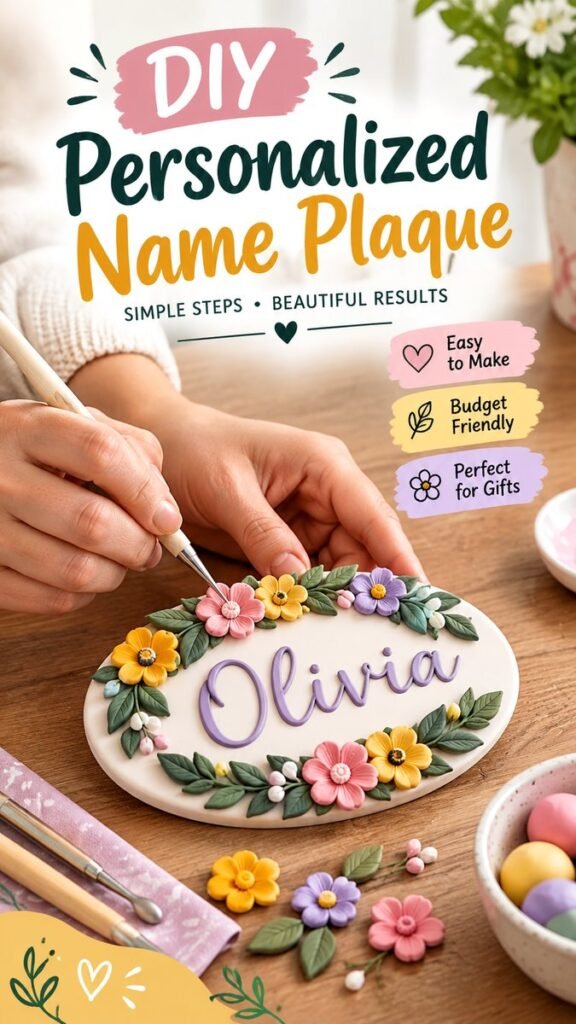
There is something wonderfully personal about adding a handmade name plate to a home. A simple plaque can turn an ordinary bedroom door, nursery wall, entryway, or creative corner into a space that feels truly yours. This DIY name plate idea combines a soft oval plaque with colorful handmade flowers, leafy details, and raised lettering for a cheerful decorative finish. The result feels warm, playful, and handcrafted without needing an overly complicated design.
Whether you are creating a personalized room sign for a child, making a thoughtful handmade gift, or simply looking for a creative weekend craft, name plates for home DIY projects offer plenty of room for customization. You can experiment with colors, lettering styles, flowers, shapes, and decorative accents to create a plaque that matches the personality of the space.
Key Takeaways
- A personalized name plate can add character to bedrooms, nurseries, entryways, and creative spaces.
- Soft pastel colors create a welcoming and versatile handmade look.
- Clay flowers and leaves can turn a simple plaque into a decorative focal point.
- Raised lettering makes the name easy to notice while adding dimension.
- Small decorative details can be changed to suit different themes, names, and rooms.
- A handmade name plaque can also become a thoughtful personalized gift.
Why Name Plates for Home DIY Projects Are So Charming
Personalized decor has a special quality because it feels connected to the people who live in a space. Instead of choosing a generic wall decoration, a DIY name plate gives you the opportunity to create something with a name, color palette, and decorative style that feels intentional.
The design shown here uses an oval plaque as the foundation. Its smooth, neutral surface creates a calm backdrop for colorful floral decorations. The name sits prominently in the center, while flowers and leaves create a decorative border around the edges. This arrangement keeps the lettering as the main focus while allowing the surrounding details to provide personality.
Another appealing feature is the balance between natural and playful elements. Green leaves give the design an organic feel, while pink, yellow, and purple flowers add cheerful pops of color. This combination works especially well for home decor because it feels decorative without being tied to one very specific interior style.
Important: The most effective personalized plaques usually have one clear focal point. Keep the name easy to read, then use flowers, leaves, or small accents to frame it rather than compete with it.
Choosing the Right Base for a DIY Name Plate
The base determines the overall shape and character of a personalized plaque. An oval shape, like the one featured in this design, has a soft decorative quality and provides enough space for a name surrounded by embellishments.
You can also explore round, rectangular, arched, scalloped, or organically shaped bases. The best choice depends on the room, the name length, and the decorative style you want to achieve.
Consider the Size First
A name plate should be large enough for the lettering to remain readable from a comfortable viewing distance. For a bedroom door or wall, a larger plaque can make the name feel like part of the room design. For a shelf, desk, or small decorative area, a compact plaque may be more appropriate.
Think about where the finished piece will be displayed before choosing the base. Measuring the available area can help prevent a plaque from looking crowded or too small once the decorations are added.
Choose a Neutral Foundation
A soft cream, white, beige, or light pastel base provides plenty of flexibility. Neutral backgrounds allow colorful flowers and raised lettering to stand out clearly. They also make it easier to change the decorative accents without needing to redesign the entire plaque.
Creating a Floral Border Around the Name
The floral border is one of the most visually appealing parts of this DIY name plate concept. Instead of covering the entire surface with decoration, the flowers are arranged around the edges. This naturally draws the eye toward the center where the name appears.
Small handmade flowers can be shaped in several different styles. Simple five-petal flowers are easy to recognize and can be repeated in different colors. You can also vary the petal size, center details, and number of flowers to create a more natural arrangement.
Mix Flower Colors Thoughtfully
The reference design uses a cheerful combination of pink, yellow, and purple flowers. These colors create contrast while maintaining a soft, friendly appearance. You can use a similar approach with your own favorite palette.
- Use two or three main flower colors for a coordinated look.
- Add one contrasting shade for visual interest.
- Repeat colors around the plaque instead of placing every color in one area.
- Keep the center lettering visually distinct from the floral colors.
Add Leaves for Balance
Green leaves help connect the flowers and make the border feel more complete. They can be arranged between flowers, tucked underneath petals, or extended slightly beyond the main decorative cluster.
Different leaf shapes can also add subtle movement. A few larger leaves can anchor the design, while smaller leaves and tiny buds can fill gaps without making the plaque feel crowded.
Expert Insight
Think of the floral decoration as a frame. Leaving enough open space around the name gives the lettering room to breathe and makes the finished plaque look more polished.
Making the Name the Main Feature
The purpose of a name plate is personalization, so the name should remain the strongest visual element. Raised lettering is particularly effective because it adds depth and creates a handcrafted appearance.
When selecting a lettering style, consider readability first. A decorative script can look beautiful, but it should still be clear enough to recognize quickly. For longer names, a simpler lettering style may work better because it prevents the center of the plaque from becoming visually crowded.
Choose a Complementary Lettering Color
Lavender, muted pink, warm brown, soft green, or another gentle accent color can work beautifully against a cream or light-colored plaque. The lettering does not necessarily need to match every flower. In fact, using a slightly different shade can help the name stand apart.
Keep strong contrast in mind. If the background and lettering are too similar, the personalized element may become difficult to see. A subtle but noticeable difference in tone is often enough to create definition.
Simple DIY Steps for a Personalized Name Plaque
Once you have chosen the base, colors, and decorative style, the project can be approached in a straightforward sequence. Planning the arrangement before attaching anything makes the final result easier to control.
- Choose your plaque base. Select a shape and size that suit the intended display area.
- Plan the color palette. Pick a small group of coordinated colors for flowers, leaves, and lettering.
- Prepare the name. Decide on the lettering style and position it in the center.
- Create the flowers and leaves. Make enough decorative pieces to form a balanced border.
- Arrange everything before fixing it. Move flowers and leaves around until the composition feels even.
- Attach the decorative pieces. Secure the elements carefully so they remain in place.
- Check the final balance. Look at the plaque from a short distance and make sure the name remains easy to see.
Pro Tip: Photograph or quickly sketch your arrangement before permanently attaching the pieces. This gives you a simple reference and makes it easier to recreate a balanced layout after moving the decorations.
Ideas for Using DIY Name Plates Around the Home
A personalized plaque does not have to be limited to one location. The same basic idea can be adapted for different areas of the home by changing the colors, lettering, and decorative details.
Bedroom Door Decor
A name plate can make a bedroom feel more personal and welcoming. Choose colors that coordinate with the bedding, wall art, or other accessories. A floral design works particularly well when the room already includes soft botanical or pastel details.
Nursery and Child-Friendly Spaces
For a nursery or child’s room, consider playful colors and simple shapes. The name can remain the centerpiece while stars, flowers, clouds, leaves, or other non-religious decorative motifs provide additional personality.
Entryway Personalization
A name plaque can also become a small decorative feature near an entryway. Choose a more restrained palette and fewer embellishments for a sophisticated look. Neutral tones with greenery-inspired accents can work particularly well in shared spaces.
Craft Room or Creative Corner
In a craft room, you have more freedom to experiment. Bright colors, layered flowers, playful lettering, and handmade textures can create an energetic display that reflects a creative personality.
Personalized Name Plates as Handmade Gifts
A customized name plate can also make a meaningful handmade gift because the design can be tailored specifically to the recipient. Instead of selecting a generic decorative item, you can choose a name, favorite color family, and style that fits the person or their room.
For a softer gift, use pastel flowers and neutral backgrounds. For something more playful, introduce brighter colors and varied shapes. You can also coordinate the plaque with an existing room theme without making the design overly complicated.
The handmade quality is part of the appeal. Small variations in flower shapes or arrangement can make each piece feel unique. The goal is not necessarily perfect uniformity. A thoughtful composition and clear personalization are what give the finished piece its charm.
How to Make the Design Look More Professional
A few simple design principles can make a noticeable difference. Start by limiting the number of colors. Too many unrelated shades can make a small plaque feel busy. A coordinated palette creates a more intentional appearance.
Next, pay attention to spacing. The flowers should frame the lettering rather than overlap important parts of the name. Leaving small areas of open space between decorative clusters can make the entire composition easier to read.
Finally, vary the size of decorative elements slightly. A border made from identical flowers placed at identical intervals may look overly rigid. Mixing larger blooms with smaller buds and leaves can create a more natural handcrafted effect.
- Keep the name centered or intentionally positioned as the focal point.
- Use repeated colors to visually connect separate flower clusters.
- Leave breathing room around the lettering.
- Use small details to fill gaps instead of adding large decorations everywhere.
- Step back occasionally to judge the overall balance.
At a Glance
- Style: Soft, colorful, handmade, and personalized
- Focal point: Raised name lettering
- Decorative theme: Flowers, leaves, and gentle pastel accents
- Best spaces: Bedrooms, nurseries, entryways, shelves, and craft areas
- Design tip: Keep the center readable and let the decoration act as a frame
Final Thoughts on Name Plates for Home DIY
Name plates for home DIY projects are a simple way to bring personalization and creativity into everyday spaces. A basic plaque becomes much more special when it includes a carefully chosen name, a coordinated color palette, and handmade decorative details.
The floral design is especially versatile because it can be adjusted for different rooms, ages, and decorating styles. Change the flower colors, simplify the border, use a different plaque shape, or experiment with lettering to create something completely personal.
The most important part is to keep the design balanced. Let the name remain easy to read, use decorative elements to frame rather than overwhelm it, and choose colors that work together. With a little planning, even a simple plaque can become a charming piece of personalized home decor.
Whether you are making one for yourself, decorating a child’s room, or creating a thoughtful handmade present, a personalized name plaque offers plenty of opportunities to make something unique. Gather your favorite colors, shape a few flowers and leaves, choose a name style you love, and create a piece that feels right at home.
Tags
Name Plates Home DIY Personalized Decor DIY Home Decor Custom Name Signs Handmade Plaques Personalized Room Decor DIY Name Signs