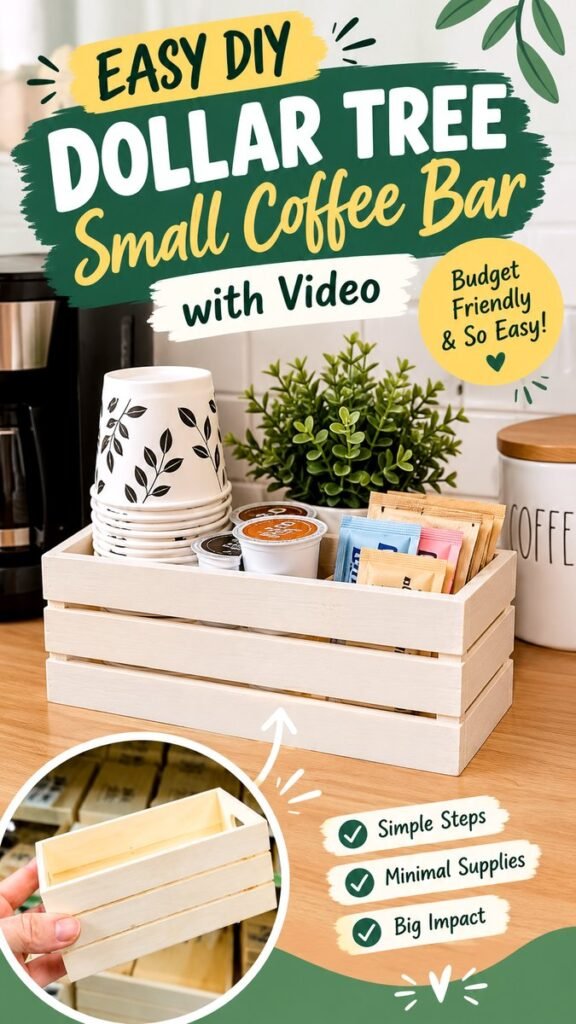
Creating a DIY coffee bar does not have to require a large kitchen, expensive furniture, or complicated woodworking skills. A simple wooden crate can become a charming coffee station with a little creativity, giving you a practical place to organize cups, coffee pods, sweeteners, and other everyday essentials. The inspiration here combines a light wood finish with a warm kitchen setting, showing how a small project can create a noticeable difference in both organization and style.
Key Takeaways
- A small wooden crate can create an attractive and useful coffee station.
- Neutral finishes work well with many kitchen decorating styles.
- Open storage keeps cups, pods, and drink accessories easy to reach.
- A compact coffee bar can make better use of limited counter space.
- Simple decorative touches can turn practical storage into inviting kitchen decor.
Why a DIY Coffee Bar Is Worth Creating
A dedicated coffee corner gives everyday essentials a home while adding personality to your kitchen. Instead of spreading coffee supplies across several cabinets and countertops, you can gather the items you use most often in one convenient location.
The beauty of a small DIY coffee bar is its flexibility. It can sit on a kitchen counter, a sideboard, a small shelf, or another suitable surface. You can also change the contents whenever your routine changes. That makes this type of project especially useful for people who enjoy practical home organization with a decorative touch.
Important: The most successful small coffee stations balance storage and visual simplicity. Keep frequently used items accessible while leaving enough open space around the station so the area does not feel crowded.
The Simple Wooden Crate Coffee Bar Concept
The main feature of this coffee bar idea is a small wooden crate with horizontal slats and a light finish. Its straightforward shape makes it easy to adapt for different kitchens and decorating preferences. Rather than treating the crate as ordinary storage, you can use it as a defined container for your coffee essentials.
The open-top design is particularly useful because the contents remain visible. Cups can be stacked toward one side, while coffee pods, packets, and small accessories can occupy the remaining space. This creates a compact arrangement that is both functional and visually appealing.
Choose a Light and Versatile Finish
A pale wood or creamy painted finish gives the project a fresh appearance and works nicely with modern, farmhouse, cottage, and casual kitchen interiors. Light colors can also help a compact coffee station feel less visually heavy.
If you prefer a different look, the same basic idea can be customized with stain, paint, or decorative details. A darker wood tone can create a more traditional appearance, while soft colors can make the station feel playful and relaxed.
Think About the Coffee Routine First
Before arranging the station, consider what you actually reach for each morning. If coffee pods are part of your routine, make them easy to grab. If you prefer ground coffee, leave room for a container, scoop, and filters. If you frequently add sugar or other drink additions, create a dedicated area for those small packets or jars.
This approach prevents the coffee bar from becoming a decorative display that is inconvenient to use. Good organization should support your routine rather than complicate it.
How to Build a Small DIY Coffee Bar
The project can be approached as a simple decorating and organization task. The exact construction method will depend on the crate or wooden container you choose, but the overall process can remain straightforward.
1. Start With a Small Wooden Crate
Look for a crate with enough interior space to hold your coffee essentials without taking over the counter. A compact rectangular shape is especially practical because it provides useful storage while maintaining a tidy footprint.
Inspect the wood before using it. Make sure the slats are secure and that there are no rough areas that could catch on fabric or cause an uncomfortable splinter.
2. Prepare the Surface
If the wood feels rough, lightly smooth the surfaces before decorating. Pay particular attention to the edges and corners because these areas are frequently handled.
Wipe away dust before applying any finish. A clean surface helps paint or other finishes look more even and polished.
3. Add Your Preferred Finish
A light cream or neutral finish can recreate the soft, clean appearance of the inspiration. Apply the finish evenly and allow it to dry according to the product instructions. Multiple thin coats can often provide a more controlled result than applying one heavy coat.
You can also leave some natural wood visible if you prefer a rustic appearance. The goal is not perfection. Small variations can add handmade character to a DIY project.
4. Plan the Interior Arrangement
Once the crate is ready, place it where you want your coffee station to live. Then arrange the essentials inside. Keep taller items toward the back and smaller items toward the front so everything remains visible.
- Choose a convenient location near your coffee maker.
- Place frequently used items where they are easiest to reach.
- Group similar supplies together.
- Leave a little open space so the crate does not look overloaded.
- Add one or two decorative elements for personality.
Organizing Coffee Bar Essentials
The most useful coffee station is one that makes your morning routine faster. A small container can hold coffee pods, while a neat stack of cups can sit beside them. Sweetener packets, stirrers, napkins, and other small accessories can be grouped together rather than scattered around the counter.
Try to avoid filling every available inch. A little breathing room makes the station easier to maintain and gives the overall arrangement a more intentional appearance.
Create Zones Within the Crate
Think of the crate as several small zones instead of one large storage area. One section can be dedicated to cups, another to coffee, and another to drink additions. Small bowls, trays, or containers can help separate loose items if necessary.
Keep Daily Items Within Reach
If something is used every morning, it should not be hidden behind less frequently used supplies. Place everyday essentials at the front or top of the station, while backup supplies can stay elsewhere.
Why This Matters
A coffee bar works best when organization follows your real habits. Grouping items by how often and how they are used makes the station easier to maintain and keeps the countertop looking intentional.
Make Your Coffee Corner Look More Inviting
Functionality is important, but a coffee station is also an opportunity to add warmth to your kitchen. The inspiration combines the light wooden crate with greenery, neutral containers, and coffee supplies. These elements create a relaxed atmosphere without requiring complicated decoration.
Add a Touch of Greenery
A small plant or simple green accent can soften the appearance of a wooden coffee station. Choose a size that complements the crate instead of overwhelming it. Artificial greenery can also work when a low-maintenance option is preferred.
Use Coordinated Containers
Matching or complementary containers can make everyday supplies look more cohesive. A neutral mug, storage jar, or canister can help connect the coffee station with the rest of the kitchen.
Pro Tip: Use one main decorative color and repeat it in small details. This creates a coordinated coffee corner without requiring every item to match.
Small Coffee Bar Ideas for Limited Spaces
You do not need a large countertop to enjoy a dedicated coffee station. The compact crate approach is especially useful in smaller kitchens because it keeps supplies contained within one defined footprint.
For a very small space, focus only on the essentials. A few cups, your preferred coffee supplies, and one decorative accent may be enough. Extra items can remain stored in a cabinet and be brought out when needed.
A narrow side table or shelf can also become a coffee corner. When floor and counter space are limited, vertical storage may provide additional room without expanding the station’s footprint.
Make the Station Easy to Move
One advantage of a crate-style coffee organizer is portability. If you need to clear the counter for cooking or entertaining, the supplies can potentially be moved together rather than one item at a time. This makes the setup practical for kitchens where surfaces need to serve multiple purposes.
Budget-Friendly Ways to Personalize It
The basic concept can be customized without turning it into a complicated project. Look around your home for containers you already own before purchasing new accessories. Repurposing jars, small bowls, trays, and baskets can add character while keeping costs under control.
- Reuse small containers for sweetener packets or stirrers.
- Use a small tray to group loose accessories.
- Add a simple label when it improves organization.
- Choose neutral accessories for a clean, timeless appearance.
- Rotate seasonal decorations instead of changing the entire station.
Another simple approach is to change the appearance of the crate itself. A fresh coat of paint can completely alter the style, while natural wood can emphasize a relaxed, rustic feel. Small changes can make the same basic storage piece work with different kitchen themes.
Keeping Your DIY Coffee Bar Tidy
Once the coffee station is finished, maintaining it should be simple. Return items to their designated areas after use and avoid allowing empty packages or unnecessary accessories to accumulate.
Every few days, check the crate and remove anything that no longer belongs there. Wipe the surface as needed, especially around coffee-making areas where small spills or crumbs can collect.
A useful rule is to keep only the items you regularly use in the main display. This keeps the coffee bar attractive while making it easier to find what you need.
Ways to Adapt the Idea for Your Home
The wooden crate coffee bar can be interpreted in many different ways. A farmhouse kitchen might pair it with natural wood and simple ceramic mugs. A modern kitchen could use a crisp painted finish with minimal accessories. A cozy kitchen might add warm textures and greenery.
You can also adjust the organization depending on your preferred drink. Coffee pod users may want dedicated pod storage, while ground coffee drinkers can prioritize containers for beans or grounds and related tools. Tea drinkers can adapt the same concept for tea bags, mugs, honey, and teaspoons.
This versatility is what makes a simple DIY coffee station so appealing. The project provides a basic structure, while the final arrangement can reflect your personal routine and decorating style.
At a Glance
- Use a compact crate to create defined coffee storage.
- Choose a finish that complements your kitchen.
- Organize supplies by frequency of use.
- Add greenery or coordinated containers for extra style.
- Keep the station simple enough to maintain every day.
Final Thoughts on This DIY Coffee Bar
A small DIY coffee bar can combine organization, creativity, and everyday convenience in one approachable project. The simple wooden crate concept is a great example of how an ordinary storage piece can become a purposeful part of your kitchen decor.
The key is to design the station around the way you actually make and enjoy coffee. Keep your most-used supplies accessible, choose a finish that fits your space, and add only the decorative touches that make the area feel welcoming.
Whether you are working with a spacious kitchen or a small counter, a thoughtfully arranged coffee corner can make the room feel more organized and inviting. Start with a simple crate, build around your daily routine, and let your personal style shape the final details.