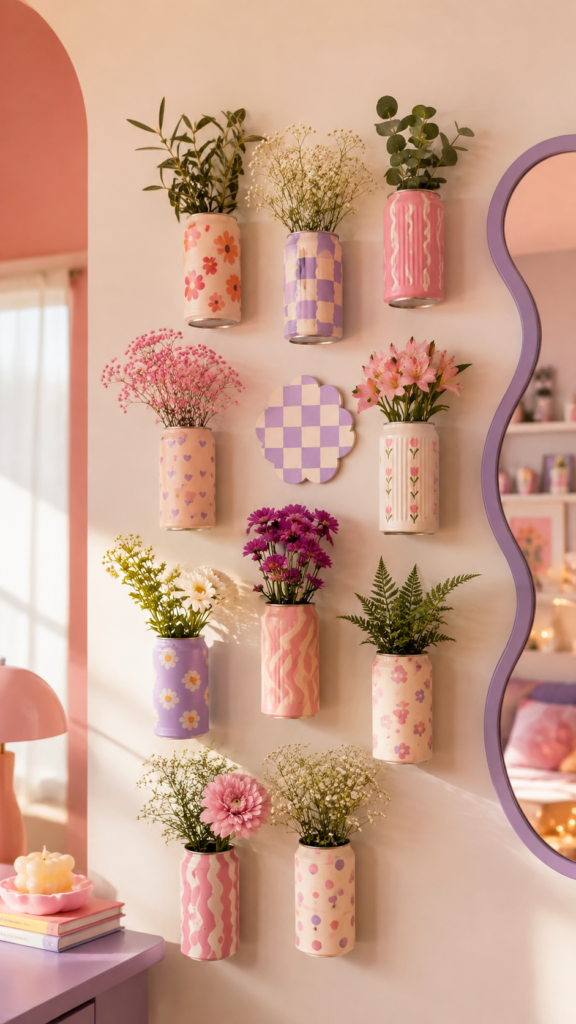
A beautiful room does not have to start with an expensive shopping list. Sometimes, a few painted containers, fresh flowers, soft colors, and a little creativity can completely change the feeling of a space. This cozy decor idea combines playful pastel shades, handmade-looking patterns, greenery, floral arrangements, and an organic mirror to create a cheerful wall that feels personal rather than overly polished. If you are searching for room decor ideas DIY projects that are colorful, affordable, and easy to personalize, this style is full of inspiration.
Key Takeaways
- Turn simple containers into decorative wall planters with paint and patterns.
- Use pastel pink, lavender, cream, and peach tones for a soft, cheerful atmosphere.
- Combine fresh-looking greenery with delicate flowers for texture and contrast.
- Arrange wall decor in an intentional composition instead of lining everything up perfectly.
- Use mirrors, lighting, and small accents to make a cozy room feel more layered.
Why DIY Room Decor Feels So Special
DIY room decor has a charm that ready-made decorations often cannot match. A handmade piece can reflect your favorite colors, patterns, flowers, and personality. Even when the basic materials are inexpensive, the finished arrangement can look thoughtfully designed when the pieces work together.
The wall shown in this decorating style works because it combines several small ideas into one cohesive display. Instead of relying on a single oversized decoration, it uses multiple painted vessels, botanical elements, a decorative accent in the center, and a curving mirror to create visual interest. Each piece contributes something different while the pastel palette keeps the overall look connected.
Important: The secret to successful DIY room decor is not making every item identical. Choose a common color family or repeated pattern, then allow individual pieces to have their own personality.
Create a Pastel Wall Decor Palette
Color is one of the easiest ways to make a collection of DIY decorations look intentional. The inspiration here uses gentle shades of pink, lavender, cream, peach, and muted green. These colors create a warm and playful mood without making the room feel visually heavy.
You do not need to copy the exact colors. Start with two or three favorite shades and use a neutral such as warm white or cream to give the eye a place to rest. For example, lavender and blush pink can create a dreamy combination, while peach and sage green add a slightly more natural feel.
Easy Color Combinations to Try
- Blush pink + lavender + cream: soft, playful, and feminine.
- Peach + sage + warm white: fresh and botanical.
- Dusty rose + lilac + beige: cozy with a vintage-inspired feel.
- Pastel yellow + pink + lavender: bright, cheerful, and youthful.
Keeping the background relatively neutral can make colorful DIY decorations stand out even more. A light wall also helps small flowers, leaves, painted patterns, and decorative shapes become focal points.
Turn Simple Containers Into DIY Wall Planters
One of the most appealing ideas in this room decor concept is the use of painted containers as wall-mounted botanical displays. Their simple cylindrical shapes provide a consistent base, while the hand-painted patterns make every piece look different.
This is a great approach for anyone who enjoys upcycled room decor. Containers that might otherwise be discarded can become colorful decorative accents. Once they are cleaned and prepared appropriately, they can be transformed with flowers, leaves, dots, stripes, waves, checks, hearts, or simple floral motifs.
Pattern Ideas for Painted Containers
- Paint small flowers across a soft pink background.
- Create lavender and cream checkerboard blocks.
- Use simple wavy lines for a playful handmade effect.
- Add tiny hearts or dots for a sweet bedroom accent.
- Combine a neutral base with one repeating pastel color.
- Try simple vertical botanical motifs for a more delicate appearance.
The goal is not perfect craftsmanship. Slight variation can actually make DIY decor feel warmer and more authentic. If you prefer a cleaner modern look, use painter’s tape, simple stencils, or small brushes to create sharper patterns.
A Simple Styling Rule
When decorating several containers, repeat at least one visual element. That could be the same shade, the same flower motif, or a similar line pattern. Repetition creates unity even when every container is unique.
Bring Flowers and Greenery Into the Arrangement
Flowers immediately add life and softness to a room. In this style, the botanical elements range from delicate sprays of tiny blossoms to fuller flowers and leafy greenery. This mixture creates texture and prevents the wall from looking flat.
You can recreate the same feeling with whatever botanical materials suit your space. Dried flowers work especially well because they can add an airy, lightweight appearance. Artificial stems are another practical option if you want the display to remain consistent throughout the year. Fresh flowers can be used when you want a temporary seasonal update.
Mix Different Shapes and Textures
Avoid putting identical arrangements in every container. Instead, vary the height, density, and shape of the botanical elements. A tall leafy stem can balance a low cluster of flowers, while delicate branches can fill visual space without adding too much weight.
Expert Insight: Botanical displays look more natural when their heights are varied. Use a few taller stems, some medium arrangements, and a handful of compact flowers so the eye moves around the wall instead of stopping at one level.
How to Arrange DIY Wall Decor Without Making It Look Crowded
A collection wall can quickly become cluttered if every object competes for attention. The solution is to think about the wall as one composition rather than a group of unrelated decorations.
- Choose a central visual anchor. A decorative shape, mirror, or larger botanical piece can establish the focus.
- Build outward from the anchor. Place complementary pieces around it instead of filling random empty spaces.
- Leave breathing room. Small gaps between objects make the entire arrangement easier to appreciate.
- Vary the heights. Avoid creating a rigid grid unless a very structured style is your goal.
- Step back regularly. View the arrangement from across the room before committing to every placement.
The inspiration uses an organized but relaxed arrangement. The containers feel coordinated without appearing mechanically aligned. This balance is ideal for cozy bedroom decor because it creates personality while preserving a sense of calm.
Use a Statement Mirror to Add Depth
A mirror can do more than provide a place to check your reflection. In a small or cozy room, it can become part of the decor itself. An organically shaped frame adds softness to the straight lines of painted containers and shelves, while the reflective surface helps the room feel more layered.
A curved or wavy mirror is particularly effective beside a collection of rectangular furniture and vertical wall decorations. The contrast between curved and straight forms makes the composition more dynamic.
Make the Mirror Part of the Color Story
Consider choosing a mirror frame that repeats one of the colors used elsewhere in the room. Lavender, soft pink, cream, or natural wood can all work beautifully with a pastel botanical display. Repeating the frame color in small accessories can make the room feel more coordinated without looking overly matched.
Add Cozy Lighting and Small Decorative Details
Lighting has a major influence on the mood of a room. Soft, warm illumination can make pastel colors appear richer and create a relaxed atmosphere in the evening. A small table lamp, subtle decorative lighting, or warm accent light can complement a botanical wall display beautifully.
Small details also make the space feel lived in. A stack of colorful books, a candle, a decorative dish, or a small desk accessory can connect the wall display to the rest of the room. These additions do not need to be expensive. The key is to repeat colors and textures already present in the decor.
Why This Matters
- Soft lighting makes pastel decor feel warmer and more inviting.
- Small repeated accents help separate DIY projects look like part of one room.
- Layering practical objects with decorative pieces creates a more natural, lived-in space.
DIY Room Decor Ideas for Different Spaces
Although this style works beautifully in a bedroom, the basic concept can be adapted throughout the home. The important thing is to adjust the colors, scale, and botanical choices to fit the room.
Bedroom
Keep the palette soft and relaxing. Pastel planters, delicate flowers, a decorative mirror, and warm lighting can create a cozy corner near a vanity, desk, or reading area.
Study or Desk Area
Use fewer wall pieces and allow the desk to remain functional. A small painted container with greenery, a colorful notebook stack, and one decorative wall element can bring personality without distracting from work.
Small Apartment
Vertical decor is especially useful when floor space is limited. A carefully arranged wall display adds color and character without requiring additional furniture.
Creative Corner
A craft or hobby area can handle bolder patterns and brighter pastel combinations. Use painted containers to hold decorative stems, craft tools, or lightweight accessories while keeping the overall palette consistent.
Simple DIY Steps to Recreate the Look
You can approach this decorating project in stages rather than trying to complete the entire wall at once. Start with the elements you already have and build the display gradually.
- Gather containers. Look for lightweight vessels with similar proportions.
- Prepare the surfaces. Clean and dry them thoroughly before decorating.
- Plan the palette. Select a small group of colors that complement the room.
- Paint the bases. Apply simple background colors before adding patterns.
- Add decorative details. Use flowers, dots, checks, waves, hearts, or botanical motifs.
- Plan the wall composition. Lay out the pieces before mounting anything permanently.
- Add greenery and flowers. Vary the height and fullness of each arrangement.
- Finish with accents. Add a mirror, lighting, books, or small decorative objects to complete the corner.
For anything being mounted on a wall, choose hardware and attachment methods appropriate for the wall surface and the weight of the finished decoration. Lightweight pieces are generally easier to position and rearrange as your style evolves.
Make the Look Your Own
The most successful DIY room decor is personal. You can keep the same overall concept while changing nearly every detail. Swap flowers for leafy plants, replace lavender with sage, use geometric patterns instead of florals, or introduce a favorite accent color.
You can also make the display seasonal. Spring might call for soft pinks and fresh-looking flowers, while autumn could introduce warmer peach, cream, and muted terracotta tones. The structure of the display can remain the same while the details evolve.
Another option is to create a more minimalist version. Instead of covering an entire wall, choose three or five decorated containers and leave generous negative space around them. This gives the same handmade character with a cleaner modern appearance.
At a Glance
- Painted containers create affordable statement decor.
- Pastel colors keep the display soft and cheerful.
- Flowers and greenery add natural texture.
- Curved shapes create contrast against structured wall pieces.
- Warm lighting makes the finished room feel especially cozy.
Conclusion: Build a Room That Feels Like You
DIY room decor is ultimately about creating an environment that feels comfortable, expressive, and genuinely yours. A collection of simple painted containers can become a striking feature when combined with flowers, greenery, thoughtful spacing, and a cohesive color palette.
You do not need a large budget or a perfectly styled home to create this kind of atmosphere. Start with one small corner, choose a few colors you love, and experiment with patterns and botanical textures. As you add pieces, look for repetition, contrast, and breathing room. Those three elements can turn individual DIY projects into a polished room decor idea.
Pro Tip: Photograph your arrangement from a distance before deciding it is finished. A quick wider view can reveal where you need more balance, more empty space, or one small accent to bring the entire composition together.
Whether you are refreshing a bedroom, styling a small apartment, or simply looking for your next creative project, this colorful botanical approach offers plenty of room to experiment. Save your favorite ideas, gather a few simple supplies, and let your own color palette and personality guide the final design.