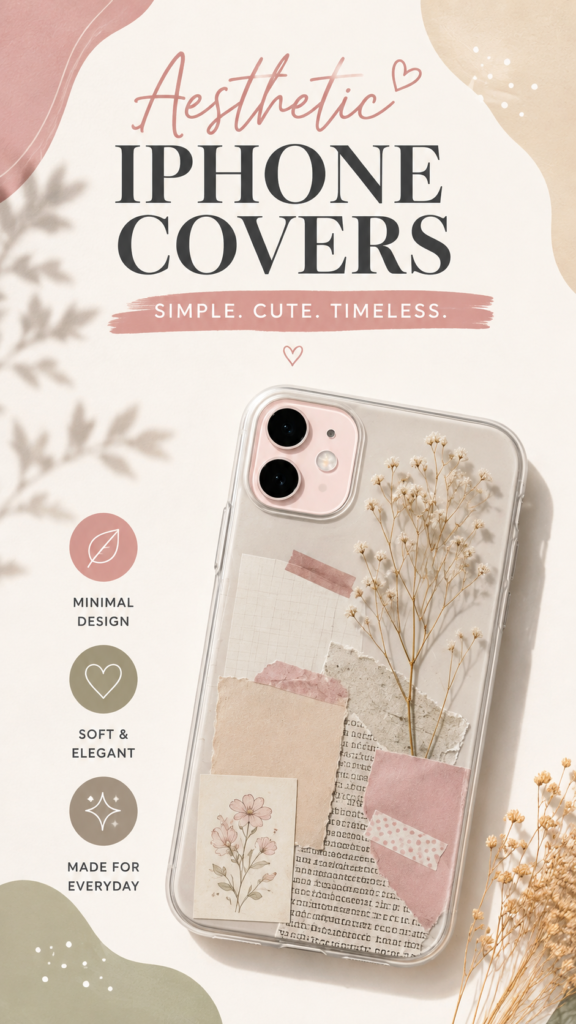
DIY phone cases are one of the easiest ways to turn an everyday accessory into something that feels completely personal. A plain clear case can become a soft, romantic, minimalist statement with a few carefully chosen details such as dried flowers, paper textures, ribbon accents, handwritten-style lettering, or delicate stickers. The aesthetic shown here combines warm neutrals, dusty blush tones, botanical elements, and layered collage pieces to create a phone case that feels simple, cute, and timeless.
The best part of creating your own phone case is that you do not need an elaborate craft setup. With a clear case and a small collection of decorative materials, you can experiment with different layouts until the design feels right. Whether your style is feminine, vintage-inspired, minimalist, coquette, floral, or simply cozy, a DIY phone case gives you plenty of room to make something that reflects your taste.
Key Takeaways
- Clear phone cases are an excellent base for customizable DIY designs.
- Soft blush, cream, beige, and muted brown tones create a calm aesthetic.
- Dried flowers, ribbons, paper scraps, and stickers can add dimension without overwhelming the case.
- Layering small decorative pieces creates a personalized collage effect.
- A simple design often looks more polished when you leave some clear space around the details.
What Makes an Aesthetic DIY Phone Case?
An aesthetic DIY phone case is less about following one exact style and more about creating a pleasing combination of colors, textures, shapes, and small personal details. The design featured here works because it uses a restrained palette instead of trying to include every possible decoration. Cream, dusty pink, soft tan, and natural floral tones work together to create a cohesive look.
The transparent phone case also plays an important role. Rather than completely covering the original surface, the design allows portions of the case to remain visible. This keeps the finished accessory feeling light and modern while giving the decorative pieces enough room to stand out.
Another defining feature is the collage approach. Small pieces of paper appear layered together, while a delicate ribbon and botanical elements provide contrast. The result feels handmade without looking cluttered.
Important: The secret to a polished DIY phone case is restraint. Choose a small group of complementary colors and repeat those tones throughout the design. A few intentional details usually look more sophisticated than a case covered from edge to edge.
Why Clear Phone Cases Are Perfect for DIY Projects
A clear phone case provides a flexible starting point because it can showcase decorations without requiring a complicated base. You can create an entirely new look while still allowing the original phone color to influence the finished design.
Clear cases also work especially well for temporary or interchangeable designs. Instead of permanently attaching every decorative element, you can arrange paper pieces, photographs, stickers, and other flat accents inside the case. This makes it easier to change the design whenever you want a fresh look.
For an aesthetic phone case, transparency can actually become part of the design. Leaving intentional areas empty gives the eye somewhere to rest and helps delicate decorations feel more balanced.
A Simple Base for Endless Designs
Start with a clean, transparent case that fits your phone securely. Before adding anything, wipe the inside surface so dust and fingerprints do not become trapped beneath your decorations. Then place your materials beside the case and begin experimenting with different arrangements.
Do not attach anything immediately. Move the pieces around first and take a quick photo of your favorite arrangement. This simple step makes it much easier to compare different layouts and avoid committing to a design that feels unbalanced.
Choosing the Right Color Palette
Color is one of the easiest ways to make a DIY phone case look intentional. The design inspiration here uses a warm, muted palette rather than bright contrasting colors. Cream provides a soft foundation, while dusty pink adds a romantic accent. Beige and natural brown tones bring warmth and keep the design grounded.
If you want a similar aesthetic, consider choosing three to five colors before you begin. You might combine ivory, blush pink, taupe, muted rose, and soft brown. These shades can be repeated in your paper pieces, ribbons, floral details, stickers, or lettering.
- Soft neutral: Use cream or ivory as the visual foundation.
- Blush accent: Add muted pink through ribbon, paper, or small decorative details.
- Natural tone: Use beige or tan to introduce warmth.
- Dark accent: Add a little brown or charcoal for contrast and readable lettering.
Keeping the palette muted is especially useful when you want a timeless phone case. Softer shades tend to work together naturally, making the finished design feel cohesive instead of overly busy.
DIY Phone Case Materials to Try
You can customize the materials according to your preferred aesthetic. The visual inspiration combines several flat and delicate elements, but you can create your own version with whatever supplies you already have.
Paper and Collage Pieces
Small scraps of textured paper are ideal for creating a layered collage effect. Try cream paper, recycled-looking sheets, grid paper, vintage-inspired prints, or handmade paper with slightly irregular edges. Tear the edges instead of cutting them perfectly for a softer handmade appearance.
Layer two or three pieces at slightly different angles. You can place a smaller illustration or handwritten message on top to create a focal point.
Dried Flowers and Botanical Details
Dried flowers can instantly add a natural, delicate quality to a phone case. Tiny white blossoms are particularly effective in neutral designs because they add texture without introducing a strong competing color.
Keep the botanical elements relatively delicate. A small branch or cluster can become a beautiful focal point, while too many stems may make the case look crowded. Arrange the flowers along one side or diagonally across the composition to create visual movement.
Ribbon and Fabric Accents
A thin ribbon can bring softness and movement to an otherwise flat collage. A small bow in blush or neutral pink works especially well with feminine and romantic aesthetics. You can also experiment with narrow lace, fabric scraps, or other lightweight textile accents.
When using a ribbon, think about scale. A small bow can be charming, while an oversized decoration may hide the rest of the composition. The goal is to create a detail that complements the case rather than becoming the only thing people notice.
How to Create Your Own Aesthetic Phone Case
Creating a DIY phone case becomes much easier when you build the design in stages. Start with the largest elements and gradually add smaller accents. This approach prevents the finished composition from becoming overcrowded.
- Choose your case. A transparent case is a versatile option for collage-style designs.
- Select your palette. Pick a few colors that work well together before choosing decorations.
- Gather your focal pieces. Choose one or two larger elements such as a floral illustration, paper card, or dried botanical.
- Add supporting details. Introduce smaller scraps, stickers, ribbon, or handwritten-style phrases.
- Experiment with placement. Move everything around until the composition feels balanced.
- Check the camera area. Keep decorative pieces away from the phone’s camera opening and other functional areas.
- Secure the design appropriately. Use materials and attachment methods suitable for the case and intended use.
- Clean the finished surface. Remove visible dust, fingerprints, or loose fibers before using the case.
Start With One Focal Point
Every good collage benefits from a visual hierarchy. Choose one feature that should attract attention first. It might be a small floral illustration, a ribbon bow, a meaningful phrase, or a particularly beautiful piece of textured paper.
Once your focal point is selected, arrange the smaller details around it. This creates a natural flow and makes the case easier to look at.
Expert Insight
Think of your phone case like a tiny piece of wall art. Give the largest element enough breathing room, repeat a few colors throughout the composition, and use small accents to guide the eye rather than fill every empty space.
Cute DIY Phone Case Ideas to Explore
Once you have the basic technique down, there are countless directions you can take. The same collage method can be adapted to different personalities, seasons, and aesthetics.
Minimalist Neutral Case
For a clean look, use a transparent case with one small botanical illustration and a couple of neutral paper shapes. Keep the palette focused on cream, beige, and soft brown. This style is ideal if you want something understated and easy to coordinate with everyday outfits.
Soft Pink and Ribbon Case
Bring in dusty pink through a small ribbon, paper accent, or simple heart motif. Pair it with ivory and tan so the pink feels gentle rather than overpowering. A handwritten-style phrase can complete the romantic look.
Floral Collage Case
Combine pressed-looking floral illustrations with tiny botanical elements and textured paper. Try arranging the flowers toward one corner while keeping the opposite side relatively open. This creates a balanced asymmetrical design with plenty of personality.
Vintage-Inspired Paper Case
Use warm beige paper, handwritten details, subtle text fragments, and slightly torn edges to create a nostalgic collage. The key is to keep the colors coordinated so the case looks intentionally vintage rather than randomly assembled.
How to Make Your Design Look More Professional
A homemade phone case can look surprisingly polished when you pay attention to spacing. One of the easiest mistakes is placing every decorative item too close together. Instead, leave small gaps between pieces and allow the transparent surface to become part of the composition.
Scale is also important. If every element is the same size, the design can feel flat. Combine one larger piece with several medium and small accents. This creates depth and makes the eye move around the case.
Texture can help too. Pairing smooth paper with rough torn edges, delicate flowers, or a soft ribbon creates visual interest without requiring bright colors.
Pro Tip: Before finalizing your layout, hold the case at arm’s length or photograph it from above. A design that looks attractive up close can sometimes feel crowded when viewed as a whole. A quick photo makes spacing problems much easier to spot.
Personalize Your Phone Case With Words
Short phrases can make a DIY phone case feel more personal. Instead of using a long quote, choose a few meaningful words that complement the visual design. Phrases such as “bloom at your own pace,” “stay soft,” “little moments,” or “slow days” can work beautifully with a gentle botanical aesthetic.
Typography should match the mood. A handwritten script can create a delicate feminine feeling, while a classic serif font can make the design feel sophisticated and editorial. For a modern minimalist case, clean uppercase lettering can provide contrast against softer decorative elements.
Keep text short and readable. The smaller surface of a phone case means that long messages can quickly become difficult to read or visually overwhelming.
Common DIY Phone Case Mistakes to Avoid
Creating a custom phone case is an experiment, so imperfections are part of the process. Still, a few simple considerations can help your finished design last longer and look cleaner.
- Avoid placing bulky decorations where they could interfere with handling the phone.
- Do not cover the camera openings or important phone controls.
- Use a limited color palette instead of combining too many unrelated shades.
- Give delicate elements enough space so they remain visible.
- Check that any attached pieces are secure before carrying the phone around.
- Consider how the case will be cleaned and handled before choosing fragile materials.
Most importantly, do not feel pressured to make the first version perfect. DIY phone cases are meant to be creative and personal. If a layout does not work, rearrange the pieces and try again.
Creating a Timeless Aesthetic
Trends can be a great source of inspiration, but a timeless phone case usually comes from choosing elements you genuinely enjoy. Neutral colors, simple botanical motifs, delicate paper textures, and understated lettering can remain appealing even as trends change.
The design does not need to match everything you own. Instead, think about the mood you want to carry with you every day. Maybe you prefer calm neutrals, romantic pink accents, natural textures, or a nostalgic scrapbook feeling. Once you know the mood, selecting individual decorations becomes much easier.
A successful aesthetic phone case should feel like a small extension of your personal style. That is what makes DIY customization so appealing. You are not simply decorating an accessory. You are creating a design that can change whenever your interests or aesthetic evolve.
At a Glance
- Use a clear case as a versatile DIY foundation.
- Choose three to five coordinated colors.
- Build around one clear focal point.
- Mix paper, florals, ribbon, and small accents for texture.
- Leave some empty space for a clean, modern finish.
Final Thoughts on DIY Phone Cases
A DIY phone case is a small project with a big opportunity for creativity. A simple transparent case can become a soft floral collage, a minimalist neutral design, a romantic pink accessory, or a completely different expression of your personality. The most appealing designs often rely on a few thoughtful details rather than an overwhelming number of decorations.
Start with a color palette you love, choose one focal element, and build the composition gradually. Experiment with paper layers, delicate flowers, ribbon, handwritten-style phrases, and subtle textures until everything feels balanced. There is no single correct formula for an aesthetic phone case, which is exactly what makes the process so enjoyable.
Whether you are making a case for yourself, refreshing an old accessory, or looking for a fun creative project, these DIY phone case ideas offer an easy place to begin. Keep the design personal, let your creativity guide the details, and remember that even the smallest handmade touches can make an everyday item feel special.