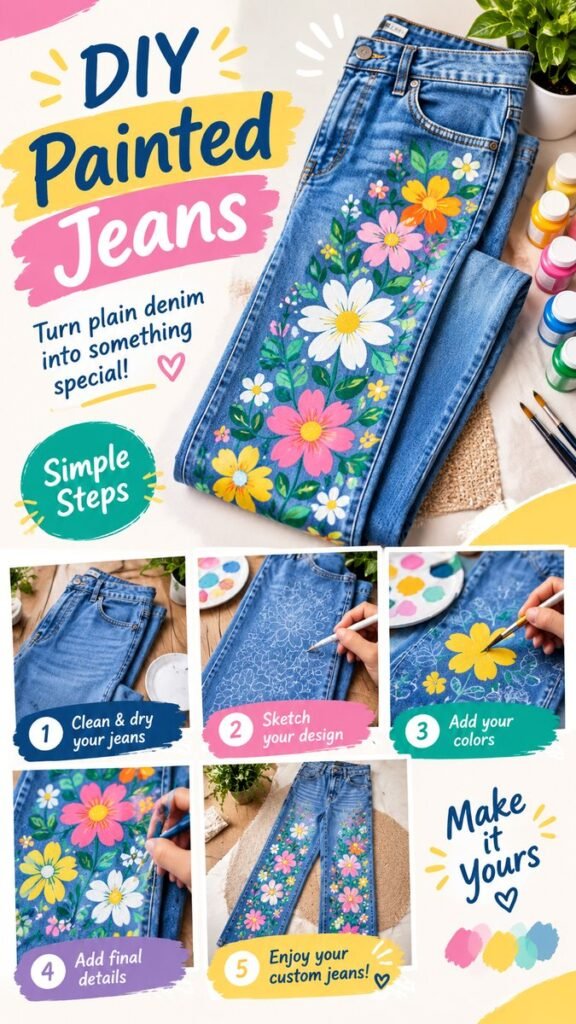
Painted clothes are one of the easiest ways to turn an ordinary wardrobe into something colorful, personal, and completely unique. A plain pair of denim jeans can become a wearable piece of art with a few fabric paints, brushes, and a little creativity. Floral designs are especially fun because they work beautifully across denim, jackets, shirts, skirts, tote bags, and other fabric pieces. This painted clothes DIY idea combines bright flowers, leafy details, and playful colors to create a cheerful custom look that feels handmade and fresh.
Whether you are refreshing an old pair of jeans or starting with a new clothing piece, fabric painting gives you plenty of room to experiment. You do not need advanced art skills to get started. Simple flowers, leaves, dots, petals, and colorful accents can create an impressive result when they are arranged thoughtfully. The goal is not perfect symmetry. It is to create a design that feels expressive and suits your personal style.
Key Takeaways
- Fabric paint can transform plain clothes into colorful statement pieces.
- Floral patterns are beginner-friendly and easy to personalize.
- Cleaning and preparing the fabric helps create a smoother painting surface.
- Sketching a design before painting can make placement and proportions easier.
- Layering colors and adding small details can give painted clothes more depth.
- Properly setting fabric paint helps your finished design last longer.
Why Painted Clothes Are So Fun to Make
DIY painted clothes combine fashion and creativity in a way that makes every project feel personal. Instead of searching for a particular print in a store, you can create your own pattern and decide exactly where it belongs. A floral design can cover one leg of a pair of jeans, decorate a pocket, run along a jacket sleeve, or form a small cluster near the hem.
This type of project is also a great way to give older clothing a new personality. A pair of jeans that feels too plain can become much more interesting with colorful flowers and leaves. Even small painted details can make a noticeable difference.
Another advantage is flexibility. You can keep the design simple with two or three colors, or build a much more detailed composition with multiple shades. Bright pinks, oranges, yellows, blues, greens, and white create a cheerful floral effect, while softer colors can produce a more subtle look.
Important: The most successful painted clothing projects usually begin with a clear design idea rather than adding random shapes as you go. Even a loose sketch helps you balance large flowers, smaller accents, and leafy areas before the paint goes on.
Materials for a DIY Painted Clothes Project
You do not need a large collection of art supplies to create painted clothing. A small selection of useful materials is enough for most beginner projects. Gather your clothing item, fabric paints, paintbrushes in several sizes, a pencil or washable fabric marker, a palette or small plate, water for rinsing brushes, and a protective surface for your work area.
Choose the Right Clothing
Denim is a particularly appealing surface for fabric painting because its blue color creates a strong background for bright flowers. Jeans, denim jackets, shorts, skirts, and bags can all work well. Cotton shirts and canvas pieces are also useful choices for beginners.
Look for a garment with enough open space for your design. If the fabric already has heavy embellishments, seams, or patterns, painting can become more difficult. A relatively simple garment gives your artwork more visual impact.
Select Fabric Paints
Use paint specifically designed for fabric whenever possible. Fabric paint is formulated to adhere to textiles and is generally more suitable for wearable projects than ordinary craft paint. Choose colors that contrast with the fabric so the design remains visible.
For a floral denim project, a bright palette can include yellow, orange, pink, blue, white, green, and purple. You can also mix shades to create lighter or darker versions of your main colors.
Gather Different Brush Sizes
A small round brush is useful for outlines, flower centers, stems, and fine details. A medium brush works well for petals and leaves, while a slightly wider brush can cover larger sections more efficiently. Having several sizes makes it easier to create visual variety.
Step 1: Prepare and Clean the Clothing
Start with clean, dry fabric. Wash the clothing according to its normal care instructions and allow it to dry completely. This helps remove dirt, dust, and residues that could interfere with painting.
Place the garment on a flat, protected work surface. If you are painting jeans, slide a piece of cardboard inside the leg so the paint does not accidentally transfer through to the opposite side. Smooth the fabric as much as possible before you begin.
Take a moment to decide which section of the clothing should receive the artwork. The image inspiration focuses the floral painting along the denim leg, creating a strong vertical composition. This approach is particularly effective because the flowers naturally follow the long shape of the jeans.
Step 2: Sketch Your Floral Design
Before reaching for the paint, lightly sketch the general arrangement. You do not need to draw every petal. Simple circles for flower centers and loose outlines for petals are enough to establish placement.
Start by choosing one or two larger flowers as focal points. Then add medium flowers around them and finish with smaller blooms and leaves. This creates a natural hierarchy that keeps the design interesting.
Try to avoid placing every flower at the same height or using identical shapes. Different sizes and angles make the finished artwork feel more organic. You can also allow some flowers to overlap visually with leaves or smaller blooms.
Expert Insight
- Place larger flowers first so they become the main visual anchors.
- Use smaller flowers and leaves to fill open areas without overcrowding the design.
- Keep some denim visible between painted sections to give the pattern breathing room.
Step 3: Paint the Main Flower Shapes
Once the sketch is ready, begin with the larger flowers. Start with the petals and allow the paint to dry as needed between layers. You can create simple five-petal flowers, daisy-inspired blooms, rounded petals, or more playful abstract shapes.
Bright orange, pink, yellow, and white stand out beautifully against blue denim. Try varying the colors instead of repeating the exact same flower throughout the garment. A mix of warm and cool shades creates contrast and gives the composition more energy.
Do not worry if the first layer looks slightly transparent. Depending on the fabric and paint, a second layer may create stronger coverage. Building color gradually can also make the flowers look more dimensional.
Pro Tip: Let each painted area become touch-dry before adding details on top. This reduces accidental smearing and makes small decorative marks much easier to control.
Step 4: Add Leaves, Stems, and Greenery
Flowers become much more convincing when they are surrounded by leaves and stems. Use different shades of green if you have them, or mix lighter and darker variations from your existing palette.
Paint curved stems that connect different parts of the design. Add leaves at different angles rather than lining them up in identical pairs. A few small leaves can fill narrow spaces beautifully without making the design feel crowded.
For a more playful look, combine larger leafy shapes with tiny dots or miniature leaves. These little accents are especially useful around the edges of larger flowers.
Step 5: Layer in the Details
Once the major shapes are painted, it is time to make the design come alive. Add flower centers, smaller petals, highlights, outlines, dots, and tiny blossoms. White and yellow are especially useful for bright flower centers and small highlights.
Details do not need to be complicated. A few short brushstrokes around a flower center can suggest texture. Small dots can create pollen-like accents, while thin lines can define leaves and petals.
Step back from the garment regularly to look at the design as a whole. This is easier than focusing on one flower at a time because it helps you see whether one section needs more color or whether another area is already busy enough.
Step 6: Balance the Colors
Color balance can make a major difference in DIY painted clothes. If one section contains several bright orange flowers, consider repeating small touches of orange elsewhere. The same idea works for pink, yellow, blue, green, or white.
Repeating colors helps the design feel intentional. At the same time, avoid making every flower identical. The combination of repeated colors and varied shapes creates cohesion without making the pattern look mechanical.
If your clothing is blue denim, bright colors will naturally attract attention. You can soften the overall effect by leaving some denim exposed between flowers. The blue background becomes part of the design rather than simply an empty space.
Step 7: Let the Artwork Dry and Set the Paint
After finishing the painting, allow the garment to dry according to the fabric paint manufacturer’s instructions. Avoid folding or wearing the clothing before the paint has fully set.
Some fabric paints require heat setting, while others are designed to cure without additional treatment. Always follow the directions for the particular paint you are using. Once the artwork has cured properly, wash the garment according to the recommended care instructions.
Important: Paint care matters just as much as the painting process. Following the paint manufacturer’s curing and washing instructions gives your finished DIY clothing the best chance of staying colorful and wearable.
Creative Painted Clothes Ideas to Try
Once you have tried a floral denim design, there are countless directions you can explore. The same techniques can be adapted to different clothing pieces and artistic styles.
Painted Denim Jackets
Create a large floral arrangement across the back of a denim jacket, or add small painted flowers along the sleeves and pockets. A jacket gives you plenty of space to experiment with larger compositions.
Floral Painted Shorts
Paint flowers around one pocket or create a border along the hem. Smaller projects are ideal if you want to practice before decorating a larger garment.
Hand-Painted T-Shirts
Plain cotton shirts can become colorful statement pieces with a central flower, scattered botanical pattern, or simple painted lettering paired with decorative shapes.
Painted Tote Bags
Canvas tote bags are another approachable option. Try a small bouquet, oversized flowers, leaves, or a repeating pattern for an everyday accessory with a handmade feel.
How to Make Your Painted Clothes Look More Professional
A polished result comes from thoughtful composition more than complicated painting techniques. Start with a limited palette and repeat your key colors throughout the garment. Keep your largest elements spaced apart, then use small details to connect the design.
Clean brush control also helps. Avoid loading the brush with too much paint, especially when working near seams. Thin layers are often easier to manage than one very heavy application.
Another useful technique is to vary the scale of your flowers. One large bloom can become a focal point, while medium and tiny flowers guide the eye through the rest of the design. Leaves can fill gaps and visually connect separate clusters.
Most importantly, embrace the handmade quality. Painted clothes do not need to look machine printed. Slight variations in petals, brushstrokes, and color are part of what makes a DIY garment special.
Common Mistakes to Avoid
- Skipping fabric preparation: Dirty or damp fabric can make painting less predictable.
- Using too much paint: Heavy layers can take longer to dry and may obscure small details.
- Overcrowding the design: Leaving some fabric visible gives colorful sections more impact.
- Using only one flower size: A mixture of large, medium, and small blooms creates better visual rhythm.
- Rushing the drying process: Give each layer enough time to dry before adding delicate details.
- Forgetting care instructions: Proper curing and washing can help protect your finished artwork.
Personalize Your DIY Painted Clothes
The best part of painted clothing is that there are no strict rules about what your final design should look like. You can use flowers inspired by your favorite colors, create a bold abstract pattern, or combine several small motifs into a larger composition.
For a softer aesthetic, choose pastel pink, lavender, pale yellow, and light blue. For something energetic, combine vivid orange, hot pink, bright yellow, turquoise, and deep blue. You can also keep the design monochromatic and use different shades of a single color.
Consider where you want people to notice the artwork. A painted panel along one jeans leg creates a dramatic vertical statement, while details around pockets feel more subtle. Painting only the cuffs or hem can also create a small but stylish update.
There is also no need to decorate an entire garment. A carefully placed cluster of flowers can look just as striking as a full-coverage design. Starting small gives you a chance to understand how the paint behaves before committing to a larger pattern.
At a Glance
- Prepare clean, dry fabric before painting.
- Sketch the overall floral arrangement first.
- Paint large flowers before smaller decorative details.
- Use leaves and repeated colors to connect the composition.
- Allow the artwork to cure fully before wearing and washing.
Conclusion
DIY painted clothes are a creative way to refresh your wardrobe while turning simple fabric pieces into something that feels truly personal. A plain pair of jeans can become a colorful floral statement with a few brushes, fabric paints, and a thoughtful design. The process is flexible enough for beginners and open-ended enough for experienced crafters to keep experimenting.
Start with a simple floral arrangement, build your colors gradually, and use small details to bring the design together. Whether you decorate jeans, a denim jacket, a shirt, shorts, or a tote bag, the result can become a wearable reminder of your creativity.
Most importantly, have fun with the process. Choose colors you love, experiment with flower shapes, and let your own style guide the finished piece. Once you complete one painted clothing project, you may find yourself looking at every plain garment as a new creative canvas.
Tags
Painted Clothes DIY DIY Painted Jeans Fabric Painting Painted Denim DIY Fashion Floral Denim Upcycled Clothing Hand Painted Clothes