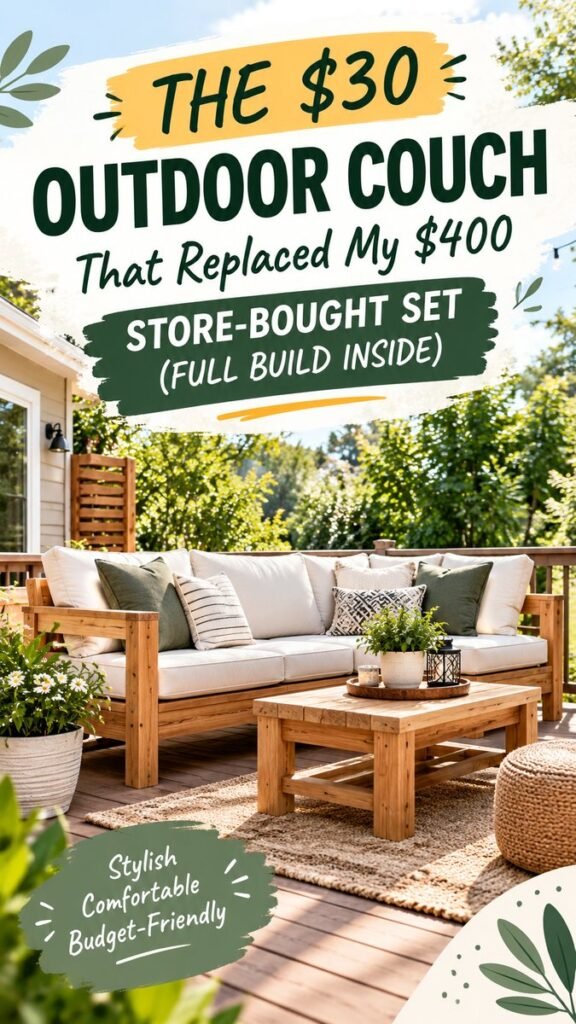
Creating a comfortable outdoor living space does not have to mean spending hundreds of dollars on a matching patio furniture set. A simple DIY outdoor furniture project can turn a deck, patio, or backyard into a welcoming retreat while giving you the freedom to choose the size, finish, and style that works best for your space. A sturdy wooden outdoor couch paired with a coordinating coffee table can create the relaxed look of a professionally designed patio without requiring an elaborate furniture collection.
Key Takeaways
- DIY outdoor furniture can create a stylish seating area on a practical budget.
- Simple wooden construction works especially well for outdoor sofas and coffee tables.
- Comfort comes from choosing supportive cushions, soft pillows, and inviting textures.
- A neutral palette makes handmade furniture feel polished and easy to decorate.
- Outdoor rugs, plants, and small accessories can transform basic furniture into a complete patio setup.
- Weather protection is essential for keeping wooden furniture looking attractive over time.
Why DIY Outdoor Furniture Is Worth Trying
Store-bought patio furniture can be convenient, but large outdoor seating sets often come with a surprisingly high price tag. DIY furniture offers another approach. Instead of paying for a complete collection, you can build individual pieces that suit the dimensions of your patio and add components gradually as your budget allows.
The outdoor sofa shown in this design has a simple, substantial wooden frame with broad arms and a generous seating area. Its straightforward appearance is part of its appeal. You do not need an overly complicated silhouette to make a patio look beautiful. Clean lines, natural wood, comfortable cushions, and thoughtful accessories can create a relaxed outdoor atmosphere.
Important: The most successful DIY patio furniture projects balance appearance with practicality. Before choosing a design, think about how many people will use the furniture, how much space you have available, and how easily the materials can be maintained outdoors.
The Appeal of a Simple Wooden Outdoor Couch
A wooden outdoor couch is one of the most useful pieces you can add to a patio or deck. It creates a comfortable place for morning coffee, afternoon reading, casual conversations, and relaxed evenings outside. Because the frame is visually simple, it can also adapt to different decorating styles.
Natural wood pairs beautifully with cream, white, gray, sage, beige, and earthy tones. In the featured design, light cushions soften the strong lines of the wooden frame, while patterned pillows introduce personality without making the space feel cluttered. This combination creates a modern yet welcoming look.
Another advantage of a simple DIY outdoor sofa is flexibility. You can make the frame longer or shorter depending on the available space. You can also coordinate it with a matching chair, side table, coffee table, or outdoor bench. Building one foundational piece can therefore become the starting point for an entire backyard furniture collection.
Choosing a Practical Furniture Layout
Before cutting any lumber, consider the layout of your outdoor area. Measure the available floor space and think about walking paths around the furniture. A large couch may look beautiful, but it should not make the patio difficult to navigate.
A useful arrangement is to position the outdoor sofa facing a coffee table with enough space between the seating and table for comfortable movement. An additional chair can create an L-shaped conversation area, while a small side table gives guests a convenient place for drinks or accessories.
For smaller patios, avoid filling every available corner. Leaving some open space can make the area feel larger and more relaxing. A compact DIY loveseat may be more useful than an oversized sectional if the goal is to maintain an airy layout.
Planning Your DIY Patio Furniture Project
A little planning can make a major difference when building outdoor furniture. Start by deciding which piece you want to make first. An outdoor couch and coffee table are a practical combination because they immediately establish the main seating zone.
Measure Before You Build
Measure the patio or deck carefully and write down the dimensions. Pay particular attention to the total width, depth, and height of the planned sofa. Remember that cushions will add thickness to the seating and backrest, so the finished furniture will occupy more visual and physical space than the bare frame.
Also consider doors, railings, stairs, and nearby planters. A piece that fits perfectly on paper may be difficult to move into position if access points are narrow.
Select Outdoor-Friendly Materials
Wood is a popular choice for DIY patio furniture because it is versatile, attractive, and relatively straightforward to work with. The most appropriate wood depends on your climate, budget, availability, and desired finish.
Whatever material you choose, outdoor furniture needs protection from moisture, sunlight, temperature changes, and everyday use. A suitable exterior finish can help reduce weather-related wear. Hardware should also be appropriate for outdoor conditions so that fasteners are less likely to corrode.
Think beyond the visible frame as well. Cushion fabric should be suitable for outdoor use, especially if the furniture will remain exposed to the elements. Removable covers are particularly convenient because they make cleaning easier.
Keep the Construction Simple
One of the biggest advantages of the furniture style shown here is its uncomplicated structure. Straight boards and sturdy supports can create an attractive frame without unnecessary decorative details. Simple construction can also make future repairs easier.
- Measure and plan the furniture dimensions.
- Prepare and cut the lumber according to your chosen design.
- Sand rough edges and surfaces carefully.
- Assemble the frame with appropriate outdoor-rated hardware.
- Check that the structure is stable and level.
- Apply a suitable exterior finish if required.
- Allow finishes to cure properly before adding cushions and accessories.
How to Make Basic Patio Furniture Look Expensive
A handmade wooden sofa does not need to look rustic or unfinished. The right styling choices can give affordable DIY outdoor furniture a sophisticated appearance.
Start with a restrained color palette. Cream cushions provide a clean foundation, while muted green, gray, beige, or striped pillows can add contrast. Instead of using many different colors, repeat two or three complementary shades throughout the space.
An outdoor rug is another powerful decorating tool. It visually connects the seating pieces and defines the conversation area. A patterned rug can also add depth beneath simple wooden furniture without requiring additional decorative objects.
Plants bring softness and natural texture to a patio. Use a mixture of pots and planters around the seating area rather than placing every plant directly on the furniture. Greenery can help the space feel connected to the surrounding garden or landscape.
Expert Insight
The easiest way to elevate budget-friendly patio furniture is to treat the seating, rug, pillows, plants, and coffee table as one coordinated composition. Repeating colors and textures makes simple pieces look intentional rather than mismatched.
Create a Coordinated Outdoor Seating Area
The outdoor couch does not have to stand alone. A matching DIY coffee table can make the entire arrangement feel more cohesive. The square, substantial design shown here works particularly well with a wooden sofa because the materials and proportions visually relate to each other.
Keep the coffee table practical rather than excessively decorative. A broad surface provides room for drinks, books, trays, small plants, or outdoor entertaining accessories. An open lower section can also provide useful visual breathing room and additional storage potential.
If your patio has enough space, add one or two individual chairs. Matching the wood tone helps create a unified appearance, while different cushion patterns can keep the arrangement from looking too formal.
Add Comfort With Cushions and Textiles
The frame provides structure, but cushions are what make an outdoor sofa inviting. Choose seat cushions with enough support for extended sitting and back cushions that create a comfortable lounging position.
Layering pillows is an easy way to personalize the furniture. Try combining solid colors with subtle stripes or geometric patterns. Neutral tones work especially well when you want a timeless patio design that can be refreshed seasonally.
Outdoor textiles should also be practical. Look for materials designed for outdoor environments and follow the manufacturer’s care instructions. Removable covers are helpful for cleaning and storage.
Weatherproofing and Maintaining DIY Outdoor Furniture
Building the furniture is only part of the project. Regular maintenance helps protect your investment and keeps the patio looking polished.
Start by keeping the wooden surfaces reasonably clean. Dust, pollen, leaves, and dirt can accumulate quickly outdoors. Gentle cleaning at appropriate intervals can prevent buildup from becoming difficult to remove.
Pay attention to changes in the wood as well. If the finish begins to look worn, follow the recommended maintenance process for the specific product used. Depending on the material and finish, this may involve cleaning, light preparation, and reapplying an exterior protective coating.
Cushions deserve attention too. Bring them inside or store them in a protected container during periods of severe weather when practical. Allow damp cushions to dry thoroughly before storing them to reduce the chance of unpleasant odors and moisture-related problems.
Pro Tip: Outdoor furniture lasts longer when protection becomes part of the routine rather than an occasional rescue project. Simple habits such as covering furniture, storing cushions, cleaning surfaces, and checking hardware can make seasonal maintenance much easier.
Budget-Friendly Ways to Personalize Your Patio
DIY outdoor furniture gives you a strong foundation, but the finishing touches are what make the space feel personal. You do not need to buy everything at once. Add accessories gradually as you discover what the space needs.
- Use outdoor pillows to introduce color and pattern.
- Add a washable outdoor rug to define the seating zone.
- Place potted greenery near the furniture for natural texture.
- Use a tray on the coffee table to organize small items.
- Add outdoor lighting for a warm evening atmosphere.
- Choose baskets or storage pieces for blankets and accessories.
One of the smartest strategies is to prioritize pieces that serve a purpose. A coffee table should provide usable surface area, a rug should define the seating arrangement, and pillows should add both comfort and visual interest. When every element has a function, the patio stays attractive without becoming overcrowded.
DIY Outdoor Furniture Ideas to Explore Next
Once you have completed a wooden outdoor couch, there are many ways to expand the collection. A matching loveseat can provide additional seating in a smaller area. A simple outdoor bench can work near a garden, entryway, or fire pit. Side tables are useful beside individual chairs, while a larger coffee table can become the center of a spacious entertaining area.
You can also experiment with different finishes. A natural wood appearance emphasizes warmth and texture, while a painted finish can introduce a stronger design statement. The best option depends on the existing colors of your deck, home exterior, plants, and outdoor accessories.
Another advantage of DIY patio furniture is that you can build around the way you actually live. If your household enjoys outdoor meals, prioritize a dining table. If you prefer relaxed conversations, focus on deep seating and a central coffee table. If the patio doubles as a reading area, include a comfortable chair and convenient side table.
At a Glance
Quick Points
- Start with a simple outdoor sofa and coordinating coffee table.
- Measure your patio before selecting furniture dimensions.
- Use weather-appropriate materials, hardware, and finishes.
- Layer neutral cushions, patterned pillows, rugs, and greenery.
- Protect and maintain the furniture regularly for better longevity.
Conclusion: Build an Outdoor Space You Love
DIY outdoor furniture is a practical way to create a beautiful patio without relying on a complete store-bought set. A straightforward wooden couch can become the centerpiece of an outdoor living area, especially when it is paired with a coordinating coffee table, comfortable cushions, an outdoor rug, and plenty of greenery.
The real appeal is the freedom to make the furniture fit your space and lifestyle. You can adjust dimensions, choose your preferred finish, coordinate colors with your home, and add new pieces whenever you are ready. Even a modest deck can feel like an inviting outdoor room when the furniture is arranged thoughtfully.
Whether you are planning a complete backyard makeover or simply looking for an affordable weekend project, a DIY outdoor furniture build is a rewarding place to start. Focus on sturdy construction, comfortable seating, practical weather protection, and simple styling. With those elements in place, you can create a patio that feels comfortable, polished, and uniquely yours.