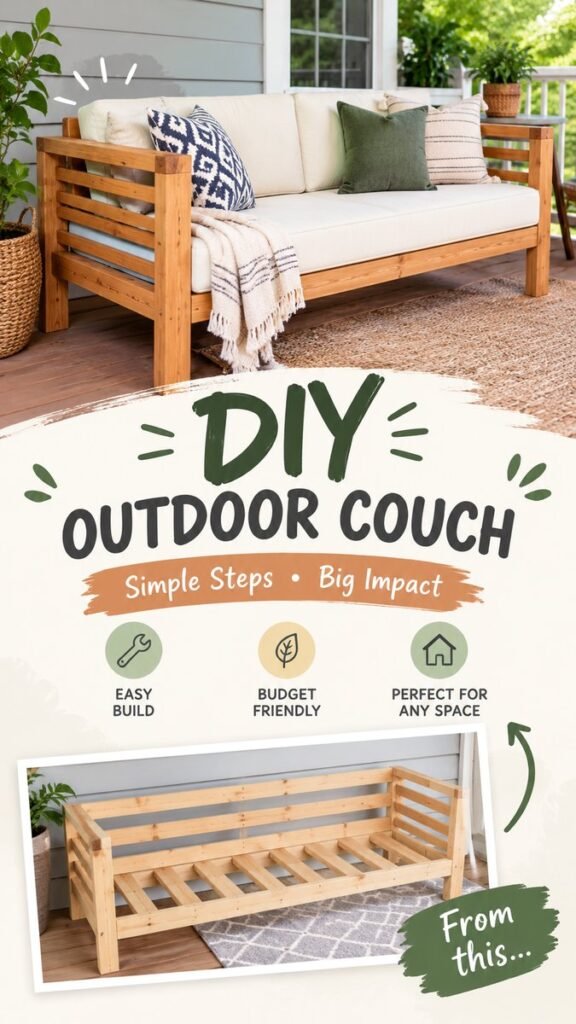
Creating a comfortable outdoor seating area does not always require a large furniture budget. A DIY couch can turn a simple patio, porch, deck, or backyard corner into a welcoming place to relax, especially when you combine a sturdy wooden frame with soft, inviting cushions. The design shown here pairs natural wood with light upholstery and simple striped and neutral pillows, creating a relaxed look that feels both practical and stylish.
Key Takeaways
- A DIY couch can create custom outdoor seating with a simple, versatile design.
- A wooden slat frame adds structure while keeping the furniture visually light.
- Neutral cushions and patterned pillows make the couch easy to style for different seasons.
- Careful measuring is one of the most important steps before cutting or assembling wood.
- Weather-aware materials and protective finishes can help outdoor furniture last longer.
Why a DIY Outdoor Couch Is Worth Making
There is something especially satisfying about building your own couch. Instead of searching for a ready-made piece that almost fits your space, you can create seating around the dimensions, style, and purpose of your outdoor area. A straightforward wooden couch frame also gives you plenty of freedom when choosing cushions, pillows, throws, and surrounding decor.
The pictured design has a particularly approachable quality. Its warm wood frame contrasts beautifully with cream-colored cushions, while the striped and textured pillows add visual interest without making the space feel busy. The result is a casual outdoor couch that looks comfortable enough for everyday lounging but polished enough to become the focal point of a patio.
Important: The success of a DIY couch depends less on complicated construction and more on accurate measurements, solid connections, comfortable proportions, and choosing materials appropriate for the environment where the couch will live.
Understanding the Design
The couch shown features a simple rectangular seat supported by a substantial wooden frame. Horizontal boards create the back and side sections, giving the piece a slatted appearance. The armrests extend naturally from the frame, while the seat supports a thick, light-colored cushion.
This type of construction works well for a DIY furniture project because the overall shape is easy to understand. Rather than relying on elaborate curves or decorative details, the design gets its character from proportions, wood grain, clean lines, and carefully selected textiles.
The Wooden Frame
The frame is the foundation of the entire project. In a design like this, the wood needs to create a stable base for the seat while also supporting the back and arms. Horizontal slats provide structure and contribute to the relaxed outdoor aesthetic.
When planning your own frame, think about the overall footprint first. Measure the area where the couch will sit and leave enough room for people to move around it comfortably. Remember to account for nearby tables, planters, doors, railings, or other outdoor furniture.
The Cushioned Seat
The soft cushion completely changes the character of the wooden structure. A bare frame can feel utilitarian, while a generously padded seat makes it feel like a genuine relaxation spot.
Before building the seat frame, it is helpful to know the approximate cushion dimensions you intend to use. This allows you to design the wooden base around the finished cushion instead of discovering later that the cushion is too large or leaves awkward gaps.
Decorative Pillows and Textiles
The styling in this design demonstrates how much personality can come from accessories. Cream upholstery creates a calm foundation, while striped pillows introduce a classic pattern. A darker textured pillow provides contrast, and a soft throw adds another layer of comfort.
You can easily change this look without rebuilding the couch. Try earthy greens for a garden-inspired space, blue and white for a coastal feel, or warm terracotta and beige for a more rustic patio. The wooden frame works as a neutral base for many decorating directions.
Planning Your DIY Couch Before You Build
Good planning can make a DIY furniture project significantly easier. Start by deciding where the couch will be placed and how many people you want it to accommodate. Then consider the cushion dimensions, the desired seat height, and the amount of space needed for the arms and back.
- Measure the available outdoor space.
- Decide on the approximate overall width and depth.
- Choose cushions before finalizing the frame dimensions.
- Sketch the front, side, and top views of the couch.
- Make a materials list based on your measurements.
- Check each measurement before cutting the wood.
Even a simple sketch can help reveal potential problems. Look at the couch from multiple angles and consider how the back boards, armrests, seat supports, and legs will connect. A few minutes spent planning can prevent unnecessary cuts and adjustments later.
Materials to Consider for a DIY Outdoor Couch
The exact materials will depend on your design, local conditions, and preferred appearance. The visual concept calls for wood as the main structural material, paired with outdoor-friendly cushions and decorative textiles.
- Suitable exterior wood for the frame
- Exterior-rated screws or appropriate fasteners
- Sandpaper or a suitable sanding tool
- Wood finish or protective coating suitable for outdoor use
- Outdoor cushions sized to the finished frame
- Weather-aware pillows and accessories
- Basic measuring and cutting tools
Pro Tip: Do not choose wood based only on appearance. Outdoor furniture faces moisture, temperature changes, sunlight, and everyday use. Selecting a material and finish appropriate for your climate can make a major difference in how the finished couch performs over time.
A Simple DIY Couch Building Approach
The construction can be approached as a series of manageable sections rather than one complicated project. Begin with the main seat structure, then add the supporting legs, back, and arms. Keeping the process organized makes it easier to check alignment as you work.
Step 1: Prepare and Measure the Wood
Measure each piece carefully and mark your cuts clearly. If several boards need to be the same length, use the first accurately measured piece as a reference when marking the remaining boards. Consistency is important because uneven pieces can make the finished frame look crooked.
After cutting, smooth rough edges and surfaces. Sanding is not only about appearance. It also helps reduce sharp edges and splinters, which is particularly important for furniture that people will touch frequently.
Step 2: Assemble the Seat Base
The seat base should provide dependable support for the cushion and anyone sitting on it. Arrange the structural pieces according to your design and check that the corners are square before permanently tightening the connections.
If the design uses multiple support boards beneath the cushion, space them consistently. A well-supported base helps the couch feel more stable and prevents the cushion from resting on an uneven surface.
Step 3: Add the Legs and Frame Supports
Once the basic seat structure is established, add the legs and supporting members. The legs need to sit evenly so the couch does not rock. Place the structure on a reasonably level surface while checking the alignment.
At this stage, it is useful to step back and inspect the couch from the front and side. Small alignment problems are much easier to correct before all of the remaining boards are attached.
Step 4: Build the Back and Arms
The back and arms give this DIY couch its distinctive appearance. Attach the back supports securely and then add the horizontal boards that create the slatted effect. The arms can be constructed in a similar visual language so the entire frame feels cohesive.
Keep the spacing between boards consistent. Even spacing creates a cleaner appearance and helps the furniture look intentionally designed rather than simply assembled from leftover materials.
Step 5: Sand and Finish
Once the frame is assembled, inspect every accessible surface. Smooth rough areas and pay special attention to corners, edges, and places where hands may naturally rest.
Choose an appropriate exterior finish if the couch will remain outdoors. Follow the product instructions for preparation, application, drying, and maintenance. A protective finish can also influence the final color of the wood, so test it on a small area when possible.
How to Make the Couch Look More Expensive
A beautiful DIY couch is not necessarily about adding more decoration. The strongest visual impact often comes from getting a few basic details right. Straight lines, even spacing, smooth surfaces, and a thoughtful combination of materials can make a simple project look surprisingly refined.
Start with the wood. A consistent finish gives the frame a unified appearance. Next, choose cushions that fit the frame neatly without excessive gaps. Finally, use a small number of coordinated pillows rather than filling every available space.
Expert Insight
The easiest way to make handmade outdoor furniture look polished is to focus on consistency. Keep board spacing even, corners aligned, edges smooth, and textiles coordinated. Simple construction can look intentional when the details are clean.
Styling Your DIY Couch for Outdoor Living
Once the frame is complete, styling becomes the fun part. The neutral look shown here is particularly versatile because cream upholstery works with natural wood, greenery, woven accessories, and a wide range of accent colors.
Create a Relaxed Patio Corner
Place the couch against a wall, railing, or another architectural feature and surround it with plants or simple outdoor accessories. A small side table can provide a convenient place for drinks, books, or decorative pieces without overwhelming the seating area.
Layer Neutral Textures
If you prefer a calm and timeless look, combine cream, beige, white, soft gray, and natural wood. Introduce interest through texture instead of lots of strong colors. Woven baskets, textured pillows, soft throws, and natural-looking rugs can make the area feel warm and inviting.
Add Seasonal Color
The couch can also become a flexible seasonal decorating base. Green and natural tones work beautifully for spring and summer, while rust, mustard, and deeper neutrals can create a cozy autumn atmosphere. Because the main furniture remains simple, swapping accessories can refresh the entire space.
Making Your Outdoor Couch Comfortable
Comfort should be considered alongside appearance. A couch can look beautiful in photographs but still feel awkward if the seat proportions or cushion arrangement are not right for everyday use.
Pay attention to the cushion thickness and how firmly it sits on the frame. Test the seating position before finalizing the design whenever possible. If several people will use the couch regularly, consider how they will sit, stretch out, and move around the space.
A soft throw can add warmth during cooler evenings, while several supportive pillows can make the back more inviting. Just remember that outdoor textiles should be cared for according to their material and exposure conditions.
Outdoor Furniture Care Tips
A DIY couch deserves regular care, especially when it is exposed to outdoor conditions. Keep the frame reasonably clean and inspect it periodically for signs of wear. Look over joints and fasteners and address any movement or damage before it becomes a larger problem.
- Keep the wooden frame clean and free from accumulated debris.
- Check structural connections periodically.
- Follow the care instructions for the chosen wood finish.
- Protect cushions from unnecessary moisture when they are not being used.
- Store or cover textiles according to their outdoor-care requirements.
Maintenance does not have to be complicated. A few regular checks can help preserve both the appearance and usability of handmade outdoor furniture.
Common DIY Couch Mistakes to Avoid
Even a relatively simple couch can become frustrating if the planning stage is rushed. One of the most common mistakes is building the frame first and trying to find cushions afterward. Since cushions come in different sizes, working backward from the seating you want can make the project easier to manage.
Another mistake is overlooking the environment. A couch placed on a covered porch may experience very different conditions from one sitting fully exposed in a backyard. Think about sunlight, rain, humidity, airflow, and seasonal storage when choosing materials and finishes.
Finally, do not underestimate the importance of sanding. Rough edges can spoil the feel of an otherwise beautiful project. Take time to inspect the areas that will be touched most often.
Ways to Personalize Your DIY Couch
The basic wooden design can be adapted to suit almost any outdoor decorating style. You could change the wood finish, modify the dimensions, experiment with different cushion colors, or add coordinating side tables.
For a modern appearance, keep the frame simple and use solid-color cushions. For a farmhouse-inspired patio, pair natural wood with neutral textiles and subtle stripes. For a garden setting, introduce green pillows and plenty of plants around the seating area.
You can also personalize the project by creating a matching coffee table or small outdoor stool from the same visual style. Repeating the same wood tone and design details throughout the space helps everything feel connected.
Quick Points
- Measure the space and cushions before building.
- Prioritize stable construction and smooth edges.
- Use materials and finishes suited to outdoor conditions.
- Keep pillows and accessories coordinated for a polished look.
- Regular maintenance helps preserve your handmade furniture.
Conclusion: Build a DIY Couch That Feels Like Home
A DIY outdoor couch can be a practical way to transform an ordinary patio or porch into a comfortable gathering space. The beauty of this style comes from its simplicity: a warm wooden frame, generous cushions, and a handful of thoughtfully chosen textiles are enough to create an inviting focal point.
The design also proves that DIY furniture does not have to look unfinished or overly complicated. With careful measurements, consistent construction, smooth surfaces, and a cohesive styling plan, a straightforward wooden couch can become one of the most useful pieces in an outdoor living area.
Whether you are planning a complete patio makeover or simply looking for a rewarding weekend furniture project, this DIY couch concept offers plenty of room for creativity. Adjust the size to your space, choose cushions that reflect your style, and finish the frame with care. The result can be a comfortable outdoor retreat that feels personal because you built it yourself.
Tags
DIY Couch Outdoor Couch DIY Furniture Patio Furniture Outdoor Living Woodworking Projects Backyard Ideas Patio Decor