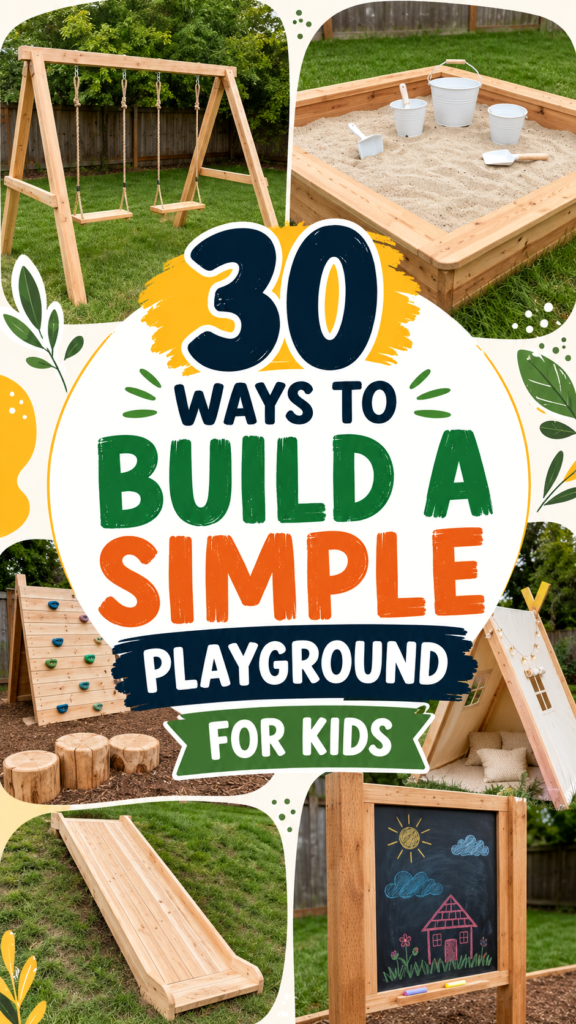
Creating a DIY kids playground in your backyard can turn an ordinary outdoor space into a place filled with movement, imagination, and everyday adventure. You do not need a huge yard or an elaborate structure to create something exciting. A few thoughtfully designed features, such as a wooden swing set, sandbox, slide, climbing wall, play tent, outdoor chalkboard, or balance area, can create a backyard play zone that feels special and inviting.
The ideas featured here focus on simple, approachable playground projects that can be adapted to different yards, budgets, and skill levels. Whether you want to build one feature at a time or create a complete backyard playground, these ideas can help you plan a space that encourages kids to explore, climb, swing, slide, create, and play outdoors.
Key Takeaways
- Start with one simple DIY playground feature and build gradually.
- Combine active play with creative and imaginative activities.
- Use sturdy, outdoor-friendly materials and carefully inspect every structure.
- Make the layout fit your available backyard space rather than copying a fixed design.
- Leave enough open space around play equipment for comfortable movement.
Why Build a DIY Kids Playground?
A backyard playground offers more than a collection of wooden structures. It creates a dedicated environment where children can move their bodies, invent games, and spend time outside. A homemade play area can also be tailored to the space you already have, making it easier to choose features that actually suit your yard.
One of the biggest advantages of a DIY kids playground is flexibility. You can begin with a basic swing set and later add a sandbox, climbing feature, slide, chalkboard, or imaginative play space. This gradual approach can make a large project feel much more manageable.
DIY playground ideas can also inspire creative use of ordinary materials. Wood can become platforms, seats, ramps, borders, or climbing structures. A simple framed board can become an outdoor drawing station. A small wooden structure can become a cozy playhouse or pretend camping space.
Important: The best backyard playground is not necessarily the biggest one. A thoughtfully arranged collection of simple play features can provide plenty of variety while keeping the space practical and easy to maintain.
1. Start With a Simple Wooden Swing Set
A wooden swing set is one of the most recognizable elements of a backyard playground, and it can become the central feature around which the rest of the play area is organized. The pictured style uses a straightforward timber frame with suspended seats, creating a clean design that fits naturally into a grassy backyard.
For a DIY version, focus first on the frame and its stability. The support structure needs to be appropriate for outdoor use and carefully secured. Swing seats should be attached using hardware and components designed for playground applications rather than improvised materials.
Make the Swing Area More Interesting
You can create additional variety by using more than one swing position or incorporating different types of swinging activities. Keep the surrounding area uncluttered so children have a clear zone for movement. The natural wood appearance also works beautifully with a garden-style backyard, especially when surrounded by grass, mulch, or simple landscaping.
2. Add a Backyard Sandbox
The sandbox shown in the design is a great example of how a simple wooden frame can become an engaging play station. A sandbox does not require complicated construction. A low, sturdy perimeter filled with appropriate play sand can create hours of open-ended activity.
Children can build roads, castles, pretend landscapes, and small construction sites. Adding simple buckets and scoops gives the area an immediate purpose without requiring expensive accessories.
Plan the Sandbox Location Carefully
Choose a level location that is easy to see from the house or another commonly used part of the yard. Think about drainage, shade, accessibility, and how the area will be covered or protected when it is not being used. A simple cover can help keep unwanted debris and animals out of the sand.
3. Build a Small Wooden Climbing Wall
The climbing wall in the pictured playground concept adds a completely different type of physical activity. Instead of swinging or sliding, children can work on climbing, reaching, stepping, and balancing as they move across the surface.
A DIY climbing feature should be approached with particular attention to structural strength. Every board, fastener, handhold, and supporting section needs to be securely installed. The climbing surface should also be positioned and surrounded with an appropriate impact-absorbing surface.
Keep the Design Age Appropriate
A climbing feature should match the abilities of the children who will use it. You can keep the layout relatively simple for younger kids and consider more challenging configurations for older children, always prioritizing safe construction and supervision.
Expert Insight
A varied playground works best when different features encourage different types of play.
- Swings encourage rhythmic movement and active play.
- Climbing areas encourage physical problem-solving.
- Sandboxes and chalkboards encourage creative, quieter activities.
4. Create a Simple Wooden Slide
The wooden slide shown in the lower portion of the design has a simple, natural appearance that works well with a backyard setting. A slide can be a standalone feature or incorporated into a larger play structure.
If you are building a slide yourself, pay close attention to the slope, surface smoothness, edges, transitions, and supporting structure. A slide should feel secure from the starting platform through the landing area. Avoid sharp corners, exposed fasteners, splinters, or surfaces that can become excessively hot in direct sunlight.
Pair the Slide With a Platform
A raised wooden platform can turn a simple slide into a miniature adventure structure. The platform can also connect to another activity, such as a climbing wall or small playhouse. When combining features, make sure each section is structurally appropriate and that there is enough room for children to move safely between activities.
5. Add a Cozy Outdoor Play Tent
The small A-frame play tent featured in the design brings imaginative play into the playground. Unlike climbing equipment, a tent provides a quieter retreat where children can pretend, read, play house, or create their own little world.
A simple wooden frame can create the basic shape, while an outdoor-friendly fabric covering can provide the finished appearance. Keep the structure comfortable, well ventilated, and positioned away from hazards created by other active play equipment.
Make It a Flexible Imagination Station
The beauty of a simple play tent is that its purpose can change every day. One afternoon it can become a campsite. The next day it can be a reading corner, pretend shop, clubhouse, or secret hideaway. You can refresh the experience with cushions, washable textiles, toy baskets, or seasonal decorations.
6. Build an Outdoor Chalkboard
An outdoor chalkboard is one of the easiest ways to balance active playground equipment with a creative activity. The design shown uses a simple wooden frame surrounding a dark writing surface, with a small ledge underneath for chalk.
This feature can be installed at a comfortable height and used for drawing, letters, numbers, games, signs, and imaginative storytelling. It can also become a shared activity where siblings and friends create drawings together.
Pro Tip: Include at least one quieter creative station in a DIY playground. A chalkboard, sandbox, or small imaginative play area gives children an option when they want a break from climbing, swinging, and sliding.
7. Use Wooden Stumps for Balance Play
The round wooden stumps shown beside the climbing structure demonstrate how simple natural-looking elements can add another activity without requiring a complicated build. Arranged as individual stepping points, they can become a basic balance course or imaginative path.
The key is to make sure any stepping elements are stable, appropriately positioned, and free from sharp edges or deteriorated wood. Their height and spacing should suit the children who will use them.
8. Combine Several Small Features
You do not have to choose between a swing set, sandbox, climbing wall, slide, tent, and chalkboard. The most inspiring backyard playgrounds often combine several small ideas rather than relying on one enormous structure.
Think about the yard in zones. One section can be dedicated to active movement, another to sensory play, and another to creativity. This makes the playground feel varied while allowing you to control the scale of each individual project.
- Choose the main active-play feature.
- Add one sensory or creative activity.
- Create a small area for imaginative play.
- Leave open space for running and flexible games.
- Review the entire layout before beginning construction.
How to Plan a DIY Backyard Playground
Before buying materials, sketch a basic layout of the yard. You do not need professional plans for the first planning stage. Mark the location of existing trees, fences, patios, garden beds, pathways, and other permanent features.
Then decide where children will enter and move through the play area. Avoid creating a crowded arrangement where swings, slides, climbing activities, and walking paths overlap unnecessarily.
Think About Materials
Natural wood is especially appealing for DIY playground projects because it blends with outdoor landscaping and can be shaped into many different structures. Choose materials suitable for exterior conditions and inspect them regularly for cracks, rot, splinters, loose connections, or other signs of wear.
Consider the Ground Surface
The ground beneath and around playground equipment deserves as much attention as the structures themselves. Grass may work well for some low-impact areas, while active equipment may call for a more suitable impact-absorbing surface. The correct surface depends on the equipment, its height, and the intended use.
Keep the area clean and inspect it regularly. Remove branches, stones, sharp objects, standing water, and anything else that could interfere with play.
Safety Checks for DIY Playground Projects
DIY playgrounds can be rewarding projects, but safety should always guide the design. Playground equipment needs to withstand repeated use, outdoor weather, and the movement of children. Do not rely on appearance alone to determine whether a structure is safe.
- Check that supporting structures are stable and properly secured.
- Smooth exposed wooden surfaces and inspect them regularly for splinters.
- Use suitable hardware for swings and climbing components.
- Keep active play equipment separated from obstacles and high-traffic areas.
- Inspect playground components periodically as weather and use can cause deterioration.
- Match equipment and challenge levels to the children using the playground.
For larger or elevated structures, it is wise to use appropriate plans, construction guidance, and local requirements rather than relying solely on inspiration photos. The goal is to capture the spirit of the design while building each component responsibly.
Make the Playground Feel Like a Backyard Adventure
A playground becomes more exciting when children can use it in different ways. A wooden platform does not have to be just a platform. It can become a lookout tower, spaceship, castle, or treehouse in a child’s imagination. A sandbox can become a construction site. A chalkboard can become a restaurant menu or outdoor classroom.
That flexibility is one reason simple DIY playground ideas are so appealing. You are not simply building equipment. You are creating a framework for imaginative play.
Natural materials can also help the playground blend into the garden instead of looking like a separate plastic structure. Wood, greenery, mulch, and simple outdoor accessories create a warm, inviting environment that feels like part of the backyard.
Build the Playground in Stages
If a complete playground feels overwhelming, break the project into manageable stages. Start with the feature that children will use most, then add complementary elements over time.
For example, the first stage might include a simple swing set. A sandbox could follow as a second project. Later, you might add a climbing wall, wooden slide, chalkboard, balance stumps, or play tent.
This approach also gives you time to see how the space is actually used. You may discover that children spend more time drawing and building in the sandbox than expected, or that a particular play area needs more open space. A flexible design can evolve with those observations.
At a Glance
- Swing set: active movement and classic backyard fun.
- Sandbox: sensory and imaginative play.
- Climbing wall: physical challenge and exploration.
- Wooden slide: exciting movement and adventure.
- Chalkboard and play tent: creativity, storytelling, and quieter play.
Conclusion: Create a Playground Kids Will Love
A DIY kids playground does not have to be complicated to be memorable. The strongest ideas often begin with simple elements that encourage different kinds of play. A wooden swing set can provide active fun, while a sandbox invites creativity. A climbing wall adds challenge, a slide creates excitement, and a play tent or outdoor chalkboard gives children space to slow down and invent their own stories.
The examples in this collection show how several approachable backyard playground ideas can work together in one cohesive outdoor space. By choosing features that match your yard, planning the layout carefully, using appropriate materials, and prioritizing safe construction, you can create a play area that feels personal rather than mass-produced.
Start small, build thoughtfully, and let the playground grow over time. Whether you create one simple project or an entire backyard adventure zone, the result can become a favorite place for outdoor play, creativity, and family memories.
Tags
DIY Kids Playground Backyard Playground DIY Playground Ideas Outdoor Play Area Backyard Ideas Kids Outdoor Activities Woodworking Projects DIY Backyard Ideas