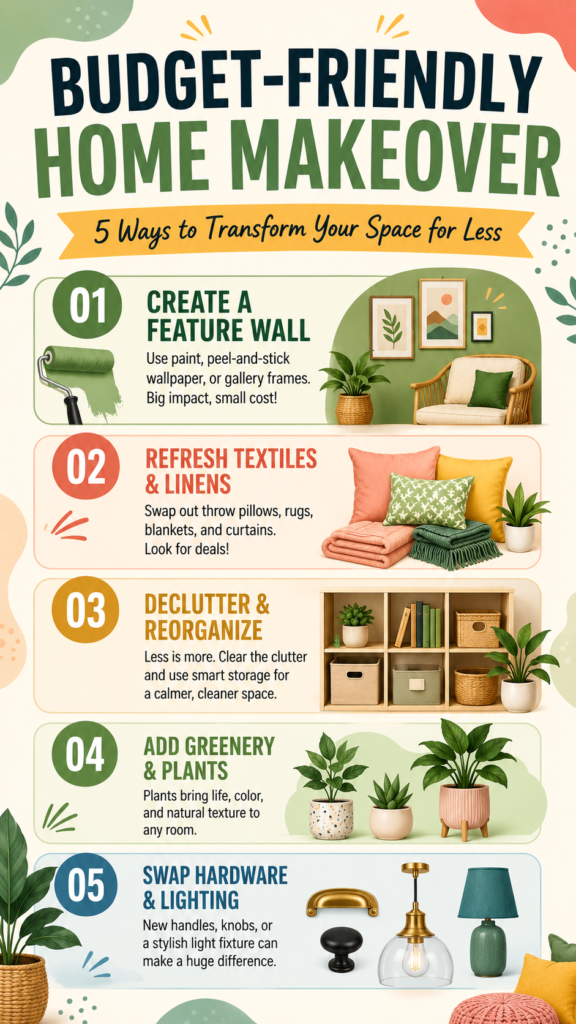
Giving your home a fresh new look does not have to mean taking on a costly renovation. With a little creativity and a focus on high-impact details, you can make a room feel brighter, calmer, more organized, and more personal without spending a fortune. A budget-friendly home makeover is all about choosing changes that create a noticeable difference while keeping materials, labor, and unnecessary purchases under control.
From painting a feature wall and refreshing soft furnishings to clearing clutter, adding greenery, and upgrading small hardware details, there are plenty of approachable DIY home improvement projects worth trying. The best part is that many of these ideas can be completed gradually, allowing you to improve your space one small project at a time.
Key Takeaways
- Use paint and removable wall treatments to create an affordable focal point.
- Refresh pillows, rugs, blankets, and curtains for an instant visual update.
- Declutter and reorganize before buying more storage or decorative items.
- Add plants and greenery to introduce color, texture, and natural character.
- Replace outdated handles, knobs, and lighting for small changes with big impact.
- Focus your budget on visible improvements rather than unnecessary full-room renovations.
1. Create a Feature Wall for Maximum Impact
One of the easiest ways to change the personality of a room is to give one wall special attention. A feature wall creates a visual focal point and can make an otherwise ordinary space feel intentionally designed. Instead of repainting every surface, concentrate your time and budget on a single area.
Paint is a particularly practical choice for a budget home makeover. A new color can dramatically alter the atmosphere of a bedroom, living room, entryway, or home office. Soft greens, warm neutrals, muted blues, earthy tones, and other calming shades can complement a wide range of interior styles.
Try Paint, Peel-and-Stick Wallpaper, or Gallery Art
If you enjoy changing your decor regularly, removable wallpaper can provide a flexible alternative to traditional wallpaper. It can introduce pattern or texture without requiring a permanent commitment. For renters or anyone who likes experimenting with different looks, this can be an especially useful DIY decorating option.
Another approach is to create a simple gallery wall. A collection of coordinated frames can turn an empty wall into an attractive display. You do not necessarily need expensive artwork. Prints, personal photographs, botanical illustrations, or simple decorative pieces can all contribute to the overall effect.
Important: The goal of a feature wall is not to make the entire room busy. Choose one area that naturally draws attention, then keep the surrounding decor balanced so the new focal point has room to stand out.
How to Keep the Cost Low
- Measure the wall before purchasing paint or wallpaper.
- Use leftover paint from another project if the color works with your room.
- Shop secondhand for frames and decorative artwork.
- Use a small accent area instead of covering an entire room.
2. Refresh Textiles and Linens
Soft furnishings can have an enormous effect on how a room looks and feels. Pillows, rugs, blankets, curtains, and other textiles are often easier to replace than large pieces of furniture, making them ideal for an affordable home makeover.
If your furniture is still comfortable and functional, there is no need to replace it simply because the room feels dated. Instead, change the surrounding textiles. A new combination of pillow covers, a folded throw, a different rug, or lighter curtains can create a completely different visual direction.
Build a Simple Coordinated Color Palette
Start by identifying two or three colors already present in the room. Then look for textiles that repeat or complement those shades. This creates a more cohesive appearance without requiring every item to match perfectly.
For example, neutral furniture can work with earthy green cushions, warm blankets, and natural-looking textures. A room with cooler tones can be softened with cream, beige, or muted accent colors. The key is to create visual connection rather than buying an entirely new collection of decor.
Look for sales, clearance sections, seasonal discounts, and affordable cushion covers rather than replacing entire cushions. Small changes can stretch your decorating budget much further.
Layer Textures Instead of Buying More Decor
Texture can make a room feel richer without filling it with objects. Combine smooth fabrics with knitted throws, woven materials, soft rugs, or textured cushions. This creates depth while keeping the overall arrangement relatively simple.
Expert Insight
Before buying new furniture, try changing the smaller visual layers around what you already own. Textiles are one of the fastest ways to shift a room from plain to polished while keeping the original furniture in place.
3. Declutter and Reorganize Your Space
A makeover does not always begin with buying something. Sometimes the most effective improvement is removing what no longer serves the room. Clutter can make even a beautifully decorated home feel cramped, distracting, and difficult to maintain.
Start with visible surfaces such as shelves, countertops, tables, and open storage. Remove items that are broken, unused, duplicated, or simply no longer appropriate for the space. Once unnecessary objects are gone, you can see what storage problems actually need to be solved.
Organize Before You Buy Storage
It is tempting to purchase baskets and organizers immediately, but doing so can sometimes add more clutter. First decide what you need to keep, where it belongs, and how frequently you use it. Then select storage that fits those needs.
- Clear one small area at a time.
- Group similar items together.
- Decide what should remain visible and what can be stored away.
- Assign frequently used items an easy-to-reach location.
- Use baskets, boxes, shelves, or containers only where they solve a real problem.
Open shelving can also become part of the decor when it is thoughtfully arranged. Mix books with a few decorative objects, small plants, and practical storage baskets. Leaving some empty space between groups keeps shelves from looking overcrowded.
Pro Tip: Take a quick photo of the room before you start decluttering. Comparing the space afterward can make small improvements much easier to notice and helps you identify which areas still need attention.
4. Add Greenery and Plants
Plants are a simple way to bring life and natural texture into an interior. They can soften hard surfaces, introduce fresh color, and fill awkward corners without requiring a major decorating project.
You can use greenery in almost any room where suitable light and care conditions allow. A larger plant can anchor an empty corner, while smaller plants can brighten shelves, side tables, windowsills, or other compact spaces.
Choose Plants Based on Your Space
Instead of choosing a plant solely because it looks attractive, consider where it will live. Think about available natural light, the amount of space around it, and how much maintenance you are comfortable providing.
Mixing different plant sizes can create a more layered arrangement. Pair a tall plant with smaller pots, or group several modest plants together to create a compact green display.
Make Plant Pots Part of the Decor
Planters can contribute just as much visual interest as the plants themselves. Look for simple ceramic pots, woven baskets, textured containers, or affordable decorative planters that complement the existing room palette.
If you already have plain pots, consider giving them a subtle DIY update. A new finish, decorative wrap, or coordinated grouping can make inexpensive containers feel more intentional.
5. Swap Hardware and Lighting
Small functional details are easy to overlook, yet they can strongly influence the overall style of a room. Cabinet handles, drawer pulls, knobs, door hardware, and light fixtures are examples of details that can make older furniture or rooms feel more current.
Changing cabinet hardware can be particularly effective in kitchens, bathrooms, home offices, and storage areas. Instead of replacing an entire cabinet system, you can update the visible hardware and create a refreshed appearance.
Update Small Details First
Look around the room and identify details that immediately catch your eye. If cabinet handles look worn or a lamp feels out of place, those may be better starting points than expensive structural changes.
Lighting can also influence the mood of a room. A more attractive lamp or updated fixture can act as both a functional improvement and a decorative feature. Consider how the fixture fits the scale and style of the room before choosing a replacement.
When working with electrical fixtures, follow appropriate safety practices and use a qualified professional when the installation requires electrical work beyond your experience.
How to Plan a Budget-Friendly Home Makeover
The biggest advantage of these DIY home improvement ideas is that you do not have to complete everything at once. A successful makeover can happen in stages. Planning each stage prevents impulse purchases and makes it easier to keep spending under control.
Start With the Highest-Impact Area
Walk through your home and identify the room or area that feels most in need of attention. It might be a tired living room, a cluttered bedroom, an empty hallway, or a workspace that no longer feels inviting.
Then choose one or two changes that will have the biggest visible effect. For one room, that might mean painting a feature wall and replacing pillows. For another, decluttering and adding greenery may be enough.
Create a Simple Project List
Write down your ideas and separate them into three categories: free changes, low-cost changes, and larger purchases. Begin with free improvements such as rearranging furniture and removing clutter. Move to affordable decorative updates afterward.
- Free: Decluttering, rearranging, cleaning, and restyling items you already own.
- Low cost: Paint, cushion covers, plants, storage baskets, artwork, and small hardware.
- Higher cost: Larger furniture, major fixtures, or substantial renovation work.
This approach helps you see how much you can accomplish before committing to expensive changes.
Make Your DIY Updates Feel Cohesive
A collection of inexpensive improvements looks much more polished when the individual elements work together. Choose a simple color direction and repeat it throughout the room. You can also repeat materials, shapes, or textures to create a consistent visual language.
For example, natural greens can appear in plants and cushions, while woven textures can appear in baskets, rugs, or planters. Warm metallic hardware can connect cabinet details with lighting accents. These repeated elements help separate projects feel like part of one coordinated makeover.
Most importantly, resist the urge to fill every empty area. Negative space is valuable. A room often feels more sophisticated when decorative pieces have enough space around them to be appreciated.
At a Glance
- Paint one wall instead of repainting the entire room.
- Refresh textiles before replacing major furniture.
- Declutter first, then choose storage based on actual needs.
- Use plants and attractive planters to add natural character.
- Upgrade small hardware and lighting details for an easy style refresh.
Conclusion: Transform Your Home Without Overspending
A budget-friendly home makeover is less about how much you spend and more about where you direct your effort and money. A feature wall can change the atmosphere of a room, fresh textiles can add instant personality, and decluttering can make the entire space feel more open. Plants bring natural texture, while updated hardware and lighting can give familiar rooms a surprisingly fresh appearance.
The strongest DIY home improvement projects are often the ones that solve a real problem while making the space more enjoyable. You do not need to renovate every room or purchase everything new. Start with what you already have, identify the details that need attention, and make thoughtful improvements one step at a time.
Whether you are refreshing a single corner or gradually transforming your entire home, these affordable makeover ideas provide a practical starting point. With a little planning, creativity, and patience, small changes can add up to a home that feels cleaner, more comfortable, and much more like your own.
Tags
DIY Home Improvement Budget Home Makeover DIY Home Decor Affordable Renovation Ideas Room Makeover Ideas Home Organization Interior Design DIY Easy Home Projects