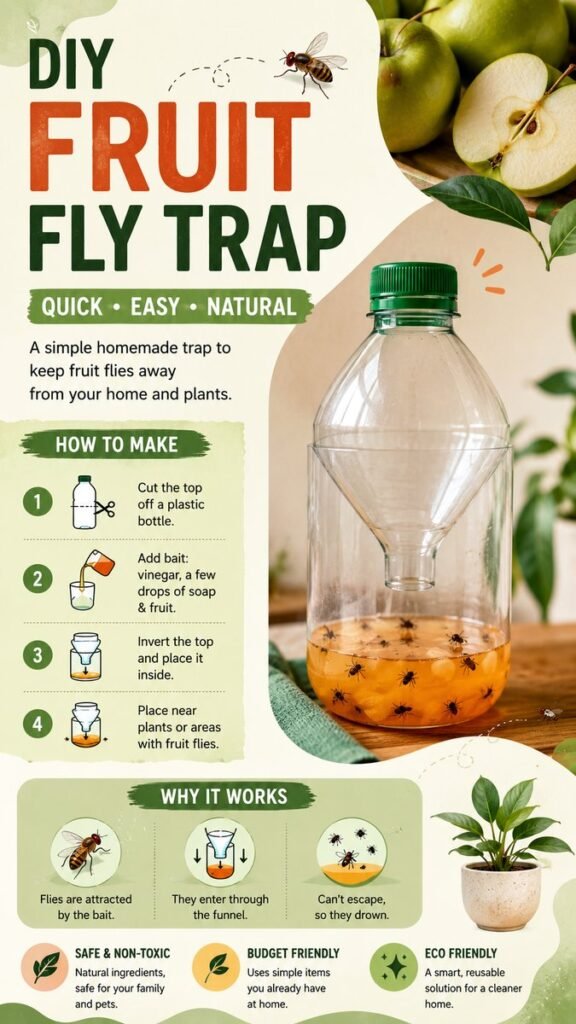
Fruit flies can appear almost overnight, especially around ripe fruit, kitchen counters, houseplants, compost bins, and other areas where moisture and food residue collect. The good news is that you do not need complicated equipment to deal with them. A simple DIY fruit fly trap made from an empty plastic bottle and a few everyday ingredients can provide an easy, inexpensive way to reduce fruit flies around your home.
Key Takeaways
- A homemade fruit fly trap can be made with an empty plastic bottle, vinegar, dish soap, and a little sugar or ripe fruit.
- The inverted bottle top creates a funnel that encourages flies to enter the bait area.
- Apple cider vinegar provides an appealing scent for fruit flies.
- A few drops of dish soap help reduce surface tension in the liquid bait.
- Refreshing the bait regularly can help keep the trap useful.
- Good kitchen and plant-area hygiene is an important part of long-term fruit fly control.
How to Make a DIY Fruit Fly Trap at Home
The basic idea behind this DIY fruit fly trap is remarkably simple. Fruit flies are attracted to the smell of fermenting or sweet food. A small amount of apple cider vinegar combined with sugar or ripe fruit creates an inviting bait. The bottle is then arranged so that flies can move toward the bait through a narrow funnel opening.
The trap shown here uses an empty plastic bottle as the main container. Instead of throwing the bottle away, you can turn it into a practical household tool. This makes the project especially appealing if you enjoy simple DIY home hacks that reuse items you already have.
Important: A fruit fly trap works best as part of a broader cleanup routine. Removing overripe fruit, wiping sticky spills, cleaning drains and emptying food waste regularly can help reduce the places where fruit flies feed and reproduce.
What You Need for a Homemade Fruit Fly Trap
One reason this project is so useful is that the materials are inexpensive and easy to find. The reference design highlights four basic ingredients and supplies:
- Apple cider vinegar: This forms the main liquid bait and provides a strong, attractive scent.
- Dish soap: Only a small amount is needed in the bait mixture.
- Sugar or ripe fruit: A little sweetness can make the bait more appealing.
- An empty plastic bottle: This becomes the body of the trap and its funnel-like entrance.
You can keep the preparation simple. There is no need to create a complicated mixture or purchase specialized pest-control equipment. The goal is to create an attractive bait area inside a container that makes it easier for fruit flies to reach the liquid.
Why Apple Cider Vinegar Is a Popular Bait
Apple cider vinegar has a strong fermented scent that makes it a common choice for homemade fruit fly traps. Fruit flies are naturally drawn to food-related odors, particularly around ripe or fermenting produce. This makes vinegar a convenient base for a simple kitchen trap.
You do not need a large amount. A shallow layer of bait in the bottom of the bottle is enough to create the scent and liquid area needed for the trap.
Step-by-Step DIY Fruit Fly Trap Instructions
1. Cut the Top Off the Plastic Bottle
Start with a clean, empty plastic bottle. Carefully cut the bottle approximately one-third of the way down from the top. The exact position does not have to be perfect. You simply want to create a top section that can be turned upside down and placed inside the lower section.
Take care when cutting plastic. Use appropriate scissors or a cutting tool and keep your hands away from the cutting edge. If children are helping with the project, an adult should handle this step.
2. Prepare the Bait Mixture
Pour a small amount of apple cider vinegar into the bottom section of the bottle. Add a little sugar or a small piece of ripe fruit if desired. Then add approximately one or two drops of dish soap.
The dish soap is an important part of the simple formula. It helps change the surface properties of the liquid, making the bait less effective as a surface for insects to land on. Keep the amount small because you do not need a thick, heavily soapy mixture.
3. Turn the Bottle Top Into a Funnel
Take the top section of the bottle and turn it upside down. Place it inside the lower section so the bottle neck points downward toward the bait. This creates a funnel-like entrance.
The funnel arrangement is the key visual feature of this homemade trap. Flies can follow the scent toward the opening and enter the bottle, while the narrow route makes it less straightforward for them to leave.
4. Position the Trap Near the Problem Area
Place the finished trap in an area where fruit flies are most noticeable. A kitchen counter near a fruit bowl, a plant area, or another location where flies gather can be a practical starting point.
Pro Tip: Location matters. Instead of placing the trap somewhere hidden or far from the activity, position it close to the area where fruit flies are actually being seen. The goal is to put the bait near the source of the problem.
How the DIY Fruit Fly Trap Works
The trap combines attraction with a simple physical design. First, the scent of the bait draws fruit flies toward the bottle. Once they locate the opening, they can enter through the funnel formed by the inverted bottle top.
The narrow opening creates a more confined route than an open container would. Once flies move down toward the bait, they may have difficulty navigating back through the same opening. The liquid bait and dish soap complete the basic trapping mechanism.
The Attraction Stage
The first stage is scent. Fruit flies are tiny insects, but they are highly responsive to food odors. A strong-smelling bait gives them a reason to investigate the container.
The Funnel Stage
The inverted bottle top functions like a funnel. Its wide end sits inside the bottle while the narrow neck points toward the bait. This directs insects inward without requiring complicated construction.
The Bait Stage
Once the flies reach the bait area, the liquid and soap mixture provides the final part of the trap. The design shown in the image illustrates flies gathering around the bait, demonstrating the intended purpose of the setup.
Why This Matters
A homemade trap is most useful when paired with simple prevention habits.
- Keep ripe fruit covered or refrigerated when appropriate.
- Clean food residue and sticky spills promptly.
- Empty food scraps and compost regularly.
Where to Place a Fruit Fly Trap
The image highlights several practical locations, including areas near affected plants, fruit bowls, and compost bins. These are useful places to consider because fruit flies may be attracted to food residue, ripe produce, organic material, or moisture.
If your kitchen is the main problem area, try placing the trap near the fruit bowl or another location where flies are frequently visible. If the activity is concentrated around houseplants, position the trap nearby while also checking the plant area for excess moisture and organic debris.
Avoid putting the trap directly where it could easily be knocked over. A stable counter, shelf, or protected plant-area surface is generally more practical than a busy walkway.
How to Keep Your Homemade Trap Effective
Refresh the Bait Regularly
The visual guide recommends replacing the bait every three to five days for best results. A fresh mixture can maintain a stronger scent and keep the trap looking cleaner.
If the liquid becomes heavily contaminated, evaporates noticeably, or develops an unpleasant buildup, replace it sooner. Rinse the bottle carefully before preparing a fresh batch.
Keep the Surrounding Area Clean
A trap should not be treated as the only solution. Fruit flies may continue to appear if food sources remain accessible. Check fruit bowls for produce that is past its prime, clean crumbs and spills, and take out food waste regularly.
Check Houseplants and Compost Areas
If you notice flies around plants, inspect the surrounding area for damp organic material, fallen leaves, or other debris. Likewise, compost containers should be kept appropriately covered and emptied or maintained regularly.
Common Mistakes to Avoid
- Using too much dish soap: A couple of drops is generally enough for a simple homemade mixture.
- Leaving old bait for too long: Refreshing the bait keeps the setup cleaner and more useful.
- Ignoring the food source: Removing ripe or spoiled produce can help address the reason flies are gathering.
- Putting the trap too far away: Keep it close to areas where fruit flies are active.
- Leaving the trap within reach of children or pets: Place it somewhere secure and inaccessible.
The image specifically emphasizes keeping the trap out of reach of children and pets. Although the ingredients are common household items, a homemade trap should still be handled responsibly and positioned where it cannot be easily tipped over or accessed by curious hands or animals.
A Simple, Low-Cost Home Hack
One of the biggest advantages of a DIY fruit fly trap is its simplicity. Instead of buying a specialized container, you can repurpose an empty plastic bottle and combine it with basic kitchen ingredients. This makes the project approachable for anyone looking for a quick household solution.
It also fits naturally into a more mindful approach to household organization. Reusing an empty bottle gives an otherwise disposable item another purpose, while the straightforward construction means there are very few components to manage.
The setup can be prepared in just a few basic stages: create the container, add the bait, form the funnel, and place the trap. Once you understand the design, it is easy to recreate whenever you need it.
Is a DIY Fruit Fly Trap Worth Trying?
For a simple household experiment, this is an appealing option because it requires inexpensive materials and minimal preparation. The funnel design is easy to understand, the bait ingredients are familiar, and the finished trap can be placed discreetly near problem areas.
The most important thing is to combine trapping with prevention. If fruit flies keep returning, look beyond the visible insects and search for the food, moisture, or organic material attracting them. Cleaning the environment can make your trapping efforts much more useful.
At a Glance
- Bait: Apple cider vinegar with a little sugar or ripe fruit.
- Addition: One or two drops of dish soap.
- Container: An empty plastic bottle.
- Design: Invert the bottle top to create a funnel.
- Maintenance: Refresh the bait every three to five days or sooner when needed.
Conclusion
A DIY fruit fly trap is a clever example of how a few everyday materials can become a practical home solution. With an empty plastic bottle, apple cider vinegar, a little sugar or ripe fruit, and a few drops of dish soap, you can create a simple funnel-style trap designed to attract fruit flies and keep them contained around the bait.
For the best results, place the trap near areas where fruit flies are active, refresh the bait regularly, and keep potential food sources under control. Pay particular attention to fruit bowls, kitchen surfaces, compost containers, and plant areas. A cleaner environment combined with a strategically placed trap can make your overall approach much more effective.
If you love practical DIY home hacks, this is one of those projects worth saving. It is simple, inexpensive, easy to understand, and useful when those tiny flying pests start appearing around the house. Keep the materials on hand and you will have a quick homemade fruit fly trap ready whenever you need one.