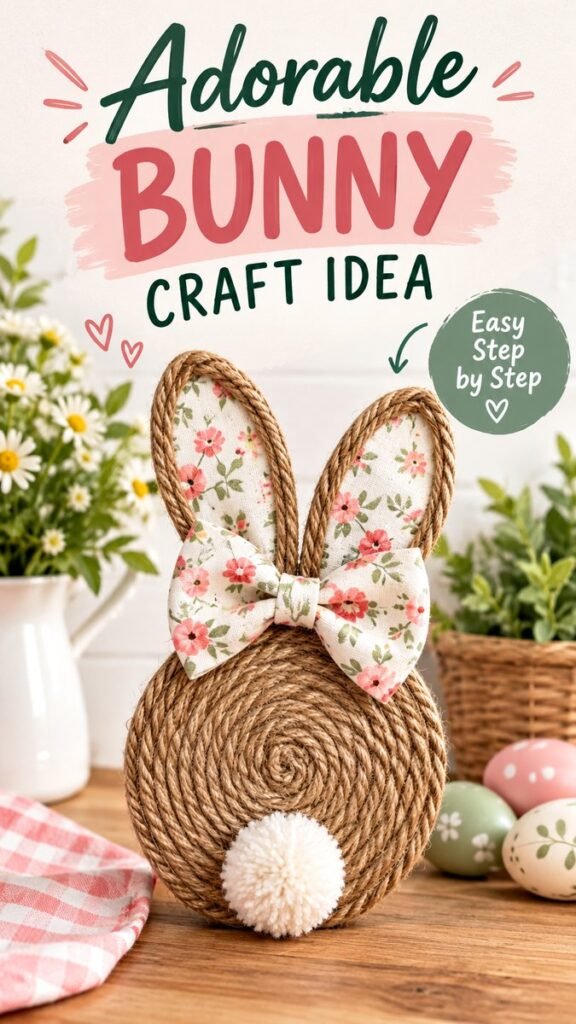
Bring a warm, handmade touch to your spring decorating with charming DIY Easter decorations that feel both festive and timeless. This rustic bunny craft combines natural jute rope, soft floral fabric, and simple decorative details to create a sweet piece that works beautifully on a shelf, entryway table, tiered tray, mantel, or Easter centerpiece. The design shown here is especially appealing because it blends farmhouse texture with cheerful spring colors without making the space feel overly seasonal.
Key Takeaways
- A jute rope bunny creates an instantly cozy farmhouse-inspired look.
- Floral fabric adds softness, color, and a cheerful spring accent.
- Natural textures pair beautifully with pastel Easter decorations.
- The finished bunny can be used as shelf decor, table decor, or a seasonal centerpiece.
- Simple handmade decorations can make Easter decorating feel personal and inviting.
A Charming DIY Easter Decoration for Spring
There is something special about handmade Easter decor. Instead of relying on mass-produced decorations, a simple craft can introduce texture, personality, and a sense of warmth into your home. This rustic bunny is a perfect example. Its rounded body is formed from tightly coiled rope, while the tall ears are outlined with the same natural material and finished with patterned fabric.
The large floral bow immediately draws attention to the bunny and gives the neutral rope a fresh spring update. Soft greens, pinks, and cream tones create an inviting palette that feels right at home alongside pastel eggs, greenery, woven baskets, and checked textiles.
Important: The most appealing part of this Easter craft is the balance between rustic and delicate elements. Natural jute provides visual weight and texture, while floral fabric keeps the finished decoration light, feminine, and distinctly spring-inspired.
Why Rustic Bunny Decor Works So Well
Bunny decorations are a natural fit for Easter and spring decorating, but the materials you choose can completely change their appearance. A brightly colored plastic bunny creates a playful look, while a rope-covered bunny has a more relaxed, handcrafted character.
Jute rope is particularly effective for rustic home decor because its rough, natural texture contrasts beautifully with smooth surfaces and soft fabrics. In the pictured design, the spiral pattern created by the coiled rope becomes part of the visual appeal. Rather than hiding the construction, the texture is allowed to become a major decorative feature.
This approach also makes the bunny easy to coordinate with other farmhouse-inspired pieces. Think wooden trays, wicker baskets, neutral pottery, checked fabric, greenery, and pastel accents. Together, these elements create a cohesive Easter display without requiring a large collection of seasonal decorations.
Materials to Consider for a DIY Rope Bunny
One of the best things about this type of DIY Easter decoration is that the overall concept can be adapted to materials you already have. The goal is to combine a sturdy natural base with soft decorative accents.
- Jute or natural rope: Use it to create the textured body and outline the ears.
- Floral fabric: A light spring print works beautifully for the ears and bow.
- Sturdy backing: A firm base helps the bunny maintain its shape.
- Decorative adhesive: Choose an appropriate craft adhesive for securing the rope and fabric.
- Scissors: Useful for trimming rope and shaping fabric.
- Optional embellishments: Small ribbons, faux greenery, buttons, or other simple accents can personalize the design.
You do not need an elaborate collection of supplies to create a beautiful result. The finished look comes primarily from the combination of texture, shape, and color. Keeping the materials simple can actually make the decoration feel more polished.
How to Create the Rustic Bunny Look
The pictured bunny has a simple silhouette, making it a useful inspiration for a beginner-friendly spring craft. The body is rounded, the ears extend upward, and the bow provides a focal point near the top of the body.
1. Build the Bunny Shape
Start by deciding how large you want your bunny to be. A smaller version works well for a tiered tray or bookshelf, while a larger silhouette can become a focal point on a mantel or console table.
Prepare a sturdy bunny-shaped foundation or create separate pieces for the body and ears. The foundation should be firm enough to support the rope without bending as you work.
2. Add the Coiled Rope
Begin applying the jute rope in a controlled spiral pattern. Keeping the coils close together creates the full, textured appearance visible on the bunny’s body. Work gradually and make sure the rope remains secure as you move around the shape.
For the body, the spiral effect creates a natural focal point. The rope does not need to look perfectly machine-made. Slight variations in texture can enhance the handcrafted character of the finished decoration.
3. Finish the Ears
The ears are where the design becomes especially charming. Cover or outline the ear shapes with rope, then introduce floral fabric as an interior accent. A cream background with small pink flowers and green leaves works particularly well because it echoes the colors often associated with spring.
Keep the fabric neatly shaped so that the rope border remains visible. This creates a layered appearance and gives the ears more definition.
4. Add a Statement Bow
A large fabric bow instantly changes the personality of the bunny. Fold the chosen fabric into a full bow and secure the center before attaching it to the decoration. Positioning it between the ears and body creates a balanced focal point.
If your floral fabric is particularly colorful, keep the rest of the decoration relatively neutral. This lets the bow remain the star without making the overall arrangement feel busy.
5. Add the Finishing Details
The reference design uses a soft white pom-pom as a tail, which adds another tactile element to the rope body. Similar details can be added according to your preferred style. A fluffy pom-pom, small fabric circle, ribbon accent, or neutral decorative piece can all work.
The key is restraint. A few carefully chosen details often look more sophisticated than covering the entire bunny with embellishments.
Expert Insight
When designing rustic Easter decor, pair one dominant natural texture with one softer patterned element. Here, the coarse jute and delicate floral fabric complement each other, creating contrast while keeping the color palette harmonious.
Choosing the Right Easter Color Palette
The colors shown in this style of Easter decoration are gentle rather than intense. Cream, natural brown, dusty pink, soft green, and white create a relaxed spring palette that can blend into an existing neutral home.
If you want to recreate the same mood with a different fabric, look for small-scale floral prints instead of large, dramatic patterns. Tiny flowers and leaves can make the finished bunny feel delicate while still adding enough color to stand out.
For a more modern farmhouse look, combine natural rope with sage green and ivory. For a sweeter spring arrangement, add blush pink or soft peach. If your home already features neutral decor, even one floral bow can provide enough seasonal color.
Ways to Display Your DIY Easter Bunny
A handmade bunny does not have to sit alone. The image shows how natural greenery, pastel eggs, wood tones, and checked textiles can turn a single craft into a complete spring vignette.
Create a Farmhouse Shelf Display
Place the bunny near a wooden frame, small basket, vase, or greenery. Vary the heights of the surrounding objects so that the display has dimension. Keep the bunny toward the front where its floral bow and textured body remain easy to see.
Style an Easter Table
A rope bunny can also become part of a spring table arrangement. Place it beside a neutral vase filled with faux greenery and surround the base with a few pastel eggs. A checked runner or cloth napkin can reinforce the farmhouse feeling.
Decorate a Tiered Tray
If you prefer smaller seasonal displays, make a compact bunny and place it on a tiered tray with miniature eggs, greenery, wooden signs, and small baskets. The natural rope texture adds interest without taking over the entire arrangement.
How to Make the Craft Feel More Personal
DIY decorations become more meaningful when you adapt them to your own home. Instead of trying to reproduce every detail of one design, use its basic concept as a starting point.
- Choose a fabric that complements your existing spring decor.
- Adjust the bunny size to suit the area where you plan to display it.
- Use natural rope for a rustic finish or a lighter decorative cord for a softer appearance.
- Change the bow shape or size to create a different personality.
- Coordinate the surrounding accessories with two or three colors from the fabric.
Pro Tip: Repeat one color from the bunny’s fabric elsewhere in the display. A small pastel egg, ribbon, flower, or textile detail can visually connect the entire arrangement and make the styling look intentional.
Simple Tips for a Polished Rustic Finish
Natural rope crafts look best when the construction feels neat and intentional. Take your time around curves, corners, and the edges of the ears. Consistent rope placement will help the silhouette remain clean.
It is also worth paying attention to the proportions. The pictured bunny has a generous round body, elongated ears, and an oversized bow. These proportions create a playful statement without requiring many additional decorations.
- Keep rope coils close together for a fuller appearance.
- Trim loose fibers carefully for a cleaner finish.
- Choose fabric with a clear contrast against the rope.
- Use a substantial bow to balance tall bunny ears.
- Keep surrounding accessories slightly simpler so the bunny remains the focal point.
Make DIY Easter Decorating Feel Effortless
One of the biggest advantages of a handmade Easter decoration like this is versatility. The same bunny can transition from a spring shelf display to an Easter table arrangement without requiring a complete change in your decorating style.
Natural materials also make seasonal decorating easier to blend with everyday home decor. A rope bunny looks comfortable beside wood, wicker, greenery, linen, cotton, and neutral ceramics. That means you can create a festive atmosphere without filling every room with bright seasonal colors.
For an especially cohesive look, select a small group of materials and repeat them throughout the room. For example, combine jute rope, greenery, floral fabric, and soft pastel accents in several small areas. This creates a connected spring theme while keeping each vignette interesting.
At a Glance
- Style: Rustic farmhouse spring decor
- Main texture: Natural jute rope
- Accent: Floral fabric bow and ears
- Best colors: Cream, brown, soft pink, green, and white
- Display ideas: Shelves, tables, tiered trays, mantels, and entryway vignettes
A Sweet Handmade Touch for Easter
DIY Easter decorations do not need to be complicated to make an impact. This rustic rope bunny demonstrates how a simple silhouette can become a standout seasonal accent through thoughtful materials and a few well-chosen details.
The combination of coiled jute, floral fabric, a soft pom-pom tail, pastel accents, and fresh greenery creates a look that feels cheerful without being overwhelming. It is the kind of decoration that can add personality to a spring display while still fitting naturally into a cozy home.
Whether you are preparing a complete Easter decorating scheme or simply looking for one charming handmade project, a rustic bunny is an easy concept to adapt. Experiment with different fabrics, sizes, bows, and display arrangements to create a version that feels uniquely yours.
Conclusion
Beautiful DIY Easter decorations often come down to the simplest ingredients: natural texture, soft seasonal colors, and a little creativity. A jute rope bunny combines all three, making it a versatile addition to farmhouse, rustic, cottage-inspired, and neutral spring interiors.
Use the basic bunny shape as inspiration, then personalize the fabric, proportions, colors, and surrounding accessories to match your home. Pair it with greenery, pastel eggs, checked textiles, wooden accents, or woven baskets for a welcoming Easter vignette.
Most importantly, let the handmade quality be part of the charm. The texture of the rope, the softness of the floral fabric, and the playful bow give this decoration character that store-bought pieces often cannot replicate. With a thoughtful arrangement, one small bunny can become the centerpiece of an entire spring decorating moment.
Tags
DIY Easter Decorations Easter Bunny Crafts Rustic Easter Decor Farmhouse Easter Decor Spring DIY Crafts Jute Rope Crafts Easter Home Decor Spring Decorating Ideas