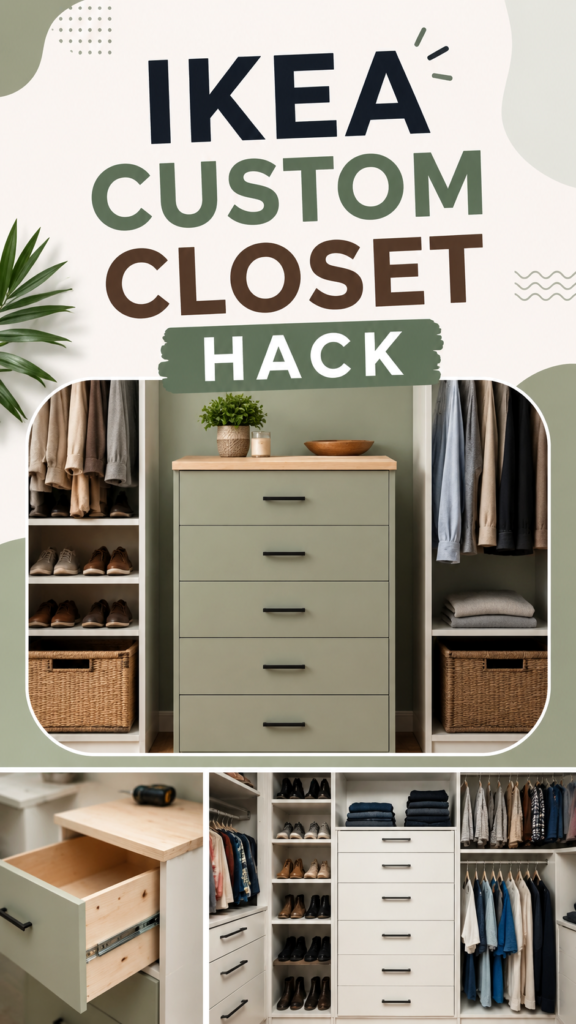
A well-designed closet can completely change the way a bedroom feels and functions. Instead of treating storage as an afterthought, a DIY closet gives you the opportunity to create a setup around the way you actually dress, organize, and use your space. An IKEA-inspired custom closet is especially appealing because it can combine practical drawers, open shelving, hanging areas, and shoe storage into one cohesive design without requiring a completely built-in wardrobe.
Key Takeaways
- Use a combination of drawers, shelves, and hanging rails to make storage more versatile.
- An IKEA closet hack can provide the foundation for a more personalized wardrobe system.
- Vertical storage helps make better use of limited bedroom space.
- Open shelving keeps frequently used clothing and shoes easy to access.
- Matching finishes and hardware can make separate storage pieces look like one custom closet.
- Good organization is about creating a system that matches your daily habits.
Why a DIY Closet Is Worth Considering
Custom closets can be expensive, particularly when every cabinet, drawer, and shelf needs to be made specifically for the room. A DIY closet offers a more flexible alternative. You can start with practical storage components and then adapt them to create the look and function you want.
The setup shown here demonstrates the basic idea beautifully. A tall central drawer unit provides substantial folded-clothing storage, while shelving on either side creates dedicated areas for shoes, baskets, and hanging garments. The result is much more useful than a single open wardrobe because every category has a defined place.
Important: The best DIY closet is not necessarily the largest one. It is the one that uses available space intelligently and gives every frequently used item a practical home.
The Anatomy of a Functional Custom Closet
A successful closet usually works best when it combines several types of storage rather than relying on one format. Drawers are excellent for folded clothing and smaller items, shelves work well for shoes and baskets, and hanging rails keep shirts, dresses, jackets, and other garments visible and accessible.
Central Drawer Storage
The central bank of drawers is one of the most useful features in this style of closet. Multiple drawers create a straightforward way to separate clothing by type. You might use one drawer for T-shirts, another for workout clothes, another for underwear, and another for accessories.
Deep drawers can hold larger folded items, while shallower drawers are useful for smaller pieces. If you are building or adapting an IKEA-based closet system, think about what you already own before deciding how each drawer should be used.
Open Shelving for Shoes and Accessories
Open shelves make it easy to see what you have at a glance. In a closet, this is particularly useful for shoes because pairs can be arranged neatly without having to open individual boxes or containers.
Shelves can also accommodate folded sweaters, handbags, hats, baskets, and other accessories. For a cleaner appearance, use matching storage baskets on shelves where smaller or visually busy items need to be contained.
Hanging Space
Hanging sections are essential for clothing that wrinkles easily or is easier to organize on hangers. Instead of filling the entire closet with one long rail, consider dividing hanging areas by clothing category.
For example, one section could hold shirts and blouses while another accommodates trousers, jackets, or longer garments. If the closet has enough height, different rail levels can also make better use of vertical space.
How to Plan Your DIY Closet Before Building
The planning stage is where many DIY closet projects are won or lost. Before purchasing storage components, measure the available wall and think carefully about how you want to use the finished closet.
- Measure the space. Record the width, height, and usable depth of the closet area.
- Inventory your belongings. Identify how much hanging clothing, folded clothing, footwear, and accessories you need to store.
- Choose storage zones. Decide which parts of the closet will be dedicated to drawers, shelves, hanging clothes, and other items.
- Think vertically. Look for opportunities to use the upper portion of the wall for less frequently used belongings.
- Plan accessibility. Everyday items should be placed where they are easy to reach.
- Consider the visual balance. Combining open and closed storage can create a more polished appearance.
Measure Twice, Build Once
Closet measurements need to account for more than the wall itself. Check doors, trim, baseboards, nearby walls, and any features that could interfere with drawers or cabinet doors. A few extra minutes spent measuring can prevent frustrating surprises later.
It is also helpful to sketch the planned arrangement before assembling anything. Even a simple drawing can reveal whether your drawer unit is too wide, whether shelves are properly positioned, or whether hanging areas provide enough room for the clothes you own.
Creating an IKEA Closet Hack With a Custom Look
One of the biggest attractions of an IKEA closet hack is the ability to combine accessible furniture pieces with custom-looking details. The goal is not simply to place several storage units next to each other. With thoughtful finishing touches, separate components can visually read as one coordinated built-in system.
A consistent color palette is a simple way to create cohesion. Neutral white, warm wood, soft green, beige, and other understated shades can make the closet feel calm and intentional. The reference style also demonstrates how natural wood tones can add warmth to an otherwise practical storage area.
Expert Insight
A custom appearance often comes from consistency rather than complexity. Matching drawer fronts, repeating hardware, coordinating finishes, and aligning storage pieces can make a simple modular system feel significantly more intentional.
Add Hardware for a Finished Appearance
Drawer pulls are small details, but they can have a major effect on the overall appearance of a closet. Long, simple handles can emphasize a modern aesthetic, while smaller hardware can create a more understated look.
Whichever style you choose, repeating it throughout the closet helps create visual consistency. If you are combining different storage units, matching hardware can be one of the easiest ways to make the pieces feel related.
Smart Ways to Organize a DIY Closet
Once the physical storage is installed, organization becomes the key to keeping the closet functional. A beautiful closet can quickly become cluttered if everything is simply placed wherever there happens to be room.
Group Similar Items Together
Start by grouping similar belongings. Keep shirts together, separate trousers from dresses, and create a dedicated area for shoes. Within each category, you can organize by color, season, frequency of use, or personal preference.
The most important thing is consistency. When every category has a predictable location, putting clothes away becomes faster and finding something in the morning becomes easier.
Use Vertical Space
Vertical storage is particularly valuable in smaller bedrooms. The area above drawers and shelves can often be used for additional storage, provided it remains accessible and does not make the closet feel overcrowded.
Reserve the highest areas for seasonal clothing, luggage, spare bedding, or items that you do not need every day. Everyday essentials should remain within comfortable reach.
Make Shoes Easy to See
Shoe storage often becomes one of the messiest parts of a closet. Open shelves solve part of the problem by giving every pair a visible position. Arrange frequently worn shoes at a comfortable height and place less-used pairs higher or lower.
Keeping shoes paired and facing consistently can also make a surprisingly large difference. It creates a cleaner visual line and makes it easier to choose what you need.
Making a Small Closet Feel Bigger
A DIY closet does not have to occupy an enormous room. In fact, thoughtful organization can make a compact bedroom feel considerably more spacious. The key is to avoid wasting valuable wall space while keeping the visual design light.
Open shelving can help you see the full depth of the closet, while drawers keep smaller belongings contained. If possible, maintain clear visual zones instead of filling every available surface. Empty space is useful because it allows the storage system to breathe.
Pro Tip: Before adding more storage, edit what you already own. Removing rarely used clothing can create more usable capacity than adding another shelf or drawer.
Choosing Materials and Finishes
The materials you choose can influence both the appearance and the character of your finished closet. Natural wood adds warmth and texture, while painted surfaces can create a cleaner, more contemporary appearance.
A combination of wood and neutral cabinetry can be particularly effective. For example, a wood-toned countertop or drawer top can soften a predominantly white storage system. Simple black or dark hardware can provide contrast without overwhelming the design.
When choosing finishes, consider the rest of the bedroom. A closet should feel connected to its surroundings rather than looking like a completely separate piece of furniture.
Common DIY Closet Mistakes to Avoid
Even a straightforward closet project can become frustrating if the storage plan does not match the space or your habits. Avoiding a few common mistakes can make the finished result much more practical.
- Overloading shelves: Too many items make open storage look messy and make it harder to find things.
- Ignoring vertical space: Leaving large unused areas above storage wastes valuable capacity.
- Creating too much hanging space: If you primarily wear folded clothing, dedicate more room to drawers and shelves.
- Forgetting accessibility: Frequently used items should not be stored in awkward or difficult-to-reach locations.
- Mixing too many finishes: Too many colors and hardware styles can make a modular system look disconnected.
- Skipping a layout plan: A storage unit that looks useful individually may not work well within the complete arrangement.
How to Keep Your Custom Closet Organized
Organization should not require constant effort. The easiest system to maintain is one that makes sense for your routine. If you regularly wear certain clothing, keep those pieces within easy reach. If you rarely use something, it can occupy a higher or less accessible position.
A simple seasonal reset can also help. Rotate clothing as the weather changes, remove pieces you no longer wear, and return items to their designated zones. This prevents drawers and shelves from gradually becoming overcrowded.
Use baskets or containers selectively rather than putting everything inside a box. Open shelves are valuable because they provide visibility, so reserve containers for small accessories or categories that benefit from being grouped together.
At a Glance
- Combine drawers, shelves, and hanging rails for flexible storage.
- Use vertical space for seasonal and less frequently used items.
- Keep shoes visible with dedicated open shelving.
- Coordinate finishes and hardware for a custom-built appearance.
- Organize the closet according to your everyday routine.
DIY Closet Ideas That Balance Style and Function
The most inspiring DIY closet projects are not simply attractive. They solve real storage problems while making the room feel more organized. A central drawer unit surrounded by shelves and hanging sections is a strong example because it gives different belongings their own dedicated zones.
An IKEA custom closet hack can be adapted to many different decorating styles. You can keep the look minimal and bright, introduce warm wood accents, choose muted colors, or add decorative details that complement the bedroom. The underlying organization remains the same, but the finish can be personalized to your taste.
Most importantly, remember that a closet should work for the person using it. There is no single perfect arrangement. The right combination of drawers, shelving, hanging space, and baskets depends on your wardrobe and your available room.
Conclusion: Build a Closet That Works for You
A DIY closet is a practical way to turn an ordinary storage area into a personalized organization system. By combining modular storage ideas with thoughtful planning, you can create a closet that feels custom without making the project unnecessarily complicated.
The strongest approach is to begin with your real storage needs. Decide what should hang, what should fold, where your shoes belong, and which items need quick access. Then build the layout around those priorities. Add cohesive finishes, simple hardware, and a few carefully chosen organizers to bring everything together.
Whether you are refreshing a small bedroom closet or planning a larger wardrobe system, these DIY closet ideas can provide a useful starting point. With smart use of vertical space, practical drawer storage, open shelving, and clearly defined zones, an IKEA-inspired setup can become a stylish and highly functional part of your home.
Ready to rethink your storage? Start with your measurements, sketch your ideal layout, and focus on the storage features you will use every day. A little planning can turn a basic closet into an organized space that feels genuinely made for you.