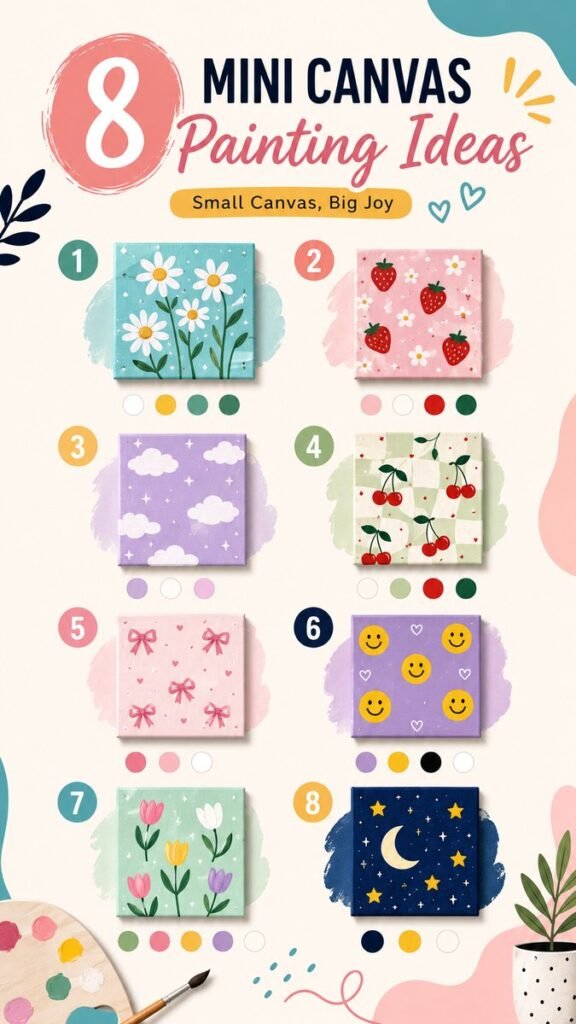
DIY canvas art is one of the easiest ways to add personality, color, and creativity to your home without needing advanced painting skills. Small canvases are especially inviting because they give you a manageable surface to experiment with simple patterns, cheerful colors, and playful illustrations. Whether you are completely new to painting or simply looking for a relaxing weekend project, these mini canvas painting ideas offer plenty of inspiration.
The collection features eight approachable themes, including daisies, strawberries, clouds, cherries, bows, smiley faces, tulips, and a moon-and-stars scene. Each concept uses uncomplicated shapes and recognizable details, making the ideas easy to adapt to your own style. The goal is not perfect artwork. It is to enjoy the process while creating something you will be happy to display.
Key Takeaways
- Mini canvases are a simple starting point for beginner painters.
- Basic flowers, fruit, clouds, bows, and faces can create charming artwork.
- Pastel backgrounds make small designs feel soft, cheerful, and modern.
- Repeating patterns can make a canvas look polished without complicated techniques.
- Simple color palettes help individual details stand out clearly.
- Small paintings work well as room accents, handmade gifts, or creative projects.
Why DIY Canvas Art Is Perfect for Beginners
Painting can sometimes feel intimidating when you imagine a large blank canvas waiting for a detailed masterpiece. A mini canvas changes that experience. The smaller surface encourages you to keep your composition simple and focus on a few visual elements instead of trying to fill every inch.
Simple DIY canvas art also gives you freedom to make mistakes. A flower can have uneven petals, a cloud can have an imperfect outline, and a smiley face does not need to be perfectly symmetrical. Those small variations often give handmade artwork its character.
Important: The most successful beginner canvas projects usually focus on a limited number of shapes and colors. Instead of trying to master everything at once, choose one easy motif and repeat it until the design feels balanced.
8 Mini Canvas Painting Ideas to Try
1. Cheerful Daisy Canvas
Daisies are an excellent choice for easy canvas painting because their structure is naturally simple. Start with a soft blue, peach, cream, or another light background. Add several white petals around small yellow centers, then finish the composition with slender green stems and leaves.
You can create a single large flower as the focal point or arrange several daisies across the canvas. A few tiny white dots or sparkles can fill empty spaces without making the design feel crowded.
For an especially clean look, vary the height and direction of the flowers. Some blooms can face forward while others appear slightly tilted. This creates movement while keeping the painting beginner-friendly.
2. Sweet Strawberry Pattern
Strawberries bring an instant pop of color to DIY canvas art. A pink or blush background provides a soft foundation, while red strawberries create strong focal points. Add green leafy tops and a handful of tiny white seeds to make the fruit recognizable.
This idea works particularly well as a repeating pattern. Instead of painting one oversized strawberry, place several smaller ones at different angles. Tiny flowers, dots, or hearts can be added between them to create a playful handmade pattern.
If you are using acrylic paint, allow each background layer to dry before adding the fruit details. This makes the individual colors cleaner and helps small decorative marks remain crisp.
3. Dreamy Cloud Canvas
A cloud painting is a wonderful project when you want something calm and whimsical. A lavender, blue, or pale pastel background can create a soft sky-inspired setting. Paint fluffy white clouds using rounded shapes rather than trying to create complicated realistic forms.
Small stars, dots, or sparkles can be scattered around the clouds to give the canvas more visual interest. Keep the decorative details small so the clouds remain the main focus.
This design can also be customized with different background colors. A pale pink sky creates a romantic feel, while lavender feels dreamy and playful. A light blue background gives the artwork a classic sky-inspired appearance.
4. Cherry Picnic Pattern
Cherries are another simple subject that can turn basic shapes into attractive artwork. Use small red circles or rounded forms for the fruit, then connect pairs with thin green stems. A few green leaves add contrast and make the composition feel more complete.
A checkerboard background can make this idea especially eye-catching. Alternating cream and soft green or pink squares create a picnic-inspired pattern behind the cherries. If a checkerboard feels too demanding, use broad painted blocks or a simple solid background instead.
The key is repetition. When similar cherry pairs appear across the canvas, the finished piece starts to resemble a coordinated decorative print.
5. Pink Bow Canvas
A bow pattern is perfect if you prefer decorative designs over nature-inspired artwork. Paint a light pink, cream, or white background and add small bows across the surface. Each bow can be created from two rounded loops, a center knot, and two short ribbon tails.
Use different shades of pink to create subtle contrast. You can also add tiny hearts, dots, or miniature sparkles around the bows. Keep plenty of background visible so the painting feels airy rather than overloaded.
Because bows are easy to repeat, this is a great project for practicing consistency. Try painting one bow first and use it as a visual guide for the rest of the canvas.
6. Smiley Mood Canvas
For a playful piece of DIY canvas art, create a collection of simple smiley faces. A lavender or another colorful background makes the yellow faces stand out. Each face can use the same basic circular shape while changing the expression slightly.
Try adding happy, winking, surprised, or sunglasses-wearing faces. Tiny hearts can fill the spaces between the larger shapes. This design does not require realistic drawing skills, which makes it particularly accessible for beginners.
One of the best things about a smiley canvas is that you can let the artwork reflect your personality. Keep the expressions uniform for a neat graphic appearance or make every face slightly different for a more spontaneous result.
7. Pastel Tulip Field
Tulips are another beginner-friendly flower because their blooms can be reduced to a few curved shapes. Choose a soft green background and paint tulips in pink, white, yellow, lavender, or other complementary pastel shades.
Keep the flowers relatively simple. A rounded or slightly pointed bloom sits above a thin stem, with two or three leaves extending outward. Repeating this structure across the canvas creates the feeling of a tiny flower field.
Varying the flower colors is an easy way to add interest. You can also change the height of the stems so the composition feels natural instead of looking like a rigid grid.
8. Moon and Stars Night Sky
If you enjoy dreamy artwork, a moon-and-stars canvas can make a beautiful accent piece. Start with a deep navy or dark blue background. Add a simple crescent moon in a warm light shade, followed by stars in different sizes.
Small white dots and tiny starbursts can add the impression of a sparkling night sky. You do not need to create a realistic galaxy. A clean graphic arrangement often looks more polished on a small canvas.
Try positioning the moon slightly off-center and scattering larger stars around it. This creates a focal point while keeping the overall design balanced.
Expert Insight
A cohesive mini painting often depends more on color harmony and spacing than on complicated painting techniques. Pick three to five main colors, repeat key shapes, and leave enough negative space around your details.
Choosing Colors for Easy Canvas Painting
Color is one of the easiest ways to personalize a mini canvas. The ideas in this collection lean toward cheerful pastel shades, but you can adapt the palette to suit your room or personal taste.
For a soft and modern appearance, combine one dominant pastel with white or cream and one or two stronger accent colors. For example, lavender can be paired with white and yellow, while blush pink works beautifully with red and green.
- Soft pastels: Great for calm, playful, and airy artwork.
- Warm accents: Yellow, coral, orange, and red add energy.
- Natural greens: Useful for leaves, stems, and botanical details.
- Deep blue: Creates contrast for night-sky and dreamy designs.
- White or cream: Helps small decorative elements remain visible.
Pro Tip: Before painting the canvas, arrange your chosen colors together. If one shade feels too strong, replace it with a softer variation. This quick step can make the final artwork feel much more coordinated.
Simple Supplies for a Mini Canvas Project
You do not need a large collection of art supplies to begin. A small set of basic materials is enough for many easy canvas painting ideas.
- Small blank canvas panels or mini stretched canvases
- Acrylic paints in your chosen colors
- Small round brushes for details
- A flat brush for backgrounds
- A palette or washable surface for mixing paint
- A cup or container for rinsing brushes
- Paper towels for cleaning and correcting small mistakes
- Pencil for lightly sketching shapes before painting
For tiny details such as flower centers, seeds, facial features, and stars, a small detail brush can make the process easier. You can also use a clean fine-tip tool designed for painting when appropriate, but always work gently on the canvas surface.
How to Make Your DIY Canvas Art Look Polished
Start With the Background
A smooth background gives the rest of the painting a clean foundation. Apply the base color evenly and let it dry before adding the main illustrations. If the first layer looks uneven, a second thin coat can create a more consistent surface.
Sketch the Main Shapes Lightly
If you are nervous about painting directly onto the canvas, lightly sketch the major shapes first. Keep the marks faint so they can be covered easily with paint. For repeated designs, a simple guide can also help you keep the spacing consistent.
Build From Large Shapes to Small Details
Paint the largest elements first, then add smaller details once the base shapes are dry. For a daisy, that could mean painting the flower head, then the center, followed by the stem and tiny accents. For a strawberry, paint the fruit before adding the leaves and seeds.
Use Repetition to Create Balance
Repeating a motif is one of the simplest ways to make handmade artwork look intentional. Place similar elements at different heights or angles while keeping enough space between them. This works especially well with cherries, bows, flowers, strawberries, and smiley faces.
Creative Ways to Customize These Painting Ideas
The eight concepts are starting points rather than strict templates. Once you understand the basic shapes, you can combine them or change the colors to create something completely personal.
- Combine flowers with tiny hearts or stars for a cheerful botanical design.
- Turn the strawberry pattern into a fruit-and-flower canvas.
- Use different facial expressions to create a personalized smiley collection.
- Replace pastel colors with earthy neutrals for a more understated look.
- Paint several mini canvases using one shared color palette for a coordinated display.
- Experiment with a monochromatic palette by using different shades of one color.
You can also create a small gallery arrangement by displaying several mini canvases together. Matching colors can make different designs feel connected even when the subjects are completely different.
Easy DIY Canvas Art for Relaxing Creative Time
Mini painting projects can be a pleasant way to slow down and spend time doing something hands-on. The small scale keeps each project approachable, while the simple motifs allow you to concentrate on color, shape, and repetition rather than complicated techniques.
Choose a design that genuinely appeals to you. If you love flowers, start with daisies or tulips. If you prefer playful artwork, try smiley faces or bows. If dreamy scenes are more your style, paint clouds or a moonlit sky.
The most important part is to avoid treating the project like a test. Handmade art does not need to look machine-perfect. Small differences in petals, stars, faces, and patterns can make your painting feel more authentic and personal.
At a Glance
- Start with a small canvas and a simple motif.
- Limit your palette to a few coordinated colors.
- Paint larger shapes before adding tiny details.
- Use repetition and spacing to create a balanced composition.
- Let your own color choices and creative details make the piece unique.
Conclusion: Make Small Art With Big Personality
DIY canvas art does not have to be complicated to be beautiful. A small canvas, a handful of colors, and a few simple shapes can become a cheerful piece of handmade decor. The eight ideas here show how versatile beginner painting can be, from colorful daisies and strawberries to playful bows, smiley faces, pastel tulips, fluffy clouds, cherries, and a sparkling moonlit sky.
Start with the design that feels easiest, keep your palette simple, and give yourself permission to experiment. As your confidence grows, you can combine motifs, introduce new color combinations, and develop your own recognizable painting style.
Final thought: The beauty of mini canvas art is that a small project can still make a big visual impact. Keep the process enjoyable, embrace handmade imperfections, and let each canvas become a little expression of your creativity.
Tags
DIY Canvas Art Canvas Painting Ideas Mini Canvas Art Easy Painting Ideas Beginner Painting Acrylic Painting DIY Home Decor Painting Inspiration