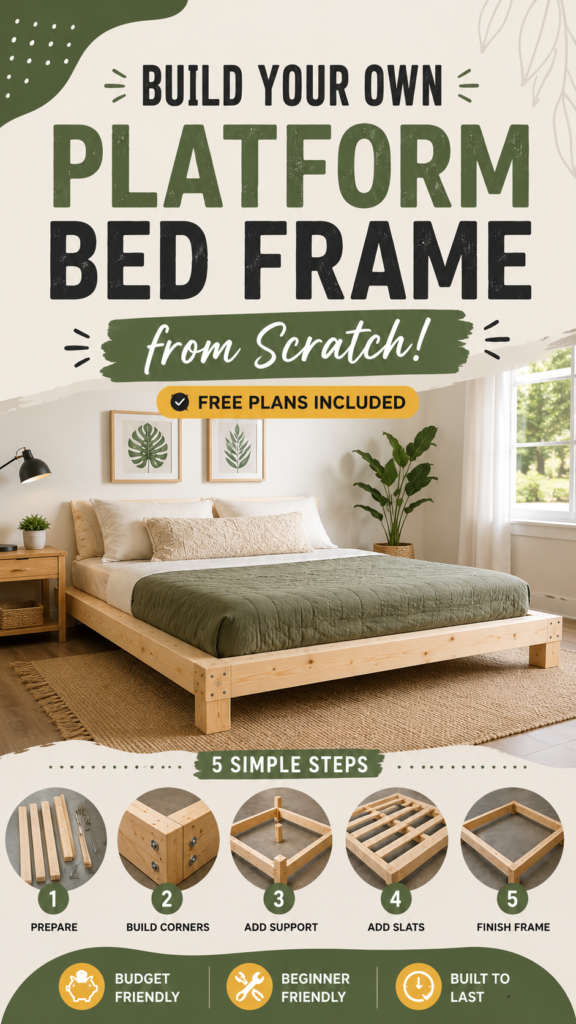
Building your own DIY bed frame is one of the most satisfying ways to upgrade a bedroom without spending a fortune on store-bought furniture. A simple wooden platform bed has a clean, timeless look, and the basic construction can be approachable even for beginner DIYers. With a practical plan, a few common materials, and a step-by-step approach, you can create a sturdy bed frame that feels custom-made for your space.
The appeal of a DIY bed frame goes beyond saving money. Building it yourself gives you control over the size, height, finish, and overall style. You can keep the wood natural for a warm, minimal look, paint it to match your bedroom, or adjust the design to create a lower or higher sleeping platform. A straightforward platform bed design also works beautifully with modern, rustic, Scandinavian, farmhouse, and minimalist interiors.
Key Takeaways
- A simple platform bed frame can be a beginner-friendly woodworking project.
- Careful measuring and a square base are essential for a sturdy result.
- Support rails and evenly spaced slats help distribute mattress weight.
- Choosing straight, dry lumber makes assembly easier and improves the finished look.
- DIY construction lets you customize the height, size, and style of the bed.
- A clean natural wood finish can complement many different bedroom designs.
Why a DIY Bed Frame Is a Smart Bedroom Upgrade
A bed is the visual centerpiece of most bedrooms, so changing the frame can dramatically change the entire room. A DIY platform bed offers a simple way to achieve that transformation while keeping the design practical. Instead of relying on a bulky headboard, complicated upholstery, or oversized decorative details, the frame itself becomes the feature.
A basic wooden bed frame also has long-term appeal. The simple lines do not depend heavily on a temporary trend, which means you can update the room around it without needing to replace the furniture. Change the bedding, wall art, rug, or paint color, and the same bed can take on a completely different personality.
Important: The best DIY bed frame designs focus on structure before decoration. A beautiful finish is important, but a level, square frame with strong support is what makes the project comfortable, durable, and safe for everyday use.
For many people, another major benefit is cost control. Store-bought bed frames can be expensive, especially when looking for solid wood construction. A DIY approach allows you to choose materials that fit your budget and invest more where it matters most, such as stronger lumber, quality fasteners, or a protective finish.
The Simple Platform Bed Design
A platform bed is built around a supportive rectangular structure. The mattress sits on a series of slats or another properly supported platform, eliminating the need for an elaborate box spring in many modern mattress setups. The exact support requirements depend on the mattress manufacturer, so it is always wise to check those recommendations before finalizing the slat spacing.
The overall construction can be broken into a few logical sections:
- Two long side rails that establish the length of the bed.
- Front and back boards that create the width.
- Corner connections that hold the frame square.
- Interior supports that strengthen the structure.
- Slats that provide a stable surface for the mattress.
- Optional legs or a raised frame that creates visual height and clearance underneath.
This type of layout is ideal for beginners because each stage builds on the previous one. You can first create the outer frame, then add reinforcement, then install the mattress support system. Breaking the project into smaller tasks makes the process easier to manage and easier to correct if something needs adjustment.
Choose the Right Size Before You Buy Lumber
Start by confirming the size of the mattress you plan to use. A DIY bed frame should be designed around the actual mattress dimensions rather than relying on assumptions. Mattress sizes can vary slightly between brands, and the finished frame should provide a comfortable fit without being unnecessarily tight or excessively loose.
Measure the mattress length, width, and height. Then decide whether you want the frame to sit close to the mattress edges or include a visible border. Also consider the height of the completed bed. The combined height of the frame and mattress affects how the bed looks in the room and how easy it feels to get in and out of.
Plan the Wood Layout
A well-planned cut list can make the project smoother and reduce waste. Before cutting, sketch the frame and identify every major component. Label the side rails, end boards, support pieces, legs, and slats. Then double-check how those pieces connect.
When choosing lumber, look for boards that are reasonably straight and free from major defects that could weaken a structural component. Slight visual imperfections may be fine in non-critical areas, but large cracks, severe warping, or splits near fastener locations can create problems during assembly.
How to Build a DIY Bed Frame Step by Step
The most effective way to build a wooden bed frame is to follow a clear assembly sequence. Taking time to check measurements at each stage can prevent small errors from becoming larger problems later.
Step 1: Prepare and Measure the Lumber
Cut all major pieces according to your plan. If possible, label them as you work so that the longer side rails and shorter end pieces are easy to identify during assembly. Lightly sand rough edges before building, especially in areas that will be difficult to reach once the frame is complete.
Dry-fit the pieces on a flat surface before permanently fastening them together. This gives you a chance to confirm the overall dimensions and identify any obvious fit issues.
Step 2: Build the Outer Frame
Connect the side rails and end boards to create the basic rectangular shape. Keep checking for square as you work. One common method is to measure diagonally from corner to corner. If the two diagonal measurements are equal, the frame is generally square.
Use fasteners and joinery appropriate for the design and the load the frame will carry. Pre-drilling can help reduce the risk of splitting and can make screw placement more accurate.
Step 3: Add Legs and Corner Support
Depending on the design, the bed may rest on corner legs or a raised outer frame. Strong corners are important because these areas experience significant stress from movement and weight. Position the legs carefully so they sit evenly on the floor.
If the room has an uneven surface, test the frame before completing the final finish. A bed that rocks or shifts should be corrected before the mattress is added.
Expert Insight
A square frame is easier to finish, easier to fit with slats, and more likely to distribute weight evenly. Measure the diagonals before moving on to the support system, because correcting the shape becomes much harder after additional components are installed.
Step 4: Install Interior Support
A mattress can place a considerable load on the frame, so interior reinforcement is an important part of the project. The support design will depend on the size of the bed and the mattress requirements. Larger beds may need additional center support and legs beneath that support.
Make sure the internal structure is positioned at the correct height to support the slats or platform. This helps the mattress sit neatly within the frame and creates a more finished appearance.
Step 5: Add the Slats
Lay the slats across the frame at consistent intervals. Even spacing helps distribute weight and supports airflow beneath the mattress. The correct number and spacing of slats should be based on the requirements of your mattress and the strength of the materials being used.
Once positioned, secure the slats if your design requires them to be fixed in place. This can help prevent movement when the bed is used or moved.
Tools and Materials for a Beginner-Friendly Build
One of the advantages of a simple DIY bed frame is that it does not necessarily require a large workshop. The exact tool list will vary, but a straightforward project often uses common woodworking equipment.
Useful Tools
- Tape measure
- Carpenter’s square
- Drill and suitable drill bits
- Saw appropriate for cutting lumber
- Sander or sanding block
- Clamps
- Safety glasses and other appropriate protective equipment
Basic Materials
- Structural lumber for the outer frame
- Wood for slats and interior support
- Wood screws or other suitable fasteners
- Wood glue where appropriate for the selected joinery
- Sandpaper
- Optional wood stain, paint, or protective clear finish
The best material choice depends on your budget, tools, and desired look. Natural unfinished-looking wood can create a relaxed, warm appearance, while a darker stain can make the same basic structure feel more refined and dramatic.
How to Make a DIY Bed Frame Look More Expensive
A simple design can still feel polished. The difference often comes from attention to detail rather than expensive materials. Start by sanding visible surfaces carefully. Rounded edges and smooth corners are more comfortable and create a cleaner visual result.
Consider the placement of visible fasteners. Where possible, keep screw heads consistent and neatly aligned. You can also choose construction methods that reduce the appearance of exposed hardware, depending on your skill level and the design.
Bedding also has a major impact. Neutral sheets, textured blankets, layered pillows, and a well-sized rug can make a simple wooden platform bed feel like a complete bedroom centerpiece.
Pro Tip: If you want a custom-looking bedroom on a limited budget, keep the bed frame design simple and invest your decorative effort in bedding, textiles, lighting, and wall art. The combination often looks more intentional than an overly complicated frame.
Common DIY Bed Frame Mistakes to Avoid
Even a beginner-friendly woodworking project can become frustrating when the basic preparation is rushed. Fortunately, many common problems can be avoided with a few simple checks.
Skipping the Dry Fit
Assembling every part permanently without first checking the layout can lead to incorrect dimensions and misaligned pieces. A quick dry fit gives you an opportunity to catch mistakes early.
Forgetting to Check for Square
A bed frame may look square even when it is slightly twisted. Check the corners and diagonal measurements before adding slats and interior components.
Using Inadequate Mattress Support
The support system should not be treated as an afterthought. Slats, center rails, and support legs should be designed according to the size of the bed and the mattress manufacturer’s recommendations.
Ignoring the Final Room Layout
Before choosing the final dimensions, think about how the bed will fit into the room. Leave enough clearance around the frame for walking, making the bed, opening drawers, and accessing nearby furniture.
Customize Your DIY Platform Bed
Once you understand the basic structure, there are many ways to personalize the project. A low-profile frame can create a relaxed, contemporary feel, while taller legs can provide a lighter appearance and make cleaning underneath easier.
You can also adapt the finish to match your decorating style. A clear protective coat preserves the natural character of the wood. A light stain can add warmth while keeping the grain visible. Paint can create a more dramatic contrast or help the frame blend into the rest of the room.
Add a Headboard Later
A simple platform bed can stand on its own, but it can also serve as the foundation for a future DIY headboard. This gives you flexibility to update the bedroom over time without rebuilding the entire frame.
Create a Coordinated Bedroom
Matching nightstands, wood tones, plant stands, or simple wall shelving can help tie the DIY bed frame into the rest of the room. You do not need every piece of furniture to match exactly. Repeating similar materials or colors is often enough to create a cohesive look.
Why This DIY Project Works So Well for Beginners
A DIY bed frame is a rewarding first large furniture project because the design can be kept straightforward while still producing an impressive result. The individual steps are easy to understand: prepare the materials, build the outer frame, reinforce the structure, add the slats, and finish the wood.
The project also teaches useful skills that transfer to future woodworking ideas. Measuring accurately, cutting lumber, drilling pilot holes, checking for square, sanding, and applying finishes are all valuable techniques for DIY furniture projects.
At a Glance
- Start with the actual dimensions of your mattress.
- Keep the outer frame level and square.
- Use adequate interior support and properly spaced slats.
- Sand carefully and finish the wood for a polished appearance.
- Customize the height and style to suit your bedroom.
Build a Bed Frame That Fits Your Home and Your Style
A DIY bed frame proves that practical furniture can also be beautiful. With a simple platform design, natural wood, thoughtful proportions, and careful assembly, you can create a bedroom centerpiece that feels warm, modern, and completely personal.
The key is to focus on the fundamentals. Measure carefully, plan the structure, choose suitable materials, and make sure the frame provides proper support for the mattress. Once those essentials are in place, the finishing details become the enjoyable part of the project.
Whether you are building your first piece of DIY furniture or looking for a budget-friendly way to refresh your bedroom, a wooden platform bed is a project worth considering. The finished result can be simple, sturdy, and stylish, with the added satisfaction of knowing you built it yourself.
Conclusion
A well-designed DIY bed frame combines function, affordability, and personal style in one rewarding project. By following a clear building sequence and paying close attention to measurements and support, even a simple wooden frame can become a durable focal point for the bedroom.
Start with a practical plan, work carefully through each stage, and allow the natural beauty of the materials to guide the final look. A custom platform bed can save money, build confidence, and transform an ordinary bedroom into a space that feels more comfortable and intentional.