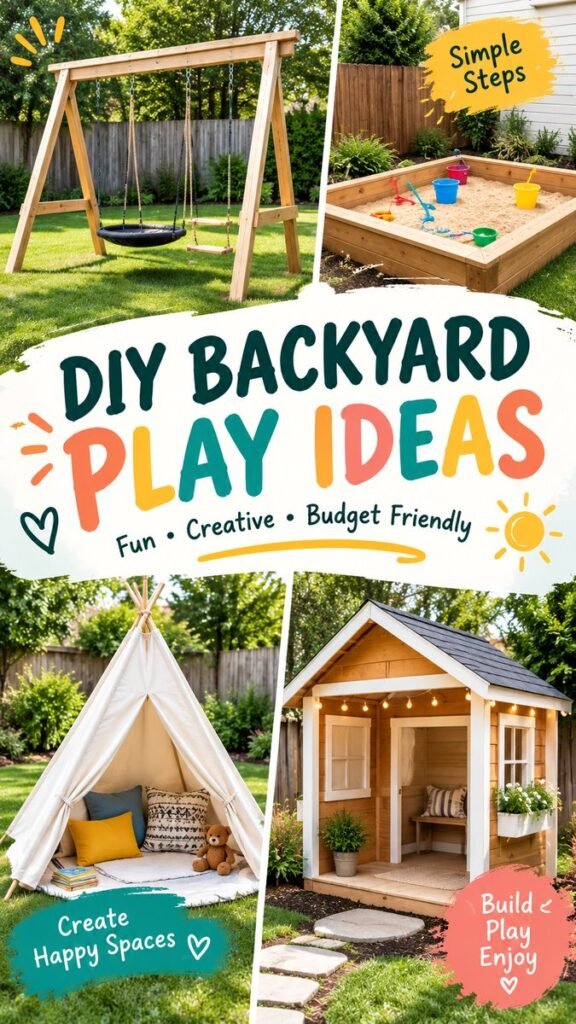
Creating a fun outdoor play space does not have to mean buying an expensive playground set. With a little creativity, a backyard can become an exciting place for children to swing, dig, climb, imagine, and explore. From simple wooden swing structures and DIY sandboxes to cozy playhouses and imaginative activity areas, there are plenty of DIY playground ideas that can turn an ordinary yard into a playful family space.
Key Takeaways
- Use simple materials to create engaging backyard play zones.
- A sandbox can provide hours of open-ended sensory and imaginative play.
- Combine active play with quiet spaces for reading and pretend play.
- Chalk walls and outdoor activity boards add creativity without requiring much space.
- Plan every structure around stability, age-appropriate use, and safe supervision.
- Small yards can still accommodate memorable DIY playground features.
Why DIY Backyard Playgrounds Are So Appealing
A backyard playground gives children a dedicated place to be active while keeping play close to home. Instead of relying on a single piece of equipment, a DIY approach lets you create several different experiences throughout the yard. One corner might be designed for movement, another for sensory play, and another for quiet imaginative activities.
The ideas featured here focus on approachable concepts rather than complicated commercial playground installations. A wooden swing set, raised sandbox, chalk activity wall, outdoor playhouse, or fabric play tent can each serve a different purpose. Together, these features can create a backyard that feels inviting and varied.
One of the biggest advantages of a DIY playground is flexibility. You can build gradually, adapt the design to the available space, and choose features that match the interests of the children who will use them. There is no need to complete everything at once. Start with one engaging feature and expand as your ideas and budget allow.
1. Build a Simple Backyard Swing Set
A wooden swing structure can become the centerpiece of a backyard play area. The classic design is easy to recognize, visually appealing, and useful for active outdoor play. The reference concept shows how a sturdy timber frame can support multiple swing styles, creating options for different types of movement.
Choose a Practical Swing Design
When planning a DIY swing set, think about the available yard space, the number of children using it, and the type of swings you want to include. Traditional flat seats are a familiar choice, while wider bucket-style or tire-inspired seats can create a different experience.
Keep the surrounding area open and avoid placing the structure too close to fences, walls, garden furniture, or other obstacles. The frame should be properly constructed and secured according to appropriate safety guidance for outdoor play equipment.
Add a Natural Look
Wooden playground structures work especially well in gardens because they blend naturally with grass, trees, fences, and other outdoor elements. A simple wood finish can create a warm appearance, while carefully selected outdoor paint or stain can add personality.
2. Create a DIY Sandbox
A sandbox is one of the most versatile additions to a backyard playground. Children can dig, scoop, pour, build, pretend, and experiment with different textures. The simple wooden sandbox shown in the visual concept demonstrates how an attractive play zone can be created without taking over the entire yard.
Raised wooden borders can help define the sandbox and visually separate it from the lawn. Keep the edges smooth and make sure the construction is appropriate for children. Use suitable play sand and consider a cover to protect the area when it is not being used.
Make the Sandbox More Interactive
Basic buckets, scoops, molds, small containers, and child-friendly digging tools can turn a simple sandbox into an imaginative construction zone. You can also create a small pouring station using safe containers or incorporate natural objects such as smooth stones and sticks when appropriate.
For a more polished backyard design, frame the sandbox with a small seating edge. This can provide a convenient place for children to sit while playing and gives adults an easy spot to supervise.
Why This Matters
The best backyard playgrounds do not need dozens of features. Combining active movement, sensory play, creativity, and pretend play gives children different ways to enjoy the same outdoor space.
3. Add a Backyard Chalk Wall
An outdoor chalkboard wall is a clever idea for families who want creative play without using much floor space. The concept shown in the visual can be adapted to a fence, dedicated outdoor panel, or another suitable vertical surface.
Children can draw pictures, practice letters and numbers, create pretend menus, design games, or invent their own artwork. Unlike permanent playground equipment, a chalk wall can change every day.
Turn It Into an Activity Station
Instead of thinking of the chalkboard as decoration, make it part of the playground. Add a small outdoor container for chalk and washable drawing supplies. You could also create sections for free drawing, simple games, or rotating activities.
A hopscotch path painted or drawn on a suitable outdoor surface can complement the chalk wall. Numbered squares encourage movement while keeping the design simple and inexpensive.
4. Design a Creative Sand Play Zone
A larger sand area can become more than a traditional sandbox. The visual concept includes a raised wooden play area with colorful containers and a climbing-style structure, showing how a sandbox can be combined with other playful elements.
Think about how children move through the space. A sand area can encourage digging and building, while nearby climbing or balancing elements can provide a transition into more active play.
Creating separate activity zones can make a backyard feel much larger than it actually is. Even when several features share one compact yard, defining each area with borders, paths, landscaping, or changes in surface can give every activity its own sense of place.
5. Create a Cozy Backyard Playhouse
A small outdoor playhouse can transform a backyard into a world of pretend play. The wooden playhouse concept shown here has the welcoming feel of a tiny cottage, complete with windows, a covered entry, simple seating, and garden details.
Keep the Interior Simple
You do not need to fill a playhouse with toys. A small bench, a few cushions, pretend kitchen accessories, books, or child-friendly storage can be enough. Keeping the interior uncluttered leaves room for imaginative games.
Children might turn the space into a pretend café, reading corner, shop, clubhouse, or secret hideaway. The flexibility is part of what makes a playhouse such a valuable addition to a DIY backyard playground.
Decorate With Garden-Friendly Details
Simple planters, stepping stones, outdoor-safe textiles, and small decorative touches can make the playhouse feel integrated with the garden. Choose durable materials that can handle outdoor conditions and avoid creating sharp edges or unnecessary hazards.
6. Add a Backyard Reading or Imagination Tent
Not every playground feature needs to involve climbing or running. A small fabric play tent creates a quieter retreat where children can read, draw, play pretend, or simply take a break from energetic activities.
A simple teepee-style structure placed on grass can be decorated with washable cushions, blankets, and a few favorite toys. Keep the setup lightweight and weather appropriate, and bring soft furnishings indoors when necessary.
This type of space is especially useful when you want a backyard playground to offer different levels of activity. Children can move from energetic play to quieter creative time without leaving the yard.
7. Make the Playground Budget Friendly
A DIY playground does not need to be expensive to be exciting. Start by identifying features that offer the most play value for the space and budget available. A chalk wall, sandbox, or simple creative station may cost less than a large structure while still encouraging hours of imaginative play.
Build in Stages
Instead of trying to create an entire backyard playground in one weekend, divide the project into manageable stages.
- Choose the main play zone.
- Measure the available space carefully.
- Decide which feature will provide the most value.
- Gather suitable materials and safety equipment.
- Complete and test one feature before adding another.
- Introduce creative accessories after the main structures are ready.
This approach can make the project easier to manage and gives you time to see how children actually use each area before expanding it.
8. Design Around Different Types of Play
One of the smartest ways to plan backyard play ideas is to think beyond individual equipment. Consider the different experiences children can have outdoors.
- Active play: swings, climbing elements, balancing activities, and movement games.
- Sensory play: sand, water-friendly activities, natural textures, and digging.
- Creative play: chalkboards, drawing stations, crafts, and building activities.
- Imaginative play: playhouses, tents, pretend shops, and outdoor role-playing spaces.
- Quiet play: reading corners, cozy seating, and shaded retreats.
When these categories are represented, the backyard becomes more adaptable. A child who is not interested in swinging on a particular day can move to the sandbox or create a drawing on the outdoor chalkboard instead.
Safety Considerations for DIY Playground Ideas
Creative design should always be paired with careful construction and regular inspection. Playground equipment needs to be stable, appropriately sized, and designed for the children who will use it.
Before allowing children to use a homemade structure, check that connections are secure, surfaces are smooth, moving components work properly, and the surrounding area is free from obvious hazards. Pay particular attention to swing clearance, elevated areas, loose hardware, sharp corners, and unstable objects.
Choose age-appropriate equipment and supervise children according to their age, abilities, and the specific activity. Outdoor structures should also be checked regularly because weather and repeated use can affect wood, fasteners, surfaces, and other components.
Expert Insight
- Prioritize stable construction over decorative details.
- Leave enough open space around active equipment.
- Inspect DIY structures regularly as children grow and use them more frequently.
How to Make a Small Backyard Feel Bigger
Limited outdoor space does not mean you have to skip the idea of a backyard playground. The key is to use vertical surfaces and multifunctional areas effectively.
A chalk wall uses fence space rather than valuable floor area. A compact sandbox can fit into one corner. A small playhouse can combine pretend play and seating, while a simple tent can be moved when the space is needed for another activity.
Choose a few strong features rather than overcrowding the yard. Open pathways between play zones make the space easier to navigate and give children room for spontaneous games.
Use Consistent Materials
Wooden borders, natural tones, greenery, and colorful play accessories can create a cohesive appearance. The result can feel like a thoughtfully designed garden rather than a collection of unrelated playground equipment.
Easy Ways to Personalize Your Outdoor Play Area
The best DIY playground is one that reflects the children who use it. Personalization can be as simple as choosing their favorite colors for buckets, chalk storage, cushions, or outdoor accessories.
You can also create rotating activity themes. One week might focus on drawing and sidewalk games, while another centers around building sand creations or imaginative play in the playhouse.
Adding a small outdoor storage area can keep supplies organized. Buckets, chalk, balls, shovels, and other toys can be grouped together so children can easily access them and help tidy the space afterward.
Planning Your Own DIY Playground
Before starting construction, sketch a simple layout of the backyard. Mark existing trees, fences, garden beds, patios, and other fixed features. Then consider where each activity could fit while leaving comfortable open areas between them.
Start With One Favorite Feature
If you are unsure where to begin, choose the feature that best matches the type of play your children enjoy most. A sandbox is a strong choice for sensory and imaginative play. A swing set works well for active movement, while a playhouse offers endless pretend-play possibilities.
Once the first feature is established, you can build around it. This creates a more intentional playground and prevents you from spending money on features that may not get much use.
Pro Tip: Think about play value before appearance. A simple feature that encourages children to invent games, build things, move around, and explore can be more rewarding than a complicated setup with limited ways to play.
At a Glance
- Build a simple swing area for active play.
- Add a sandbox for digging and creative construction.
- Use a chalk wall for low-cost artistic activities.
- Create a playhouse or tent for imaginative and quiet play.
- Keep layouts open, practical, and age appropriate.
Final Thoughts on DIY Playground Ideas
A memorable backyard playground does not have to look complicated. A few thoughtfully chosen features can transform a basic outdoor area into a place where children want to spend time every day. Wooden swings encourage movement, sandboxes invite hands-on exploration, chalk walls inspire creativity, and playhouses or tents provide space for stories and pretend adventures.
The most successful DIY playground ideas combine fun with flexibility. Rather than designing a space around one activity, create several small opportunities for children to choose how they want to play. This approach can make even a modest backyard feel active, imaginative, and welcoming.
Whether you start with a sandbox, swing set, chalkboard, playhouse, or cozy outdoor tent, focus on safe construction, durable materials, and plenty of room for creativity. Build slowly, personalize the details, and let the play area evolve with your family. A simple backyard can become a favorite destination when it is designed around curiosity, movement, and imagination.
Tags
DIY Playground Backyard Playground Kids Play Area Outdoor Play Ideas DIY Sandbox Backyard Ideas Kids Outdoor Activities Playground Ideas