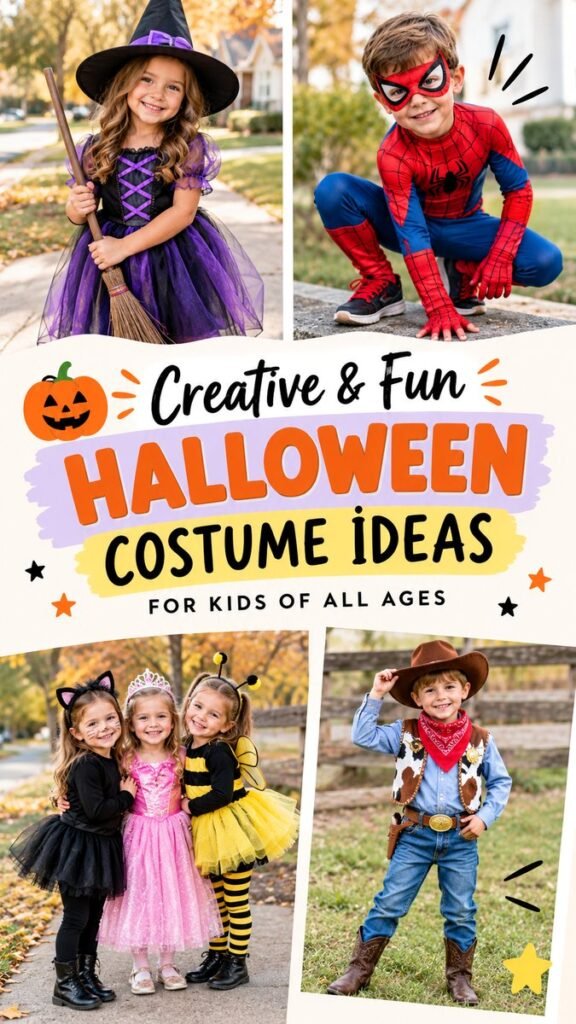
Creative DIY costumes for kids are a wonderful way to turn ordinary clothes, craft supplies, and a little imagination into memorable Halloween looks. The colorful costume inspiration here shows just how many directions you can take, from playful character outfits and classic dress-up themes to animal-inspired looks and imaginative western styles. The best part is that a homemade costume does not need to be complicated to feel special. With a few thoughtful details, children can transform simple pieces into something fun, comfortable, and full of personality.
Key Takeaways
- Simple clothing can become the foundation for an imaginative DIY costume.
- Accessories often make a homemade Halloween look instantly recognizable.
- Choose comfortable materials that allow kids to walk, sit, and play easily.
- Group costumes are a fun way to coordinate siblings or friends.
- Let kids participate in choosing colors, details, and finishing touches.
Creative DIY Costume Ideas for Kids
When children help create their own costumes, the activity becomes part of the Halloween experience. Instead of simply putting on a purchased outfit, they can choose a theme, experiment with colors, and add personal touches. This makes DIY costumes especially appealing for families looking for affordable Halloween ideas that still feel creative and unique.
The inspiration pictured features several recognizable costume directions. A dramatic witch-inspired outfit uses a dark dress, purple details, a pointed hat, and a simple prop. A superhero look relies on a bold color combination, a mask, and strong character-inspired details. Other outfits use animal ears, crowns, bright dresses, themed sweatshirts, denim, hats, and accessories to create completely different personalities.
Important: The most effective DIY costumes usually start with one recognizable idea and then build around it. You do not need dozens of decorations. A few carefully chosen details can communicate the entire theme.
1. Character-Inspired Costumes
Character costumes are easy to personalize because children can often recognize the essential elements immediately. Rather than recreating every detail of a character’s outfit, focus on the colors, silhouette, and one or two memorable accessories.
For example, a simple colored sweatshirt and matching pants can provide the foundation for a superhero-inspired costume. Add a homemade mask, cape, emblem, or wrist detail and the outfit becomes much more distinctive. This approach works well when you want an easy costume that can be assembled from clothing already in a child’s wardrobe.
For a magical storybook-inspired look, a dark dress can be paired with a dramatic hat, colorful ribbon, tights, and a lightweight prop. Children can help choose the accent color, making the finished costume feel more personal.
Keep the Main Idea Simple
A useful rule for DIY costumes is to identify the three details that make the theme obvious. Everything else is optional. This prevents the project from becoming expensive or overly time-consuming.
2. Animal-Themed DIY Costumes
Animal costumes are among the easiest homemade Halloween costumes for kids because the defining features can be created with a few accessories. Cat ears, face details, a tail, whiskers, or a matching color palette can turn a basic outfit into a recognizable animal-inspired look.
A black outfit, for instance, can become the base for a playful cat costume. Add handmade ears from cardstock or felt, a simple tail, and comfortable shoes. If face paint is appropriate for the child, a few small whisker lines can complete the idea, although the costume works perfectly well without face paint too.
Other easy possibilities include bumblebees, butterflies, foxes, bears, rabbits, and ladybugs. The key is to concentrate on the animal’s most recognizable features rather than trying to recreate an elaborate full-body costume.
3. Princess and Dress-Up Costumes
Princess-inspired costumes can be created from dresses, skirts, tulle, ribbons, costume jewelry, and handmade crowns. The colorful dress-up style shown in the inspiration demonstrates how a simple outfit can become more festive through coordinated accessories.
A homemade crown is particularly easy to personalize. Cut a crown shape from sturdy cardstock, decorate it with stickers or paper shapes, and secure it with a comfortable headband. Metallic paper, colorful ribbon, or lightweight embellishments can add interest without making the accessory heavy.
For a softer look, pair a favorite dress with a handmade sash, simple hair accessories, or a decorative cape. This is also a practical option because many of the pieces can be reused for everyday dress-up play after Halloween.
4. Bumblebee and Bright Color Costumes
Bright colors can do much of the creative work in a DIY costume. A yellow-and-black outfit immediately suggests a bumblebee, especially when paired with simple wings and antennae.
For a quick version, use a yellow shirt with black leggings or pants and add black stripes using fabric-safe materials. Lightweight wings can be attached to the back of the outfit, while a simple headband with soft antennae creates the finishing detail.
Color-based costumes are especially useful when several children want coordinated outfits. Each child can choose a different variation while still sharing a common color palette.
Why This Matters
A DIY costume is most successful when it balances creativity with comfort. Children are likely to enjoy the celebration more when their costume is easy to move in, does not feel too heavy, and allows them to participate in normal activities.
Easy Costume Foundations to Use at Home
You do not need a large craft collection to make creative costumes for kids. Start by looking at basic clothing pieces that can become the foundation of the outfit. Solid-color shirts, leggings, jeans, dresses, hoodies, jackets, and sneakers can all be surprisingly useful.
- Black clothing: useful for cats, classic dress-up characters, and many dramatic themes.
- Bright dresses: excellent starting points for princess, fairy, or colorful character ideas.
- Jeans and shirts: ideal for cowboy, explorer, farmer, or adventure-inspired costumes.
- Colored sweatshirts: practical foundations for superheroes, sports-inspired looks, and group costumes.
- Simple accessories: hats, headbands, scarves, capes, masks, and homemade badges can define the theme.
DIY Accessories That Make a Big Difference
Accessories are often where a basic costume becomes memorable. They are also a great place to involve children in the creative process. A child can decorate a cardboard crown, choose ribbon colors, draw a simple emblem, or help assemble a lightweight prop.
Consider making:
- Cardboard crowns and tiaras
- Animal ears from felt or cardstock
- Simple superhero masks
- Paper badges and character emblems
- Lightweight capes
- Decorated cowboy-style hats
- Simple fabric belts and sashes
- Colorful bows and hair accessories
When creating accessories, keep edges smooth and avoid pieces that could become uncomfortable during extended wear. Lightweight materials are usually easier for younger children to manage.
Creative Group Costume Ideas for Kids
The image also highlights how fun coordinated costumes can be when several children dress together. Group costumes do not have to be identical. In fact, giving each child a different character can make the group more interesting while keeping a clear visual connection.
For example, a group could choose a shared color palette while allowing each child to select a different theme. One child might choose an animal, another a princess-inspired look, and another a superhero. Coordinating colors, accessories, or simple handmade details can make the costumes feel connected.
Another option is to create a themed group using different versions of the same concept. Several children could become different animals, different superheroes, or different characters from an imaginary adventure team.
How to Make DIY Costumes More Comfortable
A costume can look fantastic and still be frustrating if it is difficult to wear. Comfort should be considered from the beginning, particularly for children who will be wearing the outfit for several hours.
- Choose breathable and flexible clothing as the base.
- Make sure hats and headbands fit comfortably without being too tight.
- Keep props lightweight and easy to carry.
- Avoid accessories that interfere with walking or sitting.
- Test the complete costume before the event.
- Keep a simple backup layer nearby in case the weather changes.
Pro Tip: Have children wear the full costume for a short trial at home. A quick test can reveal uncomfortable straps, loose accessories, tricky shoes, or anything that needs adjusting before Halloween.
How to Make a DIY Costume Feel More Original
The goal of a homemade costume is not necessarily to create something complicated. Small personalized details can make a familiar idea feel completely different. Let children select their favorite color combinations, add handmade decorations, or invent a unique accessory.
You can also mix clothing styles. Pair a dress with boots instead of traditional costume shoes, add a denim jacket to a character-inspired outfit, or use a colorful hoodie as the base for an imaginative costume. These combinations make the costume practical while still giving it a creative personality.
Another easy strategy is to create one statement piece. A decorated hat, oversized bow, colorful cape, handmade mask, or pair of themed wings can become the focal point of an otherwise simple outfit.
Simple DIY Costume Planning Checklist
Before starting, decide how much time and effort you want to invest. A quick costume can often be completed with clothing and a few accessories, while a more elaborate project may require several crafting sessions.
- Choose the costume theme.
- Select a comfortable clothing base.
- Pick two or three main colors.
- Identify the most important accessory.
- Gather craft materials before starting.
- Let the child help with safe decorating tasks.
- Try on the complete costume before the event.
Fun DIY Costume Ideas to Try
If you are still deciding what to make, use the visual inspiration as a starting point and adapt the concepts to clothing you already have. Here are several directions that can be customized for different ages and personalities.
- Classic cat: black clothing, handmade ears, a tail, and optional face details.
- Superhero: colorful clothes, a cape, mask, and homemade emblem.
- Bumblebee: yellow and black clothing with simple wings and antennae.
- Princess: a favorite dress with a handmade crown, sash, or cape.
- Cowboy: jeans, a shirt, boots or comfortable shoes, a hat, and a colorful bandana.
- Storybook character: build around a recognizable color palette and one signature accessory.
These ideas can also be adjusted for siblings. One child might prefer a dramatic costume while another wants something simple. A shared color or theme can connect the outfits without forcing everyone to wear the same thing.
At a Glance
- Start with clothes you already own.
- Choose one strong costume theme.
- Use accessories to make the idea recognizable.
- Prioritize movement and comfort.
- Personalize the details so every costume feels unique.
Conclusion: Make Halloween Creative and Personal
Creative DIY costumes for kids do not have to be expensive, complicated, or perfectly polished. The most enjoyable projects often begin with simple clothing and grow through imagination, color, and a few handmade details. Whether the final look becomes a playful animal, a superhero, a princess, a bumblebee, a cowboy, or an entirely original character, the process gives children an opportunity to participate in creating something they can proudly wear.
Use these ideas as inspiration rather than strict instructions. Mix and match pieces, invite kids to choose their favorite details, and focus on making a costume that feels comfortable and fun. With a little creativity, everyday items can become the foundation for memorable Halloween costumes that are perfect for parties, school celebrations, trick-or-treating, or family photos.
Most importantly, remember that the best DIY costume is one that lets a child feel excited to dress up. Keep the project manageable, make room for imagination, and enjoy the process together. A simple homemade costume can become one of the most memorable parts of Halloween.