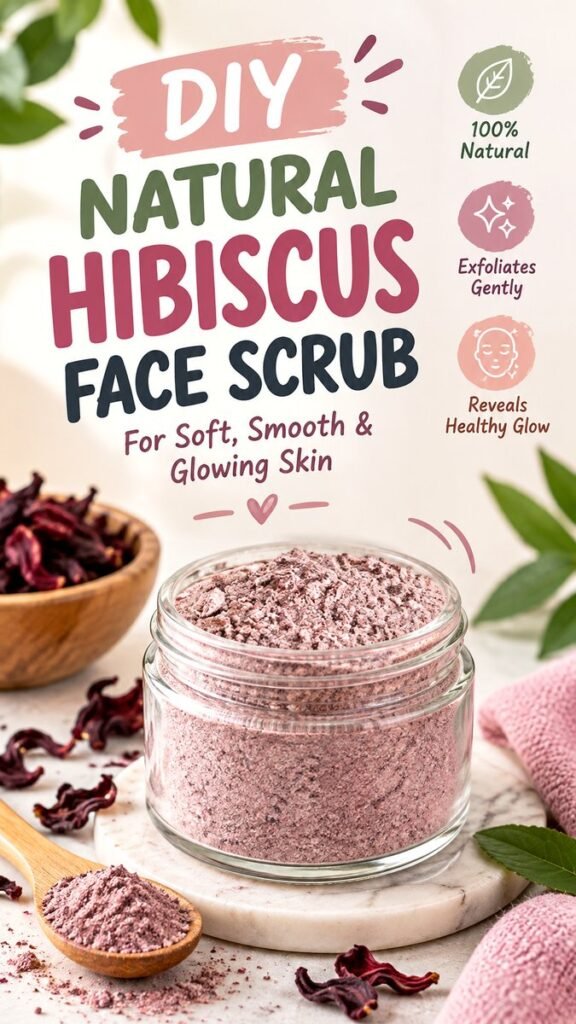
DIY skin care recipes are a wonderful way to turn a simple self-care routine into something creative, calming, and personalized. One especially eye-catching idea is a natural hibiscus face scrub, featuring a soft pink botanical powder and dried hibiscus petals for a spa-inspired look. This type of homemade skincare recipe can be appealing to anyone who enjoys simple beauty rituals, plant-inspired ingredients, and gentle exfoliation.
Key Takeaways
- Hibiscus-inspired scrubs can add a botanical touch to a simple skincare ritual.
- Gentle exfoliation can help remove surface buildup and leave skin feeling smoother.
- Fine, soft-textured ingredients are preferable to harsh, rough particles for facial use.
- Patch testing is an important step when trying a new homemade skincare mixture.
- A simple recipe is easier to prepare fresh and use without unnecessary additives.
Why Hibiscus Is Popular in DIY Skin Care
Hibiscus has become a popular ingredient in natural beauty routines because of its colorful appearance and botanical appeal. The dried petals have a deep red to burgundy color, while finely ground hibiscus can create a naturally rosy powder that looks beautiful in homemade face care recipes.
For a DIY skin care routine, the appeal is not only about appearance. Creating a homemade scrub can make an ordinary skincare moment feel more intentional. Measuring ingredients, mixing a fresh preparation, and taking a few quiet minutes for facial care can turn a basic routine into a relaxing at-home spa experience.
Important: A homemade face scrub should be treated as a cosmetic self-care product rather than a treatment for wrinkles, acne, or other skin conditions. Natural ingredients can still cause irritation, so gentle use and patch testing matter.
DIY Hibiscus Face Scrub: The Basic Concept
The featured idea centers on a finely powdered hibiscus-based scrub stored in a small glass jar. The visual combination of pink powder, dried petals, and simple natural textures gives the recipe a fresh botanical character that works beautifully for Pinterest-inspired DIY beauty content.
A basic homemade scrub typically combines a finely textured exfoliating ingredient with a moisturizing or conditioning component. Hibiscus powder can serve as the botanical element, while a gentle base helps create a spreadable consistency. The goal is to make a soft mixture that can be applied lightly rather than aggressively rubbed across the skin.
Simple Ingredients to Consider
The exact formula can be adjusted according to your skin preferences and the ingredients you already have available. Keeping the ingredient list short makes the recipe easier to understand and helps you identify what may be responsible if irritation occurs.
- Finely ground hibiscus: Provides the botanical centerpiece and distinctive pink-red appearance.
- A gentle moisturizing base: Helps turn the dry powder into a workable scrub.
- Optional soothing ingredients: A simple, skin-friendly ingredient can be included if it is already known to suit your skin.
When making a face scrub, texture is particularly important. Ingredients intended for facial exfoliation should feel fine and smooth rather than sharp, jagged, or excessively coarse. A rough mixture can create unnecessary friction and may leave sensitive skin feeling uncomfortable.
How to Make a Natural Hibiscus Face Scrub
Making a small batch is usually more practical than preparing a large jar. Freshly prepared DIY skin care recipes are easier to monitor, and small quantities reduce the temptation to keep a homemade mixture for too long.
Step 1: Prepare the Hibiscus
If using dried hibiscus petals, make sure they are clean and completely dry before grinding. A dedicated grinder can be used to create a fine powder. Sift the powder if necessary so that larger pieces are removed.
The finished powder should have a relatively consistent texture. For facial use, avoid incorporating large petal fragments or anything that feels scratchy between your fingertips.
Step 2: Combine the Ingredients
Place a small amount of hibiscus powder into a clean bowl. Gradually add your chosen base while mixing until the ingredients form a soft, spreadable paste. Adding the liquid or creamy component little by little makes it easier to control the consistency.
The ideal texture should be easy to spread without requiring pressure. If the mixture feels too dry or gritty, adjust it before applying it to the face.
Step 3: Perform a Patch Test
Before using a new homemade skincare recipe on your face, test a small amount on an inconspicuous area of skin. Wait and observe how your skin responds. If redness, burning, itching, or other irritation develops, discontinue use rather than applying the mixture more widely.
This step is particularly useful with botanical ingredients because “natural” does not automatically mean suitable for every skin type.
Step 4: Apply With a Light Touch
Start with clean, damp skin. Apply a small amount of the scrub using gentle circular motions, avoiding the delicate eye area and any areas that are irritated, broken, or inflamed. There is no need to scrub forcefully to achieve an exfoliating effect.
After a short application, rinse thoroughly with lukewarm water and gently pat the skin dry. Follow with a simple moisturizer that you already know works well for your skin.
Expert Insight
Exfoliation is about moderation, not intensity. A scrub that feels extremely abrasive is not necessarily more effective. For facial skin, a gentle approach and appropriate frequency are generally more comfortable than aggressive scrubbing.
Potential Benefits of a Gentle Face Scrub
The main purpose of a physical face scrub is exfoliation. By gently loosening surface debris, a scrub can help skin feel smoother and refreshed. This can make a simple skincare routine feel more polished, particularly before applying moisturizing products.
The visual appeal of a hibiscus scrub also makes it a lovely addition to a homemade beauty collection. Its natural pink tone, floral character, and dried botanical pieces create a presentation that feels thoughtful without requiring complicated packaging.
It is important to separate cosmetic benefits from stronger claims sometimes associated with DIY skincare. A homemade hibiscus scrub may help skin feel clean and smooth, but that does not mean it can reverse aging, stimulate collagen production, erase wrinkles, or replace professional skincare treatments.
How to Make Your DIY Skin Care Routine More Enjoyable
The best DIY skin care recipes do not have to be complicated. A small preparation area, clean utensils, attractive storage, and a few minutes without distractions can make the experience feel much more enjoyable.
Keep Your Routine Simple
Instead of layering numerous homemade treatments, choose one or two simple steps that complement the rest of your skincare routine. A gentle cleanser, occasional exfoliation, moisturizer, and daytime sun protection can form a much more manageable routine than constantly experimenting with different mixtures.
Use Small Batches
Homemade skincare products generally do not have the same preservation systems as commercially formulated cosmetics. Preparing a small amount for immediate or very short-term use can be more practical than filling a large container and storing it for an extended period.
Use clean, dry utensils and containers, and avoid introducing water, fingers, or other contaminants into a stored mixture. If the appearance, smell, or texture changes, discard the product.
Who Should Be Careful With Facial Scrubs?
Physical exfoliation is not ideal for everyone. People with very sensitive skin or an already irritated skin barrier may find scrubs uncomfortable. Anyone experiencing active irritation, open skin, or a significant skin condition should avoid experimenting with abrasive DIY treatments until the skin has recovered or a qualified professional has provided appropriate guidance.
It is also worth remembering that different ingredients can interact with individual skin types differently. Even a recipe made from familiar household ingredients can cause irritation or an allergic reaction.
Pro Tip: If your skin feels hot, stings, becomes unusually red, or feels uncomfortable after exfoliation, stop using the scrub. Healthy skincare should feel gentle and comfortable, not painful or harsh.
Storage and Hygiene Tips
Good hygiene is essential when preparing homemade beauty products. Wash your hands before preparing the mixture, use a clean bowl and spoon, and make sure your storage container has been properly cleaned and dried.
- Prepare small quantities rather than large batches.
- Use clean utensils every time you portion the mixture.
- Keep homemade skincare away from heat and direct sunlight.
- Do not share a homemade facial product with others.
- Discard anything that develops an unusual odor, color, or texture.
A simple glass jar can make the finished scrub look beautiful, but attractive packaging does not make a homemade formula shelf-stable. Treat homemade skincare as fresh, small-batch self-care rather than a commercial cosmetic product.
A Simple Self-Care Ritual
One of the most appealing aspects of DIY skin care recipes is the ritual itself. Preparing a small amount of hibiscus scrub, setting aside a few quiet minutes, and following it with moisturizer can turn an ordinary evening into a relaxing personal-care moment.
The pink botanical appearance also makes this type of recipe particularly attractive for beauty lovers who enjoy creating their own products. Dried hibiscus petals, a wooden spoon, a glass jar, and soft towels can create a simple spa-inspired setup without complicated decorations.
For a more complete routine, consider pairing occasional gentle exfoliation with consistent daily skincare habits. Cleansing, moisturizing, protecting the skin from excessive sun exposure, and choosing products suited to your skin type generally matter more than any single homemade recipe.
Quick Points
- Choose a fine, gentle texture for facial exfoliation.
- Patch test before applying a new DIY recipe broadly.
- Use light pressure and avoid irritated areas.
- Prepare small batches and practice careful hygiene.
- Keep realistic expectations about what homemade skincare can do.
Final Thoughts on DIY Hibiscus Skin Care
A DIY hibiscus face scrub can be a beautiful and approachable addition to a simple homemade skincare routine. Its naturally colorful botanical appearance makes it especially appealing for anyone who enjoys creating fresh, spa-inspired beauty recipes at home.
The key is to keep the experience gentle. Use a finely textured mixture, avoid aggressive rubbing, patch test unfamiliar ingredients, and pay attention to how your skin responds. Homemade skincare can be fun and creative, but simple formulas and sensible precautions are more valuable than making exaggerated beauty claims.
Whether you are building a collection of DIY skin care recipes or simply looking for a relaxing weekend self-care project, a hibiscus-inspired scrub offers an easy place to begin. Prepare a small batch, enjoy the botanical experience, and make gentle skincare part of a routine you can comfortably maintain.