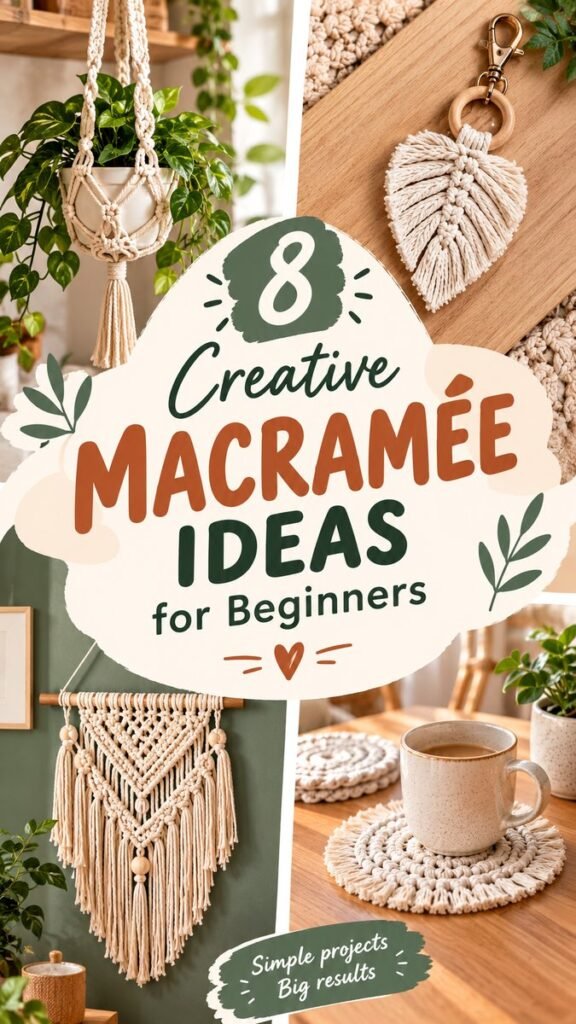
Macramee DIY is a beautiful way to turn simple cord and basic knots into practical, decorative pieces for your home and everyday life. The cozy inspiration shown here combines natural fibers, warm wood, greenery, soft textures, and handmade details to create a relaxed look that feels both modern and timeless. From plant hangers and wall art to keychains and textured coasters, macrame projects can be surprisingly approachable, even when you are just getting started.
The appeal of macramee DIY goes beyond decoration. Working with cord encourages creativity, patience, and experimentation, while the finished pieces add a personal handmade touch to a room. Whether you want to refresh a quiet corner, create a small handmade gift, or simply learn a relaxing craft, there are plenty of beginner-friendly ways to start.
Key Takeaways
- Start with simple macramee DIY projects that use basic knots.
- Natural cotton cord works beautifully with warm, neutral home decor.
- Plant hangers, wall hangings, keychains, and coasters are versatile project ideas.
- Keep your first designs simple so you can focus on consistent knots and tension.
- Small handmade pieces can add texture without overwhelming a room.
- Experiment with size, cord thickness, and finishing details as your skills grow.
What Makes Macramee DIY So Appealing?
Macrame is based on creating patterns by tying and combining knots. Instead of requiring complicated equipment, many projects can be made with cord, scissors, a measuring tape, and a few simple supporting materials. This makes macramee DIY especially attractive for beginners who want a creative hobby without a large collection of supplies.
The visual style is another reason macrame continues to inspire home crafters. Soft cotton cord creates natural texture, while repeated knots form patterns that look intricate without needing bright colors or complicated embellishments. Pairing handmade macrame with wood, ceramics, plants, and neutral fabrics creates a warm atmosphere that works especially well in relaxed interiors.
Important: The beauty of beginner macrame is that simple construction can still create a striking result. Focus first on neat knots, even spacing, and consistent tension rather than trying to make an elaborate design immediately.
Beginner-Friendly Macramee DIY Ideas
There are many ways to explore macrame without starting with a large or complicated project. Smaller pieces allow you to practice individual techniques while producing something useful at the same time. Once you become comfortable with the basic movements, you can combine them into larger designs.
1. Macrame Plant Hanger
A plant hanger is one of the most recognizable macrame projects and an excellent introduction to working with multiple strands of cord. The design can be kept minimal or expanded with decorative knots and fringe. A simple hanger also works nicely with leafy houseplants, adding vertical texture to a room.
When creating a plant hanger, pay attention to the spacing between strands and keep the knots as consistent as possible. The structure should feel balanced so the finished hanger supports its pot securely. For a first project, a straightforward pattern is often easier to manage than one with many decorative sections.
2. Macrame Wall Hanging
A small wall hanging is another approachable macramee DIY project. It can be attached to a wooden dowel or branch and finished with a simple fringe. Geometric sections, diagonal patterns, and repeated knots can create visual interest while keeping the overall design calm and natural.
Wall hangings are particularly flexible because you can change their proportions to suit your space. A narrow design can work beside a shelf or doorway, while a wider piece can become a focal point above a console or small table. Neutral cord keeps the handmade texture at the center of attention.
3. Macrame Keychain
Small keychains are ideal when you want a quick macrame project. They require less cord than larger decorations and give you an opportunity to practice compact knot patterns. A wooden ring or metal clasp can provide a practical base, while fringe adds a soft decorative finish.
Because keychains are portable, they can also be useful practice projects. You can test different knot combinations, cord thicknesses, and finishing techniques without committing to a large amount of material.
4. Macrame Coasters
Textured macrame coasters bring handmade character to everyday spaces. Circular or fringed designs can be placed beneath mugs, small vases, or decorative objects. They also make practical gifts because they are compact, reusable, and easy to coordinate with different home styles.
For a cohesive collection, make several coasters using the same cord and basic pattern. Slight differences in the knots can actually add handmade charm, so there is no need to expect every piece to look perfectly identical.
Essential Supplies for Macramee DIY
You do not need a large craft room to begin. A small selection of supplies is enough for many beginner projects. The most important material is macrame cord, which is available in different thicknesses and constructions. Natural cotton cord is especially popular for soft, neutral designs because it creates visible knots and a pleasant textured finish.
- Macrame cord in a suitable thickness
- Sharp craft scissors
- Measuring tape or ruler
- Wooden rings, dowels, or suitable hanging hardware
- A stable surface for tying and arranging knots
- A comb or similar tool for separating fringe when needed
Choose materials according to the size of your project. Thicker cord can make knots easier to see and can help a small project develop a bold appearance. Finer cord may be better for delicate details and smaller accessories.
Basic Macrame Knots to Learn First
Macrame can look complicated because finished patterns contain many overlapping strands. In reality, a large number of designs are built from a relatively small collection of repeated knot techniques. Learning a few foundations gives you a useful starting point for experimenting.
Square Knot
The square knot is one of the most useful foundations for macrame. It creates a balanced, woven appearance and can be repeated to form lines, panels, and decorative sections. Practice it slowly at first, paying attention to which strand crosses over and which strand passes underneath.
Lark’s Head Knot
The lark’s head knot is commonly used to attach cords to a dowel, ring, or other support. It is especially useful when beginning wall hangings and plant hanger designs. Once the cord is attached evenly, the remaining strands can be divided into groups for additional knots.
Gathering Knot
A gathering knot can help bring several strands together into a neat section. It is useful for finishing areas of a project, especially when multiple cords need to be visually contained. Practicing this technique can make your finished pieces look more polished.
Expert Insight
Consistency matters more than complexity when learning macrame. Keep your working strands organized, maintain similar tension from knot to knot, and pause occasionally to check the overall shape. A simple pattern tied neatly can look more finished than a complicated pattern with uneven spacing.
How to Make Your First Macrame Project Easier
Starting with a manageable project can make the learning process much more enjoyable. Choose a design that uses a limited number of knot types and has a clear structure. Small wall hangings, keychains, and simple plant holders are useful choices because they allow you to see progress quickly.
- Choose a simple pattern. Avoid designs with too many knot variations for your first attempt.
- Measure your cord carefully. Allow enough material for knots, spacing, and finishing.
- Organize your strands. Separating working cords from filler cords can make instructions easier to follow.
- Practice before starting. Tie a few sample knots to understand the movement and tension.
- Check your spacing. Step back regularly and look at the overall pattern.
- Finish slowly. Trim fringe carefully and straighten the strands before displaying your project.
Pro Tip: Do not pull every knot as tightly as possible. The correct tension depends on the pattern. Consistent tension is usually more important than maximum tightness because it helps the finished design maintain an even shape.
Choosing Colors for a Modern Macrame Look
Natural cream and beige cords create the relaxed look often associated with macrame, but there is no rule that says every project needs to be neutral. Soft sage, muted terracotta, dusty rose, warm brown, and other earthy shades can introduce subtle color while keeping the handmade aesthetic intact.
If your goal is a calm home-decor style, consider choosing one main cord color and allowing the texture to provide most of the visual interest. This approach works particularly well with wooden furniture, ceramic accessories, woven baskets, plants, and soft fabrics.
For a more playful project, introduce a contrasting accent cord in a small section rather than changing colors throughout the entire design. A simple color detail can make a familiar pattern feel fresh without distracting from the knots.
Decorating With Handmade Macrame
One of the most enjoyable parts of macramee DIY is deciding where finished pieces belong. A plant hanger can add height to a room, while a wall hanging can introduce texture to an otherwise plain surface. Coasters and small accessories can bring the same handmade feeling to shelves, tables, desks, and other everyday areas.
Try grouping handmade pieces with materials that complement their natural texture. Wood, rattan, linen, cotton, ceramic, and greenery all pair naturally with macrame. Keeping the surrounding decor relatively simple can help the knots and woven details stand out.
Small projects can also be used to refresh a space seasonally. Swap a keychain, coaster set, or small hanging decoration when you want a subtle change without replacing larger furniture or decor.
Common Beginner Mistakes to Avoid
Every new craft comes with a learning curve, and macrame is no exception. Uneven knots, inconsistent tension, tangled strands, and inaccurate measurements are common during the first few projects. These issues become easier to manage with practice.
- Cutting cord too short: Measure carefully and account for the amount used in knots.
- Mixing up working strands: Keep cords separated and organized while following a pattern.
- Changing tension: Try to use similar pressure throughout repeated knots.
- Rushing the finishing stage: Take time to straighten, comb, and trim fringe.
- Starting too large: A smaller project can be a better way to learn the basics.
Most importantly, do not treat small imperfections as failures. Handmade projects naturally have character. As your hands become familiar with each knot, your movements will become more consistent and your designs will become easier to control.
How to Turn Simple Knots Into Your Own Designs
Once you are comfortable with a few basic techniques, begin experimenting. Change the number of strands, adjust the spacing between sections, or combine a simple knot with a different fringe treatment. You can also modify the proportions of an existing project to suit your space.
Instead of trying to invent an elaborate pattern immediately, start by changing one element at a time. For example, create the same wall hanging in two different sizes or use the same knot sequence with different cord thicknesses. This helps you understand how small design changes affect the final appearance.
Keeping a small notebook or collection of photographs can also be helpful. Record combinations you like, note which knots were easiest to work with, and save ideas for future projects. Over time, these experiments can become the foundation for your own signature macrame style.
At a Glance
- Begin with a small, uncomplicated macramee DIY project.
- Practice basic knots before moving into detailed patterns.
- Use natural textures and earthy colors for a relaxed decor style.
- Focus on consistent tension and spacing for a polished finish.
- Let simple handmade details add warmth and personality to your space.
Final Thoughts on Macramee DIY
Macramee DIY offers a simple and satisfying way to create something beautiful with your own hands. The combination of cord, knots, texture, and natural materials can turn an ordinary object into a decorative piece with plenty of personality. You do not need advanced skills to begin. A few basic techniques, some patience, and a willingness to experiment are enough to get started.
Whether you are drawn to leafy plant hangers, textured wall art, practical coasters, or small macrame accessories, choose a project that feels enjoyable rather than intimidating. Start small, pay attention to your knots, and give yourself room to learn. Each project can teach you something new about tension, spacing, texture, and design.
The best part of macrame is the freedom to make a project your own. Begin with a simple pattern, then experiment with cord, color, size, and finishing details as your confidence grows. A few basic knots can become everything from useful accessories to beautiful home decor.
With so many beginner-friendly possibilities, macramee DIY is an inviting craft to return to whenever you want a creative project. Gather your cord, practice a few knots, and start with something small. Before long, those first simple knots can become handmade pieces that bring warmth, texture, and a personal touch to your everyday surroundings.
Tags
Macramee DIY Macrame DIY Macrame Ideas Macrame Projects Macrame for Beginners Boho Home Decor DIY Home Decor Macrame Crafts