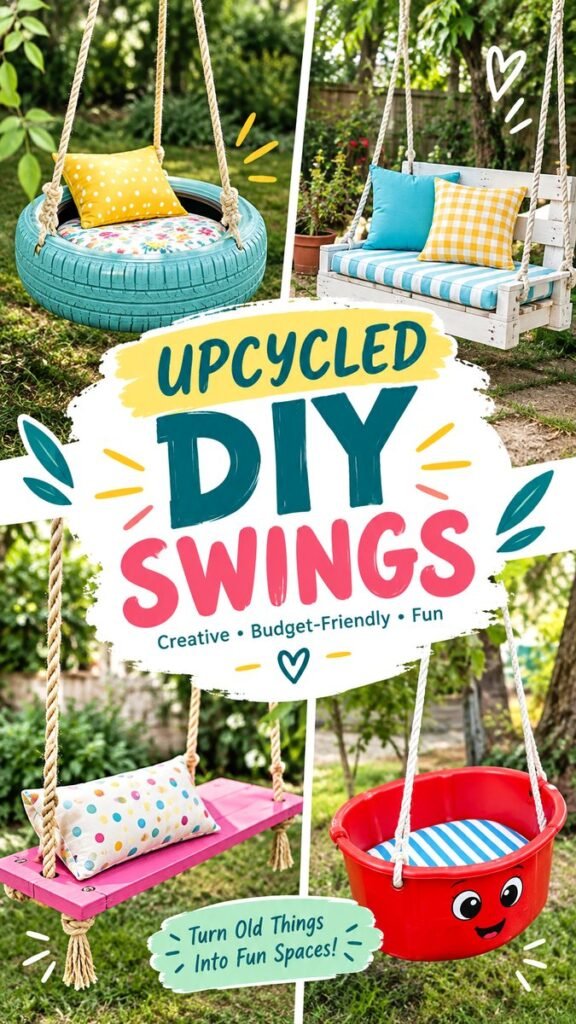
Creating a DIY swing set can turn an ordinary backyard into a playful outdoor space filled with color, movement, and personality. The most inspiring ideas often start with simple materials that can be refreshed, repurposed, and transformed into something children will enjoy. From colorful tire swings and sturdy wooden seats to creative upcycled designs, there are plenty of ways to build a swing area that feels personal without requiring an elaborate playground setup.
Key Takeaways
- A DIY swing set can make a backyard feel more playful and inviting.
- Upcycled materials can inspire creative and budget-conscious designs.
- Different seat styles can create completely different looks and experiences.
- Colorful cushions and painted surfaces add personality to outdoor swings.
- Safety, stability, and weather-resistant materials should always come first.
- A simple swing can become a charming focal point for an outdoor play area.
Important: The most successful DIY swing set ideas balance creativity with practical construction. A beautiful design is only worthwhile when the swing, ropes, hardware, and supporting structure are appropriate for the intended use and securely installed.
Why DIY Swing Sets Are So Appealing
A backyard swing has a timeless quality. It gives children a place to move, play, and enjoy fresh air while adding a fun feature to the garden. A DIY swing set also offers more freedom than choosing a standard playground design. You can experiment with shapes, colors, seating styles, and decorative details to create something that fits the character of your outdoor space.
The visual inspiration here centers on colorful, imaginative swings made from materials that can have a second life. That approach makes the project feel approachable and creative. Instead of thinking about a swing as only a piece of playground equipment, consider it an opportunity to combine practical outdoor design with a little imagination.
Upcycling can also make the process more interesting. A tire, sturdy board, old outdoor furniture component, or suitable container may inspire a completely different swing concept. The important part is choosing materials that are structurally appropriate and adapting them carefully for outdoor use.
Creative DIY Swing Set Ideas
1. Colorful Tire Swing
A tire swing is one of the most recognizable upcycled swing ideas. Its round shape naturally creates a relaxed seating area, and the surface can be refreshed with an outdoor-appropriate finish. Adding a comfortable cushion can make the swing look more inviting while introducing a bright accent color.
For a playful backyard, consider a cheerful color paired with patterned outdoor fabric. A simple tire can become a statement piece rather than blending into the garden. If you prefer a more natural appearance, leave the material in a neutral finish and let the surrounding greenery provide the color.
2. Wooden Board Swing
A wooden board creates a classic swing silhouette and can be customized in countless ways. Paint the seat a bright color, keep the wood natural, or add a simple pattern for a handcrafted appearance. A small outdoor cushion can make a traditional board feel softer and more decorative.
When selecting wood for a swing seat, look for a sound piece without obvious structural damage. Sand rough surfaces thoroughly and use finishes designed for outdoor conditions when appropriate. The rope and attachment points deserve just as much attention as the seat itself.
3. Pallet-Inspired Swing Bench
A larger swing can provide more room than a traditional single-seat design. A pallet-inspired bench creates the feeling of a small outdoor lounge while maintaining the playful movement of a swing. Cushions in contrasting colors can instantly transform the appearance.
This style works especially well in a family garden where the swing can function as both a relaxing seat and a decorative feature. Keep the design visually simple, then use cushions and textiles to introduce personality.
4. Repurposed Outdoor Container Swing
Another imaginative approach is to transform a suitable large container into a rounded swing seat. The inspiration for this style comes from giving an everyday object an unexpected purpose. A bright finish can make it especially fun for a children’s outdoor area.
Because unconventional materials are not automatically designed to carry a person’s weight, this type of project requires extra care. The material must be structurally suitable, the attachment points must be strong, and the complete suspension system should be designed for the intended load and movement.
Expert Insight
When choosing an upcycled material for a swing, think beyond appearance. Inspect its condition, strength, edges, attachment points, and ability to withstand outdoor exposure. Creative reuse works best when the material is both visually interesting and genuinely appropriate for the job.
Choosing Materials for a DIY Swing Set
The materials you choose will influence the appearance, durability, and maintenance needs of your DIY swing set. Wood, tires, outdoor fabrics, strong rope, suitable connectors, and weather-resistant finishes are common elements in creative backyard projects. However, every material should be evaluated according to its intended use.
Wood
Wood offers a warm, natural appearance and is easy to customize with sanding and outdoor finishes. Check boards carefully for cracks, rot, severe splitting, or other signs of weakness before using them in a load-bearing application.
Rope and Hardware
The suspension system is one of the most important parts of a swing. Use components that are appropriately rated for the intended load and outdoor environment. Connections should be secure, properly installed, and checked regularly for wear.
Outdoor Cushions and Fabrics
Cushions are an easy way to make a DIY swing more comfortable and visually appealing. Outdoor fabrics can introduce stripes, checks, florals, or playful patterns while helping the swing coordinate with the rest of the garden.
How to Plan Your Backyard Swing Area
Before building anything, look carefully at the available outdoor space. A swing needs sufficient clearance around it so that people can use it without colliding with fences, trees, walls, furniture, or other obstacles. Think about the direction of movement and the amount of space required for the complete swing arc.
It is also worth considering the surface underneath the swing. A suitable impact-absorbing surface can provide additional protection compared with hard paving or other unforgiving ground. Keep the surrounding area uncluttered and inspect it regularly as the project is used.
For a cohesive backyard design, repeat colors from other outdoor elements. A pink swing could coordinate with flowers or garden accessories, while turquoise cushions could complement a painted planter or outdoor seating. Small connections like these make an individual DIY project feel intentionally designed.
Adding Color and Personality
Color is one of the easiest ways to make a DIY swing set feel unique. The examples shown use cheerful shades that stand out against green garden surroundings. You can use the same principle with your own palette, whether you prefer bright primary colors, soft pastels, earthy neutrals, or a combination of several tones.
Patterns can add another layer of interest. A checked cushion, striped seat pad, floral fabric, or simple painted detail can transform an otherwise basic swing. Keep the main structure relatively simple if you want decorative accessories to become the focal point.
Pro Tip: Choose one main color for the swing and two supporting colors for cushions or accents. This creates a coordinated look without making the backyard feel visually crowded.
Safety Considerations for DIY Swings
Creative design should never take priority over safety. A swing is a moving structure that places repeated loads on its seat, suspension system, attachment points, and supporting frame. Every component needs to be appropriate for its intended use.
- Choose a strong, stable support structure designed for swing use.
- Inspect ropes, chains, connectors, and attachment points regularly.
- Remove or smooth sharp edges and rough surfaces that could cause injury.
- Make sure the swing has adequate clearance from nearby objects.
- Use materials and hardware suitable for outdoor exposure.
- Check the complete installation before allowing children to use it.
- Follow appropriate manufacturer guidance when using commercial hardware or components.
For children’s swings especially, adult supervision and age-appropriate use are important. An attractive DIY project should be treated as a functional structure first and a decorative project second.
Making an Upcycled Swing Feel Finished
One advantage of an upcycled swing set is that imperfections can become part of its charm. Still, a few finishing touches can make the project look polished. Smooth exposed surfaces, refresh faded finishes, coordinate the colors, and choose cushions that fit the shape of the seat.
Garden greenery can provide a beautiful backdrop for colorful swings. Positioning a swing near a lawn, flowering plants, or leafy shrubs can make it feel integrated into the landscape. Just be careful that branches, roots, planters, and garden structures do not interfere with safe movement.
You can also create a small outdoor play zone around the swing. A nearby picnic table, outdoor storage basket, chalk area, or comfortable seating can turn a single project into a more complete family-friendly backyard space.
Simple Ways to Refresh an Existing Swing
You do not always need to build a completely new swing set. An existing swing can often receive a visual refresh through careful maintenance and simple decorative updates. Replace worn accessories, repaint suitable surfaces, add a new cushion, or update the surrounding area with plants and outdoor decor.
A fresh color can dramatically change the personality of a familiar swing. Bright pink, turquoise, yellow, red, or green can create a playful atmosphere, while natural wood tones and neutral textiles can create a calmer garden aesthetic.
Refreshing an existing setup is also a useful way to extend the life of materials when the underlying structure remains sound. Always inspect the complete swing before making cosmetic changes, since appearance alone does not indicate structural condition.
At a Glance
- Style: Colorful, playful, creative, and garden-friendly
- Materials: Wood, tires, suitable recycled items, rope, hardware, and outdoor textiles
- Best feature: Personalization through color, cushions, and creative reuse
- Priority: Stable construction, secure connections, proper clearance, and regular inspection
- Design idea: Pair a simple swing structure with cheerful outdoor accents
Conclusion: Create a Swing Set With Personality
A DIY swing set can be much more than a place to swing. It can become a colorful centerpiece for a backyard, a creative upcycling project, and a reason to spend more time outdoors. The most appealing designs combine simple shapes with thoughtful colors, comfortable details, and materials that give an old or ordinary object a new purpose.
Whether you choose a classic wooden swing, a colorful tire design, a larger bench-style seat, or another imaginative upcycled concept, start with a practical plan. Pay close attention to the supporting structure, suspension system, materials, clearance, and maintenance before adding decorative details.
Once the essential construction is handled properly, have fun with the creative side. Experiment with cheerful colors, outdoor cushions, playful patterns, and garden-friendly styling. With a little imagination, an ordinary backyard can become a welcoming space where a simple DIY swing brings energy, comfort, and plenty of outdoor fun.