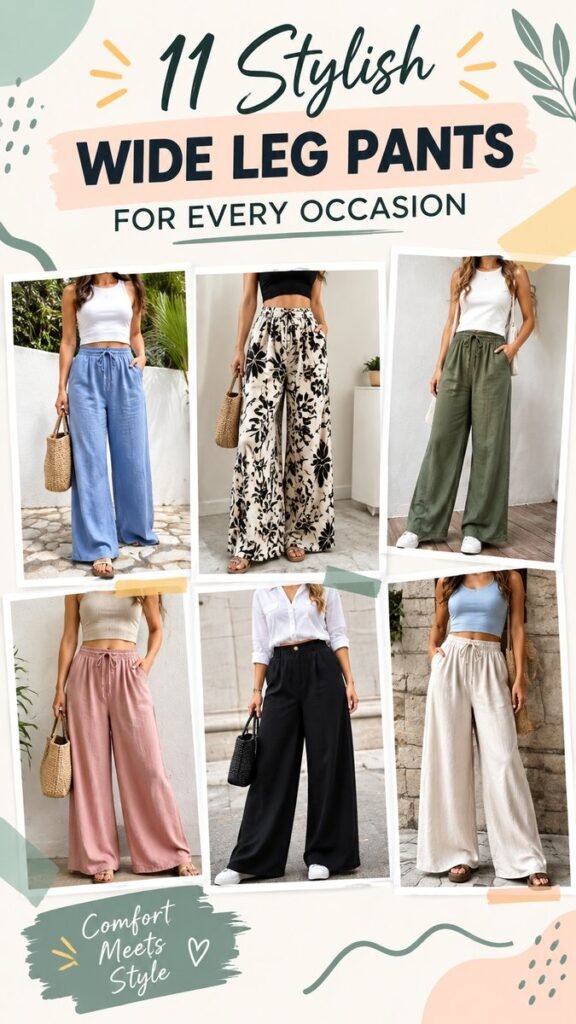
DIY pants are a fun way to create comfortable, wearable pieces that fit your personal style. The ideas featured here focus on relaxed wide-leg silhouettes, simple waistbands, lightweight fabrics, and versatile shapes that can work across casual everyday outfits. Whether you are new to sewing or simply looking for your next handmade wardrobe project, these pants offer plenty of inspiration for experimenting with fabric, color, prints, and fit.
Key Takeaways
- Wide-leg pants are a comfortable and versatile DIY sewing project.
- Elastic or relaxed waistbands can make beginner projects easier to sew and wear.
- Linen, cotton, rayon, and other lightweight fabrics can create a soft, flowing silhouette.
- Solid colors, checks, florals, and animal-inspired prints can completely change the finished look.
- Small adjustments to length, rise, waistband, and leg width can personalize a basic pants pattern.
Why DIY Pants Are Worth Making
Making your own pants gives you more control over the details than buying a ready-made pair. You can choose the fabric you love, adjust the proportions, and create a style that works with the rest of your wardrobe. A simple pair of wide-leg pants can become a relaxed weekend staple, a polished outfit for going out, or a comfortable warm-weather essential.
The styles shown in this collection share an easygoing shape. Instead of relying on a fitted leg, wide-leg pants provide generous room through the thigh and lower leg. This creates an effortless appearance while allowing the fabric to move naturally as you walk.
Important: When choosing a DIY pants pattern, pay attention to the finished measurements rather than relying only on your usual clothing size. Comparing the pattern measurements with a pair of pants you already love can make the fitting process much easier.
Choosing the Right DIY Pants Style
There are many directions you can take when making DIY pants, but wide-leg designs are especially useful because the basic silhouette is simple to style. The examples shown include soft neutrals, pastel shades, earthy green, black, checks, and bold animal-inspired prints. This variety demonstrates how much personality can come from fabric selection alone.
Relaxed Wide-Leg Pants
Relaxed wide-leg pants are a great starting point for a handmade wardrobe. Their generous shape creates a comfortable fit without requiring a highly complicated construction. They also work well with simple tops, fitted tanks, oversized shirts, sweaters, and lightweight blouses.
For a minimalist version, choose a solid fabric in cream, black, navy, soft blue, or another versatile shade. A neutral pair can be worn repeatedly and styled in several different ways.
Printed DIY Pants
If you want your handmade project to make more of a statement, printed fabric can transform the same basic pants shape. Checks and animal-inspired patterns add visual interest, while botanical or abstract prints can create a softer, artistic feel.
When working with a strong print, keep the rest of the outfit relatively simple. A plain fitted top can balance a dramatic pair of pants and allow the fabric to remain the focal point.
Flowy Linen-Look Pants
Lightweight, breathable-looking fabrics are particularly appealing for relaxed pants. Cream, beige, white, pale blue, and olive shades create an airy aesthetic that works beautifully with wide legs.
These pants can be styled with simple sandals, sneakers, woven accessories, or a lightweight shirt. The result is casual without looking unfinished.
Fabric Ideas for DIY Pants
Fabric choice affects almost everything about the finished garment, including drape, movement, comfort, appearance, and sewing difficulty. Before cutting into your favorite material, consider how you want the finished pants to look and feel.
- Linen: A natural-looking option for relaxed pants with an airy appearance.
- Cotton: Versatile and practical, with many weights and patterns available.
- Rayon or viscose: Useful when you want more fluid movement and a soft drape.
- Lightweight blends: Can offer a balance between comfort, structure, and easy movement.
- Heavier fabrics: Suitable when you want a more structured wide-leg silhouette.
For a first sewing project, a stable woven fabric can be easier to manage than an extremely slippery or delicate material. A fabric with moderate structure can also make pressing, cutting, and stitching more straightforward.
Expert Insight
The same pants pattern can look completely different when you change the fabric. A structured cotton creates a cleaner shape, while a soft draping fabric produces a more fluid silhouette. If you already have a pattern you like, experimenting with fabric can give you several distinct looks without starting from scratch.
Beginner-Friendly Details to Look For
If you are new to sewing clothes, look for DIY pants patterns with construction details that feel manageable. A simple design does not have to look basic. Clean proportions, attractive fabric, and careful finishing can make a straightforward pattern look polished.
Elastic Waistbands
Elastic waistbands are a popular feature in relaxed pants because they combine comfort with relatively simple construction. They are especially useful for casual styles and wide-leg silhouettes.
A waistband can also be designed with a drawstring for an adjustable fit. This adds a relaxed detail while giving you more flexibility when wearing the finished pants.
Simple Leg Shapes
A wide, straight leg can reduce the need for complicated shaping. It also gives you room to experiment with proportions. You can make the leg slightly narrower for a more streamlined appearance or wider for an exaggerated fashion-forward look.
Practical Pockets
Pockets are both useful and decorative. Side-seam pockets can keep the front of the pants clean, while patch pockets can add a more casual handmade character. When working with a patterned fabric, consider whether the pocket placement will affect the visual flow of the print.
How to Plan Your DIY Pants Project
A little planning before cutting can save time and fabric. Start by deciding what type of pants you want to make and how you expect to wear them. Then choose your fabric, compare measurements, and check the pattern instructions before beginning.
- Choose your silhouette. Decide whether you want a classic wide leg, an extra-flowy shape, or a slightly more tailored version.
- Select your fabric. Consider weight, drape, color, print, and how the material will behave during sewing.
- Check measurements. Compare your body measurements with the pattern’s finished garment measurements.
- Make a test version. If possible, use an inexpensive fabric to check the fit before cutting your final material.
- Adjust the length. Decide whether you prefer ankle-length, full-length, or cropped pants before finishing the hem.
- Press as you sew. Neat pressing can make a significant difference in the final appearance of a handmade garment.
Pro Tip: Before cutting your final fabric, hold the material against your body or drape it over a pair of pants with a similar shape. This simple step helps you visualize how the fabric weight and width will translate into the finished garment.
Ways to Customize Your Handmade Pants
One of the best parts of DIY clothing is the ability to make small changes that give a familiar pattern your own personality. You do not need to completely redesign a pattern to make it feel unique.
Experiment With Color
Color can change the mood of an outfit immediately. Soft blue creates a fresh and relaxed look, while olive green adds an earthy quality. Cream and white create a clean minimalist effect, and black gives the same wide-leg shape a more polished appearance.
Try Different Prints
Checks, florals, stripes, abstract designs, and animal-inspired prints can all work with a simple pants silhouette. If you are nervous about a bold print, use it with a basic top in one of the quieter colors found in the fabric.
Adjust the Length
Length is one of the easiest ways to personalize pants. A longer hem creates a dramatic, flowing effect, while an ankle-length version can feel lighter and more casual. Always consider your preferred footwear when deciding on the final hem position.
Styling Ideas for DIY Wide-Leg Pants
Handmade pants can become surprisingly versatile when paired with simple wardrobe staples. A fitted tank or cropped top creates contrast with a flowing leg, while a tucked-in shirt can produce a more polished outfit.
- Pair neutral pants with a colorful top for an easy everyday outfit.
- Wear printed pants with a simple white, black, cream, or matching-color top.
- Add sneakers for a relaxed casual look.
- Try sandals and lightweight accessories for a breezy warm-weather outfit.
- Add a button-down shirt or simple blouse when you want a more polished appearance.
The visual appeal of wide-leg pants comes from their proportions, so balance is useful when styling them. A closer-fitting top can emphasize the shape of the pants, while a loose top can create a deliberately relaxed, layered look.
Common DIY Pants Mistakes to Avoid
Even a simple sewing project can become frustrating if a few important details are overlooked. Taking your time during preparation can help prevent many common problems.
- Skipping measurement checks: Always compare the pattern measurements with your own measurements.
- Ignoring fabric behavior: A fabric that is too stiff may not create the relaxed drape you expect.
- Cutting without checking the grain: Proper fabric alignment helps the finished pants hang correctly.
- Forgetting seam allowances: Follow the pattern instructions carefully rather than assuming every pattern uses the same allowances.
- Skipping a test garment: A simple test version can reveal fit issues before you use your best fabric.
Building a Handmade Wardrobe With DIY Pants
One pair of handmade pants can be the beginning of a much larger sewing wardrobe. Once you understand the basic construction, you can repeat a familiar pattern in different fabrics and create several looks with relatively little design change.
Consider making one neutral pair first. Once you are comfortable with the fit, try a pastel shade, an earthy tone, or a patterned fabric. Over time, you can build a small collection of handmade pants that covers different seasons and occasions.
This approach also encourages thoughtful wardrobe planning. Instead of making something simply because the pattern looks interesting, think about which tops, shoes, and accessories you already own. A garment that works with several pieces in your closet is more likely to become a regular favorite.
At a Glance
- Start with a comfortable wide-leg silhouette.
- Choose fabric based on the desired drape and structure.
- Check measurements before cutting.
- Use color and prints to create different styles.
- Make a test version when trying a new pattern.
Final Thoughts on DIY Pants
DIY pants are a practical and creative sewing project that can give your wardrobe a personal touch. Relaxed wide-leg designs are particularly appealing because they combine an easygoing silhouette with plenty of opportunities for customization. A simple pattern can become completely different depending on the fabric, color, print, length, waistband, and finishing details you choose.
If you are just beginning, keep your first project straightforward. Focus on getting comfortable with measuring, cutting, stitching, pressing, and fitting. Once you have a successful pair under your belt, you can experiment with wider legs, new fabrics, bold prints, different lengths, and personalized details.
Most importantly, choose a project you are genuinely excited to wear. The best DIY clothing projects are not only satisfying to make, but also useful once they leave the sewing table and become part of your everyday wardrobe. Whether you prefer soft neutrals, cheerful colors, classic black, earthy greens, or playful prints, there is plenty of room to make DIY pants completely your own.