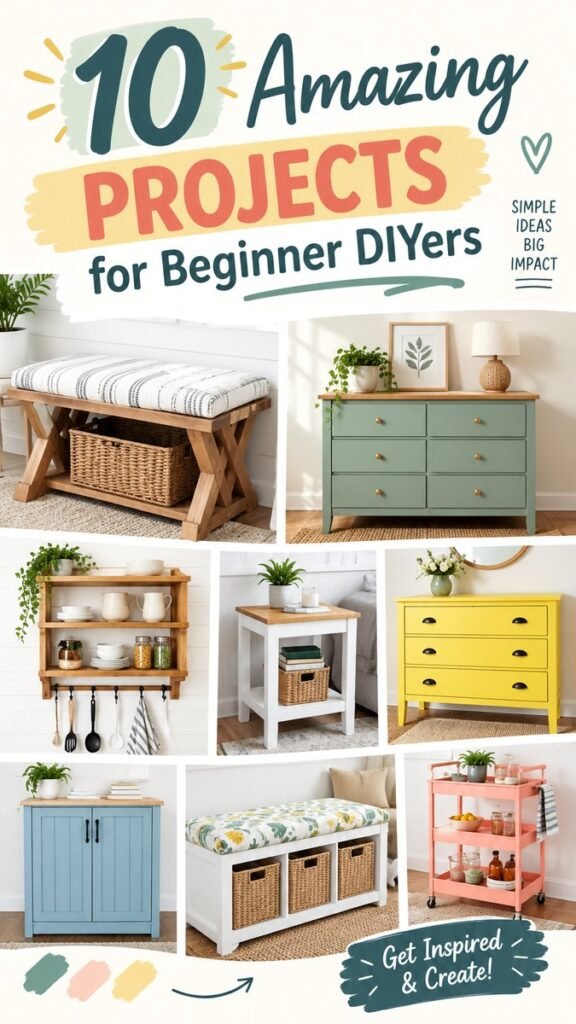
Creating beautiful furniture at home does not have to begin with complicated woodworking skills or a fully equipped workshop. The ideas shown here demonstrate how simple furniture plans can turn basic materials, practical construction techniques, and a little creativity into useful pieces for everyday living. From benches and storage cabinets to shelves, side tables, dressers, and rolling carts, beginner-friendly DIY furniture projects offer plenty of ways to personalize a room while keeping the process approachable.
Key Takeaways
- Choose simple furniture plans when you are building your confidence.
- Focus on practical pieces such as benches, shelves, tables, and cabinets.
- Use paint, stain, fabric, and hardware to create a personalized finish.
- Measure carefully before cutting or assembling any furniture project.
- Prioritize sturdy construction, especially for seating and storage pieces.
- Adapt dimensions and colors to match your room and available space.
Why DIY Furniture Plans Are Great for Beginners
DIY furniture plans give beginners something important: a clear starting point. Instead of wondering how to transform loose boards or an unfinished piece into usable furniture, a good plan helps break the project into manageable stages. This makes the process less intimidating and gives you an opportunity to learn basic measuring, cutting, sanding, assembling, and finishing techniques.
The furniture ideas represented in this collection are especially approachable because they combine function with straightforward shapes. A simple bench, compact table, open shelf, or painted cabinet can make a noticeable difference in a room without requiring an elaborate design.
Important: The best beginner furniture project is one that matches your current skill level. Start with a manageable design, concentrate on accurate measurements, and treat each project as an opportunity to build skills for the next one.
10 DIY Furniture Ideas to Inspire Your Next Project
A good furniture project should solve a real problem while adding personality to your home. The collection shown here provides a useful mix of seating, storage, display, and organization ideas. You can recreate the general concepts or use them as inspiration for a completely customized design.
1. Build a Simple Storage Bench
A storage bench is one of the most versatile pieces a beginner can make. The basic structure can combine a sturdy frame with a comfortable upholstered top and an open lower section for baskets or everyday storage. It can work at the end of a bed, beneath a window, in an entryway, or along an unused wall.
For a beginner-friendly version, keep the frame rectangular and focus on strong joints. A removable or padded seat adds comfort while baskets underneath provide an easy way to hide blankets, shoes, books, or accessories.
2. Create a Compact Side Table
Small tables are excellent starter projects because they require less material and can usually be completed without a complicated construction process. A basic side table can include a flat tabletop, four legs, and a lower shelf for books or baskets.
Consider building a table that fits beside a sofa, bed, or reading chair. Once the basic structure is complete, paint or stain can dramatically change its appearance. A natural wood top paired with a painted base is another simple way to introduce contrast.
3. Make an Open Kitchen Shelf
Open shelving combines storage and decoration in one project. A wall-mounted shelf with hooks underneath can hold dishes, mugs, utensils, towels, jars, or small decorative pieces. It is particularly useful when countertop and cabinet space is limited.
Keep the shelf visually light by choosing a straightforward wooden design. Sand all exposed edges carefully and make sure the mounting hardware is appropriate for the wall and the intended load.
4. Refresh a Small Dresser
A dresser does not always need to be built entirely from scratch. For many DIYers, updating an existing piece is a more accessible introduction to furniture projects. A fresh coat of paint, new drawer pulls, and careful surface preparation can transform a dated dresser into something that feels completely different.
Soft greens, cheerful yellows, muted blues, and warm neutrals can all create different moods. Before painting, clean the surface, repair visible imperfections, and prepare it according to the type of finish already on the furniture.
5. Build a Simple Storage Cabinet
A compact cabinet is another useful addition to a DIY furniture collection. It can provide concealed storage while also becoming a decorative focal point. A simple rectangular cabinet with doors is enough to get started, and the dimensions can be adjusted to fit a hallway, bedroom, craft room, or living area.
Think about what the cabinet will store before deciding on its internal layout. Adjustable shelves, open compartments, or a combination of both can make the finished piece more practical.
6. Try a Cushioned Storage Bench
A second bench variation can combine seating with multiple storage compartments. This is particularly useful for bedrooms, children’s spaces, entryways, and living rooms where extra organization is always welcome.
Fabric provides an easy opportunity to introduce pattern and color. Choose a durable upholstery material and a cushion thickness that feels comfortable for the way the bench will be used.
7. Create a Painted Utility Cart
A rolling utility cart can become a flexible piece of furniture throughout the home. Use it for kitchen supplies, craft materials, plants, towels, serving items, or everyday organization. Because the cart can move from room to room, it is especially helpful in smaller spaces.
When designing your own version, pay attention to the wheel placement and overall balance. A lower center of gravity can make the cart easier to move and more stable when carrying items.
8. Make a Compact Storage Table
A small table with an open lower shelf is a practical project for almost any room. The shelf can hold a woven basket, books, folded textiles, or decorative objects while the tabletop provides space for a lamp, plant, tray, or other essentials.
This type of furniture is also easy to customize. Change the height, width, shelf position, or finish to make the piece work for your particular space.
9. Build a Freestanding Display Shelf
A freestanding shelf can provide storage without requiring a complicated built-in installation. It can be used in kitchens, bedrooms, home offices, craft rooms, or living spaces. Open shelves also give you an opportunity to display plants, books, baskets, dishes, and decorative objects.
For a beginner project, use a simple frame with evenly spaced shelves. Take extra care when checking that every shelf is level and that the completed unit is stable.
10. Turn Basic Furniture Into a Personalized Piece
One of the most rewarding parts of DIY furniture is customization. Even a straightforward design can become distinctive through color, hardware, fabric, basket storage, or decorative details.
You do not need an elaborate shape to make furniture interesting. A bold painted finish can create a focal point, while natural wood can bring warmth and texture. Simple hardware can make a cabinet feel modern, traditional, playful, or rustic depending on the style you choose.
Expert Insight
Furniture becomes much easier to plan when you think about function before appearance. Decide where the piece will go, what it needs to hold, and how people will use it. Then choose dimensions, materials, colors, and finishing details around those practical requirements.
How to Choose the Right DIY Furniture Plan
With so many furniture ideas available, it can be tempting to begin with the most impressive-looking project. Beginners usually benefit from taking a more practical approach. Look at the tools, time, materials, and space you already have before committing to a design.
Consider Your Skill Level
If you are completely new to woodworking, begin with straight cuts and simple assemblies. Shelves, small tables, basic benches, and simple storage units can help you practice essential techniques without overwhelming you.
Once you become comfortable with measuring, drilling, sanding, and assembling, you can move toward more detailed furniture designs involving doors, drawers, angled components, or more complex joinery.
Measure the Space First
Beautiful furniture is only useful when it fits the space. Measure the available area before choosing dimensions. Remember to consider doors, walkways, windows, existing furniture, and clearance around the finished piece.
Write down the measurements and keep them nearby while planning. A quick sketch can also help you visualize proportions before purchasing materials.
Think About Materials
Wood is a natural choice for many DIY furniture plans, but the right material depends on the project. Consider strength, appearance, thickness, weight, and how the surface will be finished.
For some projects, repurposing an existing piece can reduce the amount of construction required. An old cabinet, table, or dresser can provide a useful starting point for a creative furniture makeover.
Essential Steps for a Successful Furniture Project
- Choose the project: Select a design that matches your experience and available workspace.
- Plan the dimensions: Measure your room and determine the appropriate size for the furniture.
- Prepare materials: Gather boards, hardware, fasteners, finishing supplies, and the tools required for the plan.
- Measure twice: Double-check every important measurement before making a cut.
- Sand carefully: Smooth rough edges and surfaces before assembly and finishing.
- Assemble securely: Follow the construction sequence and check alignment as you work.
- Finish thoughtfully: Choose paint, stain, fabric, or another finish that suits the room.
- Inspect the result: Check stability, edges, hardware, and moving parts before using the furniture.
Pro Tip: Do not rush the measuring and preparation stages. A few extra minutes spent checking dimensions and alignment can make the assembly process smoother and help produce a much more polished final piece.
Easy Ways to Customize DIY Furniture
Customization is where simple furniture plans become personal. Once the structure is complete, there are many ways to make a piece fit your home and decorating style.
- Paint: Use a soft neutral for a subtle look or a brighter shade to create a statement piece.
- Wood finish: A clear or lightly tinted finish can emphasize natural grain and warmth.
- Hardware: Swap standard pulls or knobs for hardware that complements the room.
- Fabric: Add a patterned cushion to a bench for comfort and visual interest.
- Baskets: Woven baskets can turn open shelves into attractive hidden storage.
- Decor: Plants, books, ceramics, and small accessories can finish an open shelving project.
Try to keep the overall design balanced. If the furniture already has a strong color, simple hardware may be enough. If the structure is understated, interesting handles or a patterned cushion can add personality without making the piece feel cluttered.
Safety Tips for Beginner DIYers
Furniture projects should always be approached with care. Use tools according to their instructions and wear suitable protective equipment when cutting, drilling, sanding, or applying finishes. Keep your workspace organized so materials and tools do not become trip hazards.
For furniture intended to support people or heavy objects, pay particular attention to structural strength and secure connections. Seating, tall shelving, and storage cabinets should be stable and appropriately supported for their intended use.
It is also important to allow paints, stains, adhesives, and other finishing products to cure according to their instructions before placing the furniture into regular use.
Make Your Furniture Work for Your Home
The most useful DIY furniture is not necessarily the most complicated. A compact table can fill an awkward corner, a bench can add seating and storage, and a simple cabinet can help organize an entire room. These practical improvements can make a home feel more functional without requiring a large furniture collection.
Use the visual ideas as a starting point rather than a strict template. Change the dimensions, colors, finishes, and storage solutions to suit your needs. The same basic construction idea can often become several completely different pieces depending on how you customize it.
At a Glance
- Start with simple shapes and practical furniture.
- Measure your space before choosing dimensions.
- Practice basic woodworking skills on smaller projects.
- Personalize furniture with paint, fabric, hardware, and baskets.
- Build for stability and inspect every piece before use.
Conclusion
DIY furniture plans make it possible to create useful, attractive pieces while developing practical skills along the way. The ideas in this collection show how beginner-friendly designs can include everything from cozy storage benches and compact tables to colorful dressers, cabinets, shelves, and rolling carts.
The key is to start with a project that feels achievable, plan carefully, and give yourself room to experiment. As your confidence grows, you can introduce more detailed construction methods and more ambitious designs. Even a simple piece can become something special when you choose a finish, color, or detail that reflects your personal style.
Whether your goal is to organize a small space, refresh an old piece of furniture, or build something entirely new, these DIY furniture ideas offer plenty of inspiration. Choose one project, gather your materials, and enjoy the process of creating something practical with your own hands.