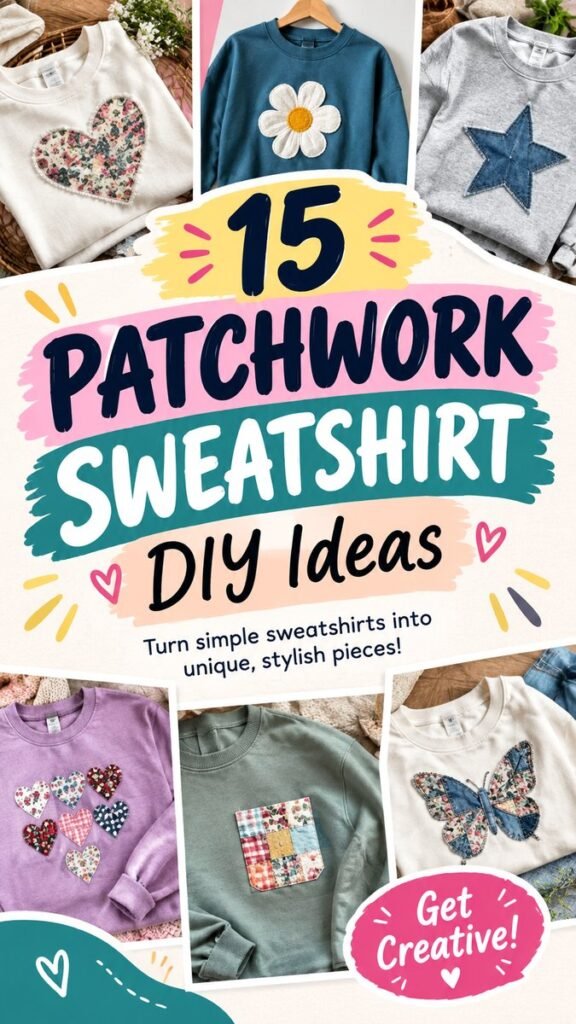
Give a plain sweatshirt a completely new personality with a little fabric, creativity, and imagination. DIY sweatshirt projects are a fun way to refresh everyday clothing while experimenting with patchwork, appliqué, color, texture, and simple sewing techniques. The ideas shown here feature playful hearts, flowers, stars, butterflies, geometric shapes, denim details, and colorful fabric scraps, proving that a basic sweatshirt can become a statement piece without requiring an elaborate wardrobe makeover.
Key Takeaways
- Patchwork is an easy way to personalize plain sweatshirts.
- Fabric scraps can become colorful hearts, flowers, stars, and other appliqués.
- Combining different prints and textures creates a handmade look.
- Simple sweatshirt projects can work for beginners and experienced crafters.
- Upcycling existing clothing can turn ordinary pieces into unique fashion.
Why DIY Sweatshirts Are So Much Fun
A sweatshirt is one of the easiest pieces of clothing to customize. Its simple shape provides a comfortable canvas for creative details without requiring an entirely new garment. Instead of leaving an old sweatshirt tucked away in the back of your closet, you can transform it with fabric pieces, appliqué shapes, embroidery, or patchwork.
The charm of a DIY sweatshirt comes from its individuality. A handmade heart made from floral fabric will look completely different from a denim star or a colorful patchwork pocket. Even when two people use the same basic idea, their fabric choices and placement can create dramatically different results.
Important: The most successful sweatshirt projects do not need to be complicated. A simple appliqué placed thoughtfully on the chest, sleeve, pocket, or back can create a strong visual statement while keeping the project approachable.
15 DIY Sweatshirt Ideas to Try
Patchwork sweatshirt designs offer endless possibilities. The inspiration can range from tiny decorative details to large focal-point motifs. Here are several creative directions to explore when planning your next DIY clothing project.
1. Floral Patchwork Sweatshirt
Floral fabric is perfect for creating a soft, cheerful sweatshirt design. Cut flowers or floral sections from leftover cotton fabric and arrange them into a larger motif. You can create one large flower in the center or scatter smaller pieces across the front.
For a coordinated look, choose fabrics that share one or two colors. For a more playful result, combine contrasting floral patterns and let each patch stand out.
2. Heart Appliqué Sweatshirt
Hearts are among the easiest shapes to cut from fabric, making them ideal for beginners. Try one oversized heart on the chest or arrange several smaller hearts in different prints. Floral cotton, gingham, denim, and patterned scraps can all create interesting variations.
You can also experiment with imperfect shapes. A slightly irregular handmade heart often gives a sweatshirt more character than a perfectly symmetrical design.
3. Denim Star Design
Old jeans can provide excellent material for sweatshirt embellishment. Denim stars add structure and contrast to soft sweatshirt fabric. A single large star makes a bold focal point, while several smaller stars can create a scattered pattern.
Leave the denim edges slightly raw for a casual upcycled appearance. Over time, the edges can develop a naturally distressed finish that adds even more personality.
4. Patchwork Pocket
Instead of decorating the main body of the sweatshirt, focus on the pocket. A patchwork pocket can become the central feature while keeping the rest of the garment simple.
Combine small squares of floral, gingham, denim, or solid fabric to create a miniature quilt-inspired design. This is especially useful when you have many small scraps that are too tiny for larger projects.
5. Butterfly Appliqué
A butterfly adds a playful and decorative touch to a sweatshirt. Use two or more fabrics for the wings to create contrast, then add stitching around the edges for definition.
A butterfly design works particularly well on cream, white, pastel, or muted sweatshirts. For a bolder look, place the butterfly slightly off-center rather than directly in the middle.
6. Gingham and Floral Combination
Mixing gingham with floral fabric creates a charming patchwork aesthetic. The structured check pattern balances the softer appearance of flowers, resulting in a design that feels colorful without becoming chaotic.
Try using gingham as the primary fabric and adding small floral sections as accents. Alternatively, reverse the proportions and let floral fabric dominate the design.
7. Colorful Scrap Collage
One of the best things about patchwork clothing is that it gives fabric scraps another purpose. Gather small pieces in different colors and patterns, then arrange them before attaching anything permanently.
You can create a random collage or follow a simple color story. Pink, red, cream, and burgundy can create a warm palette, while blue, green, lavender, and white can give the sweatshirt a softer appearance.
Why This Matters
Patchwork is more than decoration. It gives leftover textiles a new purpose and allows you to create clothing that reflects your personal taste. Start with a simple shape, arrange your materials carefully, and build the design gradually rather than trying to complete everything at once.
8. Geometric Patchwork
Not every patchwork sweatshirt needs flowers or hearts. Squares, rectangles, triangles, diamonds, and other simple shapes can create a modern geometric design.
For a cleaner appearance, repeat the same shapes in different fabrics. You can also create a larger geometric motif by combining several small pieces. This approach works particularly well when you want your DIY sweatshirt to have a contemporary handmade feel.
9. Oversized Statement Patch
For a dramatic transformation, create one large appliqué that covers a significant portion of the front. A large heart, flower, star, butterfly, or abstract shape can instantly change the appearance of a basic sweatshirt.
When using an oversized patch, keep the rest of the garment relatively simple. The contrast allows the main design to become the focal point.
10. Mixed-Texture Sweatshirt
Texture can make a handmade sweatshirt especially interesting. Combine smooth cotton with denim, corduroy, quilted scraps, or other suitable textile remnants to create dimension.
When mixing textures, consider the weight and flexibility of each material. A sweatshirt needs to remain comfortable, so decorative pieces should not make the fabric unnecessarily stiff or heavy.
11. Sleeve Patchwork Details
The sleeves are often overlooked when customizing clothing. Adding small fabric patches along one sleeve can create a subtle but stylish detail.
Try repeating a motif such as tiny hearts, stars, or flowers from the shoulder toward the cuff. You could also add one contrasting patch near the elbow for a more understated design.
12. Vintage-Inspired Fabric Scraps
Older fabrics can give a sweatshirt a nostalgic handmade appearance. Small vintage-style florals, faded checks, and muted prints can work beautifully against neutral sweatshirt colors.
Instead of trying to make every patch identical, allow slight variations in color and pattern. The resulting combination can feel like a collection of memories sewn into one garment.
13. Patchwork Around a Pocket
If you want to add detail without covering the entire sweatshirt, frame the pocket with fabric pieces. Small patches placed around the pocket can create a border effect while keeping the garment practical.
This approach is also a good way to use very small fabric remnants. Arrange the pieces first and photograph the layout before attaching them so you can easily recreate the arrangement.
14. Monochrome Patchwork
Patchwork does not always have to be colorful. A monochrome design using different shades of one color can look surprisingly sophisticated.
For example, several shades of blue can be combined with denim, pale blue cotton, and deeper blue prints. The different patterns provide interest while the limited color palette keeps the design cohesive.
15. Playful Mixed-Motif Sweatshirt
For maximum personality, combine several motifs in one design. Hearts, flowers, stars, butterflies, and small geometric patches can work together when they share a similar color palette.
The key is balance. Choose one dominant motif, a few supporting shapes, and enough empty space for the sweatshirt fabric to remain visible.
Materials for a DIY Patchwork Sweatshirt
You do not need an extensive craft collection to get started. The exact materials depend on your chosen technique, but a basic project can be built around a few simple supplies.
- A plain sweatshirt or an older sweatshirt ready for an update
- Cotton fabric scraps in complementary colors
- Denim or other suitable fabric remnants
- Fabric scissors
- Fabric-safe marking tool
- Thread suitable for the fabrics being used
- Needle or sewing machine
- Pins or fabric clips
- Optional fabric adhesive for temporary positioning
If you are new to clothing customization, start with lightweight fabric scraps and a simple shape. This makes it easier to practice positioning and stitching before attempting a larger patchwork design.
Pro Tip: Always arrange your fabric pieces on the sweatshirt before attaching them. Step back and look at the design from a distance. A composition that looks crowded up close may look balanced when viewed as a complete garment.
How to Plan Your DIY Sweatshirt Design
Planning is one of the easiest ways to improve the final result. Before cutting your favorite fabrics, decide where the main visual focus should be. The center chest is an obvious choice, but the pocket, shoulder, sleeve, or back can create equally interesting results.
Choose a Simple Color Palette
Start with two or three main colors and add patterned fabrics that include those shades. This helps unrelated fabric scraps feel connected. If your fabrics are already very colorful, use a neutral sweatshirt as the background.
Create a Focal Point
Choose one element that catches the eye first. It might be a large floral shape, an oversized heart, a denim star, or a colorful patchwork arrangement. Supporting details can then be placed around it.
Think About Scale
Large patches create a bold effect, while small patches feel more delicate and detailed. Combining both sizes can add visual rhythm. Avoid placing every element at exactly the same size unless you are intentionally creating a repeating pattern.
Tips for Making Patchwork Look Polished
A handmade project can still have a clean, professional appearance. The difference often comes down to preparation and consistency rather than advanced sewing skills.
- Prewash suitable fabric scraps: This can help reduce unexpected shrinkage later.
- Keep edges neat: Consistent shapes make patchwork look intentional.
- Test your layout: Arrange everything before sewing or permanently attaching pieces.
- Match thread thoughtfully: Coordinating thread can blend into the design, while contrasting thread can become a decorative detail.
- Check comfort: Avoid placing bulky decorations where they could interfere with movement or comfort.
- Work gradually: Complete one section at a time and reassess the overall composition.
Remember that handmade does not mean imperfectly planned. A little preparation can help preserve the creative, relaxed character of patchwork while making the final sweatshirt feel thoughtfully designed.
Easy Ways to Personalize Your Sweatshirt
Once you become comfortable with basic patchwork, there are many ways to make the concept your own. Add initials, a favorite shape, a collection of small fabric motifs, or a combination of fabrics that reminds you of a particular style.
You can also personalize the placement. A tiny patch near the hem creates a subtle detail, while a large arrangement across the chest makes the project much more noticeable. Decorative stitching can be used around individual patches to give the design additional definition.
For an especially cohesive wardrobe piece, coordinate your sweatshirt with colors already found in your jeans, skirts, sneakers, bags, or other everyday accessories. A handmade garment becomes easier to style when its colors connect naturally with pieces you already own.
Making Upcycling Part of Your Sewing Projects
DIY sweatshirt projects are also a practical way to explore clothing upcycling. Instead of discarding old garments or small fabric leftovers, you can turn them into decorative details.
Old jeans can become stars or pockets. Small cotton remnants can become hearts and flowers. Leftover quilt fabric can become geometric patches. Even a sweatshirt that has lost its original appeal can become interesting again with a thoughtful redesign.
This approach encourages creativity without requiring a completely new set of materials for every project. The more scraps you collect, the more combinations you can experiment with.
At a Glance
- Start with a plain sweatshirt and a small selection of fabric scraps.
- Choose one main motif before adding supporting details.
- Mix prints and textures while keeping the color palette connected.
- Arrange everything first so the finished design feels balanced.
- Use patchwork as an opportunity to refresh and personalize older clothing.
Conclusion: Make Your Sweatshirt Uniquely Yours
A DIY sweatshirt is a simple project with plenty of room for creativity. Whether you choose a single floral appliqué, a collection of colorful hearts, a denim star, a patchwork pocket, or an entire collage of fabric scraps, the goal is to create something that feels personal.
Start with the materials you already have, experiment with shapes and colors, and do not be afraid to try an unexpected combination. The beauty of patchwork is that every fabric piece contributes something different. Small imperfections can even become part of the handmade charm.
Final Tip: Save your favorite patchwork sweatshirt ideas before starting your project, then use them as inspiration while developing your own color palette, motif placement, and fabric combinations. The best DIY design is one that reflects your personal style.
With a basic sweatshirt and a little imagination, you can turn an ordinary wardrobe staple into a creative handmade piece. Gather your fabric scraps, sketch a few ideas, and start designing a sweatshirt that is completely your own.
Tags
DIY Sweatshirt Sweatshirt DIY Patchwork DIY DIY Clothing Upcycled Fashion Sewing Projects Fabric Scrap Crafts DIY Fashion