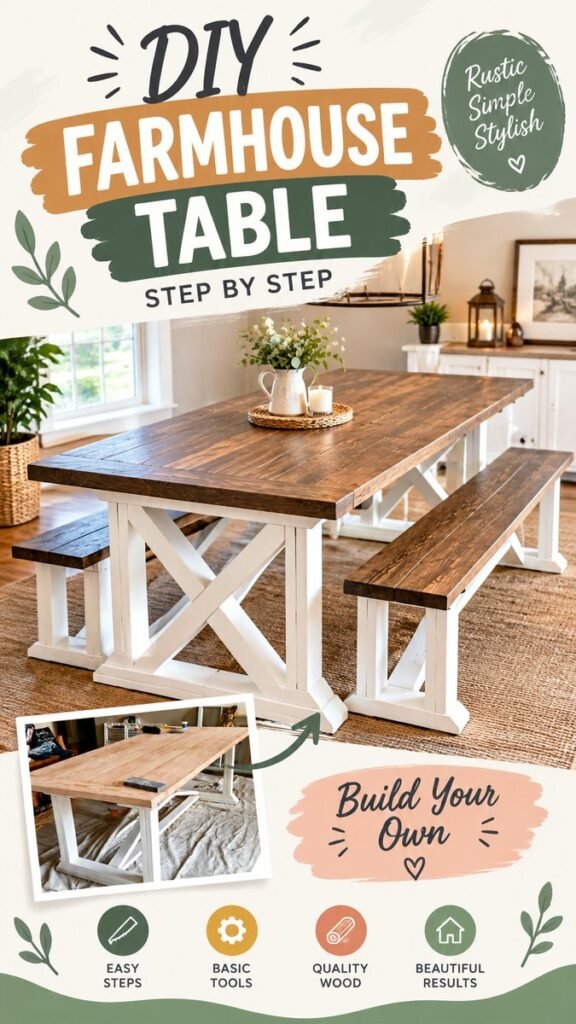
Building a DIY dining table is a rewarding way to create a practical centerpiece that feels personal, warm, and perfectly suited to your home. The farmhouse-inspired design shown here combines a substantial wood tabletop with a crisp painted base and sturdy bench seating, creating a relaxed look that works beautifully for everyday meals, family gatherings, and casual entertaining. With thoughtful planning, basic woodworking tools, and a little patience, you can create a dining table that looks custom without requiring an overly complicated design.
Key Takeaways
- A simple farmhouse silhouette can create a timeless dining centerpiece.
- A natural wood top pairs beautifully with a light painted base.
- Diagonal supports can add visual character while reinforcing the base.
- Matching benches create a coordinated and practical dining set.
- Careful sanding and finishing can make affordable materials look polished.
Why a DIY Dining Table Is Worth Making
A dining table is one of those pieces of furniture that can influence the entire feel of a room. Instead of searching for a ready-made table that may not have the right dimensions, finish, or style, a DIY dining table gives you more control over the final result. You can adjust the length, width, height, wood tone, base color, and seating arrangement to suit your space.
The farmhouse look is particularly approachable because it does not depend on complicated decorative details. Its appeal comes from natural wood grain, substantial proportions, simple construction, and a relaxed finish. The contrast between a warm wood tabletop and a painted white or cream base creates a fresh yet comfortable appearance.
Important: The most successful DIY dining tables balance appearance with structure. A beautiful tabletop is only part of the project. The base needs to remain stable, level, and strong enough for regular everyday use.
Planning Your Farmhouse Dining Table
Before cutting any boards, think about how the finished table will be used. Consider the available floor space, the number of people who normally sit at the table, and whether you want separate chairs, benches, or a combination of both. A rectangular tabletop is especially versatile because it works well in dining rooms, open-plan kitchens, breakfast areas, and multipurpose spaces.
Measure the room carefully and leave enough space around the table for people to sit down and move comfortably. Remember to account for chairs and benches when deciding where the finished piece will stand. A table can look perfect on its own but feel awkward if there is not enough clearance around it.
Choose a Practical Tabletop Size
The tabletop should be large enough for your household without overwhelming the room. If your dining area is compact, a narrower design can preserve walking space. Larger rooms can accommodate a more substantial farmhouse table with wide benches on either side.
Rather than copying a fixed dimension, use your own room measurements as the starting point. This is one of the biggest advantages of building your own furniture. You can make the table fit the space instead of forcing the space to fit a standard furniture size.
Think About the Overall Style
The design shown has a strong rustic farmhouse character, but the basic construction can be adapted to many interiors. A lighter stain can create an airy Scandinavian-inspired appearance, while a deeper brown finish can emphasize a traditional rustic look. Painting the base in white, cream, gray, or another muted shade can create contrast with the wood.
Simple styling is also part of the charm. A small vase, greenery, neutral tableware, or a simple centerpiece can complement the tabletop without hiding its natural texture.
Materials and Basic Tools
A project like this can be approached with common woodworking supplies. The exact materials will depend on your chosen dimensions and construction method, but the basic shopping list can remain fairly simple.
- Straight, suitable boards for the tabletop
- Lumber for legs, rails, braces, and supporting components
- Wood screws and appropriate fasteners
- Wood glue where suitable for the construction method
- Sandpaper in several grits
- Wood stain or another suitable tabletop finish
- Primer and paint for the base if a painted finish is desired
- A measuring tape, square, drill, saw, and clamps
Always select lumber that is appropriate for furniture construction and inspect boards before using them. Avoid pieces with serious damage, excessive warping, or defects that could compromise the finished structure.
Building the Tabletop
The tabletop is the visual star of this project, so preparation makes a major difference. If you are joining several boards together, begin by arranging them so the grain direction and overall appearance look pleasing. Try different arrangements before permanently assembling anything.
1. Prepare and Arrange the Boards
Lay the boards on a flat work surface and inspect the edges. The boards should sit together neatly without large gaps. Measure the planned overall dimensions and mark any cuts that are required.
2. Join the Top
Use an appropriate woodworking method to connect the boards and keep the tabletop aligned while the adhesive cures if glue is part of your construction. Clamps can help maintain pressure and alignment during assembly.
3. Sand Thoroughly
Once the tabletop is assembled and secure, sand the surface progressively until it feels smooth. Pay attention to board transitions, corners, and exposed edges. A smooth surface will not only feel better but will also accept stain or protective finish more evenly.
Pro Tip: Do not rush the sanding stage. A carefully prepared wood surface often makes a bigger difference to the final appearance than an expensive finishing product.
Creating the Sturdy Farmhouse Base
The base gives this dining table its distinctive farmhouse personality. The example features substantial legs and diagonal bracing that create an attractive X-style visual detail. This approach adds architectural interest while helping the table feel grounded and substantial.
Build the Leg Assemblies
Start by creating the leg sections according to your planned measurements. Keep the legs square and check every connection carefully. A carpenter’s square is especially useful during this stage because small alignment errors can become much more noticeable once the tabletop is attached.
Add Cross Supports
Diagonal supports are a defining visual feature of many farmhouse table designs. Measure and cut these pieces carefully so the angles meet cleanly. Dry-fit each component before fastening it permanently.
The supporting structure should sit evenly on the floor without rocking. Test the base before attaching the tabletop and correct any instability while the components are still easy to adjust.
Choosing a Two-Tone Finish
One of the easiest ways to achieve the warm farmhouse appearance is to contrast the wood tabletop with a painted base. The natural grain becomes the focal point while the lighter legs keep the overall piece feeling bright.
For the tabletop, you can choose a natural clear finish, a warm brown stain, or another wood tone that complements your room. Test your chosen product on a scrap piece first. Different types of wood can absorb stain differently, so a small test can prevent surprises.
For the base, prepare the surface properly before painting. Sanding, cleaning, and using an appropriate primer can help create a smoother and more durable finish. Several thin coats are generally easier to control than one heavy coat.
Why This Matters
- A contrasting base helps highlight natural wood grain.
- A consistent finish ties the table and benches together.
- Surface preparation improves the appearance and longevity of the finish.
Matching DIY Benches
The matching benches shown alongside the table are a practical addition to the design. Benches can make a dining arrangement feel more casual while allowing several people to share a side of the table comfortably.
For a coordinated look, use the same or complementary wood for the bench seats and repeat the painted finish on the bench bases. Keeping the materials and colors consistent makes the entire dining set feel intentionally designed.
Keep Bench Proportions Comfortable
A bench should be proportioned to the table so that people can sit comfortably without feeling cramped underneath the tabletop. Consider the thickness of the seat, the height of the supporting structure, and the amount of legroom available.
Before applying the final finish, test the bench in the intended dining position. This practical check can reveal spacing issues that measurements alone may not show.
How to Make the Finished Table Feel Custom
The beauty of a DIY dining table is that the finishing touches can reflect your personal style. You can keep the design understated or introduce details that make it more distinctive.
- Change the stain: Try a lighter, medium, or deeper wood tone.
- Change the base color: Soft white, warm cream, gray, or muted neutral shades can work beautifully.
- Adjust the tabletop: Use wider or narrower boards to change the visual character.
- Add subtle texture: Let natural grain and carefully sanded edges remain visible.
- Coordinate the seating: Matching benches or complementary chairs can complete the room.
Keep the styling intentional rather than overcrowding the tabletop. The natural wood surface already provides texture and visual interest, so a simple centerpiece can be enough.
Common DIY Dining Table Mistakes to Avoid
Furniture projects become much easier when you anticipate common problems. Rushing measurements is one of the biggest mistakes. Measure twice before cutting, and check the relationship between every major component.
Another common issue is failing to test the base before finishing it. Assemble the major structural components first and check for wobbling or uneven contact with the floor. It is much easier to correct structural problems before painting or staining.
Finally, avoid treating the finishing process as an afterthought. Uneven sanding, visible rough spots, and inconsistent coating can distract from an otherwise well-built table. Give the surface preparation and finishing stages enough time.
Simple Styling Ideas for Your New Table
Once the construction is complete, style the dining table in a way that allows the craftsmanship to remain visible. A small arrangement of greenery, a neutral vase, woven accents, or simple candles can create a welcoming farmhouse atmosphere.
For everyday use, keep the centerpiece low enough that people can easily see across the table. Natural textures such as wood, linen, woven materials, and ceramics pair especially well with a rustic tabletop.
If your dining room already contains wood flooring or other timber furniture, consider choosing a finish that complements rather than exactly matches those surfaces. Slight variations in wood tone can add depth and prevent the room from looking overly coordinated.
At a Glance
- Plan the table around your available room size.
- Prepare and sand the tabletop carefully.
- Build a square, stable base before finishing.
- Use contrasting finishes for a classic farmhouse effect.
- Coordinate benches with the table for a complete dining set.
Conclusion
A DIY dining table can completely transform the character of a dining space while giving you the satisfaction of creating something useful with your own hands. The farmhouse-inspired approach shown here proves that a straightforward combination of natural wood, a painted base, sturdy supports, and matching benches can create a warm and inviting centerpiece.
Focus on careful measurements, solid construction, thorough sanding, and a finish that complements your home. From there, simple styling can bring the finished piece to life. Whether you are furnishing a new dining area or replacing an old table, a handmade design offers plenty of room to customize the size, color, materials, and seating.
Ready to build? Use the farmhouse style as inspiration, adapt the dimensions to your space, and create a dining table that feels genuinely yours. The best DIY furniture projects are not only beautiful, but also practical enough to become part of everyday life.