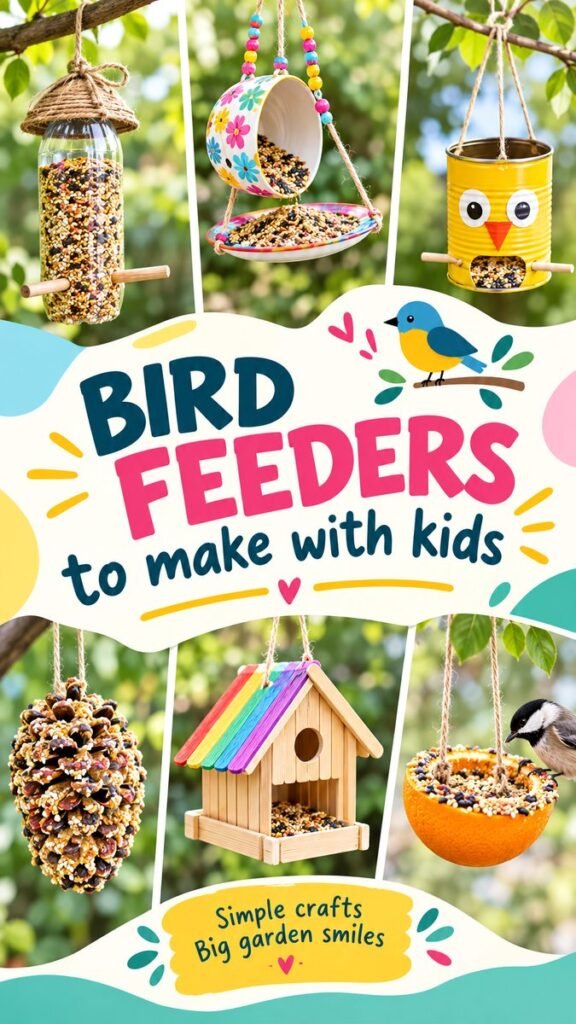
Making bird feeders DIY is a wonderful way to turn simple household and craft materials into something that brings nature closer to home. A homemade bird feeder can be colorful, creative, inexpensive, and fun to make with kids. From seed-filled pinecones and fruit bowls to recycled cans, cups, craft sticks, and hanging feeders, there are countless ways to create a cheerful feeding spot for backyard birds.
These projects are especially appealing because they combine crafting with outdoor discovery. Children can help decorate a feeder, fill it with birdseed, choose a safe place to hang it, and then watch for visiting birds. The finished crafts can add personality to a garden, balcony, patio, or outdoor space while encouraging curiosity about nature.
Key Takeaways
- DIY bird feeders can be made from simple craft and recycled materials.
- Kid-friendly projects make a fun weekend or classroom nature activity.
- Different feeder shapes can add color and creativity to outdoor spaces.
- Choose sturdy, bird-safe materials and keep feeders clean.
- Place feeders where birds can reach them while keeping the surrounding area reasonably safe.
Why Make Bird Feeders DIY?
A DIY bird feeder offers more than a finished craft. It creates an opportunity to slow down, spend time outdoors, and notice the birds that visit nearby. A project that starts with a few basic supplies can become a simple nature activity for the entire family.
Homemade feeders also leave plenty of room for creativity. Bright paint, colorful craft sticks, patterned containers, natural textures, and playful shapes can transform an ordinary feeder into an attractive garden decoration. The goal does not have to be perfection. A simple design that holds bird food securely can be just as enjoyable as an elaborate craft.
For children, the process can be particularly rewarding. They can practice measuring, sorting, decorating, assembling, and observing. Once the feeder is outside, the project continues as they look for birds and notice how different species interact with the feeding area.
Important: The most successful DIY bird feeder is not necessarily the most complicated one. Focus first on stability, safe materials, easy access to the food, and a practical location. Decorative details can come afterward.
Fun DIY Bird Feeder Ideas to Try
The inspiration for homemade bird feeders is almost endless. The ideas shown in this style of craft collection demonstrate how everyday objects can be transformed into useful feeding stations. You can choose a project based on the materials you already have, the age of the children involved, or the look you want for your outdoor space.
1. Recycled Can Bird Feeder
An empty metal can can become a playful hanging bird feeder with a little creativity. Clean the container thoroughly, make sure there are no sharp edges, and decorate the outside with bird-friendly finishes. A small perch can be added so birds have a place to land while reaching the food.
Bright colors and simple facial features can turn a can into a cheerful character. This makes the project especially appealing to children who enjoy painting and decorating. Use sturdy hanging material and check that the finished feeder remains balanced when filled.
2. Seed-Filled Pinecone Feeder
A pinecone bird feeder is one of the easiest natural craft projects to make. A pinecone provides a textured surface where bird food can cling, making it a practical choice for a quick backyard activity.
For a simple version, coat the pinecone with an appropriate sticky food layer, then gently press birdseed onto the surface. Attach a piece of sturdy natural twine and hang the finished feeder from a suitable branch.
This project is especially useful when you want a short activity that does not require complicated construction. Children can collect suitable pinecones, prepare the feeder with adult supervision, and help choose a place to hang it.
3. Cup and Plate Bird Feeder
A colorful cup paired with a plate can create a charming hanging feeder. The cup can hold additional food while the plate underneath provides a convenient feeding surface. Decorative patterns, painted details, or colorful beads can give the project a cheerful garden-craft appearance.
When creating a hanging design, pay attention to balance. The feeder should remain stable when birds land on it or when wind moves the hanging cord. Keep the construction simple and make sure all components are firmly secured.
4. Orange Half Bird Feeder
A hollowed orange half can make a naturally colorful little bird feeder. The bright fruit shell creates an attractive contrast against green leaves and branches, while the shape provides a shallow space for bird food.
This is a particularly fun project for children because the finished feeder looks different from traditional wooden designs. Hang it securely and replace it when the fruit begins to deteriorate. Keeping natural food-based feeders fresh helps maintain a clean feeding area.
5. Craft Stick Bird Feeder
Craft sticks are a versatile material for building small bird feeder structures. They can be arranged into a simple house shape, a tray, or a miniature shelter. Adding colorful sticks to the roof can create a playful rainbow-inspired design.
This type of project is a great choice for older children who enjoy construction crafts. Adults can handle any cutting or difficult assembly while children decorate the structure and help place the bird food.
6. Hanging Jar or Bottle Feeder
Clear containers can be useful for creating simple hanging feeders because it is easy to see the food inside. A bottle or jar can be adapted with a secure perch and feeding opening, depending on its shape and construction.
The main advantage of a transparent feeder is visibility. Children can easily see how much food remains and may enjoy watching birds approach the feeder. Any reused container should be cleaned carefully and checked for sharp edges, cracks, or loose pieces before use.
Choosing Materials for Homemade Bird Feeders
When planning bird feeders DIY projects, the materials should be chosen with function and safety in mind. Decorative appeal is important, but the feeder also needs to withstand outdoor conditions and remain stable when filled with food.
- Untreated wood: Useful for simple feeder structures and craft-stick designs.
- Clean containers: Recycled cans, jars, and other sturdy containers can work when prepared properly.
- Natural twine: A practical option for hanging lightweight feeders.
- Craft sticks: Helpful for building small roofs, trays, and decorative structures.
- Natural materials: Pinecones and fruit can create simple temporary feeders.
- Birdseed: Choose an appropriate seed mix for the birds commonly found in your area.
Avoid materials that could create sharp edges, loose fragments, unstable structures, or surfaces that are difficult to clean. If children are participating, adults should inspect the finished feeder before it goes outdoors.
Why This Matters
A feeder works best when its creative design supports practical use. Before adding decorations, make sure the feeder is stable, the food remains reasonably dry, and birds have enough room to approach and feed comfortably.
How to Make a Bird Feeder With Kids
Making a bird feeder with kids does not need to become a complicated construction project. The simplest approach is to divide the activity into a few manageable stages and give children tasks that match their age and abilities.
Step 1: Pick a Simple Design
Start by choosing one basic idea. A pinecone feeder is ideal for a quick project, while a craft-stick house can provide a longer building activity. Recycled containers can sit somewhere in between, offering plenty of opportunities for painting and decorating.
Step 2: Prepare the Materials
Gather the container or building materials, birdseed, hanging cord, and decorations before starting. Wash reused containers thoroughly and allow them to dry. Inspect everything for sharp edges or damaged areas.
Step 3: Let Kids Decorate
This is where children can add their personality to the project. They can choose colors, arrange craft sticks, add simple patterns, or create playful shapes. Keep decorative elements secure and avoid anything that could easily fall into the feeding area.
Step 4: Add the Bird Food
Fill the feeder with a suitable birdseed mix. Avoid overfilling it, especially if the feeder is small. A manageable amount makes it easier to monitor the food and keep the feeder clean.
Step 5: Choose a Suitable Location
Place the feeder where it can be observed easily while still providing birds with a practical feeding area. A garden branch, sturdy hook, or appropriate outdoor structure can work depending on the feeder design.
Children can help select the location, but an adult should check that the hanging point is secure. Afterward, make bird watching part of the project by keeping a simple list of the birds that appear.
Make Bird Watching Part of the Craft
The best part of a homemade bird feeder may happen after the crafting is finished. Once the feeder is outdoors, children can begin observing the activity around it. Encourage them to look quietly from a comfortable distance and notice the size, colors, movements, and behaviors of visiting birds.
A small notebook can turn the project into an ongoing nature journal. Kids can draw the birds they see, record the date, describe the weather, or keep track of which feeder design attracts the most attention.
This simple extension makes a DIY bird feeder more than a decoration. It becomes a hands-on way to connect creative play with outdoor observation.
Tips for Keeping DIY Bird Feeders Clean
Bird feeders should be checked regularly, especially when they are exposed to rain, humidity, or frequent bird activity. Remove old or spoiled food and clean the feeding surface when necessary.
- Check feeders regularly for wet or spoiled food.
- Keep feeding surfaces free from excessive buildup.
- Replace temporary natural feeders when they deteriorate.
- Inspect hanging cords and supports for wear.
- Keep the surrounding area reasonably tidy.
Pro Tip: Choose a feeder design that is easy to inspect and clean. A beautiful feeder that is difficult to maintain can become less useful over time, while a simple design can stay practical with regular care.
Creative Ways to Personalize Your Bird Feeders
There is no need for every homemade bird feeder to look the same. Personalization is part of the fun. Try coordinating the colors with your garden, using a seasonal theme, or creating a collection of different feeder styles.
For spring, pastel colors and floral patterns can create a fresh look. During summer, bright colors can complement a lively garden. Autumn-inspired feeders can use warm natural tones, while simple winter designs can emphasize wood, greenery, and natural textures.
Another idea is to create several small feeders rather than one large project. Each child can design a different feeder, giving everyone a personal craft to enjoy. Hang them in suitable locations and observe which designs become regular stopping points for birds.
Simple Bird Feeder Activities for Kids
Once the feeder is complete, extend the activity with simple games and learning opportunities.
- Bird spotting: See how many different birds can be observed from a window or outdoor seating area.
- Color watching: Notice the colors and patterns of visiting birds.
- Nature drawing: Ask children to sketch a bird they see.
- Feeder decorating: Refresh the design with a seasonal theme.
- Nature journal: Record observations over several days or weeks.
These activities can make a basic craft feel like a complete family project. They also encourage children to spend time observing rather than simply moving from one craft to the next.
At a Glance
- Use simple, sturdy materials.
- Make the project age-appropriate for children.
- Prioritize stability and clean feeding surfaces.
- Choose a practical outdoor location.
- Turn feeding into an ongoing bird-watching activity.
Conclusion: Create, Hang, and Watch
Bird feeders DIY projects are an easy way to combine crafting, outdoor time, and nature observation in one activity. The colorful collection of homemade feeder ideas shows just how many possibilities can come from ordinary materials. Whether you choose a seed-covered pinecone, recycled can, decorated cup, fruit feeder, hanging container, or small craft-stick house, the process can be adapted to fit your family and your available supplies.
The most memorable projects are often the ones that continue after the craft is finished. Once the feeder is safely placed outdoors, children can watch for visiting birds, record their observations, and learn to appreciate the small details of the natural world around them.
Keep the design simple, choose materials carefully, maintain the feeder regularly, and leave plenty of room for creativity. With a little imagination, a few basic supplies, and some birdseed, a simple DIY bird feeder can become a colorful garden project that keeps kids curious and connected to nature.