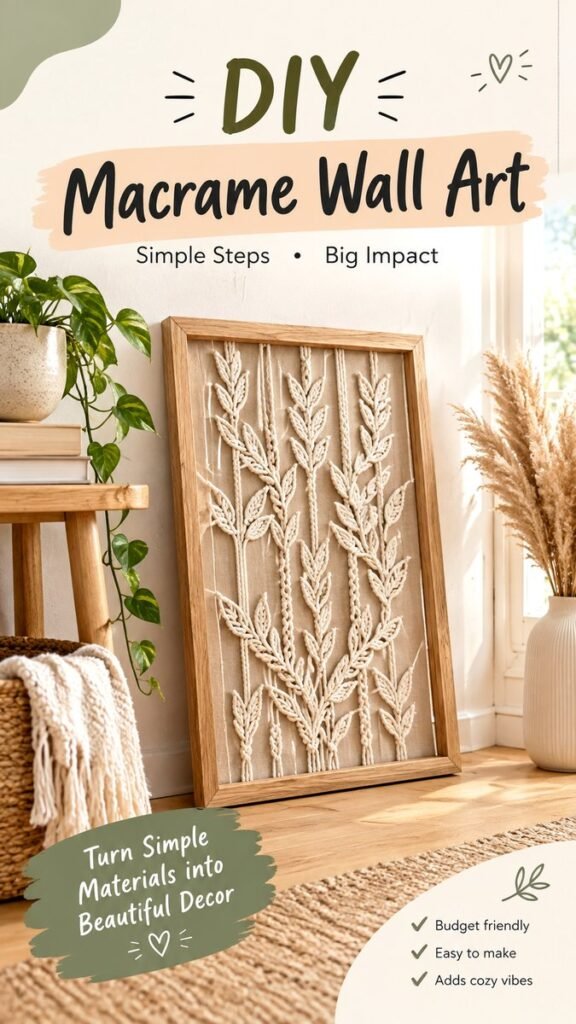
DIY frame ideas can turn an ordinary room into a warm, personalized space with surprisingly simple materials. A beautifully finished wooden frame, natural textures, soft neutral tones, and handmade details can create wall decor that feels both stylish and inviting. The look here combines rustic wood, creamy textiles, botanical-inspired details, and cozy home accents, making it a great source of inspiration for anyone who wants to create distinctive decor without relying on mass-produced artwork.
Whether you are refreshing a living room, bedroom, entryway, craft corner, or reading nook, a handmade frame gives you plenty of creative freedom. You can experiment with wood finishes, fabric backdrops, rope, macrame, dried botanicals, paint, or even repurposed materials. The goal is not perfection. It is creating something that feels connected to your personal decorating style.
Key Takeaways
- Use wooden frames to bring warmth and natural character into a room.
- Combine frames with fabric, rope, macrame, or botanical details for texture.
- Neutral colors make handmade wall art easy to coordinate with existing decor.
- Repurposed frames can become beautiful statement pieces with a little creativity.
- Mix different frame sizes and finishes to create a relaxed gallery-style display.
Why DIY Frame Ideas Work So Well in Home Decor
Frames are often treated as simple containers for photographs or artwork, but they can become decorative features themselves. A substantial wooden frame immediately adds visual weight to a wall or corner. When the frame has carved details, an aged finish, or visible natural grain, it can make even a simple interior feel more layered.
DIY frame projects also make it easier to match your decor. Instead of searching for a frame that happens to fit your preferred colors and dimensions, you can start with a basic frame and customize it. A coat of paint, a light sanding technique, a fabric insert, or a handmade embellishment can completely change its appearance.
Important: The most successful DIY frame projects usually balance structure with texture. Let the frame provide a strong visual border while the material inside adds softness, pattern, or natural interest.
Choose the Right Frame Style for Your Space
The frame is the foundation of the project, so consider the atmosphere you want to create before choosing materials. A natural wood frame works beautifully with warm, organic interiors. A painted frame can create a cleaner or more colorful look, while an ornate vintage-style frame can add character to a simple room.
Natural Wood Frames
Wood is one of the easiest materials to incorporate into DIY frame ideas because it naturally adds warmth. Light wood works especially well with cream, beige, white, sage, and other muted tones. If you prefer a rustic aesthetic, look for visible grain, slightly weathered surfaces, or reclaimed-looking finishes.
You do not necessarily need a perfectly finished frame. Small variations in wood color can actually make handmade decor feel more authentic. For a softer appearance, pair a wooden frame with linen, cotton, woven fabric, or neutral-colored cord.
Vintage and Ornate Frames
An older-looking frame can become the focal point of a room. Ornate details work particularly well when the rest of the display is simple. Instead of filling the frame with a busy image, consider using a plain fabric background, delicate textile design, or understated handmade decoration.
This approach lets the frame itself become part of the artwork. It is especially useful when you want to create a statement piece without adding lots of color.
Simple Modern Frames
For a contemporary room, keep the frame clean and uncomplicated. A slim wood border, soft neutral finish, or painted surface can provide a polished backdrop for handmade art. Minimal frames also make it easier to combine several pieces without making the wall feel crowded.
Creative Materials for DIY Frame Ideas
One of the most enjoyable parts of creating DIY frames is choosing what goes inside them. You can use materials that already exist around the home or inexpensive craft supplies to create something completely different from traditional framed artwork.
Macrame and Decorative Cord
Macrame is a natural partner for wooden frames because the softness of the cord contrasts with the structure of the wood. Simple knots can create geometric patterns, leaves, waves, fringes, or other decorative shapes. Cream or off-white cord keeps the finished piece light and versatile.
A framed macrame design can also work as a smaller alternative to a large wall hanging. Instead of taking up an entire wall, it creates a contained decorative moment that feels intentional.
Fabric and Textiles
Fabric is another easy way to transform a frame. Linen-look materials, cotton, canvas, and textured textiles can create a calm backdrop for handmade details. Choose a fabric that complements the room rather than competing with the frame.
For a layered design, attach a smaller textile element over the fabric background. This creates depth while keeping the overall palette simple.
Botanical-Inspired Details
Natural shapes are particularly effective in neutral interiors. Handmade leaves, branches, woven stems, or other botanical-inspired motifs can bring visual movement to a framed piece. You can create these shapes with cord, fabric, paper, yarn, or other craft materials.
If you prefer a very simple project, even a repeated leaf pattern can create an elegant result. Arrange the elements vertically for a tall frame or spread them outward for a more organic composition.
How to Create a Cozy DIY Framed Wall Art Piece
A framed wall art project does not have to be complicated. Start by selecting a frame that suits the size of your intended display. A medium or large rectangular frame can create a strong focal point, while smaller frames are useful for grouped arrangements.
- Choose your frame. Select a wood, painted, vintage, or thrifted frame that fits your decorating style.
- Prepare the background. Use fabric, canvas, paper, or another flat material that complements the frame.
- Plan the design. Arrange your decorative elements before attaching anything permanently.
- Add texture. Introduce cord, yarn, woven materials, or other tactile details.
- Secure everything carefully. Make sure each element is firmly attached and evenly positioned.
- Check the composition. Step back and look at the entire piece before placing it on the wall.
Planning is especially important when working with repeating elements. Small differences in spacing can change the entire appearance of the finished design. Use a ruler or simple paper guide if you want a more symmetrical result.
Expert Insight
Texture can make a neutral DIY frame feel much more interesting. When your color palette is simple, vary the surfaces instead. Combine smooth wood with soft cord, woven fabric, or subtle raised details to create depth without overwhelming the room.
How to Make a DIY Frame Look More Expensive
You do not need expensive supplies to create a sophisticated result. The secret is usually consistency. Choose a small color palette and repeat those tones throughout the project. Cream, warm wood, beige, soft green, and muted natural shades create a relaxed look that feels cohesive.
Pay attention to proportions as well. A frame that is too small for its surrounding furniture may disappear, while an oversized frame can become an intentional focal point. Consider the height of nearby tables, shelves, lamps, and other decor before deciding where your finished piece will go.
Pro Tip: If your frame has an ornate or heavily textured border, keep the artwork inside relatively simple. This creates contrast and allows the craftsmanship of the frame to stand out.
Use a Consistent Color Palette
Natural neutrals are particularly flexible. They work with wood furniture, woven baskets, soft textiles, greenery, and light-colored walls. If you want a little more contrast, add one muted accent shade instead of several competing colors.
Add Layers Without Clutter
Layering does not mean adding as many details as possible. Instead, think about visual depth. A textured background, raised decorative element, and substantial frame can be enough to create a dimensional piece.
Leave some open space around the central design. Negative space gives the eye somewhere to rest and helps handmade details remain easy to appreciate.
Where to Display DIY Frame Decor
A handmade frame can work in many areas of the home. The key is choosing a location where its textures and proportions can be appreciated.
- Living room: Place a larger framed piece near a console, side table, or reading area.
- Bedroom: Use soft colors and textile details to create a calm decorative accent.
- Entryway: A framed handmade piece can add personality near a console or bench.
- Home office: Choose a clean design that adds texture without creating visual distraction.
- Craft room: Display your frame as both functional inspiration and handmade artwork.
For a cozy arrangement, pair framed wall art with natural baskets, plants, woven textiles, and warm wood furniture. These elements reinforce the handmade character of the project without requiring every piece to match perfectly.
Easy Ways to Customize Your Frame
The beauty of DIY frame ideas is that you can change the project to suit your skill level and available materials. If you enjoy woodworking, you might build the frame yourself. If you prefer quick craft projects, start with a ready-made frame and focus on customizing the interior.
Try a Two-Tone Finish
Keep the main frame in a natural wood tone and paint a smaller interior section in a complementary neutral. This creates subtle contrast without making the design feel busy.
Experiment With Scale
Use a few large handmade elements instead of many tiny ones for a bold, modern appearance. Alternatively, repeat small motifs across the frame for a delicate, decorative effect.
Mix Old and New
A thrifted or vintage-looking frame can look fresh when paired with a modern textile design. This combination gives your decor more character and prevents the finished piece from looking overly coordinated.
DIY Frame Ideas for Different Decorating Styles
One frame design can look completely different depending on its colors and materials. For a rustic home, emphasize natural wood and slightly weathered finishes. For a minimalist interior, choose a simple frame and one restrained decorative element. For a cozy boho-inspired space, introduce woven textures, soft fibers, and organic shapes.
A modern farmhouse-inspired room can benefit from warm wood paired with cream textiles and understated details. If your space already has many decorative elements, simplify the framed artwork so it becomes a quiet supporting feature rather than another focal point.
Think of the frame as part of the room’s overall visual story. It does not have to match every item exactly. Instead, repeat one or two materials or colors already present in the space to create a natural connection.
Simple Tips for a Polished Finished Project
- Measure the frame and interior area before cutting any materials.
- Test your arrangement on a flat surface before attaching the design.
- Keep edges neat and remove excess fibers or material.
- Use repetition to make handmade patterns feel intentional.
- Step back frequently while working to check balance and spacing.
- Choose durable attachment methods when the frame will be moved or displayed vertically.
A little patience makes a noticeable difference. Handmade decor often looks most polished when the maker takes time to adjust spacing, trim loose fibers, straighten the composition, and make sure the frame sits securely.
At a Glance
- Start with a frame that complements your room.
- Use texture to add depth to neutral decor.
- Combine natural wood with soft handmade materials.
- Keep the design balanced and uncluttered.
- Customize the colors and scale to suit your space.
Final Thoughts on DIY Frame Ideas
DIY frame ideas are an easy way to make your home feel more personal while adding warmth, texture, and character to your decor. A simple wooden frame can become much more than a border when you combine it with handmade details, soft textiles, natural-inspired shapes, or creative materials.
The most appealing projects do not always require complicated techniques. A thoughtful color palette, balanced composition, and a few tactile details can create a finished piece that feels intentional and beautiful. Start with materials you already love, experiment with different arrangements, and let the character of the materials guide your design.
Whether you create a single statement frame or a collection of smaller pieces, handmade wall decor gives you an opportunity to decorate in a way that feels uniquely yours. Keep the design simple, focus on texture, and choose finishes that work naturally with your existing space. With a little creativity, an ordinary frame can become one of the most memorable details in a room.
Tags
DIY Frame Ideas DIY Home Decor Framed Wall Art Wood Frame Decor Handmade Wall Decor Rustic Home Decor Macrame Wall Art Budget Friendly Decor