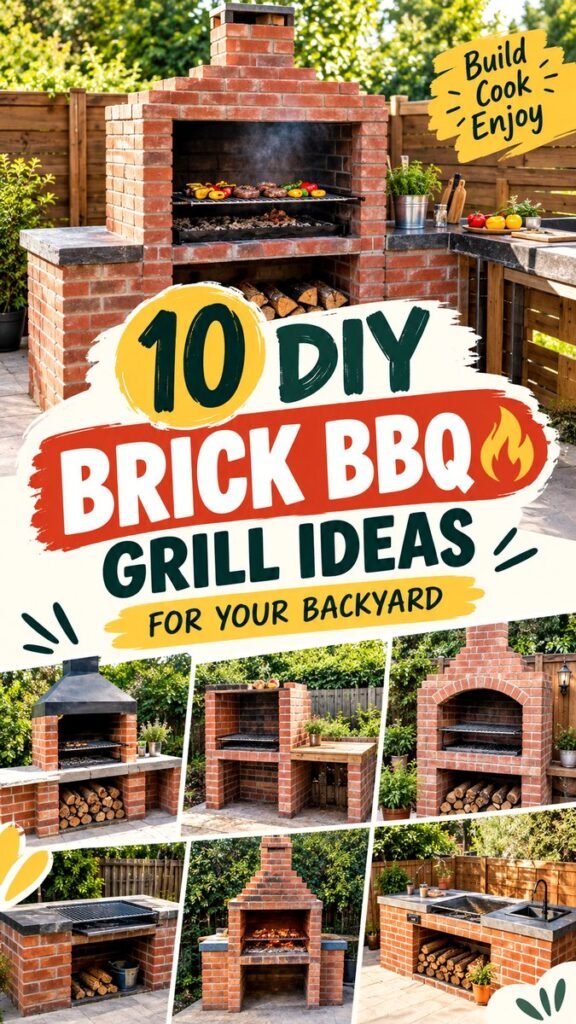
There is something special about cooking outdoors over a grill you built yourself. A DIY grill can turn an ordinary backyard into a welcoming place for weekend meals, summer gatherings, and relaxed evenings outside. Brick grill designs are especially appealing because they combine a sturdy, timeless appearance with useful cooking space. From compact brick barbecue setups to larger outdoor cooking stations with counters and storage, there are plenty of ways to create a design that fits your space and cooking style.
The ideas featured here focus on practical backyard grill concepts, especially built-in brick BBQ designs. Some include simple open cooking areas, while others combine the grill with countertops, wood storage, chimneys, or additional preparation space. The goal is not to copy one particular structure, but to use these designs as inspiration for creating a DIY grill that feels right for your own outdoor area.
Key Takeaways
- Brick is a natural choice for creating a substantial, built-in backyard grill look.
- A good DIY grill design should balance cooking space, preparation space, and accessibility.
- Countertops beside the grill can make outdoor cooking much more convenient.
- Built-in wood storage can keep fuel close without cluttering the cooking area.
- Good planning matters before construction, especially for ventilation, stability, and heat exposure.
- A simple design can still become a beautiful focal point for an outdoor entertaining area.
Why Build a DIY Grill?
A store-bought grill is convenient, but a built-in DIY grill offers something different. Instead of treating the grill as a separate appliance, you can make it part of the backyard itself. Brickwork can create a permanent cooking station that blends naturally with patios, fences, gardens, and other outdoor features.
One of the biggest advantages is flexibility. You can decide whether your grill should be compact or generous, whether it needs side counters, and whether you want space underneath for storing firewood or other supplies. You can also shape the surrounding area around the way you actually cook.
Important: A DIY brick grill should be planned as a high-heat outdoor structure, not simply as a decorative brick project. Use materials appropriate for the temperatures involved, provide proper ventilation, and make sure the structure is stable before using it for cooking.
The designs shown in this style of backyard inspiration demonstrate how much visual impact a grill can have. A simple brick enclosure can become the centerpiece of an outdoor kitchen, while a more compact grill can provide an attractive cooking area without taking over the entire yard.
10 DIY Grill Ideas to Inspire Your Backyard
1. Classic Brick BBQ Grill
A traditional brick BBQ grill is one of the easiest designs to use as a starting point. The basic concept features a brick surround with an open cooking chamber and a grill grate positioned above the fire area. Its straightforward shape gives it a timeless outdoor appearance.
This style works particularly well when you want the grill to become a permanent backyard feature. You can keep the design simple or extend the brickwork to create side surfaces for preparing food.
2. Brick Grill With Side Countertops
A grill becomes much more practical when you have somewhere to place trays, utensils, ingredients, and cooked food. Adding countertops on one or both sides creates a compact outdoor workstation.
The visual examples show how countertops can transform a basic grill into something closer to a small outdoor kitchen. A durable, heat-appropriate countertop surface can also give the finished project a polished appearance.
3. Brick Grill With Wood Storage
Using the space underneath a grill for firewood storage is a smart way to combine function and appearance. An open storage area beneath the cooking chamber can keep logs organized while adding a rustic touch to the structure.
This approach is especially attractive for traditional brick BBQ designs. The stacked wood becomes part of the overall visual design instead of sitting in a separate pile nearby.
4. Chimney-Style Brick BBQ
A taller brick grill with a chimney creates a dramatic architectural feature. The stepped or sloped brickwork around the upper portion gives the grill a more traditional outdoor fireplace appearance.
Besides creating a distinctive silhouette, this style can help define the cooking area as a dedicated outdoor feature. Careful planning is essential for the firebox, chimney, ventilation, and materials before construction.
5. Compact Backyard Brick Grill
Not every yard needs a huge outdoor kitchen. A compact DIY grill can provide a dedicated cooking area while using much less space. This is a useful direction for smaller patios, narrow garden areas, or backyards where you want to preserve plenty of open space.
A compact design can still include a cooking grate and a small side ledge. Keeping the footprint modest also makes it easier to integrate the grill with existing patio furniture and landscaping.
6. Brick Grill With Integrated Prep Area
If outdoor cooking is a regular activity, a preparation surface can make a noticeable difference. Instead of repeatedly walking between the grill and the house, you can organize ingredients, plates, tools, and serving dishes around the cooking station.
A built-in prep area can be as simple as one counter beside the grill. For a larger backyard project, you could extend the countertop to create a longer outdoor work surface.
Expert Insight
The most useful DIY grill is not necessarily the largest one. Think about how you move while cooking. Keeping the grill, preparation surface, serving area, and fuel storage logically connected can make a modest outdoor cooking station feel surprisingly efficient.
7. Open Brick Cooking Station
An open brick cooking station offers a rustic look with fewer visual elements. Instead of building a highly enclosed structure, the design can focus on a sturdy base, cooking surface, and surrounding work area.
This style is useful when you prefer a simple outdoor aesthetic. Plants, wooden fencing, stone patios, and natural landscaping can complement the warm tones of the brick without making the area feel overly formal.
8. Brick Grill With a Large Cooking Surface
If you regularly cook for several people, a wider grill area may be worth considering. A larger grate provides more room to arrange different foods while keeping ingredients organized over the heat.
When planning a larger DIY grill, remember that the cooking surface is only part of the structure. The supporting masonry, fire area, ventilation, and surrounding work surfaces all need to work together as one safe and stable design.
9. Brick Grill With Outdoor Sink or Utility Area
For a more ambitious backyard project, the grill can become part of a broader outdoor kitchen. A nearby utility area, such as a sink or dedicated prep station, can reduce trips indoors and make outdoor entertaining easier.
The inspiration for this style of design shows how a grill can be combined with countertops and other functional features. If you are planning plumbing or electrical work, those elements should be designed and installed appropriately rather than added as an afterthought.
10. Rustic Brick Grill With a Built-In Fireplace Feel
For maximum visual impact, consider a design that resembles a traditional outdoor fireplace. A wide brick opening, substantial side walls, and a chimney can create a cozy architectural centerpiece.
This approach works particularly well in yards with rustic landscaping or natural materials. Add comfortable outdoor seating nearby and the grill can become more than a cooking appliance. It becomes a gathering point for meals and conversations.
How to Plan Your DIY Grill
Before laying the first brick, spend time thinking about how the grill will be used. A beautiful design is much more enjoyable when the layout is practical.
Choose the Location Carefully
Start by considering where the grill will sit in relation to the house, patio, seating, fencing, trees, and other structures. The cooking area should have enough room for people to move comfortably around it.
Smoke and heat should also be considered when choosing a location. Follow applicable local requirements for outdoor cooking structures, clearances, fire safety, and construction.
Decide on the Size
Think about your typical cooking needs rather than choosing a size simply because a larger grill looks impressive. Consider how many people you normally serve and how much space you need for preparation.
Sketch the proposed dimensions before construction. Even a simple drawing can help you spot problems with counter space, storage, access, or overall proportions.
Plan the Cooking Chamber
The cooking chamber is the heart of the project. It needs to accommodate the grill grate while leaving appropriate space for the heat source and airflow. The design should also allow access for cleaning and maintenance.
Use components designed for grilling and high-temperature applications. Avoid assuming that every household material is suitable for direct exposure to intense heat.
Think About Workflow
A good outdoor grill layout follows a natural sequence: prepare, cook, serve, and clean. Keeping the most frequently used items within easy reach can make outdoor cooking much more comfortable.
Side counters are particularly helpful because they give you a place to set food down without balancing plates on patio furniture. Storage underneath can also keep firewood and accessories close at hand.
Pro Tip: Design the area around your cooking habits, not just the appearance of the brickwork. A little extra preparation space can often make a bigger practical difference than adding decorative details.
Choosing a Style for Your Backyard
Brick naturally creates a warm, traditional look, but the surrounding materials can change the overall style. Dark countertop surfaces can create a modern contrast, while natural wood and greenery can emphasize a rustic outdoor atmosphere.
You can also vary the brick pattern, structure shape, and countertop arrangement to make the grill feel more customized. The strongest designs usually repeat materials already found elsewhere in the yard.
For example, brick can echo an existing patio wall, while a wooden prep surface can complement a nearby fence. Plants around the edges can soften the hard masonry and help the cooking station feel integrated into the landscape.
Make the Grill a Backyard Gathering Spot
A DIY grill does not have to stand alone. Think about the entire area surrounding it. Comfortable chairs, an outdoor dining table, lighting, potted plants, and a clear walkway can turn the cooking zone into a welcoming destination.
Position seating so guests can enjoy the atmosphere without crowding the person cooking. If you regularly host larger gatherings, leave enough open space around the grill for people to move safely.
Simple details can also make the finished area feel intentional. A small shelf for grilling tools, organized wood storage, outdoor-safe containers, or a nearby serving surface can add functionality without dramatically increasing the size of the project.
Common DIY Grill Planning Mistakes to Avoid
DIY projects become much easier when common problems are considered before construction begins. One mistake is focusing entirely on the front appearance while overlooking access to the cooking grate, fire area, or cleaning surfaces.
- Ignoring ventilation: Fire needs appropriate airflow, and enclosed cooking structures require careful planning.
- Underestimating workspace: A grill without a nearby place to prepare or set down food can become inconvenient.
- Using unsuitable materials: Materials exposed to high temperatures should be appropriate for that application.
- Skipping structural planning: Brick and masonry are heavy, so the base and overall structure need to be properly designed.
- Forgetting maintenance: Plan for ash removal, grease cleanup, grate cleaning, and access to components.
- Building too close to surroundings: Consider heat, smoke, fire safety, and applicable clearance requirements.
Ways to Personalize Your DIY Brick Grill
Once the basic design is established, personalization is where the project becomes your own. Consider adding a wider counter, a dedicated wood storage opening, decorative brick patterns, or a simple serving ledge.
You can also customize the surrounding landscape. Gravel, pavers, concrete, stone, or brick can define the cooking zone, while plants can add softness around the edges.
Keep the most important features functional first. Decorative details should complement the grill rather than interfere with cooking, cleaning, ventilation, or safe movement.
At a Glance
- Start with a practical location and realistic grill size.
- Plan cooking, preparation, serving, and storage together.
- Choose materials suitable for outdoor and high-heat applications.
- Consider ventilation, clearances, stability, and local requirements.
- Use brick, counters, wood storage, and landscaping to create a cohesive backyard feature.
Create a DIY Grill You Will Actually Use
The best DIY grill ideas are the ones that combine personality with everyday practicality. A brick BBQ can be simple or elaborate, compact or expansive, rustic or modern. What matters most is that the finished cooking area works naturally with your backyard and the way you enjoy outdoor meals.
Start with the essentials: a suitable location, a thoughtful layout, a reliable cooking surface, appropriate materials, and safe construction. From there, add the features that make the space more useful, such as countertops, storage, seating, or a dedicated prep area.
Whether you are planning a small weekend-inspired project or dreaming about a complete outdoor kitchen, these brick grill ideas can help you visualize what is possible. With careful planning, a basic backyard cooking area can become a beautiful gathering spot that feels permanent, personal, and ready for memorable meals.