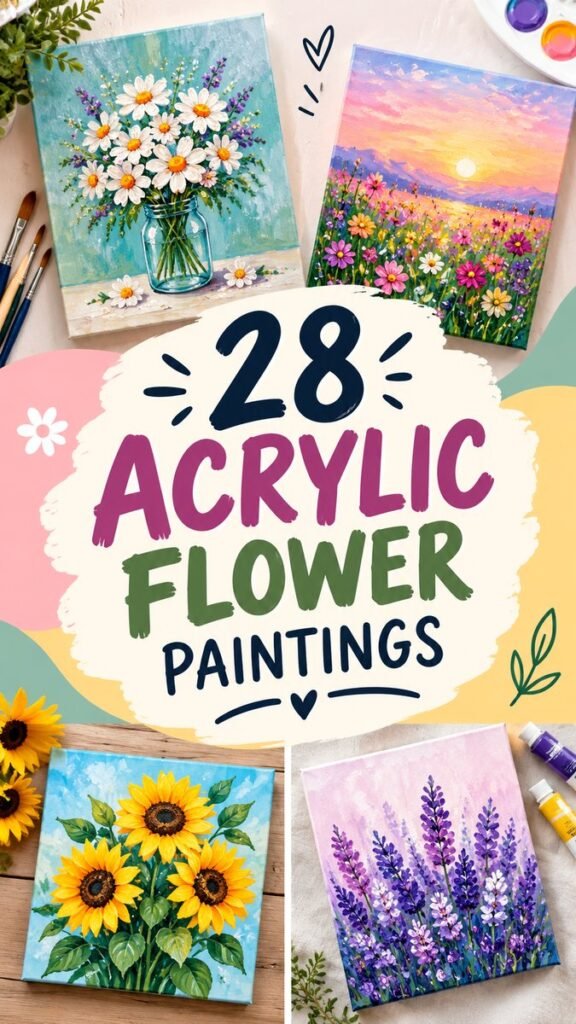
Creating beautiful wall art does not have to require advanced painting skills, expensive supplies, or hours of practice. Easy DIY canvas art is a wonderful way to turn a blank canvas into something colorful, personal, and display-worthy. Floral acrylic paintings are especially approachable because flowers can be created with simple brushstrokes, layered colors, dots, and loose shapes rather than perfectly precise details.
The inspiration here centers on cheerful flower paintings, including bouquets, wildflower fields, sunflowers, and soft lavender-inspired scenes. These ideas show how different color combinations and simple compositions can create completely different moods while using the same basic acrylic painting techniques. If you are searching for DIY canvas art easy projects, floral designs are a great place to begin.
Key Takeaways
- Simple flowers can create beautiful beginner-friendly canvas art.
- Acrylic paint works well for colorful DIY canvas painting projects.
- Layering colors and brushstrokes adds depth without complicated techniques.
- Florals, sunsets, bouquets, and wildflower fields offer plenty of creative options.
- You can personalize each painting by changing the palette, composition, and details.
Why Easy DIY Canvas Art Is So Appealing
There is something satisfying about starting with a plain canvas and gradually filling it with color. Easy canvas art gives beginners the freedom to experiment without worrying about achieving a perfect result. A slightly uneven flower petal or an imperfect brushstroke can actually make handmade artwork feel more natural and charming.
Floral paintings are particularly flexible. You can paint a single flower, create a loose bouquet, cover the canvas with tiny wildflowers, or combine flowers with a dreamy sky. The examples suggested by this style demonstrate how a few recognizable elements can turn into attractive artwork suitable for bedrooms, craft rooms, living spaces, or creative corners.
Important: The goal of beginner canvas art is not perfection. Focus on enjoying the process, choosing colors you love, and building the image one simple layer at a time.
Simple Supplies for DIY Canvas Painting
You do not need a large professional art collection to begin. A small selection of acrylic paints, a few brushes, and a canvas can take you surprisingly far. Acrylic paint is convenient for beginners because it is versatile and can be applied in thin or thick layers.
- Canvas: Choose a small or medium stretched canvas for an easy first project.
- Acrylic paints: White, green, yellow, pink, blue, purple, and a dark neutral provide plenty of possibilities.
- Small brushes: Round brushes are useful for petals, stems, leaves, and small details.
- Flat brushes: These are helpful for backgrounds, larger shapes, and broad strokes.
- Palette: Use a traditional palette, a disposable palette, or another clean surface for mixing.
- Water container: Keep water nearby for rinsing brushes between colors.
- Paper towels: These make it easy to remove excess paint and keep your brushes manageable.
Keep the setup simple. A small workspace with good lighting can be enough to create an enjoyable DIY painting session.
Easy Acrylic Flower Painting Ideas
One of the biggest advantages of floral canvas art is the number of directions you can take. You can work with realistic flowers, simplified shapes, impressionistic brushwork, or playful decorative designs. The reference style combines several approaches, making it a useful source of inspiration for anyone collecting easy painting ideas.
1. Colorful Flower Bouquet
A bouquet is an excellent beginner project because the flowers do not have to be perfectly symmetrical. Start with a simple background and loosely map out the general location of the blooms. Add larger flowers first, then fill the gaps with smaller blossoms, leaves, and stems.
Try combining pink, purple, blue, peach, and white flowers for a cheerful composition. Darker greens can help separate the blooms and give the bouquet more structure.
2. Acrylic Wildflower Field
A field of flowers can look complicated while actually being built from very simple marks. Paint a soft sky across the upper part of the canvas, then create a green field underneath. Once the background dries, add stems and clusters of flowers using small brushstrokes and dots.
Do not try to paint every flower individually. Vary the height, size, and color of the blooms so the field feels lively. Pink, orange, yellow, purple, and white flowers can create an especially playful result.
3. Simple Daisy Canvas
Daisies are among the easiest flowers to simplify into painted shapes. Use a small round brush to create several white petals around a yellow or orange center. Add green stems and narrow leaves, then place the flowers against a blue, gray, or pastel background.
A simple daisy composition can be completed on a small canvas and makes a lovely introduction to acrylic flower painting.
4. Sunflower Canvas Art
Sunflowers naturally create a strong focal point because of their bright yellow petals and darker centers. Paint a blue or lightly textured background first. Add green leaves and stems, followed by yellow petals arranged around a central brown or deep-toned circle.
For a more energetic look, use several shades of yellow instead of relying on one flat color. A lighter shade can highlight the petals while a warmer yellow adds depth.
5. Lavender-Inspired Painting
Purple flowers can create a soft, calming canvas without requiring intricate details. Paint a pale pink, cream, blue, or lavender background and add tall green stems. Use small purple brush marks along the upper portions of the stems to suggest clusters of blossoms.
This approach is ideal when you want a painting that looks detailed from a distance but is actually made from repetitive, beginner-friendly marks.
How to Make DIY Canvas Art Easy for Beginners
The easiest way to approach a canvas painting is to divide it into manageable stages. Instead of thinking about the entire finished artwork, concentrate on one layer at a time.
- Plan the composition. Decide whether you want a bouquet, field, single flower, or landscape.
- Choose a color palette. Pick three to six main colors before beginning.
- Paint the background. Cover the canvas with a smooth base or loose textured strokes.
- Add large shapes. Block in flowers, leaves, hills, or other major elements.
- Build the flowers. Layer petals and centers over the initial shapes.
- Add stems and leaves. Use varied greens to create movement and contrast.
- Finish with details. Add dots, highlights, tiny flowers, or texture where needed.
- Let the artwork dry. Step back and decide whether any areas need another layer.
Pro Tip: Work from larger shapes toward smaller details. This keeps the composition organized and prevents you from spending too much time on tiny elements before the overall painting is established.
Choosing a Color Palette for Flower Paintings
Color can completely change the personality of easy DIY canvas art. A pastel palette can make a painting feel soft and airy, while saturated colors create a bright and energetic look. You can also use a limited palette to make the finished piece feel more coordinated.
For a cheerful floral canvas, try combinations such as pink and yellow, purple and blue, or orange and green. White is useful for softening colors and creating highlights. A darker green can provide contrast between bright flowers.
Another effective approach is to start with the mood you want. For a peaceful painting, choose muted blues, lavender, pale pink, and cream. For a lively wildflower scene, use stronger pinks, yellows, oranges, purples, and greens.
Why This Matters
A consistent color palette can make even very simple brushstrokes look intentional. Choose a few dominant colors and repeat them throughout the canvas to create visual harmony.
Brush Techniques That Make Flower Art Easier
You can create many flower shapes without mastering complicated painting techniques. Simple brush movements are enough to suggest petals, leaves, stems, and textured backgrounds.
Dotting
Dip the end of a small brush into acrylic paint and tap it lightly onto the canvas. Repeating this motion creates tiny blossoms and flower centers. Vary the pressure and spacing to keep the pattern natural.
Petal Strokes
Use a round brush to pull short strokes outward from the center of a flower. Repeat the motion around the center until you have a recognizable bloom. Changing the length of each stroke creates a more organic appearance.
Layering
Let the first layer become sufficiently dry before adding lighter or darker paint on top. Layering creates depth and allows you to correct or enhance areas without repainting the entire canvas.
Dry Brush Texture
Use a brush with only a small amount of paint to create a textured effect. This works beautifully for grassy fields, soft clouds, rough backgrounds, and subtle highlights.
Creating a Beautiful Background
The background can be just as important as the flowers. A simple background allows the blooms to become the main focal point, while a more colorful background can turn the painting into a complete scene.
For an easy approach, apply a light base color and add broad strokes in a second shade. You can blend sections while the paint is still workable or allow layers to dry for a more textured appearance.
Sunset-inspired backgrounds are particularly effective for wildflower paintings. Blend soft pink, peach, yellow, lavender, and blue tones across the canvas, then add the field and flowers once the background has dried enough to work over.
Ways to Personalize Your Canvas Art
The best DIY canvas art projects leave room for personal creativity. You can use the same basic flower idea and transform it into something completely different simply by changing the composition.
- Paint a single oversized flower as the focal point.
- Create a loose bouquet that fills most of the canvas.
- Use tiny flowers to create a colorful meadow.
- Experiment with pastel backgrounds for a softer appearance.
- Try bold contrasting colors for a more energetic design.
- Add small leaves between flowers to fill empty spaces.
- Use simple abstract brushstrokes instead of realistic petals.
You can also experiment with canvas sizes. A small square canvas is convenient for quick projects, while a larger rectangular canvas gives you more room for landscapes and wide flower fields.
Common Beginner Mistakes to Avoid
Easy painting does not mean you have to avoid learning from mistakes. Understanding a few common problems can make the process much more enjoyable.
Adding Too Many Details Too Soon
Small details are exciting, but adding them before the major shapes are established can make the painting feel crowded. Begin with the background, large flowers, and main areas of color.
Using Only One Shade
Flowers and leaves often look more dimensional when several related shades are used. Even a small highlight or darker accent can make a major difference.
Making Everything Perfectly Even
Nature is full of variation. Different flower sizes, irregular petals, uneven stems, and changing colors can make a painting feel more lively. Do not worry if every flower is slightly different.
Easy Canvas Art for a Relaxing Creative Project
Painting flowers can be a satisfying way to spend a quiet afternoon or weekend. The repetitive movements involved in creating petals, leaves, and tiny blossoms can make the process feel calm and approachable.
You can also make the project more enjoyable by preparing your supplies beforehand, selecting a playlist, and giving yourself permission to experiment. Instead of treating the canvas like a test, think of it as a space where you can explore color and texture.
Whether your finished artwork looks realistic, abstract, playful, or somewhere in between, it can still become a meaningful handmade decoration.
At a Glance
- Start with a simple floral subject.
- Use acrylic paints and a few basic brushes.
- Build the painting from background to foreground.
- Combine different flower sizes for natural variety.
- Use color and texture to make the canvas your own.
Conclusion: Make Your Own Easy DIY Canvas Art
Easy DIY canvas art is all about making creativity feel accessible. You do not need advanced painting experience to create an attractive floral canvas. With a blank canvas, a few acrylic colors, basic brushes, and a willingness to experiment, you can build beautiful artwork through simple layers and repeatable techniques.
Flower bouquets, daisies, sunflowers, lavender stems, and colorful wildflower fields are all excellent starting points. Try different palettes, vary your brushstrokes, and allow the artwork to develop naturally. The most appealing handmade pieces often have small imperfections that give them character.
Whether you are looking for an easy weekend craft, beginner acrylic painting inspiration, or a colorful piece of DIY wall art, floral canvas painting offers endless possibilities. Choose your favorite idea, gather your supplies, and start with one simple brushstroke. Before long, that blank canvas can become something uniquely yours.
Tags
DIY Canvas Art Easy Canvas Art Acrylic Painting Flower Painting Canvas Painting Ideas Beginner Painting DIY Wall Art Acrylic Flower Art