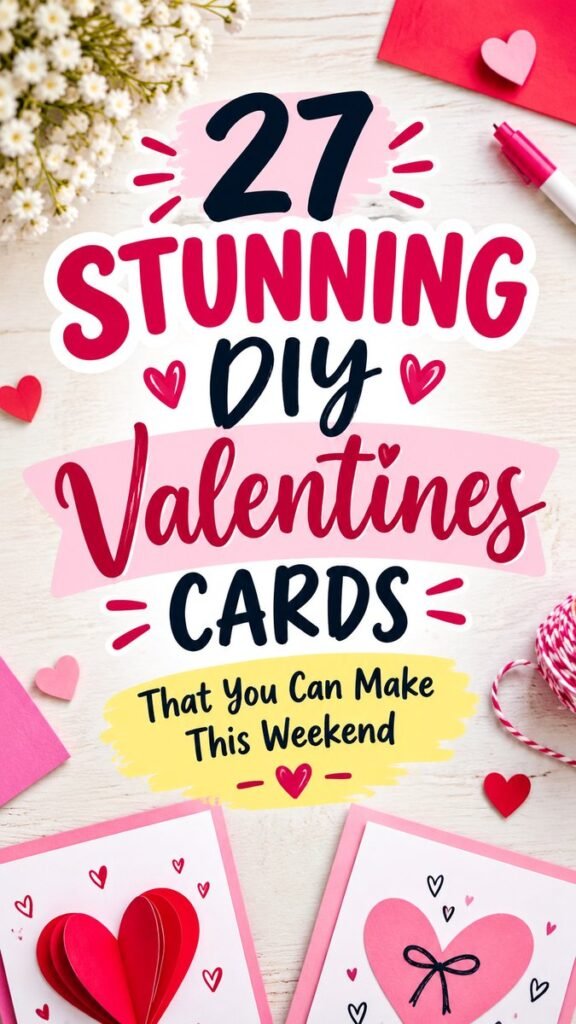
DIY Valentines cards are a simple, creative way to turn paper, markers, hearts, and a few everyday craft supplies into something personal and memorable. Whether you are making cards for friends, family, classmates, children, or someone special, handmade designs give you plenty of room to add your own colors, messages, and creative details. With a little cardstock and imagination, you can create beautiful Valentine cards without needing complicated crafting skills.
The ideas featured around this theme focus on colorful handmade cards with playful heart details, bold lettering, layered paper elements, and cheerful Valentine-inspired colors. They are especially useful when you want a weekend craft project that feels festive but remains approachable. From simple paper hearts to dimensional designs, there are countless ways to make DIY Valentines cards feel unique.
Key Takeaways
- DIY Valentines cards can be made with simple paper craft supplies.
- Layered hearts add dimension and visual interest to handmade cards.
- Personal messages make even simple card designs feel special.
- Bold colors and playful details create cheerful Valentine designs.
- Simple layouts are ideal for quick weekend crafting sessions.
- Handmade cards can be easily adapted for different ages and occasions.
Why Make DIY Valentines Cards?
Handmade Valentine cards have a charm that is difficult to recreate with a mass-produced design. A simple card becomes more meaningful when you choose the paper, create the decorations, and write the message yourself. The process can also be relaxing and enjoyable, making Valentine crafting about more than the finished result.
DIY Valentines cards are also flexible. You can keep the design minimal with one large paper heart and a short greeting, or build a more decorative card using multiple layers, doodles, ribbons, stickers, and colorful accents. The same basic idea can be adjusted to suit children, teenagers, adults, classrooms, parties, or family craft time.
Important: The most memorable handmade cards do not need to be complicated. A clean composition, thoughtful color combination, and personal message can make a simple paper design feel polished and intentional.
Simple Supplies for Handmade Valentine Cards
You do not need an extensive craft collection to get started. Many DIY Valentines cards can be created from basic stationery and a few decorative materials. Choosing a small selection of coordinated supplies can actually make the process easier because you can concentrate on the design rather than searching for too many materials.
Paper and Cardstock
Cardstock is an excellent foundation because it is sturdy enough to fold into a card and strong enough to support decorative layers. White, cream, pink, red, and pastel cardstock are versatile choices. Colored construction paper can also work well for cutout hearts and simple embellishments.
Pens and Markers
Markers are useful for writing greetings, outlining shapes, adding doodles, and creating bold lettering. A dark pen can provide contrast against pale paper, while pink or red markers can add playful accents. If the card will be made by children, washable markers can be a practical option.
Decorative Details
Small embellishments can completely change the appearance of a card. Consider paper hearts, stickers, ribbon, baker’s twine, washi tape, buttons, patterned paper, or small hand-drawn shapes. You can also create decorations entirely from scraps of cardstock, making the project inexpensive and easy to customize.
A Simple Color Palette
For a cohesive Valentine look, choose two or three main colors before you begin. Pink and red create a classic combination, while adding white, cream, yellow, or navy can provide contrast. Using a limited palette helps the card look organized even when you add several decorative elements.
27 DIY Valentines Card Ideas to Try
The beauty of this craft theme is that one basic card shape can inspire many different designs. Instead of treating the following ideas as strict patterns, use them as starting points and adjust the colors, messages, and embellishments to suit your style.
1. Layered Paper Heart Card
Cut several hearts in gradually different sizes and layer them onto the front of a folded card. Slightly offsetting the shapes creates a playful dimensional effect. Use contrasting shades of pink and red for a bright finish.
2. Large Statement Heart
Create one oversized heart as the main focal point. Add a short handwritten greeting underneath or across the heart. This approach keeps the design simple while giving it a strong visual impact.
3. Heart Doodle Card
Use a fine marker to fill the card with small hearts, stars, dots, and simple lines. Place one larger heart in the center so the smaller doodles frame the main element.
4. Hand Lettered Valentine Card
Let the message become the decoration. Write a phrase such as “Happy Valentine’s Day” in large lettering, then surround it with tiny hearts and simple accents. Practice the wording on scrap paper first if you want a cleaner result.
5. Paper Heart Bouquet
Create several small paper hearts and arrange them like a bouquet. Draw stems beneath them using a green or dark marker. This is a cheerful alternative to a traditional floral card.
6. Cutout Heart Window
Cut a heart shape from the front of the card and place a contrasting sheet of paper behind the opening. The layered effect creates a neat window without requiring complicated techniques.
7. Heart Garland Card
Draw a curved line across the card and attach or draw small hearts along it. This creates the appearance of a miniature hanging garland and works particularly well on a horizontal card layout.
8. Minimal Pink and White Card
For a clean modern look, use a white card with one pink heart and a short message. Leave plenty of open space around the design so the focal point remains clear.
9. Red Heart Collage
Cut hearts from different shades of red and arrange them in a loose collage. Vary the sizes and angles to make the design feel handmade and energetic.
10. Ribbon Accent Card
Add a narrow piece of ribbon or baker’s twine to the card as a border, bow, or small decorative accent. Keep the rest of the design simple so the texture stands out.
11. Patterned Paper Heart
Use scrapbook paper or another patterned sheet to create a heart centerpiece. Patterns with dots, stripes, or tiny shapes can give a basic card more personality.
12. Three Heart Design
Arrange three hearts across the front of the card. Keep them identical for a tidy appearance or make each one a different color and size for a more playful composition.
13. Layered Border Card
Place a smaller piece of decorative paper onto a larger cardstock base to create a framed effect. Add a heart or greeting in the center for a finished handmade look.
Expert Insight
When designing handmade cards, create one clear focal point first. Once the main heart, message, or illustration is in place, add only a few supporting details. This keeps the card visually balanced and prevents decorative elements from competing with the greeting.
14. Heart Confetti Card
Cut tiny hearts from colorful paper and scatter them across the front. A single larger heart or short greeting can anchor the composition and keep the design from feeling too busy.
15. Folded Heart Accent
Fold a paper heart gently through the center and attach it to the card so that the two sides lift slightly. This creates a simple three-dimensional decoration.
16. Color Block Valentine Card
Divide the card front into simple sections using pink, red, white, or another accent color. Add a heart or message over the blocks for a contemporary craft-inspired design.
17. Heart and Bow Card
Combine a large paper heart with a small paper or ribbon bow. This idea is especially cute when you want a card that feels decorative without requiring many supplies.
18. Handwritten Note Card
Use the front of the card for a simple phrase and reserve the inside for a longer handwritten note. The exterior can remain minimal while the personal message becomes the heart of the project.
19. Heart Sticker Design
Arrange heart stickers in a pattern around a central greeting. This is one of the quickest options and can be particularly useful for making several cards at once.
20. Mixed Texture Card
Combine smooth cardstock with textured paper, ribbon, or twine. Using different textures makes a simple design more interesting without adding excessive decoration.
21. Heart Frame Card
Create a border from small hearts around the edge of the card. Leave the center open for a message, name, or larger decorative element.
22. Pastel Valentine Card
Try softer shades such as blush pink, pale yellow, cream, and light blue. Pastel colors give the traditional Valentine theme a gentle and modern appearance.
23. Bold Typography Card
Use large block lettering for the main greeting and surround it with tiny heart accents. Strong typography can make even a very simple card feel eye-catching.
24. Handmade Heart Stack
Stack several paper hearts in the center of the card. Attach the layers only at their centers or edges to create subtle dimension and shadow.
25. Scrap Paper Valentine Card
Turn leftover craft paper into hearts, strips, dots, and other shapes. This is a practical way to use small scraps while creating a card with an intentionally playful collage appearance.
26. Simple Heart Outline
Draw one large heart outline using a marker and add a short message inside. A clean outline gives you plenty of creative freedom while keeping the project beginner-friendly.
27. Personalized Photo or Message Card
Use the same handmade layout as a base and personalize it with a small photo, name, favorite color, or meaningful message. This makes the card feel designed specifically for its recipient.
How to Make a DIY Valentine Card
Once you have chosen an idea, the actual process can be straightforward. Start by folding your cardstock into the desired card shape. Before gluing anything down, arrange all the pieces on the front so you can experiment with spacing and placement.
- Choose a sturdy cardstock base.
- Select two or three coordinating colors.
- Cut your main heart or decorative shapes.
- Arrange the pieces without adhesive first.
- Add your greeting and supporting details.
- Glue the elements securely once you are happy with the layout.
- Let the card dry completely before writing inside or placing it in an envelope.
Pro Tip: Photograph or preview your card from a short distance before finishing it. If the main greeting and focal shape are easy to see immediately, the design is likely to remain clear and attractive when viewed at a glance.
Tips for Making Cards Look More Polished
Small design choices can make a major difference. One of the easiest improvements is to create consistent spacing around the main elements. Avoid placing every decoration close together. A little open space helps the important parts of the card stand out.
Another useful technique is layering. Place a larger background shape underneath a smaller focal element to create depth. Even two layers of paper can give a handmade card a more dimensional appearance.
Typography matters too. If you are writing the greeting by hand, choose a lettering style that is easy to read. A bold word paired with a smaller handwritten phrase can create an appealing hierarchy without requiring professional lettering skills.
Keep the Message Personal
The inside of a handmade Valentine card is an opportunity to make the project truly personal. Write a short memory, compliment, thank-you note, joke, or heartfelt message. Even a few sincere words can give a simple craft project much more meaning.
Make Several Designs at Once
If you need multiple Valentines cards, prepare your materials assembly-line style. Cut several hearts first, then prepare the card bases, followed by the decorative elements and messages. This approach can save time and make it easier to create a coordinated collection without making every card identical.
DIY Valentines Cards for Different Occasions
These handmade card ideas can be adapted for many recipients. For a friend, try bright colors, playful lettering, and a funny message. For a family member, choose a warmer color palette and add a personal note. For classroom exchanges, simple designs with easy-to-cut shapes are practical when many cards are needed.
Children can also participate by choosing colors, cutting simple shapes with appropriate supervision, decorating paper hearts, and writing their own messages. Adults can handle more detailed cutting or adhesive work while letting younger crafters take the lead on decoration.
For a more sophisticated card, reduce the number of embellishments and focus on high-quality cardstock, clean lines, and a limited palette. The same heart motif can look completely different depending on the colors, scale, and amount of decoration you choose.
At a Glance
- Best basic materials: cardstock, paper, markers, scissors, and adhesive.
- Popular motifs: hearts, bows, doodles, lettering, and layered shapes.
- Easy upgrade: add dimension by layering or gently folding paper elements.
- Design tip: choose a limited color palette for a coordinated look.
- Personal touch: add a handwritten message inside every card.
Conclusion
DIY Valentines cards are a fun way to combine simple paper crafting with personal creativity. You can make a beautiful card with only a few basic supplies, then customize it with colors, layered hearts, handwritten lettering, doodles, ribbons, or other small details. The goal is not perfection. It is creating something that feels thoughtful and made especially for someone.
Whether you choose a bold statement design, a minimalist heart card, a colorful collage, or a dimensional paper creation, these Valentine card ideas provide plenty of inspiration for a creative weekend. Gather your favorite cardstock, pick a few cheerful colors, and start experimenting with shapes and messages. A handmade card can be simple, affordable, and wonderfully personal.
Tags
DIY Valentines Cards Valentine Crafts Homemade Cards DIY Card Ideas Paper Crafts Valentines Day Crafts Handmade Valentines Easy Crafts