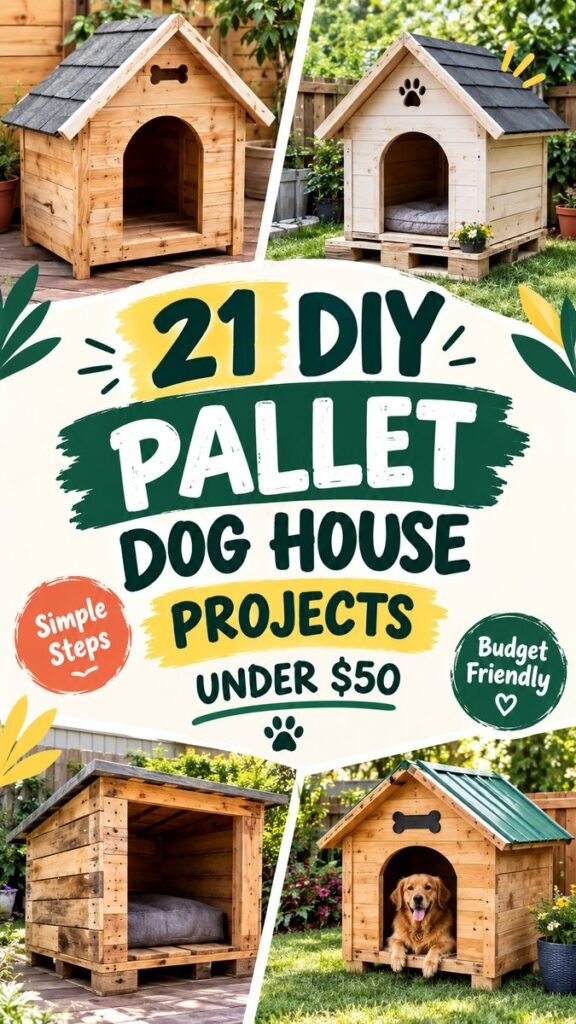
A well-built dog house can give your pup a cozy outdoor retreat while adding a charming touch to the backyard. The DIY pallet dog house ideas featured here show how simple wooden materials can be transformed into practical shelters with classic pitched roofs, raised bases, arched entrances, and rustic finishes. Whether you prefer a polished cottage-style design or a simple pallet shelter, there are plenty of ways to create a comfortable space that suits your dog and your outdoor area.
Key Takeaways
- Pallet wood can inspire attractive and practical DIY dog house designs.
- A raised floor helps create separation between the shelter and the ground.
- A pitched roof gives the house a classic cottage-inspired appearance.
- The entrance should be comfortable for your dog’s size and easy to access.
- Simple paint, stain, trim, and decorative details can personalize the finished house.
Why DIY Pallet Dog Houses Are So Appealing
DIY dog houses are popular because they combine creativity, useful woodworking, and pet-friendly design in one project. Instead of choosing a generic shelter, you can create a structure that fits the character of your garden, patio, or yard. The examples shown feature several variations, from compact rustic shelters to more finished cottage-style houses with painted roofs and decorative entrances.
Pallet-inspired construction also has a naturally rustic look. The visible wood grain, varied plank tones, and simple construction details create warmth without requiring elaborate decoration. If you enjoy DIY projects, working with wood offers plenty of opportunities to experiment with proportions, finishes, roof styles, and small decorative touches.
Important: The most attractive dog house is still only successful if it is comfortable, stable, appropriately sized, and protected from the conditions where it will be used. Treat appearance as the finishing touch, not the main priority.
Choosing the Right Dog House Design
Before cutting any boards, think about how you want the finished dog house to look and how your dog will use it. The reference designs offer several useful directions. Some have traditional triangular fronts and pitched roofs, while others use a simpler rectangular body with a sloped roof. These different silhouettes can be adapted to suit both your available space and your dog’s needs.
Classic Cottage-Style Dog House
A cottage-style dog house is one of the easiest looks to recognize. It usually features a peaked roof, wood siding, a centered doorway, and simple trim around the front. This style works especially well in gardens because it resembles a miniature backyard cottage.
You can keep the wood natural for a warm rustic appearance or add a contrasting roof color. Green, charcoal, brown, and other muted shades can create a polished outdoor look while allowing the wood to remain the main visual feature.
Simple Pallet Shelter
If your goal is a straightforward DIY project, consider a simpler shelter with fewer decorative details. A basic pallet-style structure can focus on four essential elements: sturdy walls, a suitable roof, a raised base, and a comfortable entrance.
This approach can be especially appealing when you want the natural texture of reclaimed-looking wood to stand out. Rather than covering every surface with paint, you can highlight the boards with a protective exterior finish and let their character become part of the design.
Raised Dog House Designs
Several designs in the image sit above the ground on a wooden base. This is an important design feature to consider because the space underneath can create separation between the shelter floor and the outdoor surface. A raised structure can also give the house a more finished, furniture-like appearance.
When designing a raised dog house, make sure the base is level and stable. The structure should not rock or shift when your dog enters, exits, or moves around inside.
Materials for a DIY Pallet Dog House
The exact material list will depend on the size and design you choose, but a typical wooden dog house project may require boards or suitable pallet wood, framing pieces, roofing material, exterior fasteners, and a protective finish. You may also want trim pieces for the doorway and roof edges.
- Wood: Choose sound, sturdy boards that are suitable for outdoor construction.
- Framing material: Use strong pieces to create a stable internal structure.
- Roofing: Select an outdoor-appropriate roof covering that protects the interior from rain.
- Fasteners: Exterior-rated screws or other suitable hardware can help create secure connections.
- Finish: An appropriate outdoor wood treatment can help protect exposed surfaces.
- Comfort items: Add a washable bed or cushion that fits comfortably inside the shelter.
When working with reclaimed or pallet-style wood, inspect every piece carefully. Avoid boards with serious cracks, rot, excessive splintering, or questionable treatments. Sand rough surfaces thoroughly, particularly around the entrance and anywhere your dog could brush against the wood.
How to Plan the Size
Size is one of the most important parts of a DIY dog house. A shelter that is too small can be uncomfortable, while one that is excessively large may not provide the cozy feel you want. Your dog should be able to enter comfortably, turn around, lie down, and change position without difficulty.
Start by measuring your dog rather than choosing dimensions based only on appearance. Consider standing height, body length, and the space needed for normal movement. The doorway should allow easy entry without forcing your dog to squeeze through.
Think About the Interior
The interior does not need to be complicated. A clean wooden floor combined with a removable cushion can make the space much more inviting. A removable bed is particularly convenient because it can be taken outside for cleaning and replaced when needed.
Think About the Entrance
The arched entrances shown in several designs create a soft, decorative appearance. A rectangular entrance can work just as well. Whichever shape you choose, smooth the edges carefully and avoid exposed sharp fasteners or rough splinters.
Step-by-Step DIY Dog House Approach
Building a pallet dog house becomes much easier when the project is broken into manageable stages. You do not need to reproduce any one design exactly. Instead, use the visual ideas as inspiration and adapt the construction to your available materials and your dog’s requirements.
- Plan the shape. Decide whether you want a cottage-style house, a simple shelter, or another basic silhouette.
- Prepare the wood. Remove unsuitable pieces, clean the boards, check for damage, and sand rough surfaces.
- Build the base. Create a stable platform that supports the walls and provides a suitable floor.
- Construct the walls. Assemble the wall sections securely and check that the structure remains square.
- Cut the entrance. Mark the opening carefully and smooth all edges after cutting.
- Add the roof. Install the roof structure and exterior covering so that water can move away from the shelter.
- Finish the exterior. Sand, stain, paint, or otherwise protect the wood according to your chosen look.
- Inspect the finished house. Check for instability, protruding fasteners, rough edges, and other potential hazards before use.
Expert Insight
A beautiful dog house does not need complicated construction. Strong basic geometry, smooth surfaces, a dependable roof, and a comfortable interior often make a bigger difference than elaborate decoration.
- Keep the base stable and level.
- Use outdoor-suitable materials for exposed surfaces.
- Make comfort and accessibility part of the design from the beginning.
Creative Ways to Personalize a Pallet Dog House
One of the best things about a DIY dog house is the opportunity to customize the appearance. The examples shown use different roof colors, wood tones, layouts, and decorative details, proving that one basic construction idea can become many different designs.
Experiment With Roof Colors
A contrasting roof can instantly change the character of a wooden dog house. A natural wood body paired with a dark roof creates a classic rustic appearance. A green roof can make the shelter blend more naturally into a garden setting.
Highlight the Doorway
Door trim is another simple way to add personality. Wider trim can create a more traditional cottage appearance, while a minimal frame gives the house a cleaner modern look. Keep the design functional and make sure decorative pieces are securely attached.
Keep the Wood Natural
Natural wood can be one of the most attractive finishes for a pallet dog house. Different board tones create visual texture without requiring complicated decoration. A suitable exterior protective treatment can help maintain the appearance while preparing the wood for outdoor use.
Making the Dog House Comfortable
The outside appearance may attract attention, but your dog’s comfort should determine many of the final choices. Provide enough interior room for natural movement and add a comfortable sleeping surface that can be removed for cleaning.
Think carefully about where you place the shelter. A location with appropriate shade and protection from harsh weather can make the space more comfortable. The entrance should also be positioned thoughtfully in relation to wind, rain, and the surrounding yard.
Pro Tip: Before permanently placing the finished house, observe the yard throughout the day. Sun exposure, drainage, wind direction, and the surrounding surface can all influence how comfortable the shelter will be.
Budget-Friendly DIY Ideas
The pin highlights dog house projects under $50, making affordability part of the inspiration. Actual costs will vary depending on the wood, roofing, hardware, tools, finishes, and materials you already have. Reusing suitable materials can potentially reduce the amount of new material required, but quality and safety should never be sacrificed simply to lower the budget.
Start by making a basic materials list before shopping. Separate essential construction materials from optional decorative elements. This makes it easier to control spending while still leaving room for creative touches.
- Reuse suitable wood when its condition and previous use are appropriate.
- Keep the structure simple if you want to reduce construction complexity.
- Use paint or stain selectively instead of adding unnecessary decorative materials.
- Repurpose leftover outdoor-safe materials for small finishing details.
Common Mistakes to Avoid
A DIY dog house can look impressive while still having practical problems. Taking time to check the basics can make the finished project more useful and durable.
Skipping Surface Preparation
Rough boards and sharp edges can create unnecessary hazards. Sand the wood carefully and inspect every accessible surface before your dog uses the house.
Making the Entrance Too Small
A stylish entrance is not helpful if your dog cannot comfortably use it. Base the opening on your dog’s actual size and movement rather than copying a doorway from a photograph.
Ignoring Drainage and Ground Conditions
A beautiful wooden shelter can deteriorate quickly if it sits directly in persistent moisture. A raised platform and a suitable location can help keep the floor separated from wet ground.
Overcomplicating the Build
It is tempting to add windows, porches, decorative trim, multiple roof sections, or other details. Start with a strong, functional structure first. Decorative features can be added afterward if they do not interfere with safety or comfort.
Ideas for Different Outdoor Styles
The collection of designs demonstrates how a dog house can be adapted to different surroundings. A natural wood shelter can complement a garden filled with plants, while a painted design can coordinate with exterior siding, fencing, or patio furniture.
For a rustic yard, leave more of the wood grain visible and emphasize natural textures. For a cleaner contemporary setting, use straight trim, consistent board spacing, and a restrained color palette. If you want a playful look, a colorful roof or simple pet-themed detail can add personality without changing the basic structure.
At a Glance
- Style: Rustic, cottage-inspired, and practical wooden designs.
- Focus: Comfortable shelter with a personalized outdoor appearance.
- Materials: Suitable wood, structural supports, roofing, fasteners, and outdoor finishes.
- Key detail: Choose dimensions based on your dog’s actual size.
- DIY tip: Build for stability and weather protection before adding decorative details.
Final Thoughts on DIY Pallet Dog Houses
These DIY pallet dog house ideas are a great starting point for anyone who wants to combine woodworking with a practical project for a beloved pet. From compact rustic shelters to polished cottage-style houses, the possibilities are broad even when you begin with a simple wooden structure.
The most successful project will be one that fits your dog, your outdoor space, and your building experience. Focus first on sturdy construction, a comfortable interior, a suitable entrance, smooth surfaces, and protection from outdoor conditions. Once those fundamentals are handled, you can have fun choosing roof colors, wood finishes, trim, and other personal touches.
Whether you are planning a small weekend project or simply collecting inspiration for a future build, a pallet-style dog house can be customized in countless ways. Save your favorite ideas, sketch out a design, measure your dog carefully, and turn the features you love into a shelter that feels right at home in your backyard.