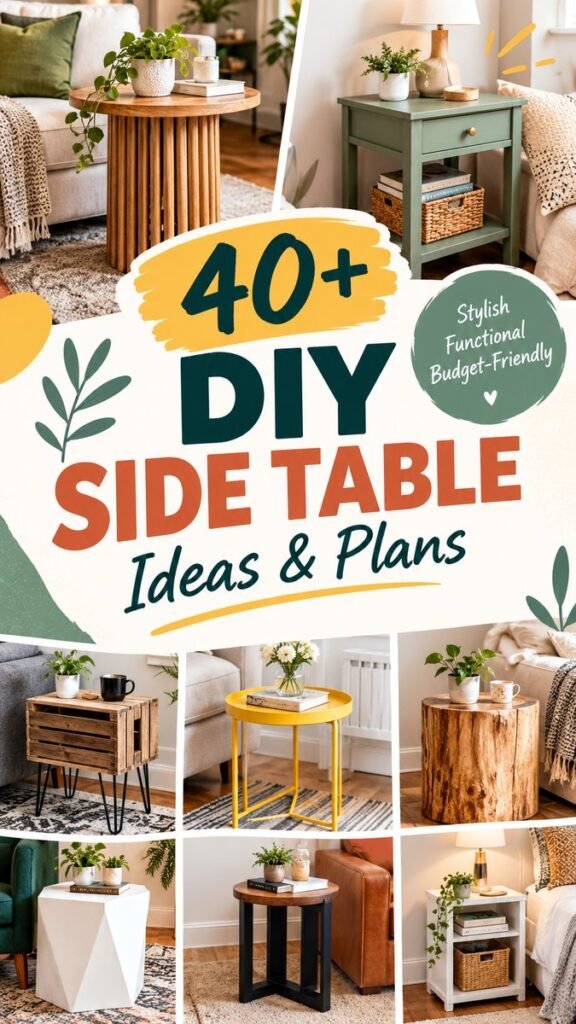
DIY side tables are one of those small home projects that can make a surprisingly big difference. A well-designed side table adds a practical surface for a lamp, books, coffee, plants, or everyday essentials while also giving a room another opportunity to show personality. The ideas featured here explore a variety of shapes, materials, finishes, and styles, from warm wooden tables and compact bedside pieces to painted designs and clever storage solutions.
Key Takeaways
- DIY side tables can be customized to suit almost any room and decorating style.
- Simple shapes and accessible materials can create attractive furniture without complicated details.
- Storage shelves, drawers, and lower compartments can make a small side table more useful.
- Paint, stain, hardware, and tabletop finishes are easy ways to personalize a basic design.
- Careful measurements and sturdy construction are essential for a functional finished table.
Why DIY Side Tables Are Worth Making
A side table does not need to be large to be useful. In a living room, it can fill an awkward space beside a sofa or chair. In a bedroom, it can serve as a compact nightstand. Near an entryway, it can hold keys and decorative accents. Because these tables are relatively small, they are also an approachable way to experiment with DIY furniture.
Making your own table gives you control over dimensions, color, materials, and storage. Instead of searching for a piece that happens to fit a particular corner, you can design one around the space you already have. This is especially helpful in smaller rooms where every inch matters.
Important: The best DIY side table is not simply attractive. It should have the right height, a stable base, enough surface area for its intended purpose, and a finish that works with the surrounding decor.
40+ DIY Side Table Ideas to Inspire Your Next Project
The collection offers plenty of directions for creating a side table that feels personal rather than mass-produced. Some designs focus on natural wood and simple construction, while others use paint, decorative details, shelving, or unusual bases to create a more distinctive look.
1. Simple Wooden Side Tables
Simple wooden designs are an excellent starting point for a DIY furniture project. A basic tabletop combined with four legs or a straightforward frame can create a timeless piece that works in many interiors. Natural wood can be left visible for a warm, organic appearance, or finished with stain to deepen its tone.
For a more contemporary look, consider a clean rectangular or square tabletop with minimal detailing. Rounded edges can soften the appearance, while thicker boards can give the table a substantial, furniture-like feel.
Keep the Shape Simple
A simple silhouette is often easier to build, sand, finish, and customize. It also leaves room for decorative touches such as a contrasting tabletop, painted legs, or attractive hardware.
2. Side Tables With Storage
A small table becomes even more practical when it includes storage. Lower shelves can hold books, baskets, blankets, or decorative objects without taking up additional floor space. A drawer can provide a discreet place for remote controls, chargers, notebooks, and other small items.
The image-inspired designs show how storage can be incorporated without making a table feel bulky. Open shelving creates a lighter visual effect, while enclosed compartments offer a cleaner appearance.
Use Storage for Both Function and Style
Storage does not have to look purely practical. A woven basket on a lower shelf can introduce texture, while a carefully arranged stack of books can become part of the room’s decoration. Think of the storage area as another styling opportunity.
3. Painted DIY Side Tables
Paint is one of the easiest ways to transform a basic furniture project. Soft greens, warm neutrals, creamy whites, muted blues, and earthy tones can create very different moods without changing the underlying construction.
A painted side table can coordinate with an existing color palette or provide a small accent in an otherwise neutral room. If the rest of the furniture is understated, a stronger color can give the corner more visual interest.
Experiment With Two-Tone Finishes
Try keeping the tabletop natural while painting the base, or use one color for the frame and another for the drawer front. These small contrasts can make a simple DIY side table feel intentionally designed.
4. Round Side Table Ideas
Round tables are especially useful beside sofas and lounge chairs because their curved edges create a softer visual flow. They can also make tight spaces feel less crowded than furniture with sharp corners.
A round wooden top paired with a simple base can produce a warm, relaxed look. For something more decorative, consider a sculptural pedestal or a creative leg arrangement. The key is to keep the base stable enough to support the tabletop and everyday objects.
5. Compact Bedside Tables
A DIY side table can easily become a custom nightstand. This is particularly useful when a bedroom has limited space. A narrow table with one shelf can provide room for a book and lamp without overwhelming the area beside the bed.
For a more organized setup, include a drawer or small cabinet. If you prefer an airy appearance, an open shelf can keep the furniture visually light while still providing useful storage.
6. Modern Minimalist Side Tables
Minimalist furniture relies on clean lines, restrained decoration, and practical proportions. A simple geometric table can fit beautifully into modern, Scandinavian-inspired, contemporary, or neutral interiors.
When creating a minimalist DIY side table, focus on precision. Straight cuts, smooth edges, consistent proportions, and a neat finish can make a relatively simple project look polished and intentional.
Expert Insight
A small furniture project often looks more professional when you spend as much time preparing and finishing as you do assembling.
- Sand visible surfaces thoroughly before applying paint or stain.
- Check the table for wobbling before adding the final finish.
- Choose hardware that complements the table rather than competing with it.
Choosing Materials for a DIY Side Table
The material you choose will influence both the appearance and construction of the finished piece. Wood is a popular option because it is versatile, visually warm, and available in many forms. Reclaimed or salvaged boards can add character, while smooth new boards can create a cleaner modern appearance.
Other materials can also be incorporated into the design. A metal base can give a wooden tabletop an industrial feel, while baskets and woven elements can add softness to a storage-focused table. The most important consideration is making sure the materials work together structurally.
Think About Proportion Before You Build
Before cutting materials, measure the space where the finished side table will sit. Consider the height of the nearby sofa or chair, the available floor area, and how much surface space you actually need.
A table that is too tall can feel awkward beside low seating, while one that is too short may be inconvenient for everyday use. Proportion also affects appearance, so sketching a basic design before starting can help you spot problems early.
How to Plan Your DIY Side Table
You do not need an elaborate blueprint to get started, but a simple plan can make the project much easier. Write down the desired height, width, depth, tabletop thickness, and any storage dimensions before purchasing materials.
- Measure the space: Determine where the table will go and how much room is available.
- Choose a shape: Decide between a square, rectangular, round, or more creative silhouette.
- Plan the base: Make sure the legs, pedestal, or frame will provide reliable support.
- Add storage if needed: Consider a shelf, drawer, basket area, or compact cabinet.
- Select the finish: Choose natural wood, stain, paint, or a combination.
- Prepare before assembly: Sand and inspect components so the finished table has a clean appearance.
Essential Tools and Supplies
The exact tools depend on the design, but many straightforward DIY side table projects can be approached with basic woodworking equipment. A measuring tape, pencil, square, drill, appropriate screws, sandpaper, and a suitable cutting tool are common starting points.
For painted furniture, include primer and furniture paint where appropriate. For natural wood, a suitable stain, clear protective finish, or other wood treatment can help protect the surface while enhancing its appearance.
Pro Tip: Always test your chosen paint, stain, or finish on a small hidden area first. The final color can look different depending on the type and tone of the material underneath.
Ways to Customize Your DIY Side Table
The most enjoyable part of DIY furniture is making the finished piece your own. Even a straightforward side table can be transformed through a few carefully chosen details.
- Change the color: Use a soft neutral for a subtle look or a richer shade for a statement piece.
- Mix materials: Pair wood with metal, woven storage, or other complementary textures.
- Switch the hardware: Decorative knobs and pulls can completely change the character of a drawer.
- Try different legs: Straight, tapered, turned, or geometric legs can create distinct styles.
- Add a lower shelf: Create useful space for books, baskets, plants, or decorative accessories.
- Keep natural details visible: A wood grain tabletop can add warmth to an otherwise painted design.
Style Your Finished Table
Once your DIY side table is complete, keep the styling simple. A small plant, a lamp, a few books, or a decorative object can make the surface feel finished without becoming cluttered.
For a living room, place the table beside a sofa or accent chair and use it as a convenient spot for drinks and reading materials. In a bedroom, a lamp and a small stack of books can create a calm, functional bedside arrangement. If your table has shelving, use baskets to conceal clutter while keeping frequently used items within reach.
Common DIY Side Table Mistakes to Avoid
Small furniture projects can look simple, but a few details can make the difference between a sturdy table and one that feels unstable. Avoid rushing through measurements or assembly simply because the project is compact.
- Do not skip measuring the available space.
- Avoid using a base that is too narrow for the tabletop.
- Check every joint for movement before applying the final finish.
- Do not leave rough or sharp edges on frequently touched surfaces.
- Avoid adding too many decorative elements if the room already has a busy style.
- Give paint, stain, and protective finishes adequate time to dry according to their instructions.
Finding the Right DIY Side Table Style for Your Home
Look at the furniture and accessories already in your room before choosing a design. If your space features warm wood, a natural tabletop can help the new piece feel connected to the existing decor. If the room uses painted furniture, a coordinated or complementary color can create a cohesive look.
For modern rooms, prioritize clean geometry and minimal decoration. For relaxed interiors, natural wood, rounded shapes, and woven storage can create a softer atmosphere. If you enjoy eclectic decorating, consider combining a distinctive color with an unexpected tabletop or base.
Important: You do not need to recreate a complicated furniture design to achieve a beautiful result. A simple side table with thoughtful proportions, a smooth finish, and a style that suits your room can be more useful and visually successful than an overly ambitious project.
Quick Points
- Measure first and design around your available space.
- Choose sturdy construction before focusing on decoration.
- Use paint, stain, and hardware to personalize the look.
- Add shelves or drawers when extra storage is useful.
- Keep the final styling simple, practical, and balanced.
Conclusion
DIY side tables are a practical way to add handmade character and useful function to your home. With so many possibilities for shape, size, materials, storage, and finish, even a simple table can become a distinctive piece that fits your space perfectly.
Whether you prefer a natural wooden design, a colorful painted table, a compact bedside stand, or a storage-friendly piece, start with a clear purpose and sensible proportions. From there, small design choices can turn a basic furniture project into something that feels genuinely personal.
Save your favorite DIY side table ideas, sketch out the style that best suits your room, and start with a project that matches your skill level. A thoughtfully planned small table can be a satisfying weekend project and a useful addition to your home for years to come.