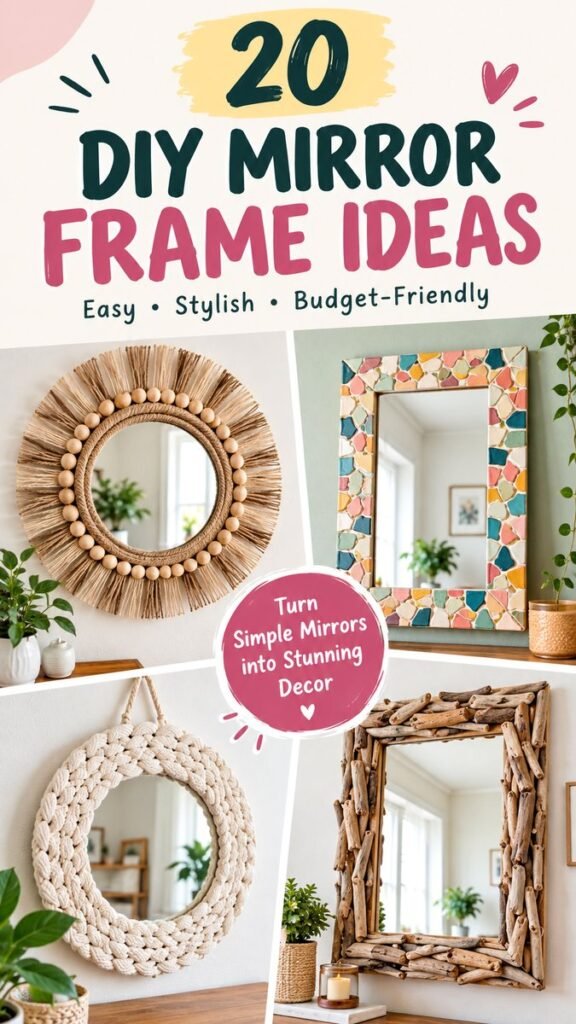
Looking for a simple way to give your home a fresh decorative touch? A mirror frame DIY project can turn an ordinary mirror into a beautiful statement piece without requiring a complete room makeover. With the right materials, even a basic mirror can become warm, textured, colorful, rustic, or wonderfully modern.
DIY mirror frames are especially appealing because they combine creativity with practical home decor. The ideas featured here show how different materials can completely change the personality of a mirror. Natural rope creates a soft boho effect, wooden beads add warmth, colorful mosaic pieces bring playful character, and rustic wood creates an organic look.
Key Takeaways
- A DIY mirror frame can refresh a room without changing the entire space.
- Rope, beads, mosaic pieces, and natural wood offer very different decorative styles.
- Choose materials and colors that complement your existing furniture and walls.
- Layering textures can make a simple mirror look much more distinctive.
- Simple frame designs can work beautifully in bedrooms, entryways, bathrooms, and living rooms.
Why Try a DIY Mirror Frame?
A mirror is already a useful part of home decor, but the frame can make it feel much more intentional. Instead of purchasing a completely new decorative mirror, you can customize the surrounding frame to match your personal style.
One of the biggest advantages of a mirror frame DIY project is flexibility. You can choose the materials, colors, shape, texture, and overall level of detail. This makes it easy to create something that feels connected to your space rather than looking like a generic store-bought accessory.
The frame is often what gives a mirror its personality. Before choosing materials, think about the feeling you want the finished piece to create, then select textures and colors that support that mood.
Creative DIY Mirror Frame Ideas
There are countless ways to decorate a mirror frame, but a few styles stand out for their versatility and visual appeal. The key is to choose an approach that suits both your creativity and the room where the mirror will be displayed.
Rope and Wooden Bead Mirror Frames
Rope is an excellent material for creating a soft, relaxed mirror frame. Its natural texture works particularly well with neutral interiors, woven baskets, houseplants, light wood furniture, and other casual decorative elements.
For an extra layer of interest, wooden beads can be arranged around the mirror. The combination of rope and beads creates a handmade look with plenty of texture while keeping the overall color palette calm.
This style is ideal if you enjoy boho, coastal, rustic, or natural-inspired home decor. You can keep the rope in its original neutral tone or experiment with different shades to coordinate with your room.
Colorful Mosaic Mirror Frames
If you prefer something more cheerful, a mosaic mirror frame can become an eye-catching focal point. Small pieces in different colors and shapes can create a playful border around a rectangular or square mirror.
A colorful frame works especially well when the surrounding room has a simple backdrop. The mirror becomes a decorative accent without requiring many additional accessories.
When selecting mosaic colors, consider choosing two or three main shades and adding a few complementary tones. This keeps the finished frame visually interesting without making it feel chaotic.
Braided and Textured Frames
Textile-inspired frames can give a mirror a cozy handmade appearance. Braided rope, woven cord, or other textured materials can be layered around a circular mirror to create a soft, dimensional border.
This approach is especially attractive for bedrooms, dressing areas, and relaxed living spaces. The texture adds visual depth while maintaining a comfortable, welcoming appearance.
You can also combine several rows of similar material to create a thicker frame. Keeping the colors neutral allows the texture itself to become the main design feature.
Rustic Driftwood Mirror Frames
Natural wood can create a completely different effect. Small branches or pieces of driftwood arranged around a mirror produce an organic frame with an imperfect, collected appearance.
This style works beautifully with nature-inspired interiors and can add warmth to a room dominated by white, cream, beige, or other light colors. Each piece of wood brings its own shape and texture, so the finished mirror naturally has an individual character.
For a balanced appearance, arrange the wood pieces thoughtfully around the frame rather than placing them randomly. Varying the lengths can create a natural look while still maintaining an intentional overall shape.
Why This Matters
A successful DIY mirror frame is not only about adding decorations. It is about creating visual balance. Consider the mirror shape, wall color, nearby furniture, lighting, and existing textures before deciding how elaborate the frame should be.
How to Choose the Right Mirror Frame Style
With so many creative possibilities, choosing one design can be difficult. Start by looking at the room where the mirror will go. The existing decor can provide useful clues about which materials will feel natural in the space.
Match the Room’s Color Palette
Color is one of the easiest ways to make a DIY mirror frame look cohesive. If your room already has several strong colors, a neutral frame may create a calmer result. If the space is mostly neutral, a colorful mosaic or painted frame can provide a welcome accent.
Think beyond the wall itself. Look at nearby cushions, artwork, curtains, rugs, plants, furniture, and decorative accessories. Repeating one or two colors from the room can make the finished mirror feel intentionally designed.
Consider Texture
Texture can make a simple mirror much more interesting. Smooth materials create a cleaner appearance, while rope, woven fibers, beads, and natural wood introduce dimension.
If the room already contains many textured accessories, keep the mirror frame relatively simple. On the other hand, a plain room may benefit from a more detailed frame that becomes a focal point.
Think About the Mirror Shape
The shape of the mirror should influence your frame design. Round mirrors are particularly suitable for layered rope, bead, woven, and sun-inspired arrangements. Rectangular mirrors provide more space for mosaic patterns, painted borders, and rustic wood designs.
The frame should enhance the shape rather than hide it. A well-planned border makes the mirror look larger and more decorative while keeping the reflective surface visually clear.
Materials to Consider for a DIY Mirror Frame
You do not need an enormous collection of craft supplies to start experimenting. The best material depends on the style you want to achieve and the type of mirror you already have.
- Natural or decorative rope for soft, textured frames
- Wooden beads for warm, handcrafted details
- Small mosaic pieces for colorful borders
- Wooden sticks or driftwood for rustic designs
- Woven cord for cozy, textile-inspired styles
- Decorative trim for a more polished finish
- Paint for refreshing an existing frame
- Simple decorative accents for additional character
Pro Tip: Make a small material sample before committing to the entire mirror. Seeing the texture and color beside the mirror can help you decide whether the combination feels balanced.
Simple Ways to Personalize Your Mirror
The most appealing DIY projects usually have a personal element. Instead of reproducing a design exactly, use the general concept as inspiration and adjust it to suit your home.
Experiment With Color
A neutral frame can create a calm and timeless look, while brighter shades can make the mirror feel playful and energetic. Soft pastels work well in light, cheerful spaces, while earthy shades complement natural materials.
Mix Materials Carefully
Combining two complementary materials can produce a more sophisticated result than using many unrelated elements. Rope and wood, for example, naturally work together because both have warm, tactile qualities.
When mixing materials, repeat at least one visual characteristic such as color, texture, or shape. This creates a sense of unity even when the materials are different.
Keep the Surrounding Decor Simple
A decorative mirror can become a strong focal point, so the area around it does not always need to be filled with accessories. A few carefully selected pieces can help the mirror stand out without competing for attention.
Where to Display a DIY Mirror
A custom mirror can work in many parts of the home. An entryway mirror can make a small area feel more welcoming, while a decorative bedroom mirror can add softness and personality.
In a living room, a framed mirror can act as wall art while also reflecting light and adding depth. In a dressing area, a textured frame can turn a practical mirror into part of the room’s overall design.
- Entryway: Create a useful focal point near the entrance.
- Bedroom: Add texture and personality to a dressing or vanity area.
- Living room: Use a decorative mirror as an alternative to traditional wall art.
- Bathroom: Add a customized frame that complements the room’s finishes.
- Creative corner: Use a handmade mirror to complete a cozy decorating area.
Tips for a More Polished DIY Result
A little planning can make the difference between a frame that looks homemade and one that looks intentionally handcrafted. Before attaching materials, lay everything out and check the composition from a distance.
Make sure the decorative elements are distributed evenly unless you are intentionally creating an asymmetrical design. Pay attention to the corners of rectangular mirrors and the center line of circular frames.
It is also helpful to think about scale. A very thin mirror may benefit from a substantial frame, while a large decorative mirror can quickly become overwhelming if the frame is too busy.
- Measure the mirror before purchasing materials.
- Plan your arrangement before attaching anything permanently.
- Keep the frame visually balanced from every angle.
- Repeat colors already present in the room when possible.
- Leave enough reflective surface visible for practical use.
- Choose durable materials appropriate for the location.
Make Your Mirror the Star of the Room
A DIY mirror frame does more than decorate a functional object. It gives you an opportunity to introduce texture, color, and personality into your home using a project that can be adapted to your own taste.
Whether you prefer a colorful mosaic border, a natural rope design, a chunky braided texture, or an organic wood frame, there is plenty of room to experiment. Start with the style that best matches your existing decor, then make small changes until the design feels like your own.
The best mirror frame DIY projects do not have to be complicated. A thoughtful material choice, a cohesive color palette, and careful placement can turn a basic mirror into a memorable piece of home decor.
At a Glance
- Choose a frame style that complements your room.
- Use texture to add dimension and handmade character.
- Coordinate colors with nearby decor.
- Plan the arrangement before attaching materials.
- Let the finished mirror become a decorative focal point.
Conclusion: Create a Mirror That Feels Like You
DIY mirror frame ideas are a wonderful way to make everyday home decor feel more personal. You can keep the design understated with natural rope and wood, create a colorful statement with mosaic pieces, or build a soft textured frame with braided materials.
The goal is not perfection. The most interesting handmade pieces often have their own character, texture, and small details that make them different from mass-produced decor. Choose materials you enjoy working with, keep the overall design balanced, and let your personal style guide the finished look.
Save your favorite mirror frame ideas now so you have plenty of inspiration when your next home decorating project begins. A simple mirror could be the perfect starting point for a beautiful DIY transformation.