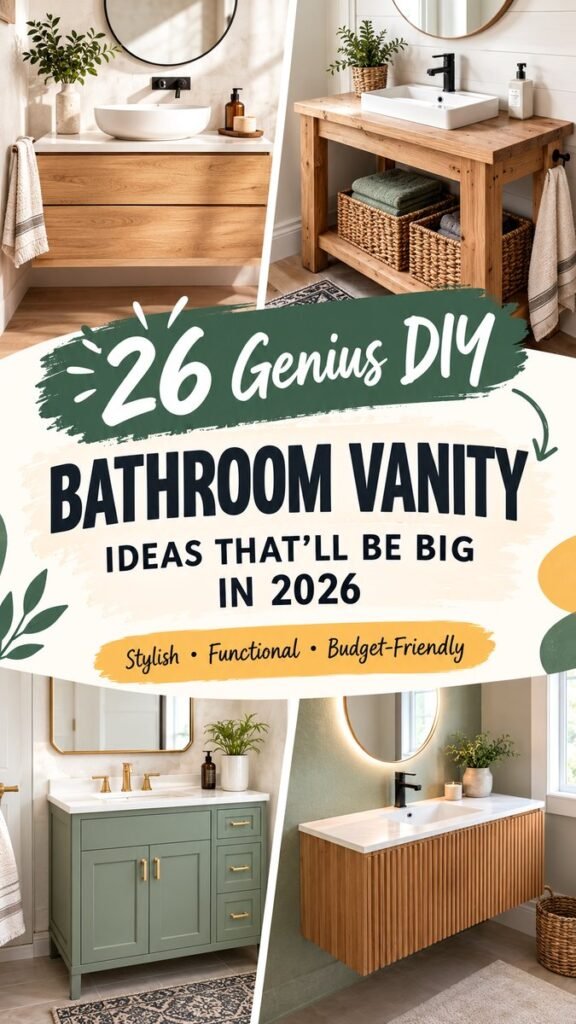
A bathroom vanity can completely change the look and function of a bathroom, and you do not need a complicated renovation to create something beautiful. The latest DIY bathroom vanity ideas show how simple materials, thoughtful storage, and a strong sense of style can turn an ordinary sink area into a standout feature. From warm wood cabinetry and open shelving to painted vanities and sleek floating designs, there are plenty of ways to build a vanity that feels personal and practical.
The inspiration here focuses on approachable designs that combine natural textures, clean lines, useful storage, and modern bathroom styling. Whether you are updating a compact powder room or giving a larger bathroom a fresh look, a DIY bathroom vanity can be adapted to suit your space, budget, and skill level.
Key Takeaways
- Choose a vanity style that matches your bathroom’s overall character.
- Use open shelves, drawers, or baskets to make storage more functional.
- Natural wood adds warmth and works beautifully with neutral bathroom finishes.
- Painted cabinetry can create a completely new look without replacing the entire layout.
- Measure carefully before choosing the countertop, sink, faucet, and cabinet dimensions.
- Prioritize moisture-resistant materials and finishes for longer-lasting results.
Why DIY Bathroom Vanities Are So Appealing
A bathroom vanity is more than a place to install a sink. It often becomes one of the largest visual elements in the room. That makes it an ideal project when you want to introduce a new style without changing every surface in the bathroom.
DIY construction also gives you more flexibility. Instead of searching for a vanity that happens to fit your exact measurements, you can design the width, height, storage arrangement, materials, and finish around your needs. A simple wooden frame can become a rustic centerpiece, while a streamlined cabinet with flat fronts can create a more contemporary appearance.
Important: The best DIY bathroom vanity is not necessarily the most complicated one. A straightforward design with good proportions, durable materials, and practical storage can look more polished than an overly elaborate build.
1. Warm Wood Bathroom Vanity
Natural wood is one of the easiest ways to bring warmth into a bathroom. The inspiration features several wood-forward vanity styles, demonstrating how timber tones can soften a room filled with white surfaces, ceramic fixtures, and hard finishes.
A basic wood vanity can be built around a sturdy rectangular frame with a countertop resting above it. Depending on the design, the lower section can include drawers, cabinet doors, or an open shelf. Open shelving is particularly useful when you want towels and baskets to become part of the room’s decoration.
For a cohesive look, pair warm wood with a simple white sink and a dark or brushed-metal faucet. Green plants, woven baskets, and neutral textiles can add additional texture without overwhelming the clean design.
2. Rustic Vanity With Open Shelving
An open-shelf bathroom vanity is a smart option for anyone who likes a relaxed, practical aesthetic. The design can use thick-looking wooden boards for the countertop and frame, creating a furniture-inspired appearance that feels less traditional than a closed cabinet.
The open lower shelf provides a convenient place for folded towels, woven baskets, toiletries, or decorative pieces. Because everything remains visible, organization becomes part of the design.
Keep the display intentional rather than filling every inch of the shelf. A few neatly folded towels and matching baskets can make the vanity look organized while still keeping frequently used items within easy reach.
How to Make Open Shelving Look Polished
- Use matching or coordinating baskets.
- Fold towels in consistent sizes.
- Leave some open space around larger items.
- Choose a wood finish that complements the bathroom floor and walls.
- Keep everyday essentials grouped together for easier access.
3. Floating DIY Bathroom Vanity
A floating vanity creates a lighter visual effect because the cabinetry appears to hover above the floor. This style works especially well in modern bathrooms where clean lines and uncluttered surfaces are important.
A wall-mounted cabinet can also make cleaning around the vanity easier and can visually open up a smaller bathroom. The key is careful planning. The wall structure and mounting system need to be appropriate for the vanity’s weight and the materials being used.
For the finish, consider natural wood, a soft neutral paint color, or a simple white cabinet. Pairing the vanity with a vessel sink or an integrated countertop sink can create a streamlined focal point.
4. Painted Vanity Cabinet Makeover
You do not always need to build a vanity from scratch. Updating an existing cabinet can be one of the easiest DIY bathroom projects, especially when the current structure is still functional.
A muted green cabinet, similar to the inspiration shown, can add personality while maintaining a calm bathroom atmosphere. Other versatile choices include warm beige, soft gray, cream, muted blue, or deep charcoal.
Before painting, clean the cabinet thoroughly and prepare the surface according to the existing finish. Remove hardware when possible and give doors and drawer fronts enough time to dry between coats. New knobs or pulls can provide another inexpensive way to refresh the finished vanity.
Small Changes With a Big Visual Impact
- Replace outdated cabinet hardware.
- Paint the cabinet in a modern neutral or muted color.
- Upgrade the countertop if the existing structure allows it.
- Add drawer organizers to improve storage.
- Install a new faucet that complements the updated finish.
5. Slatted or Ribbed Wood Vanity
Vertical slats and ribbed cabinet fronts add texture without relying on complicated decoration. This style is especially effective when the rest of the bathroom has simple walls and minimal accessories.
The repeated vertical lines draw the eye across the front of the cabinet and can give the vanity a custom furniture appearance. A light wood tone keeps the look warm, while a darker finish can create a more dramatic statement.
Because a ribbed surface naturally attracts attention, the rest of the vanity can remain relatively simple. A clean countertop, understated faucet, round mirror, and a few carefully selected accessories are often enough to complete the look.
Expert Insight
Think about the vanity as a complete composition rather than a cabinet alone. The sink, faucet, mirror, lighting, hardware, countertop, and storage accessories should work together. Repeating one material or finish in two or three places can make a DIY project feel intentionally designed.
Choosing the Right Vanity Size
Before starting any DIY bathroom vanity project, measurements should come first. The available wall width, plumbing position, door clearance, sink dimensions, and countertop depth can all influence the final design.
A vanity that is too large can make the bathroom feel crowded, while one that is too small may not provide enough useful storage. Take measurements at several points because walls and floors are not always perfectly straight or level.
Also consider how the vanity will interact with nearby features. Cabinet doors and drawers need enough clearance to open comfortably, while the sink should sit at a practical height for everyday use.
Selecting Materials for a Bathroom Environment
Bathrooms naturally expose furniture to humidity, splashes, and temperature changes. Material selection therefore matters just as much as appearance.
Solid wood can create a beautiful vanity, but it should receive an appropriate finish for the environment. Quality plywood and properly finished manufactured panels can also be useful choices depending on the construction method and desired appearance.
Pay particular attention to exposed edges, joints, and areas close to the sink. Water should not be allowed to sit on unfinished surfaces. Sealing and finishing exposed materials can help protect the project and keep the vanity looking attractive over time.
Pro Tip: Build in protection wherever water is likely to appear. A beautiful vanity will perform much better when the countertop, cabinet edges, and surrounding surfaces are designed with bathroom moisture in mind.
Adding Smart Storage to a DIY Vanity
Good storage can make an even bigger difference than decorative details. A well-planned vanity should make everyday bathroom routines easier rather than simply providing an attractive place for the sink.
Drawers are useful for smaller toiletries because they keep items organized and easy to access. Open shelving works well for towels and baskets. Closed cabinets are helpful when you want to keep cleaning supplies or less attractive essentials out of sight.
If the vanity has unused space underneath, consider using baskets or containers that can be pulled out easily. This keeps the room tidy while preserving the open, furniture-like quality seen in many modern DIY vanity designs.
Storage Ideas to Consider
- Use shallow drawers for cosmetics and grooming essentials.
- Add baskets to open shelving for towels and backup supplies.
- Reserve deeper cabinet space for larger bathroom items.
- Use drawer dividers to prevent small items from becoming cluttered.
- Keep frequently used products at comfortable, accessible heights.
Pairing the Vanity With the Right Sink
The sink can strongly influence the personality of a DIY bathroom vanity. Vessel sinks sit visibly above the countertop and can create a furniture-inspired appearance. Integrated sinks offer a cleaner, more continuous look and can be especially appealing in contemporary bathrooms.
Consider the countertop material and vanity dimensions before selecting the sink. The faucet style and mounting position should also be planned together so the finished arrangement looks balanced.
A simple white sink is particularly versatile because it works with natural wood, painted cabinetry, and modern neutral palettes. This allows you to experiment with the cabinet finish without making the entire room feel visually busy.
Finishing Touches That Complete the Look
Once the vanity itself is complete, accessories can help connect it to the rest of the bathroom. A round mirror can soften a vanity with strong rectangular lines, while a rectangular mirror can reinforce a more structured design.
Plants can introduce a natural accent, while woven baskets bring texture to wood and neutral cabinetry. Towels are another easy styling element. Choose shades that complement the vanity rather than competing with it.
Lighting should also be considered. Bright, functional illumination around the mirror is useful for everyday tasks, while warmer ambient lighting can make the room feel more inviting. The goal is to balance practicality with a comfortable atmosphere.
How to Keep a DIY Vanity Looking Modern
Modern bathroom design does not necessarily mean choosing the newest trend. A timeless vanity usually depends on clean proportions, limited materials, useful storage, and finishes that complement one another.
Natural wood, soft green cabinetry, white countertops, simple black fixtures, and woven accessories are all versatile elements that can be combined in different ways. Rather than copying a single look, use these ideas as building blocks for a vanity that fits your own home.
Avoid adding too many competing finishes. If the vanity already has a strong wood texture or detailed cabinet front, keep the accessories simple. If the cabinet is minimal, a textured basket, distinctive mirror, or decorative hardware can provide visual interest.
Planning Your DIY Bathroom Vanity Project
Before purchasing materials, create a simple plan showing the overall width, depth, height, shelf placement, sink position, and plumbing requirements. A basic sketch can reveal potential problems before construction begins.
Make a list of the materials and hardware you will need. Depending on the design, this may include wood or sheet material, screws, brackets, drawer components, cabinet hardware, countertop material, a sink, faucet, finish, and storage accessories.
Work carefully through each stage instead of rushing to the finished look. Accurate cuts, level surfaces, secure connections, and properly finished edges will have a much greater impact on the final result than decorative extras.
DIY Bathroom Vanity Ideas for Different Styles
The same basic construction can be adapted to create very different aesthetics. For a rustic bathroom, emphasize natural wood, visible grain, open shelving, and woven baskets. For a modern bathroom, use flat cabinet fronts, clean edges, minimal hardware, and a simple countertop.
A traditional-inspired vanity can use framed cabinet doors, painted finishes, decorative hardware, and a classic countertop. For a contemporary space, consider a floating cabinet with streamlined drawers and a simple vessel or integrated sink.
The most important part is consistency. Select a few visual elements that you love and repeat them throughout the vanity area. This creates a cohesive appearance without requiring an expensive full bathroom renovation.
At a Glance
- Warm wood brings natural character.
- Open shelves make towels and baskets part of the decor.
- Paint can transform an existing vanity.
- Ribbed fronts add texture and visual interest.
- Smart storage keeps the bathroom functional and uncluttered.
Final Thoughts on DIY Bathroom Vanity Ideas
A DIY bathroom vanity is a practical project with plenty of room for creativity. The strongest ideas combine attractive materials with everyday functionality, giving you a bathroom feature that looks intentional while making the space easier to use.
Whether you prefer a warm wood vanity, a rustic open-shelf design, a painted cabinet, or a sleek floating unit, the possibilities are flexible. Start with accurate measurements, choose materials that can handle a bathroom environment, plan your storage carefully, and keep the overall design cohesive.
Most importantly, let your vanity reflect the way you use your bathroom. A thoughtful layout, durable finish, and a few carefully selected details can turn a simple DIY build into one of the most rewarding features in the room.
If you are planning a bathroom refresh, these DIY bathroom vanity ideas are a great place to begin. Save your favorite style, adapt the details to your space, and create a vanity that feels both stylish and genuinely useful.
Tags
DIY Bathroom Vanity Bathroom Vanity Ideas DIY Bathroom Makeover Bathroom Storage Wood Bathroom Vanity Small Bathroom Ideas Bathroom Decor Vanity Makeover