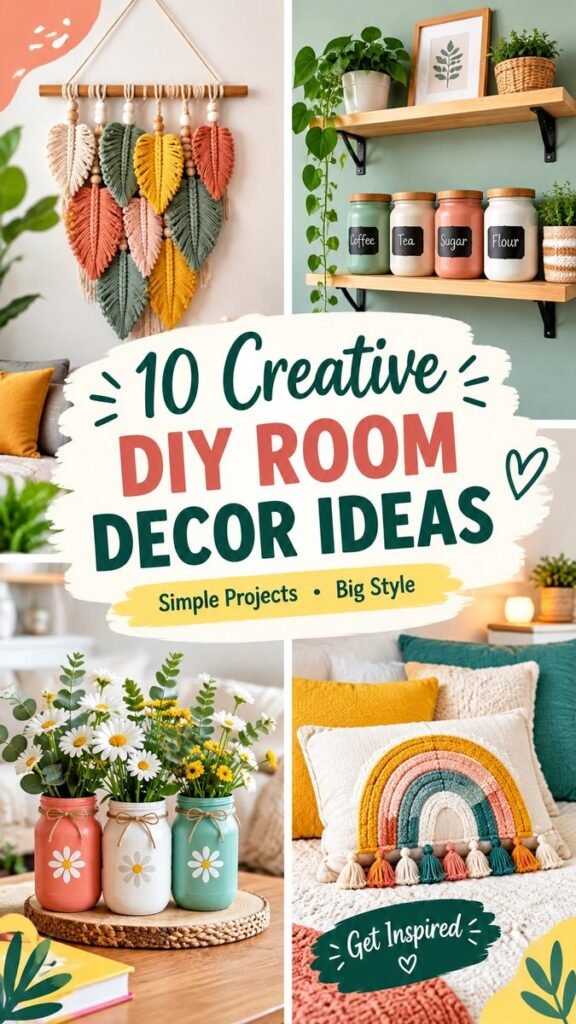
Creating a beautiful room does not always require a major renovation or an expensive shopping list. A few thoughtful DIY projects can completely change the personality of a space while making it feel more personal, colorful, and inviting. These DIY aesthetic room decor ideas combine handmade textures, greenery, painted accents, creative storage, and cozy textiles to create a room that feels both stylish and lived-in.
The inspiration here centers on approachable projects that can work across bedrooms, living spaces, creative corners, and small apartments. Think macramé-inspired wall art, floating shelves, painted jars, decorative cushions, indoor plants, and colorful handmade details. The goal is not to make everything perfectly match. Instead, it is to build a relaxed collection of pieces that share a cheerful color palette and a sense of personality.
Key Takeaways
- Use DIY wall art to create an instant focal point.
- Combine plants and handmade shelves for practical style.
- Repurpose jars into colorful decorative storage or vases.
- Add textured pillows and soft accents for a cozy finish.
- Choose a small group of complementary colors to keep the room cohesive.
- Focus on simple projects that reflect your personality.
1. Create a Colorful DIY Wall Hanging
A handmade wall hanging can instantly transform a blank wall into an interesting focal point. The inspiration features a textile-style design made with hanging strands, decorative shapes, and several soft colors. You can recreate the same general feeling with materials such as cotton cord, yarn, wooden dowels, fabric strips, beads, or leftover craft materials.
For an aesthetic room decor project, the key is to think about texture as much as color. Cream, dusty pink, muted green, warm yellow, terracotta, and natural wood can create a cheerful yet calming combination. You do not need professional weaving skills to achieve an attractive result. Simple knots, braided strands, loops, and layered fabric can produce plenty of visual interest.
Keep the palette intentional
Choose three to five main colors before starting. Repeating those shades in pillows, jars, artwork, or small accessories will help the room feel coordinated. Natural beige or white can act as a neutral foundation, allowing brighter accents to stand out without overwhelming the space.
Important: A handmade decoration does not need to look perfectly uniform. Slight variations in knots, strands, and fabric placement can give DIY pieces the character that makes them feel authentic.
2. Turn Simple Shelves Into a Decorative Feature
Floating shelves are one of the easiest ways to combine room decor with useful storage. Instead of filling shelves with random objects, use them as a carefully arranged display. Wooden shelves paired with dark brackets provide a warm foundation for plants, jars, framed artwork, and small handmade accessories.
One effective approach is to vary the height and shape of everything on the shelf. Place a taller plant or framed print toward the back, then add shorter jars and decorative objects in front. A trailing plant can soften the edges and create movement as it grows downward.
Style shelves in layers
- Start with one larger object as an anchor.
- Add one or two smaller containers nearby.
- Introduce greenery to soften the arrangement.
- Leave some empty space so the display can breathe.
- Repeat one or two colors elsewhere in the room.
This method works particularly well for small rooms because vertical storage uses wall space without taking up valuable floor area. It also makes it easy to refresh the room whenever you feel like changing the decor.
3. Paint Mason Jars for Easy DIY Room Decor
Ordinary glass jars can become attractive decorative pieces with a little paint and creativity. The colorful jars shown in the inspiration demonstrate how a simple container can become part of the room’s overall aesthetic.
Try painting jars in soft shades such as sage green, coral, cream, blush, or muted blue. Once dry, you can add simple patterns, flowers, dots, labels, or other decorative details. The finished jars can hold faux flowers, small craft supplies, pens, brushes, or other everyday items.
Make the project feel cohesive
Rather than painting every jar a different color, choose a coordinated palette. A mix of two or three shades usually looks more intentional. Natural twine tied around the neck of a jar can also add warmth and reinforce a handmade, cozy aesthetic.
For a bedroom, painted jars can become attractive organizers for small accessories. In a creative workspace, they can hold pens and brushes. On an open shelf, they can simply serve as colorful decorative accents.
4. Bring More Greenery Into the Room
Plants are an easy way to make DIY aesthetic room decor feel more organic. The inspiration combines greenery with wooden shelving and handmade details, creating a relaxed atmosphere where natural elements balance colorful decorations.
You can use a single large plant as a statement feature or arrange several smaller plants throughout the room. Trailing greenery looks especially attractive on shelves because the leaves naturally extend downward, breaking up hard horizontal lines.
Use plants as part of the composition
Think about the shape of the leaves, the height of the containers, and the surrounding colors. A plant in a simple white pot can provide a calm contrast against colorful wall art. A woven basket planter can introduce another natural texture. Small plants can also fill empty shelf corners without making the arrangement feel crowded.
Why This Matters
The most appealing DIY rooms usually balance different visual qualities. Mix soft textiles with wood, greenery with painted surfaces, and practical storage with decorative objects. This contrast keeps a room interesting while still making it feel comfortable.
5. Make a Decorative Rainbow Cushion
Soft furnishings can completely change the mood of a room, and a handmade cushion is a fun way to add personality. A rainbow-shaped textile design, like the one suggested by the inspiration, brings playful color into an otherwise neutral space.
You can create a rainbow cushion using felt, fabric, yarn, embroidery, crochet techniques, or appliqué. The design does not have to be complicated. Even a simple layered rainbow shape can become a charming focal point on a bed, chair, bench, or reading nook.
Use texture to make it stand out
Choose materials with visible texture, such as chunky yarn, woven fabric, tufted material, or soft cotton. Small tassels along the bottom edge can add movement and make the cushion feel more handcrafted.
Pro Tip: If your room already contains several strong colors, repeat only a few of them in your DIY cushion. This creates a visual connection between separate decorations and makes the entire space look more thoughtfully designed.
6. Add a DIY Plant Ladder Display
A wooden ladder can become much more than a functional household item. Used as a decorative plant stand, it creates a vertical display that works beautifully in rooms where floor space is limited.
Place different-sized pots on the ladder steps and vary the heights of the plants. A combination of upright leaves, compact plants, and trailing greenery can make the arrangement look abundant without needing dozens of accessories.
For an aesthetic room, consider leaving some ladder steps open. Empty areas give the display breathing room and prevent the arrangement from looking too busy. You can also add a small framed print, woven basket, or lightweight decorative object for variety.
Choose the right location
A plant ladder works especially well near a bright window, in a reading corner, beside a dresser, or against an otherwise unused wall. Make sure the arrangement is stable and does not obstruct walkways.
7. Paint Small Decorative Objects
Small painted objects can add a surprising amount of personality to a room. The inspiration includes colorful handmade pieces that show how ordinary materials can become playful decor with simple patterns and lettering.
Consider painting smooth stones, small wooden shapes, trays, plant pots, boxes, or other suitable decorative surfaces. Florals, rainbows, geometric shapes, dots, leaves, and simple words can all work well for an informal DIY aesthetic.
Start with simple designs
If you are new to decorative painting, begin with basic shapes. A few curved lines and small flowers can look charming without requiring advanced painting techniques. Let each piece have its own personality while keeping some colors consistent throughout the collection.
8. Create a Cozy Corner With Layered Textiles
One of the easiest ways to make a room feel more inviting is to layer different textiles. A neutral bed or sofa becomes much more interesting when you add textured cushions, a knitted throw, a colorful blanket, or a small handmade pillow.
Do not be afraid to mix patterns. The secret is to vary the patterns while keeping a connection through color. For example, a floral cushion can work alongside a striped throw when both share a similar warm or pastel palette.
Texture is just as important as pattern. Chunky knits, woven fabrics, fringed edges, cotton, and embroidered details create depth and make a space feel comfortable. These details can also help soften furniture with clean or simple shapes.
9. Make Practical Storage Part of the Decor
Beautiful rooms do not have to sacrifice organization. In fact, storage can become one of the most attractive parts of a DIY decorating project. Painted jars, open shelves, baskets, boxes, and labeled containers can keep everyday items organized while contributing to the overall design.
Open storage is particularly useful when you want your favorite objects to double as decoration. Arrange containers by size, use a consistent palette, and avoid filling every available surface. The result can feel curated rather than cluttered.
Decorate with useful items
- Choose attractive containers for frequently used items.
- Group similar objects together.
- Use labels when they make organization easier.
- Keep the most visually interesting pieces where they can be seen.
- Rotate seasonal or less-used decorations to keep displays fresh.
This approach is especially helpful for bedrooms, craft rooms, study spaces, and compact apartments where every bit of storage matters.
10. Build a Personalized DIY Decor Collection
The most successful aesthetic room decor does not come from copying one exact style. It comes from combining elements that genuinely appeal to you. The projects in this inspiration work because they share a playful, handmade feeling while still allowing different textures, colors, and materials to coexist.
Start by choosing one focal project, such as a large wall hanging or colorful cushion. Then add smaller projects that support it. Painted jars can repeat the same colors. Plants can introduce natural green tones. Wooden shelves can add warmth. Small painted objects can bring in playful details.
Instead of completing ten projects at once, work gradually. A room can evolve as you discover new techniques and materials. This also gives you the opportunity to reuse supplies and transform things you already own.
Let your room tell a story
Personal touches are what make DIY decor special. A handmade piece can reflect a favorite color combination, a creative hobby, a love of plants, or simply the satisfaction of making something yourself. Your room does not need to look like a showroom. It should feel like a space that belongs to you.
How to Choose a Cohesive DIY Aesthetic
When several DIY projects are combined in one room, a little planning can make a big difference. The easiest starting point is a simple color story. Choose one neutral foundation and two or three accent colors. Then repeat those shades across textiles, wall art, containers, and accessories.
Natural materials can help connect different projects. Wood, cotton, woven fibers, glass, and greenery all work well together because they bring subtle variations in texture without making the room feel overly decorated.
Scale matters too. A large wall hanging should have enough surrounding space to remain a focal point. Smaller pieces can then fill shelves, tables, and corners. Mixing large, medium, and small decorations creates a more balanced composition.
Key decorating insight: You do not need more decorations to make a room feel finished. Often, choosing fewer pieces and giving each one enough visual space creates a more polished result.
Simple Tips for DIY Room Decor Success
Before beginning a new project, consider how it will fit into the room you already have. DIY decorating is most effective when new pieces complement existing furniture instead of creating unnecessary visual clutter.
- Measure your wall or shelf before making large decorative pieces.
- Test paint colors on a small surface before committing to a full project.
- Keep frequently used storage within easy reach.
- Combine handmade pieces with simple neutral backgrounds.
- Use plants and natural textures to soften colorful decorations.
- Leave open areas between decorative objects.
- Reuse containers and materials whenever practical.
Most importantly, give yourself permission to experiment. A DIY project can be adjusted, repainted, rearranged, or redesigned. That flexibility is part of the appeal.
At a Glance
Quick Points
- Make one statement wall piece to anchor the room.
- Use shelves to combine plants, storage, and artwork.
- Repurpose jars and small containers into colorful accents.
- Layer cushions and textiles for warmth and texture.
- Repeat a few colors throughout the room for a cohesive look.
Final Thoughts on DIY Aesthetic Room Decor
DIY aesthetic room decor is all about creating a space that feels personal, welcoming, and creatively yours. You can start with something as simple as painting a few jars, styling a floating shelf, or adding a handmade cushion. From there, gradually introduce larger projects such as textile wall art, plant displays, and customized decorative pieces.
The strongest rooms often combine practical organization with expressive details. Instead of hiding everything away, let attractive storage become part of the decor. Instead of filling every wall, choose a few meaningful focal points. Instead of following one strict decorating formula, combine colors and textures that make you happy.
With a little creativity, everyday materials can become eye-catching room accents. Whether your goal is a colorful bedroom, a cozy reading corner, a cheerful living space, or a more personalized creative area, these DIY ideas provide plenty of ways to refresh your surroundings without losing the warmth of a handmade look.
Choose one project that inspires you, gather the materials you already have, and start small. Your perfect aesthetic room does not have to appear all at once. It can grow project by project, shelf by shelf, and handmade detail by handmade detail.