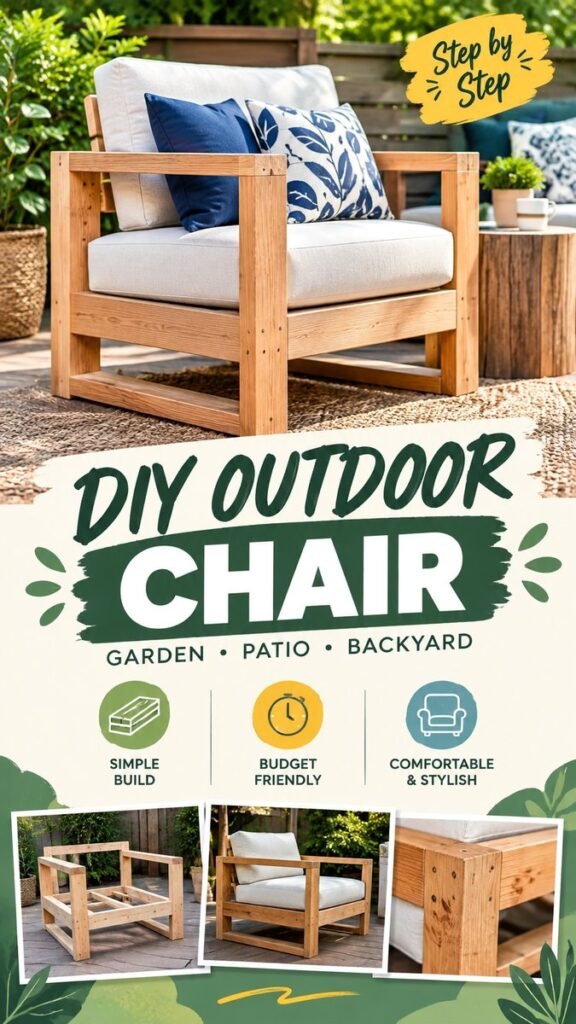
Creating a comfortable outdoor space does not have to mean spending a fortune on ready-made furniture. DIY patio furniture offers a practical way to bring personality, comfort, and function to a garden, deck, patio, or backyard. A simple wooden chair with clean lines can become the centerpiece of an inviting outdoor seating area, especially when it is paired with soft cushions, decorative pillows, greenery, and a small side table. With thoughtful planning and a few basic woodworking skills, you can create furniture that feels both stylish and personal.
Key Takeaways
- DIY patio furniture can create a stylish outdoor seating area without an elaborate design.
- Simple wooden frames work well with cushions and pillows in a variety of colors and patterns.
- Choose outdoor-suitable materials and protect exposed wood from changing weather conditions.
- Measure carefully before cutting lumber to make the finished furniture comfortable and balanced.
- Personal touches such as cushions, finishes, plants, and side tables can completely change the look.
Why DIY Patio Furniture Is Worth Trying
DIY patio furniture is appealing because it gives you control over the size, style, materials, and finishing details. Instead of trying to find a chair that perfectly fits an existing outdoor area, you can build a piece around the space you already have. This is especially useful for patios with unusual dimensions or smaller garden areas where every inch matters.
The clean wooden chair shown in this design demonstrates how a relatively straightforward frame can have a polished appearance. Broad armrests provide useful surfaces for relaxing, while the open construction keeps the furniture visually light. Add a thick seat cushion and a few pillows, and the result becomes much more inviting.
Important: The best DIY patio furniture is not simply attractive. It should also be sturdy, comfortable, appropriately sized, and finished in a way that suits the outdoor environment. Spend time planning the structure before worrying about decorative details.
Choose a Simple Outdoor Furniture Design
A simple design is often the best place to begin. The featured outdoor chair uses a straightforward rectangular wooden frame with strong horizontal and vertical lines. This style works particularly well for modern patios because it combines a rustic material with a clean silhouette.
You can use the same basic idea for several different DIY patio furniture projects. Build one chair for a quiet reading corner, create a matching pair for conversation, or adapt the proportions to make a wider loveseat. A coordinating coffee table or compact side table can complete the seating arrangement.
Start With the Function
Before choosing lumber or making cuts, decide how the furniture will be used. A chair intended for occasional entertaining can have different proportions from one designed for long periods of lounging. Think about seat height, seat depth, armrest height, back support, and cushion thickness.
- For conversation areas, create seating that encourages an upright but relaxed posture.
- For reading or lounging, allow enough room for a generous cushion and supportive back.
- For compact patios, prioritize a practical footprint that leaves comfortable walking space.
- For larger gardens, consider pairs or matching sets to create a cohesive outdoor arrangement.
Materials for a DIY Wooden Patio Chair
Wood is a natural choice for outdoor furniture because it is versatile, easy to customize, and visually warm. Different types of lumber offer different appearances and levels of durability, so select material according to your climate, intended use, budget, and available finish.
For a basic project, you will generally need appropriately sized boards or dimensional lumber, exterior-rated screws or fasteners, sandpaper, and a suitable outdoor finish. Cushions and outdoor fabric can then be added once the frame is complete.
Consider the Outdoor Environment
Patio furniture is exposed to conditions that indoor furniture does not normally encounter. Moisture, sunlight, temperature changes, and dirt can affect untreated wood over time. A protective outdoor finish can help maintain the appearance of the material and provide an additional layer of protection.
If your furniture will sit beneath a covered patio, its exposure may be lower than furniture placed completely outdoors. Even so, it is smart to select suitable materials and avoid allowing water to remain trapped around joints or horizontal surfaces.
How to Build the Basic Frame
Once your measurements and materials are ready, building can be approached as a series of manageable steps. The exact dimensions should be adapted to your preferred cushion size and the people who will use the chair.
- Plan the dimensions: Decide the overall width, height, seat depth, and armrest position before cutting anything.
- Prepare the lumber: Cut the pieces according to your measurements and label matching components to keep assembly organized.
- Sand the surfaces: Smooth rough edges and corners, paying special attention to areas that will be touched frequently.
- Assemble the sides: Construct the main supports and check that the frame remains square as you work.
- Add the seat supports: Secure the components that will carry the seat and cushion.
- Install the back structure: Attach the rear supports while checking that the angle and height feel comfortable.
- Attach the armrests: Position the arms evenly and reinforce the joints where needed.
- Check stability: Test the completed frame carefully before adding cushions or decorative elements.
- Apply the finish: Protect the prepared wood with an appropriate exterior finish.
Measure Before You Cut
Accurate measuring is one of the most important parts of any DIY furniture project. Even small errors can become noticeable when several boards need to meet at the same joint. Use a reliable measuring tool, mark cuts clearly, and compare matching pieces before assembly.
It is also helpful to think about the cushion before finalizing the seat dimensions. If you already have outdoor cushions, design the frame around their actual measurements rather than guessing. This can make the finished chair more comfortable and prevent an awkward overhang.
Expert Insight
A furniture project looks more professional when the structure is consistent. Match the dimensions of paired components, keep joints aligned, and check the frame for square during assembly. Taking a few extra minutes during construction can make a major difference in the final appearance.
Make Your Patio Chair Comfortable
A wooden frame provides structure, but cushions create the comfort that makes outdoor furniture enjoyable. The featured look combines a neutral seat cushion with layered pillows, creating a relaxed appearance while keeping the natural wood visible.
For a classic patio style, try a neutral cushion with navy, green, beige, or botanical-patterned pillows. If your garden has colorful flowers, you can repeat one of those shades in the cushions or accessories. For a minimalist space, keep the palette restrained and let the wood grain provide visual interest.
Layer Pillows for a Finished Look
Decorative pillows are an easy way to update DIY patio furniture without rebuilding anything. Use one larger pillow for back support and add smaller accent pillows in complementary patterns. Outdoor-rated fabrics are a practical choice for furniture that will remain outside.
Remember that comfort should remain the priority. Avoid filling the chair with so many decorative pillows that there is no usable seating space. A simple combination often looks more polished than an overcrowded arrangement.
Style Your DIY Patio Furniture
One of the biggest advantages of building your own outdoor furniture is the freedom to choose the final style. Natural wood can create a warm, organic appearance, while a painted finish can make the same design feel contemporary or playful.
Natural Wood Style
A natural or lightly finished wood surface pairs beautifully with greenery. Plants, woven accessories, neutral cushions, and stone or gravel surfaces can create a relaxed garden atmosphere. This approach works particularly well when you want the furniture to feel connected to its surroundings.
Painted Outdoor Furniture
Painting offers another way to personalize a patio chair. Deep green, charcoal, navy, cream, or other outdoor-friendly shades can complement surrounding plants and architecture. Always choose a finish appropriate for exterior use and prepare the wood properly before applying it.
Create a Complete Outdoor Seating Area
A single DIY patio chair can look great on its own, but several coordinated pieces can transform an entire outdoor area. Consider arranging two chairs around a small table or combining a chair with a matching bench. The goal is to create a natural flow that encourages people to sit, talk, read, or enjoy the garden.
A compact side table is particularly useful beside a chair. It gives you a place for drinks, books, small plants, or outdoor accessories without taking up much space. Keeping the table and chair in similar wood tones can help the entire arrangement feel intentional.
Use Greenery as Decoration
Plants can soften the straight lines of wooden patio furniture. Place potted greenery around the seating area, use a few planters as natural boundaries, or add seasonal flowers for color. The combination of wood, fabric, and foliage creates a welcoming outdoor setting without requiring complicated decoration.
Budget-Friendly Ideas for DIY Patio Furniture
Building furniture yourself can offer flexibility when working with a limited budget. Instead of creating an entire outdoor set at once, start with one useful piece and expand gradually. A single chair can become the starting point for a larger collection.
- Plan every cut before purchasing lumber to reduce unnecessary waste.
- Choose a simple design with fewer complicated joints when you are new to woodworking.
- Use cushions and pillows to refresh the appearance instead of rebuilding the frame.
- Coordinate several pieces through similar wood finishes or complementary colors.
- Protect the furniture properly so your work remains attractive for longer.
Pro Tip: Build the furniture around accessories you already know you want to use. Measuring for the cushion, side table, or storage area first can help you avoid redesigning the project later.
Safety and Finishing Tips
Good-looking furniture should also be dependable. Before using a completed chair, inspect every connection and make sure the frame does not wobble. Sand exposed edges thoroughly so there are no sharp corners or rough areas that could catch clothing or scratch skin.
Follow the instructions provided for your tools, fasteners, adhesives, stains, and exterior finishes. Work in an appropriate ventilated area when using products that require it, and allow finishes to cure according to their directions before placing the furniture into regular use.
Maintain the Finished Furniture
Outdoor furniture benefits from occasional cleaning and inspection. Remove dirt and debris before it accumulates, check joints periodically, and look for areas where the protective finish may be wearing down. If the furniture is exposed to harsh weather, consider moving cushions indoors when they are not being used.
A little maintenance can help preserve the appearance of the wood and keep your patio seating comfortable. It also gives you an opportunity to refresh the style with new cushions, pillows, or a different arrangement whenever you want a seasonal update.
Ways to Personalize Your Outdoor Furniture
DIY projects become especially rewarding when you add details that reflect your personal style. You can change the cushion color, introduce a patterned pillow, experiment with a wood finish, or coordinate the furniture with existing patio décor.
For a modern garden, pair clean wooden lines with simple textiles and structured planters. For a more rustic patio, emphasize the natural grain of the wood and combine it with woven baskets, textured cushions, and abundant greenery. For a colorful backyard, let bright pillows become the focal point while keeping the furniture frame understated.
The beauty of DIY patio furniture is that there is no single correct style. A basic chair can be adapted to suit a quiet garden retreat, a family-friendly backyard, or an entertaining space. Start with a practical structure, then use finishes and accessories to make it yours.
At a Glance
- Design: Keep the frame simple, sturdy, and comfortable.
- Materials: Select wood and hardware suitable for outdoor use.
- Comfort: Choose cushions that fit the seat and support your preferred sitting position.
- Style: Use finishes, pillows, plants, and tables to personalize the space.
- Care: Clean, inspect, and protect the furniture regularly.
Conclusion: Build a Patio You Love
DIY patio furniture is a practical way to turn an ordinary outdoor area into a comfortable place to relax and spend time with friends and family. A simple wooden chair can provide the foundation for an inviting seating corner, while cushions, pillows, plants, and small tables add warmth and personality.
The most successful projects begin with careful measurements and a clear understanding of how the furniture will be used. Choose suitable materials, construct the frame thoughtfully, smooth the surfaces, and protect the finished wood. From there, styling becomes the fun part.
Important: You do not need a complicated design to make a beautiful patio. Clean lines, comfortable cushions, natural materials, and a thoughtful arrangement can create an outdoor space that feels polished, welcoming, and uniquely yours.
Whether you build one chair or an entire outdoor furniture set, this style of project is a great opportunity to combine practical woodworking with creative decorating. Start small, plan carefully, and let your patio evolve piece by piece into a space you will enjoy throughout the outdoor season.