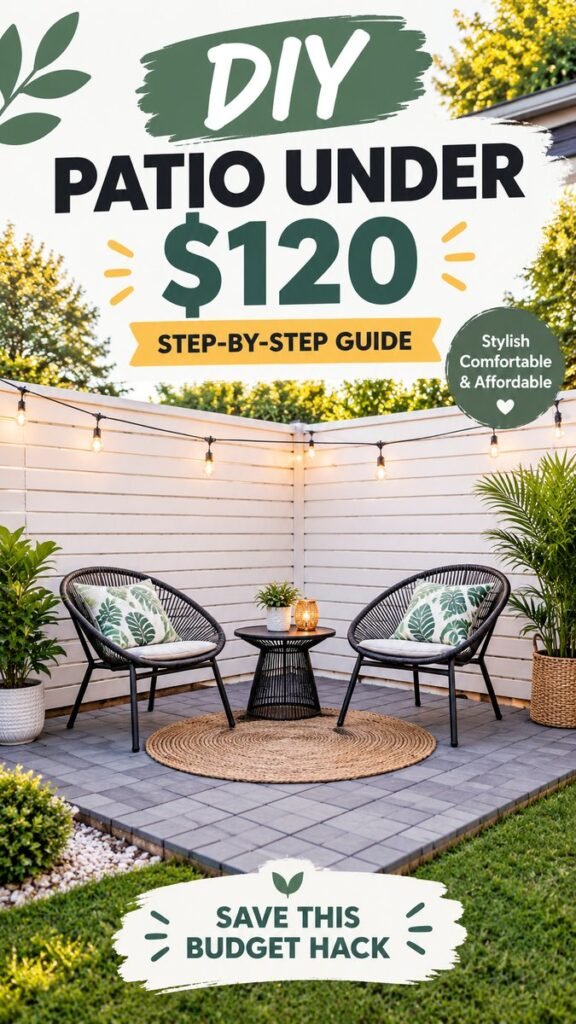
Creating a beautiful outdoor retreat does not have to mean spending a fortune. A small patio can become a comfortable, inviting extension of your home with a few thoughtful upgrades, affordable materials, and a little DIY creativity. This budget-friendly patio makeover shows how pavers, simple outdoor furniture, greenery, and string lights can work together to create a polished space while keeping the project accessible.
Whether you have a compact backyard corner, an unused patch of lawn, or a plain outdoor area that needs personality, the same principles can help you build a patio that feels intentional and welcoming. The goal is not to fill the space with expensive decor. Instead, focus on a strong foundation, comfortable seating, natural accents, and lighting that makes the area enjoyable throughout the day.
Key Takeaways
- A small patio can feel stylish without a large renovation budget.
- Paver flooring creates an instant foundation for an outdoor seating area.
- Simple chairs and a compact table provide function without overcrowding the space.
- Plants and cushions add softness, color, and personality.
- String lights can make a basic patio feel warm and inviting.
- Planning the layout before buying materials helps keep costs under control.
Why a DIY Patio Is Worth the Effort
An outdoor patio can completely change how a backyard is used. Instead of looking at an empty section of grass, you have a defined place for morning coffee, casual conversations, reading, relaxing, or enjoying an evening outside. Even a modest patio can make a backyard feel more finished and functional.
The biggest advantage of a DIY patio project is flexibility. You can work with the size and shape of your existing outdoor area, choose materials that fit your budget, and add decorative touches gradually. There is no need to complete every detail at once. A simple paved foundation can come first, followed by seating, plants, textiles, and lighting.
Important: The most successful budget patio projects prioritize the foundation and layout first. Decorative pieces can be added over time, but a well-planned surface and comfortable arrangement make the entire space feel more finished from day one.
Plan Your Patio Before You Start
Before purchasing anything, take time to decide how you want the patio to function. The space shown here works as a compact conversation area, with two chairs facing inward toward a small table. That arrangement keeps the center open while giving each person a comfortable place to sit.
Start by measuring the area you have available. Mark the proposed patio boundaries with string, stakes, or another temporary marker. Walk around the outlined space and imagine where chairs, a table, planters, and walking paths will go.
Think About How You Will Use the Space
A patio intended for quiet relaxation does not need the same layout as one designed for outdoor dining. For a cozy seating nook, two comfortable chairs and a small table may be enough. If you regularly entertain several people, you may want a larger seating arrangement and more open floor space.
Think about sunlight, shade, privacy, and access to the house. A patio positioned close to an exterior door can be especially convenient because drinks, cushions, and other items are easy to carry outside.
Keep the Shape Simple
A straightforward rectangular or square patio is often easier to plan and build than an elaborate shape. Straight edges can also make it easier to calculate the amount of surface material needed. Simplicity is especially useful when your goal is an affordable DIY outdoor makeover.
Build a Budget-Friendly Paver Foundation
The paved floor is the visual foundation of this patio concept. Square gray pavers create a clean, structured surface that contrasts nicely with the surrounding lawn. The result feels more substantial than a simple grass seating area while still maintaining a modern outdoor aesthetic.
For a DIY project, pavers can be an appealing option because they create a defined surface without requiring the visual complexity of a poured concrete design. The exact installation method depends on the site, soil conditions, drainage, local requirements, and the paving system selected.
Prepare the Area Carefully
Proper preparation is one of the most important parts of a patio project. A surface that is uneven or poorly supported can lead to movement, pooling water, or an unattractive finished result.
Generally, the process involves clearing the selected area, establishing the desired grade, preparing a suitable base, and creating a stable surface for the pavers. Follow the installation instructions supplied with your chosen materials and consider local drainage requirements before beginning.
Choose a Practical Paver Layout
Simple grid arrangements are particularly effective for small patios. The regular pattern gives the space a clean appearance and makes furniture placement straightforward. Gray tones also provide a versatile backdrop for greenery, natural wicker, black metal, or colorful cushions.
For an affordable patio makeover, concentrate your budget on creating a durable, level foundation. Decorative upgrades can always come later.
Create a Cozy Outdoor Seating Area
Once the patio surface is ready, furniture is what turns it from an empty platform into a usable outdoor room. The example features two lightweight woven-style lounge chairs and a compact round table positioned between them.
This arrangement is particularly useful for small patios because it provides seating without consuming the entire floor. The open space around the furniture keeps the area visually light and leaves room for movement.
Choose Furniture That Fits the Scale
Large outdoor sofas can look impressive, but they are not always the best choice for a compact patio. Smaller chairs can create the same sense of comfort while preserving valuable floor space.
When shopping for budget outdoor furniture, consider durability, weather exposure, maintenance, and storage. Lightweight pieces may also be easier to rearrange when you want to change the layout or protect cushions from poor weather.
Add Cushions for Comfort
Cushions are one of the easiest ways to change the personality of a patio. A simple chair can instantly feel more inviting with a comfortable seat cushion and a patterned throw pillow.
Leaf-inspired patterns work particularly well with outdoor spaces because they connect the seating area visually with surrounding plants. If you want a more flexible setup, choose removable outdoor cushions that can be stored when the patio is not being used.
Use Plants to Add Life and Privacy
Greenery plays an important role in this patio design. Potted plants soften the hard lines of the pavers and fencing while adding height, texture, and natural color.
You do not need a huge collection of plants to create the same effect. A few carefully positioned containers can make a noticeable difference. Place taller plants toward the back or corners and smaller plants closer to seating areas.
Mix Heights and Textures
Using plants of different sizes creates a more layered appearance. Tall foliage can anchor a corner, while compact plants can decorate the table or sit beside a chair. Trailing greenery can also add movement when placed on a wall or elevated planter.
Choose plants according to your local climate, available sunlight, and the amount of maintenance you are comfortable providing. Containers make it easier to experiment with placement and seasonal changes.
Expert Insight
A small outdoor space usually looks better when every item has a purpose. Instead of adding many small decorations, combine a few strong elements such as greenery, comfortable seating, warm lighting, and one useful table. This creates visual interest without making the patio feel crowded.
Make the Patio Feel Warm With String Lights
Lighting can dramatically change the atmosphere of an outdoor seating area. The patio concept uses string lights along the surrounding fence, creating a soft glow that makes the space feel especially inviting in the evening.
String lights are also a practical decorating choice because they add visual impact without taking up floor space. Their horizontal lines can emphasize the shape of a patio and make a plain fence feel more intentional.
Keep Safety in Mind
Use outdoor-rated lighting and follow the manufacturer’s instructions for installation. Make sure cords, connections, mounting points, and power sources are appropriate for outdoor use. If electrical work is required, use a qualified professional when necessary.
Decorate Without Blowing the Budget
A budget patio does not need to look basic. The trick is to choose a small number of decorative details that provide maximum visual impact.
Start with the essentials: seating, a table, lighting, and plants. Then consider inexpensive additions such as outdoor cushions, a small rug, lantern-style accents, planters, or decorative containers.
Natural textures are particularly effective in outdoor spaces. Woven furniture, basket-style planters, wood accents, and neutral textiles can add warmth to cool gray paving. Green foliage provides another layer of contrast without requiring a complicated color scheme.
Choose a Consistent Color Palette
One reason this type of patio looks polished is the limited color palette. Gray paving creates the neutral foundation, while white fencing keeps the background bright. Green plants and botanical cushions introduce color, and warm lighting adds a softer evening tone.
Following a simple palette makes it easier to shop for affordable pieces because different items are more likely to coordinate. You can also refresh the appearance later by replacing cushions or adding seasonal plants rather than changing the entire patio.
Simple Ways to Save Money on a DIY Patio
The phrase “under $120” makes this design especially appealing as budget inspiration, but actual costs can vary considerably depending on patio size, material prices, furniture availability, tools, site preparation, and local conditions. Treat the budget as a creative target rather than a guaranteed project cost.
To stretch your budget, compare material prices before purchasing and prioritize the pieces that matter most. You can also complete the project in stages.
- Start with the foundation. Spend first on the surface and preparation needed for a stable patio.
- Look for affordable seating. Compact chairs can provide plenty of comfort without requiring a complete outdoor furniture set.
- Shop your existing home. Look for planters, cushions, lanterns, and accessories you already own.
- Add plants gradually. Begin with a few statement containers and expand as your budget allows.
- Use lighting strategically. A single well-placed string-light arrangement can have a bigger impact than numerous decorative items.
Pro Tip: Build the patio around the furniture you actually plan to use. A smaller, comfortable seating arrangement is often more successful than trying to fill every available inch. Leave enough open space so the finished area feels relaxed rather than crowded.
How to Make a Small Patio Feel Bigger
Small outdoor spaces can feel surprisingly spacious when the layout is intentional. Keep furniture close to the edges where practical, leaving a clear visual path through the middle. Choose pieces with open frames rather than bulky solid forms when possible.
Using a consistent paving pattern can also create a sense of continuity. Light or neutral fencing helps reflect daylight, while plants placed at the perimeter can soften boundaries without occupying too much usable floor space.
Another useful trick is to keep the center visually simple. A compact table can provide function without becoming the main focal point. A few well-chosen accessories are enough to make the space feel finished.
A Simple Step-by-Step Patio Makeover Plan
If you want to recreate the overall feel of this affordable outdoor retreat, approach the project in a logical sequence.
- Measure the area. Determine how much usable space you have and sketch a simple layout.
- Plan drainage and preparation. Make sure the site can support the chosen patio surface and address grading or drainage concerns appropriately.
- Prepare the foundation. Clear and prepare the ground according to the requirements of your selected paving system.
- Install the pavers. Create a neat, stable surface using the manufacturer’s recommended installation method.
- Position the seating. Arrange two or more chairs around a compact table, leaving comfortable space for movement.
- Add greenery. Place plants around the edges and in corners to soften the hard surfaces.
- Install outdoor lighting. Add string lights or another suitable outdoor lighting solution for evening ambiance.
- Finish with textiles. Add cushions and a few practical accessories to make the seating area comfortable.
At a Glance
- Foundation: Use a clean, practical paver surface.
- Seating: Choose compact, comfortable outdoor chairs.
- Greenery: Layer plants around the patio for softness and texture.
- Lighting: Use outdoor-rated string lights to create evening warmth.
- Style: Combine neutral surfaces with natural textures and fresh greenery.
Enjoy Your New Outdoor Retreat
A successful DIY patio does not depend on an expensive furniture collection or a complicated landscape design. It starts with a practical plan and builds from there. A simple paved surface gives you structure, compact seating creates a reason to use the space, and plants and lighting add the personality that turns a functional area into a backyard retreat.
The most inspiring part of a budget patio makeover is its flexibility. You can begin with the basics and continue improving the space over time. Add new cushions for a seasonal refresh, move planters as your garden grows, or introduce another small decorative element when you find something that fits your style.
With thoughtful planning, even a modest backyard corner can become a place that feels comfortable, stylish, and distinctly your own. Focus on the foundation, keep the furniture proportional to the space, and use greenery and lighting to create atmosphere. The result can be a welcoming DIY patio that proves outdoor style is possible at almost any budget.