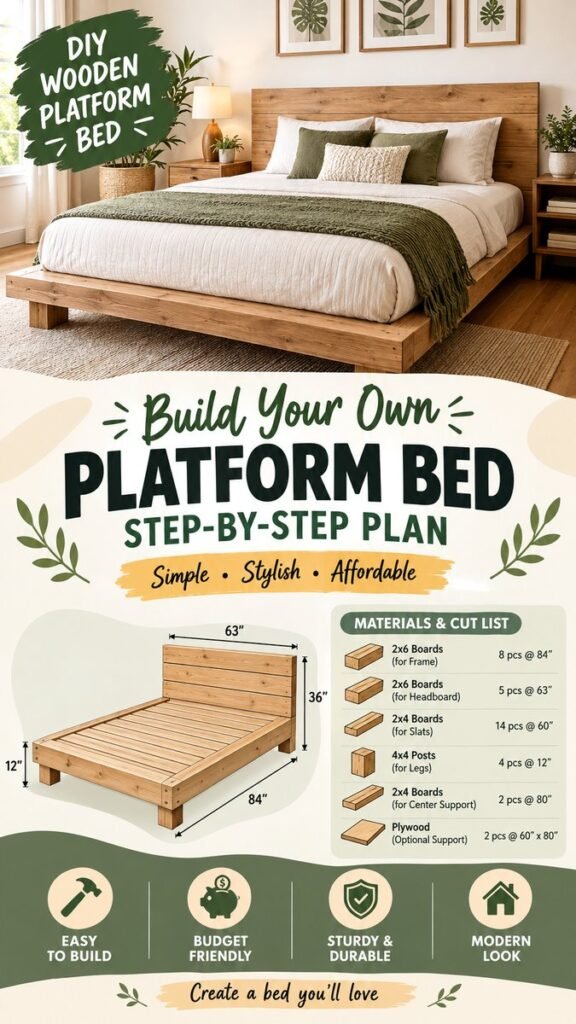
A DIY bed can completely change the feel of a bedroom without requiring an overly complicated furniture project. A simple wooden platform bed offers a clean, modern look while giving you the satisfaction of building something useful with your own hands. The design featured here combines a warm natural wood finish, a sturdy low-profile frame, a simple headboard, and a practical platform structure that works beautifully with a modern or rustic bedroom.
For anyone searching for DIY bed plans, DIY platform bed ideas, or an affordable homemade bed frame, this style is a great source of inspiration. Its straightforward shape keeps the construction visually clean, while the natural wood adds warmth and character. Whether you are an experienced woodworker or trying a larger furniture project for the first time, a platform bed is a rewarding project to consider.
Key Takeaways
- A wooden platform bed creates a clean and timeless bedroom centerpiece.
- A simple rectangular frame makes this style approachable for DIY furniture builders.
- Natural wood works especially well with neutral bedding and earthy bedroom decor.
- Planning measurements and materials before cutting can make the building process smoother.
- A sturdy support structure is essential for a comfortable and durable bed.
- The design can be customized with different wood finishes, colors, and headboard details.
Why Build a DIY Platform Bed?
Buying a bed frame is convenient, but building one yourself gives you much more control over the final result. You can choose the dimensions, materials, finish, height, headboard style, and overall appearance. A DIY platform bed also has the advantage of being designed around your room rather than forcing your room to accommodate a standard piece of furniture.
The design shown here has a particularly versatile appearance. The substantial wooden frame provides visual weight, while the uncluttered lines keep it from feeling overly traditional. The result is a bedroom centerpiece that can fit into rustic, farmhouse, Scandinavian, modern, or nature-inspired interiors.
Important: The success of a DIY bed depends more on careful planning and strong connections than on complicated decorative details. Take time to verify your mattress dimensions, frame measurements, support spacing, and overall stability before assembling the finished piece.
Understanding the Bed Design
This platform bed uses a straightforward construction concept. A rectangular outer frame supports the sleeping surface, while multiple boards across the interior create the platform. Legs raise the frame from the floor, and a simple wooden headboard extends upward behind the mattress.
The illustrated plan presents a queen-size configuration with an approximately 60 by 80 inch mattress in mind. The visual also shows a frame length of about 84 inches, a width around 63 inches, and a raised headboard reaching approximately 36 inches. The sleeping platform is shown at roughly 12 inches high.
These measurements are useful as a planning reference, but they should not be treated as universal dimensions for every mattress or room. Mattress dimensions can vary, and the exact construction should always be adjusted to the materials, hardware, tools, and mattress being used.
A Low-Profile, Modern Shape
One of the strongest features of this style is its low-profile silhouette. Instead of using ornate curves or complicated trim, the design relies on straight lines and visible wood grain. This makes the bed feel substantial without looking busy.
The natural wood finish is especially effective against white bedding. A neutral duvet and pillows allow the wooden frame to become the visual focal point, while an olive or muted green throw adds an earthy accent. Plants, woven rugs, simple bedside furniture, and nature-inspired artwork can complete the same relaxed atmosphere.
Materials for a DIY Wooden Bed Frame
The plan illustration shows a combination of common dimensional lumber and plywood. The main frame is represented with 2×6 boards, while 2×4 boards are used for the slats and center support. Larger posts form the legs, and plywood is presented as an optional support material.
The illustrated materials and cut list includes several 2×6 boards for the main frame, additional 2×6 pieces for the headboard, 2×4 boards for the mattress slats, 4×4 posts for the legs, 2×4 boards for center support, and optional plywood panels.
Choosing the Right Wood
Wood selection can have a major effect on both appearance and construction. Look for boards that are reasonably straight and free from major defects that could interfere with assembly. Inspect each piece before cutting and consider how the grain will look on highly visible sections such as the headboard and outer frame.
If you plan to stain the finished bed, remember that different pieces of wood can absorb stain differently. Testing the finish on an offcut before applying it to the entire project is a simple way to avoid surprises.
Hardware and Assembly Supplies
A wooden bed needs secure connections because it will experience repeated movement and weight over time. Depending on the chosen construction method, appropriate wood screws, bolts, brackets, or other structural fasteners may be needed. The exact hardware should match the lumber dimensions and the intended connection.
Basic woodworking equipment may also include a measuring tape, pencil, square, saw, drill, drill bits, clamps, sanding equipment, and protective safety gear. The tools required can vary depending on whether the boards are purchased pre-cut or prepared at home.
Expert Insight
A furniture project becomes much easier when every measurement is written down before construction begins. Confirm the mattress size first, then work outward to determine the platform, frame, headboard, and support dimensions. A few minutes of planning can prevent expensive cutting mistakes later.
Planning Your DIY Bed Before Building
Good preparation is one of the most important parts of a successful DIY bed project. Before purchasing lumber, measure the available bedroom space and identify where the finished bed will sit. Consider walking clearance around the sides and foot of the bed, as well as the location of nightstands, doors, windows, and other furniture.
- Confirm the exact mattress size you are building around.
- Sketch the overall bed frame and note the major dimensions.
- Determine the desired platform height and headboard height.
- Create a complete material and cut list before purchasing lumber.
- Inspect and measure boards before making permanent cuts.
- Dry-fit major components when possible before final fastening.
Building the Main Bed Frame
The outer frame establishes the foundation of the entire bed. Begin by organizing the boards according to their intended positions and checking each cut carefully. Keeping the frame square is particularly important because even a small alignment issue can become more noticeable as additional components are attached.
As the side and end sections come together, use a square to check the corners and verify that the structure remains aligned. Strong, properly positioned fasteners help create a rigid frame that does not shift easily during normal use.
Adding the Legs
The illustrated design uses substantial square posts at the corners to raise the bed from the floor. These legs contribute to the sturdy appearance while creating space beneath the platform.
Positioning is important because the legs need to transfer the weight of the frame and mattress safely toward the floor. Before final assembly, make sure the legs are aligned and firmly connected to the surrounding frame members.
Installing Platform Slats
The internal slats create the surface that supports the mattress. The reference design shows multiple 2×4 boards running across the bed, with additional center support beneath the platform. The exact spacing should be appropriate for the mattress and any requirements provided by its manufacturer.
Keep the slats evenly positioned and make sure they are adequately supported. A center support structure can help distribute weight and reduce the amount of unsupported span across the bed.
Creating the Wooden Headboard
The headboard is one of the most noticeable elements of this DIY bed. The design uses several horizontal wooden boards arranged in a clean, simple pattern. This approach creates a strong focal point without requiring complicated joinery or decorative carving.
For a cohesive appearance, choose boards with complementary grain patterns and consider arranging them before fastening. Light sanding can soften sharp edges and make the finished piece more comfortable and polished.
The headboard can also be customized. You might choose a lighter finish for a Scandinavian-inspired bedroom, a deeper stain for a rustic look, or a natural clear finish that allows the original wood character to remain visible.
Finishing Your DIY Wooden Bed
Sanding is an important finishing step for a wooden bed. Smooth the exposed surfaces and pay particular attention to corners and edges. The goal is to create a comfortable, refined surface while preserving the natural character of the wood.
After sanding, remove dust thoroughly before applying any finish. A clear protective coating can preserve the natural appearance, while stain can shift the color toward warmer, darker, or more muted tones. Always follow the instructions for the particular finishing product you choose and allow adequate drying time.
Pro Tip: Do not rush the finishing stage. A carefully sanded surface and consistent finish can make a simple DIY bed look dramatically more polished and professionally made.
How to Style a DIY Platform Bed
The beauty of a simple wooden bed frame is that it can become the foundation for many different bedroom styles. The design shown pairs particularly well with soft neutral bedding and muted green accents, creating a calm, natural atmosphere.
Keep the Bedding Soft and Neutral
White, cream, beige, and soft gray bedding can highlight the warmth of natural wood. Add a textured throw or a few decorative pillows for contrast without overwhelming the clean lines of the frame.
Bring in Natural Accents
Green plants, woven textures, linen fabrics, and earthy colors complement a wooden platform bed beautifully. These details reinforce the warm, relaxed character of the design while keeping the bedroom visually balanced.
Choose Simple Nightstands
A minimalist wooden or neutral-colored nightstand works well beside a substantial platform bed. Keep accessories practical and uncluttered so the headboard and natural wood remain the main features.
Common DIY Bed Building Mistakes to Avoid
Even a straightforward bed frame deserves careful attention to detail. One of the most common problems is cutting boards before confirming the mattress dimensions and final frame measurements. Always measure twice before making a cut.
Another issue is failing to check whether the frame is square during assembly. If the foundation is out of alignment, later components may not fit correctly. Checking each stage with a measuring tape and square can save considerable frustration.
Insufficient support is another area that should not be overlooked. The mattress platform needs appropriate support across its surface, particularly around the center. Follow the mattress manufacturer’s recommendations when determining the support structure.
Finally, do not overlook surface preparation. Rough edges, splinters, and poorly finished surfaces can detract from an otherwise beautiful piece of DIY furniture.
Ways to Customize Your DIY Bed
Once you understand the basic platform bed structure, there are many ways to make the design your own. Adjust the headboard height, change the finish, modify the leg style, or add subtle storage features underneath the platform.
- Use a natural clear finish to emphasize the wood grain.
- Choose a darker stain for a more dramatic bedroom centerpiece.
- Paint the frame in a soft neutral shade for a contemporary look.
- Adjust the headboard design with different board widths.
- Add under-bed storage boxes if the available clearance allows.
- Change the leg dimensions to create a different visual height.
At a Glance
- Style: Clean, modern wooden platform bed
- Design: Simple frame with horizontal wood headboard
- Look: Warm, natural, minimalist, and versatile
- Best for: DIY furniture and beginner-friendly woodworking inspiration
- Key priority: Accurate measurements and strong structural support
Conclusion
A DIY wooden platform bed is a practical way to bring personality, warmth, and craftsmanship into the bedroom. The design featured here proves that a beautiful bed does not need complicated decoration. Straight boards, a thoughtful layout, a sturdy support system, and a carefully chosen finish can create a timeless piece of furniture.
For DIY enthusiasts, the project also offers plenty of room for creativity. Start with the basic platform bed concept, then customize the dimensions, wood finish, headboard, and surrounding decor to suit your space. With careful planning and attention to structural details, a simple wooden frame can become the centerpiece of a comfortable and inviting bedroom.
Whether you are searching for DIY bed plans, DIY platform bed ideas, wooden bed frame projects, or affordable bedroom furniture inspiration, this style is worth saving for your next woodworking project. Gather your measurements, plan your materials, and create a bed that feels uniquely yours.