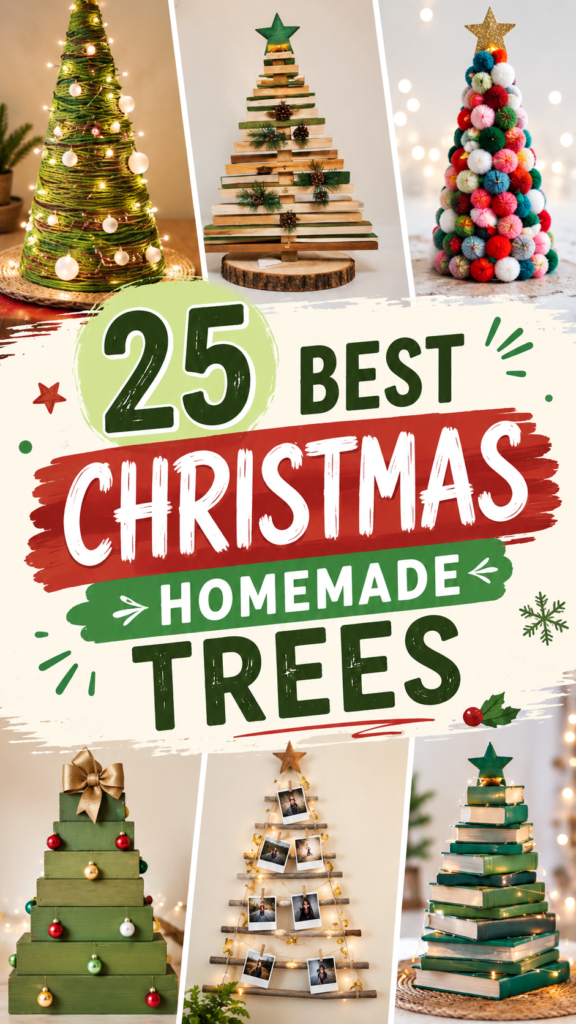
Creating a DIY Christmas tree is a fun way to make holiday decorating feel more personal, creative, and affordable. Instead of relying on a traditional full-size tree, you can turn simple materials into charming Christmas displays that work beautifully on tables, shelves, mantels, entryways, or even small apartments. The ideas shown here explore a range of handmade styles, including rustic wooden trees, colorful yarn designs, book trees, photo displays, and decorated tabletop creations.
Key Takeaways
- DIY Christmas trees can be made from simple materials you may already have at home.
- Wood, yarn, books, photos, and decorative ornaments can all become part of a creative holiday display.
- Tabletop Christmas trees are ideal for apartments, bedrooms, offices, and smaller spaces.
- Choosing one strong shape and a coordinated color palette keeps handmade decor looking polished.
- Lights, stars, ornaments, ribbons, and greenery can add festive detail without overwhelming the design.
- Personal touches make homemade Christmas decorations feel especially memorable.
Why Make a DIY Christmas Tree?
A homemade Christmas tree does more than fill an empty corner. It gives you an opportunity to decorate in a way that reflects your personality and the character of your home. A handmade tree can be rustic and natural, colorful and playful, minimalist and modern, or warm and nostalgic.
DIY Christmas tree projects are also useful when you want holiday decor without committing to a large traditional tree. A compact design can sit on a dining table, bookshelf, console, kitchen counter, or bedside table. Several small trees can even be grouped together to create a miniature Christmas forest.
Important: The best homemade Christmas tree is not necessarily the most complicated one. A simple silhouette, thoughtful materials, and a few well-placed decorations can create a much stronger visual impact than a project crowded with too many details.
25 DIY Christmas Tree Ideas to Try
The inspiration combines several approaches to homemade Christmas decorating. Each idea can be adapted according to your available materials, preferred colors, and the amount of space you have. You do not need to reproduce a particular design exactly. Instead, use these concepts as starting points for your own Christmas craft.
1. Rustic Wooden Christmas Tree
Wooden Christmas trees are a natural choice for anyone who enjoys farmhouse, rustic, or Scandinavian-inspired decor. Arrange wooden boards or branches in progressively smaller lengths to create a triangular tree silhouette. A simple central support can hold the pieces together while a round wooden base gives the design stability.
Leave the wood natural for a warm, organic appearance, or paint individual pieces in shades of green, white, cream, or muted red. Small pinecones, greenery, wooden stars, and miniature ornaments can finish the look.
2. Yarn Christmas Tree
Yarn is one of the easiest materials for creating a soft and colorful DIY Christmas tree. Wrap yarn around a cone-shaped base until the surface is completely covered. You can use one color for a clean look or combine several shades for a playful design.
For an especially cheerful display, add small pom-poms, beads, buttons, or miniature ornaments. A yarn tree is lightweight and works particularly well as a tabletop Christmas decoration.
3. Christmas Tree Made From Books
If you have a collection of books with attractive covers, they can become an unexpected holiday decoration. Stack books in gradually smaller layers to form a triangular shape. Alternating the direction of the books can create additional texture and visual interest.
This idea works especially well in reading corners, home offices, libraries, and bedrooms. Choose books in green, red, neutral, or earthy tones if you want a coordinated Christmas color scheme.
4. Photo Christmas Tree
A photo tree combines holiday decorating with personal memories. Arrange small photographs along wooden branches or another simple tree-shaped structure. Add a strand of tiny lights around the frame to make the photos stand out in the evening.
This can become a wonderful family Christmas decoration because the finished display feels more personal than a standard ornament collection. You can use favorite holiday photographs, family moments, travel memories, or pictures from throughout the year.
5. Pom-Pom Christmas Tree
Colorful pom-poms can transform a simple cone into a cheerful Christmas tree. Arrange them closely together so the base is hidden, then add a star or another small decoration at the top.
For a modern look, use two or three coordinated colors rather than every shade available. For a playful children’s room, a multicolor design can be much more expressive.
6. Reclaimed Wood Tree
Reclaimed wood is ideal for a rustic Christmas craft. Uneven boards can actually make the finished piece more interesting because they create a handmade appearance. Sand rough edges if necessary, then arrange the boards from longest to shortest.
You can keep the original wood finish or add a light coat of paint. Distressed white, sage green, natural brown, and muted red all work nicely for seasonal decorating.
7. Minimalist Branch Tree
A branch tree is a simple option for people who prefer understated holiday decor. Gather branches of different lengths and arrange them horizontally on a vertical support. The result creates an airy tree shape without taking up much floor or table space.
Decorate it with warm lights, paper ornaments, wooden stars, or small photographs. Keeping the decorations sparse allows the natural branches to remain the main feature.
8. Painted Wooden Tree
Painted wooden blocks or boards can be layered into a stylized Christmas tree. Green paint creates a traditional holiday feeling, while white, beige, dusty blue, or muted pink can give the project a more contemporary appearance.
Small round ornaments can be attached to the front, or you can paint simple dots and stars directly onto the wood.
9. Christmas Tree With Lights
Sometimes lighting is enough to turn a simple tree shape into a festive centerpiece. Wrap a lightweight string of lights around a cone, branch arrangement, or wall-mounted structure. Warm white lights create a cozy atmosphere and pair well with natural materials.
For safety, choose lighting designed for the intended indoor use and follow the manufacturer’s instructions. Keep electrical components away from moisture and avoid placing cords where they can become a tripping hazard.
10. Fabric Christmas Tree
Scraps of fabric can be layered, wrapped, folded, or tied around a cone-shaped base to make a soft Christmas tree. This is a practical project if you have leftover holiday fabric, ribbons, felt, or old textiles.
Mixing patterns can create a charming patchwork effect. For a more sophisticated design, select fabrics from the same color family and vary the textures instead.
How to Choose the Right DIY Christmas Tree Style
The right project depends largely on your available space and the atmosphere you want to create. Before starting, think about where the finished tree will live. A tall wooden tree may work beautifully in an entryway, while a yarn or pom-pom tree may be better suited to a tabletop.
Next, consider the materials you already own. DIY decorating becomes much more rewarding when you can repurpose supplies rather than buying everything from scratch. Old books, spare yarn, leftover paint, branches, wooden scraps, photographs, fabric pieces, and unused ornaments can all become useful components.
Expert Insight
A consistent shape is the secret to making unusual materials instantly recognizable as a Christmas tree. Whether you use books, boards, yarn, branches, or ornaments, arrange the materials so the overall silhouette gradually narrows toward the top.
Simple Materials for Homemade Christmas Trees
You do not need an extensive craft supply collection to begin. Start by gathering a few basic materials and then decide which design fits them best.
- Wooden boards, branches, or craft sticks
- Yarn, felt, fabric, or ribbon
- Books or other sturdy household items
- Pom-poms, beads, buttons, or small decorative pieces
- Paper, cardboard, or lightweight craft materials
- Miniature ornaments and stars
- Indoor decorative string lights
- Paint and simple craft brushes
- Glue or other suitable craft adhesives
How to Make Your DIY Tree Look More Professional
One of the easiest ways to improve homemade holiday decor is to limit the number of colors. A project can contain many different textures without looking chaotic if the colors are coordinated. Traditional combinations such as green, red, white, and gold immediately communicate Christmas, while neutral palettes can create a softer modern effect.
Scale also matters. If your tree is small, choose decorations that are proportionally small. Oversized ornaments can quickly hide the shape of a tabletop tree. Likewise, very tiny decorations may disappear on a large wooden display.
Pro Tip: Step back from your project several times while decorating. What looks balanced from a few inches away can appear crowded from across the room. A little empty space often makes handmade Christmas decor look more intentional.
Use a Strong Tree Silhouette
Even the most creative material choices work best when the basic triangular shape remains easy to recognize. Before adding decorations, check the outline from a distance. If one side feels noticeably heavier, adjust the materials before moving on to the finishing touches.
Add One Focal Detail
A star, bow, large ornament, photo, or cluster of greenery can act as the visual finishing point. You do not need multiple statement pieces. One strong accent at the top or center can make the entire tree feel complete.
Mix Texture Instead of Adding More Color
Wood, yarn, paper, greenery, fabric, and ornaments naturally provide different textures. Combining these materials can make a simple Christmas tree feel rich and layered without adding unnecessary visual clutter.
DIY Christmas Trees for Small Spaces
Small homes and apartments do not need to miss out on festive decorating. Tabletop Christmas trees can provide the same seasonal feeling while taking up very little room. Place one on a console, coffee table, shelf, desk, kitchen counter, or dining table.
Wall-mounted designs are another excellent option. A branch tree or photo tree can use vertical wall space instead of valuable floor area. This is particularly helpful when you want Christmas decor without moving furniture around.
Several miniature trees can also be arranged together at different heights. Use one taller piece as the focal point and surround it with two or three smaller designs. Keeping a similar color palette will make the collection feel cohesive.
Make Your Christmas Tree Personal
The most memorable DIY Christmas trees often include something meaningful. A photo tree can display favorite memories. A book tree can reflect your love of reading. A yarn tree can use colors associated with your family or favorite room. A wooden tree can incorporate pieces from a craft project or materials with a natural character.
Personalization does not have to be complicated. A handwritten paper star, initials, favorite colors, miniature photographs, handmade ornaments, or a small collection of meaningful decorations can make an otherwise simple project feel uniquely yours.
Creative Christmas Decorating Ideas to Combine
You can also combine several DIY concepts into one display. For example, a wooden tree can be decorated with yarn ornaments and warm lights. A book tree can feature small paper stars. A branch tree can hold photographs and tiny ornaments. A fabric tree can be finished with a wooden star.
The goal is not to follow a strict formula. Think about the materials, colors, and textures that already exist in your home, then build a Christmas tree around them. This approach can make your holiday decorating feel more natural and less repetitive.
Important: Homemade holiday decor works best when it feels intentional rather than perfectly manufactured. Small variations, natural wood grain, uneven yarn texture, and handmade details can be part of the charm.
At a Glance
- For rustic decor: Choose branches, reclaimed wood, pinecones, and natural finishes.
- For colorful decor: Try yarn, pom-poms, fabric, and bright ornaments.
- For small spaces: Create tabletop, shelf, or wall-mounted trees.
- For personal decor: Add photographs, handwritten details, or meaningful ornaments.
- For a modern look: Keep the silhouette simple and use a limited color palette.
Final Thoughts
DIY Christmas tree projects are a wonderful reminder that festive decorating does not have to follow a traditional formula. A few simple materials can become a beautiful holiday centerpiece when they are arranged thoughtfully and finished with personal details.
From rustic wooden trees and colorful pom-pom creations to book stacks and photo displays, there are countless ways to create a homemade Christmas tree that fits your style. The best part is that many of these ideas can be adapted to the size, colors, and materials already available in your home.
Whether you are decorating a small apartment, creating a festive centerpiece, refreshing a family room, or simply looking for a fun Christmas craft, start with one idea and make it your own. Choose your materials, establish a simple tree shape, add a few meaningful details, and let the handmade character become part of the holiday charm.
Tags
DIY Christmas Tree Christmas DIY Homemade Christmas Decor Tabletop Christmas Tree Christmas Crafts DIY Holiday Decor Rustic Christmas Decor Handmade Christmas Ideas