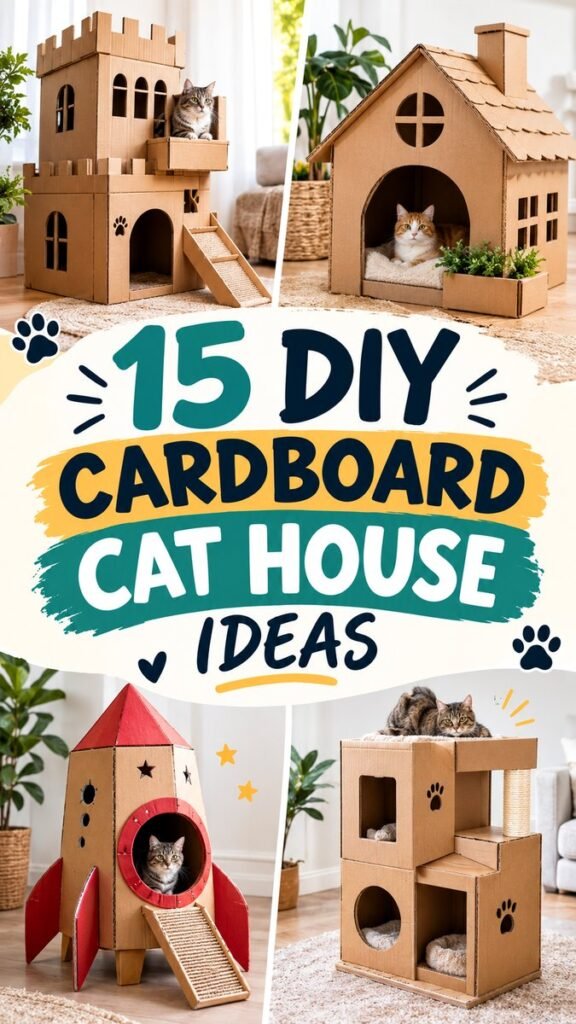
Creating a cozy retreat for your feline friend does not have to mean buying expensive furniture. A simple piece of cardboard can become a playful hideaway, climbing space, nap spot, or imaginative little home with the right design. These cat house DIY ideas show just how versatile cardboard can be, from charming castle-inspired structures and classic cottages to a fun rocket-shaped hideout and a multi-level cat condo. 🐾
Whether you are looking for a weekend craft project, a budget-friendly way to enrich your cat’s environment, or simply a creative way to reuse sturdy cardboard boxes, these ideas offer plenty of inspiration. The goal is not perfection. It is creating a safe, comfortable space that your cat will actually enjoy exploring.
Key Takeaways
- Cardboard can become a creative and affordable cat house.
- Different layouts can provide hiding, lounging, climbing, and play opportunities.
- Open doorways and windows make a DIY cat house more inviting.
- Ramps and multiple levels can add extra interest to a simple design.
- Comfort, stability, and safe construction should always come first.
Why Try a Cat House DIY Project?
A homemade cat house is more than a decorative piece. Cats often enjoy having places where they can retreat, observe their surroundings, or settle down for a quiet nap. A cardboard structure can give them that personal space while also adding an element of play.
One of the biggest advantages of a DIY cat house is flexibility. You can create a compact hideaway for a small room, a larger multi-level structure for a playful cat, or a simple box with a comfortable opening. Because cardboard is easy to cut and reshape, the design can evolve as you work.
It is also an accessible project for beginners. You do not need advanced woodworking skills or a large collection of specialist tools. With suitable cardboard, careful measuring, and a little creativity, you can build something that looks distinctive and feels personal.
Important: The most attractive DIY cat house is not necessarily the best one. Prioritize a sturdy structure, smooth openings, good ventilation, and materials that are appropriate for your cat. Decorative details should never interfere with safe movement or comfort.
15 DIY Cardboard Cat House Ideas
The designs below are inspired by the playful possibilities of cardboard cat furniture. You can recreate the general concepts or combine features from several ideas to make a completely personalized cat house DIY project.
1. Cardboard Cat Castle
Turn ordinary boxes into a miniature castle with towers, arched entrances, and simple battlements. A castle-style cat house instantly creates a playful focal point while giving your cat several spaces to investigate.
You can keep the exterior natural for a minimalist appearance or add simple, pet-friendly decorative details. Consider incorporating a lower sleeping area and an upper observation platform if the structure remains stable.
2. Cozy Cardboard Cottage
A little cardboard cottage brings a warm, home-inspired look to your cat’s corner. Use a pitched roof, an arched front doorway, and small windows to create the appearance of a miniature house.
This design works especially well when you want your DIY cat house to blend naturally with a living room or bedroom. Add a soft removable cushion inside to turn the cottage into a comfortable resting place.
3. Cardboard Cat Rocket
For a more imaginative project, transform a tall cardboard box into a rocket. A pointed top, circular doorway, and simple fins can create a fun space-inspired hideaway.
The rocket concept is especially appealing when the cat house is meant to be part of a playful environment. Keep the construction balanced and make sure decorative pieces are firmly attached.
4. Multi-Level Cardboard Cat Condo
Stacked cardboard boxes can create a compact cat condo with several levels. Different openings allow your cat to move between sections while separate platforms provide places to sit or relax.
This approach is useful when you want to make the most of vertical space. Before adding height, however, make sure each level is securely supported and the entire structure cannot easily tip over.
5. Cardboard Hideaway Box
Sometimes the simplest design is the most effective. A sturdy box with one or two carefully cut entrances can become a private retreat without requiring a complicated construction process.
This is a great starting point for anyone new to DIY cat furniture. Once the basic box works well, you can experiment with windows, a roof, decorative panels, or an attached play section.
6. Cat House With a Ramp
Add a cardboard ramp to make the house more interactive. The ramp can lead toward an upper platform, entrance, or lounging area and can turn a basic box into a small activity zone.
A textured cardboard surface can also provide a different sensation under your cat’s paws. Make sure the ramp is securely supported and has an appropriate incline for comfortable movement.
7. Windowed Cardboard Cat House
Cut several simple windows into the sides of a cardboard house to create a brighter, more open design. Windows allow your cat to peek outside while remaining inside its own cozy space.
Arches, circles, squares, and other simple shapes can change the personality of the finished house. Keep the edges smooth and avoid creating openings that could trap paws or other body parts.
8. Cardboard Playhouse
Combine a sleeping area with playful features to create a cardboard playhouse. Multiple entrances, peek-through windows, and connected compartments can encourage exploration.
This type of design can be especially fun for curious cats that enjoy investigating new spaces. You can start with two connected boxes and expand the layout as your materials and available floor space allow.
9. Tiny Cardboard Townhouse
Create a miniature townhouse with multiple sections stacked vertically. Each level can have its own opening, creating several distinct spaces within one compact structure.
A townhouse design also gives you plenty of opportunities to experiment with exterior details. Simple roof lines, windows, balconies, or small decorative panels can make the finished piece feel custom-made.
10. Cardboard Cat Cabin
A cabin-inspired cat house offers a simpler alternative to elaborate structures. Give the box a sloped roof and a generous entrance, then add a comfortable resting surface inside.
The natural brown appearance of cardboard can work beautifully with neutral home decor. If you prefer a more colorful look, decorate the exterior while keeping the interior comfortable and uncluttered.
Expert Insight
When planning a cardboard cat house, think about how your cat naturally uses space. A good design can offer a combination of privacy, visibility, movement, and rest without becoming unnecessarily complicated.
- Create at least one comfortable retreat area.
- Keep important entrances easy to access.
- Make elevated sections stable before allowing your cat to use them.
11. Cardboard Cat Tower
A cardboard cat tower can combine several boxes into a taller vertical structure. Instead of making every section identical, vary the openings and platforms to create visual interest.
Because height changes the stability requirements, construction deserves extra attention. Build a wide, dependable base and reinforce connections between sections. A shorter tower may be a better option if you cannot make a taller design sufficiently stable.
12. Double-Entrance Cat House
Give your cat more than one way in and out by cutting two entrances into the structure. This simple feature can make a small cardboard hideaway feel more open and accessible.
You can position the openings on adjacent sides or opposite sides depending on where you plan to place the house. This is also a practical way to create a better view from inside the hideaway.
13. Cardboard Cat Garage
For a playful twist, design a small garage-style shelter with a wide front opening and a flat or slightly angled roof. Add simple geometric details to make it look like a miniature building.
This concept is easy to personalize without complicated construction. A basic box can provide the foundation, while cutout panels and attached cardboard pieces can create the finished look.
14. Cardboard Cat Villa
A larger villa-inspired design can combine several favorite features into one project. Think multiple rooms, generous entrances, small windows, and a raised section for lounging.
The key is to avoid adding features simply for decoration. Every section should have a clear purpose, whether it provides a place to rest, hide, explore, or observe the room.
15. Custom Modular Cat House
If you cannot decide on a single style, build a modular cardboard cat house. Use separate boxes or sections that can be rearranged into different configurations.
This gives you the freedom to test what your cat likes. You might discover that your cat prefers a low hideaway rather than a tall tower, or that it enjoys an open platform more than an enclosed room.
How to Plan Your Cat House DIY Project
Before cutting your cardboard, spend a few minutes thinking about the final layout. The best DIY projects usually begin with a simple plan rather than cutting pieces at random.
- Choose the location. Decide where the finished cat house will sit and measure the available space.
- Select the structure. Choose a cottage, castle, rocket, condo, or simple hideaway based on your available materials and your cat’s habits.
- Plan the openings. Mark doors and windows before cutting so the finished structure remains balanced.
- Build the base first. A strong foundation helps the rest of the structure remain stable.
- Add details gradually. Test the basic structure before adding ramps, platforms, or decorative elements.
Pro Tip: Save the most decorative details for the end. First make sure the cardboard structure is stable, spacious enough, and easy for your cat to enter and leave. A simple house that your cat loves is more successful than an elaborate design that is difficult to use.
Choosing Cardboard for a DIY Cat House
Not all cardboard is equally useful for a homemade cat house. Look for clean, sturdy pieces that can support the intended design. Thicker cardboard can be useful for structural panels, bases, and platforms, while lighter pieces may work better for decorative details.
Inspect every piece before using it. Avoid cardboard that is wet, heavily damaged, contaminated, or covered with materials that could be inappropriate for pets. Remove loose tape, sharp staples, plastic pieces, and other unnecessary packaging materials.
The condition of the cardboard matters just as much as its appearance. A clean, stable material gives you a better foundation for doors, windows, roofs, ramps, and multi-level sections.
Making a Cardboard Cat House More Comfortable
Once the structure is complete, comfort can transform it from a craft project into a place your cat wants to use. A soft, removable cushion or blanket can make the interior more inviting.
Choose bedding that is easy to remove and clean. Keep the inside free from unnecessary decorations so your cat has enough room to turn around, settle down, and leave comfortably.
Placement matters too. A quiet corner can create a relaxing retreat, while a location with a view of the room may appeal to a cat that enjoys watching household activity. Observe how your cat responds and adjust the position if needed.
Creative Ways to Personalize a DIY Cat House
One of the most enjoyable parts of a cat house DIY project is personalization. You can make the exterior fit your home while keeping the design comfortable and functional for your cat.
- Use simple geometric cutouts for windows.
- Create an arched doorway for a cottage or castle look.
- Add a cardboard roof for a house-inspired silhouette.
- Create a ramp leading to a raised section.
- Combine different box sizes for a custom layout.
- Use simple, pet-appropriate decorative elements on the exterior.
Natural cardboard already has a warm, neutral appearance, so you do not have to cover every surface. Leaving some cardboard visible can create a minimalist aesthetic that works well with modern interiors.
Safety Tips for Homemade Cat Houses
Safety should remain the priority throughout the project. Cardboard is convenient, but a homemade structure still needs to be inspected regularly, especially if your cat scratches, bites, climbs, or plays energetically inside it.
- Smooth or cover rough cut edges where appropriate.
- Avoid small decorative pieces that could become loose.
- Check elevated platforms for stability.
- Make entrances large enough for comfortable access.
- Keep the structure away from hazards such as unstable furniture or exposed heat sources.
- Replace cardboard when it becomes significantly damaged or soiled.
- Supervise your cat when introducing a new or unusual structure.
A quick inspection every few days can help you notice loose panels, worn edges, or damaged connections before they become a problem. If your cat is particularly enthusiastic about scratching or chewing cardboard, inspect the structure more frequently.
Making Your DIY Cat House Pinterest-Worthy
If you are creating a cat house that will also look beautiful in your home, focus on simple shapes and balanced proportions. The castle, cottage, rocket, and stacked-box concepts demonstrate how a basic material can become visually distinctive through silhouette and thoughtful details.
Neutral cardboard pairs naturally with many interiors. You can also introduce a small amount of color through selected exterior accents instead of overwhelming the entire structure. A consistent palette can make the finished piece look intentional.
For a Pinterest-inspired project, consider photographing the finished house near natural light. Show the entrance clearly, include a glimpse of the interior, and capture your cat using the space when possible. The combination of a practical DIY project and a happy pet makes the idea especially appealing to fellow cat lovers.
How to Make Your Cat Interested in the New House
Even a beautiful DIY cat house may not receive immediate attention. Cats can be cautious about unfamiliar objects, so give your pet time to investigate the structure naturally.
Place the house somewhere your cat already enjoys spending time. Familiar bedding can make the interior feel more inviting. You can also leave the entrance open and allow your cat to approach at its own pace.
Do not worry if your cat ignores the house at first. Some cats prefer to inspect a new object several times before deciding whether to use it. The most important thing is to create a comfortable, accessible space rather than forcing interaction.
At a Glance
- Best material: Clean, sturdy cardboard.
- Popular styles: Castle, cottage, rocket, condo, and simple hideaway.
- Useful features: Doors, windows, ramps, platforms, and multiple rooms.
- Main priority: Stability, comfort, accessibility, and safe construction.
- Easy starting point: A single reinforced cardboard box with a comfortable entrance.
Conclusion: Build a Cat House Your Feline Will Love
A great cat house DIY project does not need to be complicated or expensive. With sturdy cardboard and a thoughtful layout, you can create everything from a simple hideaway to an imaginative castle, cottage, rocket, or multi-level condo.
The most important lesson is to balance creativity with function. Give your cat a comfortable place to rest, enough room to move, and easy access to the space. Then add the playful details that make the project uniquely yours.
Start with one simple idea and build from there. A cardboard box can become the foundation for an entire little world of exploration, relaxation, and play. With these DIY cardboard cat house ideas as inspiration, you can create a practical homemade retreat while turning an ordinary material into something genuinely special. 🐱