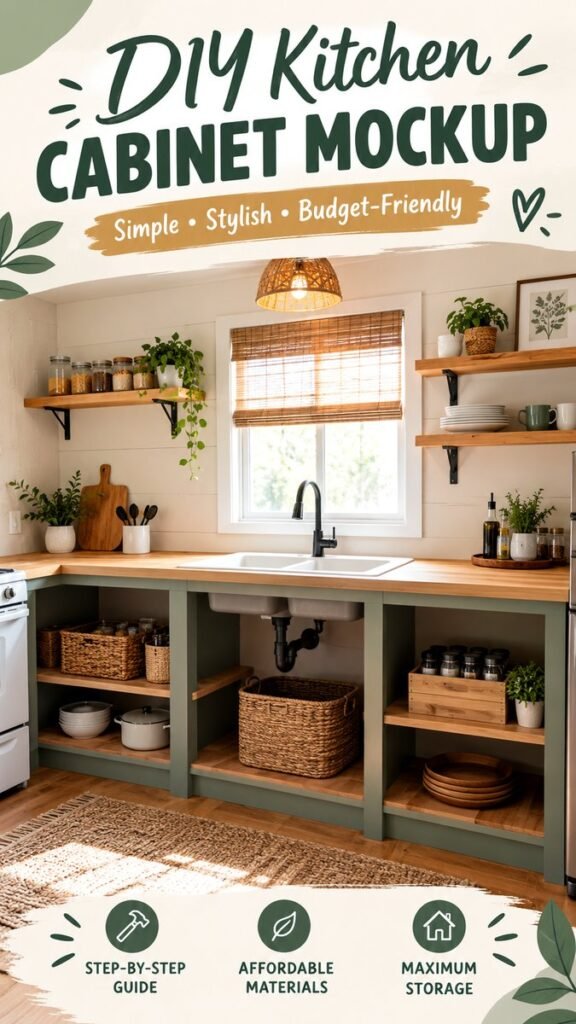
DIY kitchen cabinets can completely change the look, function, and personality of a kitchen without requiring a full high-end renovation. The inspiration here combines a warm natural wood countertop, simple open cabinetry, soft green tones, woven storage baskets, floating shelves, and practical organization to create a welcoming kitchen that feels both stylish and approachable. It is a great example of how thoughtful cabinet design can make a kitchen feel more spacious, useful, and inviting while keeping the overall look relaxed and budget-conscious.
Whether you are starting with unfinished cabinet frames, replacing outdated doors, or building a more open storage system from scratch, the right combination of materials and layout can make a dramatic difference. The goal is not simply to add more cabinets. It is to create storage that works naturally with the way you cook, clean, organize, and live.
Key Takeaways
- Open cabinet shelving can make everyday kitchen items easy to reach.
- Natural wood countertops add warmth and visual character.
- Soft green cabinetry creates a calm, timeless foundation.
- Woven baskets help hide clutter while keeping storage accessible.
- Floating shelves can provide extra storage without making walls feel heavy.
- A thoughtful cabinet layout can improve both organization and workflow.
Why DIY Kitchen Cabinets Are Worth Considering
Kitchen cabinets often represent one of the biggest visual elements in a kitchen, so changing them can have an immediate impact. A DIY approach gives you more control over the appearance, materials, storage arrangement, and finishing details. Instead of designing around a standard cabinet package, you can create solutions that fit the dimensions and needs of your particular space.
One of the most appealing features of this style is its simplicity. The cabinetry does not need elaborate detailing to look attractive. Straightforward framing, open shelves, natural wood, and carefully chosen hardware can create a polished result with relatively uncomplicated construction.
Important: Good DIY kitchen cabinet design starts with function. Before choosing colors or decorative details, think about what needs to be stored, how often you use it, and how easily you want to reach it.
Create a Warm, Modern Kitchen Cabinet Look
The visual appeal of this kitchen comes from the contrast between muted cabinetry and warmer natural materials. A soft green cabinet finish gives the room a subtle color foundation, while the wood countertop and shelves introduce warmth. White walls and a bright window help balance the deeper cabinetry so the space does not feel visually crowded.
This combination works particularly well if you want a kitchen that feels modern without becoming overly sleek. The natural materials add texture, while the restrained color palette keeps everything cohesive.
Choose a Cabinet Color That Works With the Room
Green is an especially versatile choice for DIY kitchen cabinets. Muted sage, olive, eucalyptus, and gray-green shades can create a relaxed atmosphere while still providing enough personality to make the cabinetry stand out.
If you prefer a lighter kitchen, consider a pale green or soft neutral. For a stronger statement, a deeper earthy green can create more contrast against light walls and natural wood. Always consider the amount of natural light in the room before committing to a darker finish.
Use Natural Wood for Warmth
Natural wood is one of the easiest ways to soften a kitchen design. A wood countertop can make painted cabinetry feel less formal and adds a tactile quality that works beautifully with baskets, wooden cutting boards, bowls, and other practical accessories.
You can also repeat the wood finish through floating shelves or interior shelving. Repeating the same material in several locations helps the kitchen feel intentional rather than assembled from unrelated pieces.
Plan Your DIY Kitchen Cabinet Layout
Before cutting materials or assembling cabinet boxes, spend time planning the layout. Measure the available wall space carefully and consider where appliances, plumbing, electrical outlets, windows, and doors are located. Even a simple sketch can reveal potential problems before construction begins.
Think about the kitchen as a series of storage zones. Frequently used items should be easy to access, while less frequently used pieces can be stored farther away or higher up.
- Everyday dishes: Keep plates, bowls, and mugs in an easily accessible location.
- Cooking essentials: Store pots, pans, utensils, and cutting boards close to the main preparation area.
- Pantry items: Use baskets or labeled containers to keep dry goods organized.
- Cleaning supplies: Reserve a practical cabinet area near the sink.
- Decorative pieces: Use open shelves for attractive items that contribute to the overall style.
Measure Twice Before Building
Accurate measurements are especially important for DIY kitchen cabinets. Account for wall irregularities, floor level, countertop depth, appliance clearances, and the placement of plumbing. A cabinet that looks perfect on paper may require adjustments once you begin working with the actual room.
Make a simple measurement checklist before shopping for materials. Record wall lengths, cabinet heights, desired shelf depths, and the locations of fixed features. Keeping everything in one place makes the building process easier to manage.
Open Shelving Can Make Small Kitchens Feel Bigger
One of the strongest ideas in this design is the use of open storage. Traditional closed cabinetry can provide excellent storage, but a wall filled entirely with solid doors can sometimes make a small kitchen feel visually dense. Open shelving creates breathing room and lets the wall remain part of the design.
Floating wood shelves are particularly useful because they can hold dishes, jars, plants, mugs, and frequently used kitchen supplies while keeping those items within easy reach. They also provide an opportunity to introduce natural texture.
Keep Open Shelves Organized
Open shelves look best when they are useful but not overcrowded. Group similar items together and leave a little breathing room between objects. Combining functional pieces with a few decorative elements can create a balanced arrangement.
For example, stacks of neutral plates can sit beside a few mugs, glass jars, or a small potted plant. Wooden boards and baskets can add additional texture without overwhelming the shelf.
Expert Insight
Open shelving is most effective when it solves a real storage problem. Reserve it for items you use often or pieces that add visual interest. Keeping the shelves intentionally edited makes the entire kitchen feel calmer and more spacious.
Add Baskets for Practical Kitchen Storage
Woven baskets are a simple way to make open cabinet storage look organized. They conceal smaller items, reduce visual clutter, and add natural texture to painted cabinetry. They are especially helpful for pantry goods, linens, kitchen accessories, or items that do not need to be displayed individually.
Choose baskets that are appropriately sized for the shelves. Matching or coordinating baskets create a cleaner appearance, while a combination of natural textures can create a more collected, relaxed look.
Use Baskets Strategically
Rather than filling every shelf with baskets, decide which categories benefit from concealed storage. Smaller baskets can hold miscellaneous items, while larger baskets can accommodate bulkier kitchen essentials.
If you frequently forget what is inside a basket, simple labels can make the system more useful. Labels do not have to be complicated. A small, clean tag can make everyday organization much easier.
Make the Countertop Part of the Design
The countertop plays a major role in how DIY kitchen cabinets look as a finished project. Natural wood is a strong choice when you want painted cabinets to feel warmer and more inviting. The grain introduces visual movement while maintaining a simple overall appearance.
When selecting a countertop material, consider durability, maintenance, moisture exposure, and how the kitchen will actually be used. The area around the sink deserves particular attention because it regularly encounters water and cleaning products.
A simple countertop can also become a visual bridge between different parts of the room. If wood appears on the counter, repeat it through shelves, cutting boards, storage boxes, or other small details.
Build Cabinets Around Everyday Convenience
A beautiful kitchen is much easier to enjoy when the storage supports everyday routines. Think about the path you naturally take while preparing meals. Ideally, commonly used tools and ingredients should be stored close to where they are needed.
- Identify the areas where food preparation happens most often.
- Place frequently used utensils and dishes within comfortable reach.
- Use deeper storage for larger cookware and less frequently used items.
- Keep the area around the sink practical and easy to clean.
- Use open shelving selectively so frequently used pieces remain accessible.
This type of planning can make a modest kitchen feel considerably more functional. You are not necessarily adding more storage. You are making better use of the storage you already have.
Simple Details That Elevate DIY Cabinets
DIY kitchen cabinets do not need elaborate decoration to look professionally considered. Small details can have a surprisingly large effect on the final appearance.
Consider Hardware Carefully
Cabinet hardware can reinforce the style you are trying to create. Simple black pulls can add definition to light or muted cabinetry, while brushed metal hardware can provide a softer contemporary appearance. Choose a finish that works with the faucet, lighting, and other visible metal elements in the room.
Add Greenery and Natural Accessories
Plants can bring life to an otherwise practical kitchen. A small plant on a shelf or countertop can complement green cabinetry while adding another layer of natural texture.
Wooden cutting boards, woven baskets, ceramic dishes, glass jars, and neutral textiles can all contribute to the same warm aesthetic. The key is to repeat a few materials rather than introducing too many competing finishes.
Pro Tip: Choose three or four core materials and repeat them throughout the kitchen. For this style, painted cabinetry, natural wood, woven storage, and simple ceramics create a cohesive foundation without requiring excessive decoration.
DIY Kitchen Cabinet Ideas for a Budget-Friendly Refresh
You do not have to replace every cabinet to achieve a noticeable transformation. If the existing cabinet boxes are structurally sound, consider focusing your budget on the most visible changes. Fresh paint, new hardware, improved shelving, and better organization can dramatically alter the appearance of a kitchen.
- Refresh cabinet doors with a durable paint finish.
- Replace outdated hardware with simple modern pulls or knobs.
- Add open shelves to unused wall areas.
- Install interior shelves to improve vertical storage.
- Use baskets to organize open cabinet compartments.
- Upgrade lighting to highlight work areas and shelving.
- Introduce natural wood accents for warmth.
Another budget-friendly strategy is to work in stages. Complete the cabinet structure first, then add hardware, storage accessories, lighting, and decorative elements over time. This makes a larger project feel more manageable.
Common DIY Cabinet Mistakes to Avoid
DIY cabinet projects can be rewarding, but careful preparation makes a major difference. One common mistake is prioritizing appearance before function. A beautiful cabinet arrangement can become frustrating if everyday items are difficult to reach.
Another mistake is underestimating the importance of consistent spacing. Shelves, doors, trim, and hardware should be carefully measured so the finished kitchen looks intentional.
It is also important not to overload open shelving. Too many objects can make a small kitchen feel busy. Keep frequently used items accessible and allow empty space to become part of the design.
Finally, pay attention to moisture around the sink. Materials and finishes in this area should be selected with regular exposure to water in mind.
How to Make the Finished Kitchen Feel Cohesive
The most successful kitchen makeovers usually have a consistent visual language. That does not mean everything needs to match perfectly. Instead, repeat colors, materials, shapes, and textures throughout the room.
If your cabinets are muted green, consider carrying subtle green accents into plants, textiles, ceramics, or small decorative pieces. If your countertop is natural wood, repeat that warmth with shelves, cutting boards, or wooden storage boxes.
Neutral walls and simple finishes can provide a quiet backdrop for these details. The result is a kitchen that feels layered and personal rather than overly decorated.
At a Glance
- Use soft painted cabinetry to establish a calm color palette.
- Pair cabinet colors with natural wood for warmth.
- Choose open shelving for frequently used items.
- Use baskets to control clutter in open storage.
- Plan cabinet placement around everyday kitchen routines.
Conclusion: Create a Kitchen That Works for You
DIY kitchen cabinets offer an opportunity to create a space that reflects both your style and your everyday needs. The warm combination of painted cabinetry, natural wood, open shelving, woven baskets, and simple accessories demonstrates how practical storage can also become an important part of the room’s character.
The best kitchen cabinet makeover does not have to be complicated or expensive. Start with a thoughtful layout, focus on useful storage, select a cohesive palette, and add decorative details gradually. Even small improvements can make a kitchen feel more organized, comfortable, and visually inviting.
Whether you are planning a complete cabinet build or simply refreshing the storage you already have, use these ideas as a starting point. Measure carefully, build with purpose, and choose materials that fit your lifestyle. With the right balance of function and style, your DIY kitchen cabinets can become one of the most satisfying features of your home.
Tags
DIY Kitchen Cabinets Kitchen Cabinet Ideas DIY Kitchen Remodel Budget Kitchen Ideas Open Shelving Farmhouse Kitchen Kitchen Organization Small Kitchen Ideas