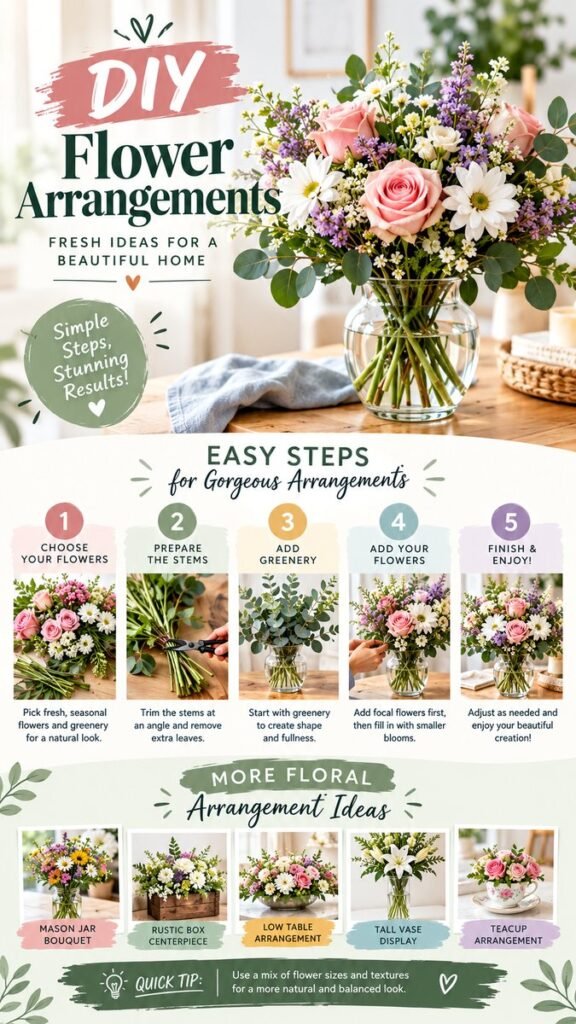
Creating beautiful floral displays at home does not have to be complicated. With a few fresh blooms, some greenery, a suitable vase, and a little creativity, you can turn simple flowers into an arrangement that instantly brightens a room. Whether you are decorating a dining table, preparing a centerpiece for a celebration, or simply want to enjoy fresh flowers at home, DIY flower arrangements offer an easy and rewarding way to add natural beauty to your space.
The secret is not necessarily having expensive flowers or professional floristry skills. A successful arrangement comes from choosing complementary flowers, preparing the stems correctly, creating a pleasing shape, and combining different sizes and textures. Once you understand a few simple principles, you can experiment with everything from casual mason jar bouquets to elegant tall vase displays.
Key Takeaways
- Choose a mix of focal flowers, smaller blooms, and fresh greenery.
- Trim flower stems at an angle before placing them in water.
- Start with greenery to establish the shape and fullness of your arrangement.
- Add larger focal flowers first, then fill empty spaces with smaller blooms.
- Use different flower heights and textures to create a natural appearance.
- Refresh the water regularly and remove fading stems to keep the display looking fresh.
Why DIY Flower Arrangements Are So Appealing
Flowers can change the atmosphere of a room almost instantly. A colorful bouquet on a kitchen counter can make the space feel warmer, while a simple arrangement on a dining table can create a polished focal point without requiring major decorating changes.
DIY flower arrangements are especially appealing because they allow you to customize the display around your home, occasion, and personal style. You can keep the design soft and romantic with blush roses and delicate blossoms, create a relaxed country-inspired look with mixed seasonal flowers, or use bold greenery and a few statement blooms for a more contemporary appearance.
Another advantage is flexibility. The same basic arranging method works with different containers and flower combinations. A clear glass vase can create an airy centerpiece, a rustic box can provide a more casual appearance, and a small teacup can turn a few petite flowers into a charming decorative accent.
What You Need to Create a Simple Flower Arrangement
You do not need a large collection of professional florist tools to get started. The goal is to have a few practical supplies that make arranging easier while leaving plenty of room for creativity.
- Fresh flowers: Select a combination of focal blooms and smaller flowers.
- Greenery: Eucalyptus, leafy stems, and delicate branches can add structure and movement.
- A vase or container: Choose a vessel that suits the size and style of your flowers.
- Sharp floral scissors or garden snips: Clean cuts make preparing stems much easier.
- Fresh water: Clean water helps maintain a fresh-looking display.
- A clean workspace: A table or counter gives you enough room to sort stems and build your bouquet.
When selecting flowers, think about variety rather than choosing every bloom in the same size. A combination of large roses, medium-sized flowers, tiny filler blooms, and leafy greenery creates more visual interest than a bouquet made from one type of flower alone.
Important: The most attractive DIY bouquets often combine different flower sizes, heights, and textures. Instead of trying to make every stem identical, allow some blooms to sit slightly higher or lower. This creates a relaxed, naturally gathered look.
How to Make a Flower Arrangement Step by Step
The process can be broken down into five simple stages. Following this order gives you a reliable starting point, even if you have never arranged flowers before.
1. Choose Your Flowers
Begin by selecting flowers that work well together in color, scale, and texture. You can create a coordinated palette with related shades or combine contrasting colors for a livelier display.
For a soft arrangement, blush pink flowers paired with white blooms and green foliage create an elegant combination. Adding small lavender or purple flowers can introduce another layer of color without overwhelming the design.
It is helpful to choose one or two larger flowers to act as the focal point. These are the blooms that naturally attract attention. Smaller flowers can then surround them, while greenery fills gaps and gives the arrangement a fuller appearance.
Think in Three Layers
- Focal flowers: Larger blooms that become the visual stars of the arrangement.
- Supporting flowers: Medium or small blossoms that add color and volume.
- Greenery and filler: Leaves and delicate stems that connect everything visually.
2. Prepare the Stems
Before placing flowers into the vase, prepare each stem. Remove leaves that would sit below the waterline, since submerged foliage can make the water dirty more quickly. Then trim the stems with a sharp, clean pair of scissors or floral snips.
Cutting the stems at a slight angle is a simple technique that can help create a clean, professional preparation. Do not worry about making every stem exactly the same length. Different heights are useful when building a dimensional arrangement.
Lay the prepared stems on your workspace so you can see the entire selection. This makes it easier to decide which flowers should become the focal points and which ones will be used as fillers.
3. Start With Greenery
Greenery is more than a finishing detail. It can establish the overall silhouette of the bouquet before the flowers are even added. Begin by placing a few leafy stems around the container to create width, height, and movement.
Eucalyptus-style foliage is particularly useful for creating a soft, flowing appearance. Other leafy stems can provide fullness around the center of the bouquet. Let a few pieces extend beyond the main flower cluster to prevent the arrangement from looking too compact.
Try turning the vase as you work. Looking at the arrangement from different angles helps you create a balanced display instead of building one attractive side while leaving another side empty.
4. Add Your Focal Flowers
Once the greenery has established the shape, begin adding your largest blooms. Position them at slightly different heights rather than lining them up in a straight row. This small change can make the arrangement feel much more natural.
Place focal flowers where they can be easily noticed, then rotate the vase and add supporting blooms around them. If one side feels too heavy, add a smaller flower or leafy stem to visually balance it.
Do not feel that every empty space needs to be filled immediately. Some breathing room between blooms can make the arrangement look more elegant and allow individual flowers to stand out.
5. Finish and Adjust
The final stage is about refinement. Step back from the arrangement and look at it from a distance. Check whether the bouquet feels balanced in height, width, color, and texture.
Move individual stems if one flower is hidden behind another. Add a small filler bloom to an obvious gap or remove a stem if one area feels too crowded. The goal is not perfect symmetry. A slightly varied shape usually feels more relaxed and visually interesting.
Pro Tip: Do not judge your arrangement only from directly above. Place the vase where it will actually be displayed, then view it from several angles. A bouquet that looks balanced on the worktable may need a few adjustments once it is sitting on a dining table, shelf, or entryway surface.
Why This Matters
- Greenery establishes the framework of the arrangement.
- Large focal flowers create an immediate point of interest.
- Smaller blooms and varied textures make the finished bouquet feel layered and full.
Five DIY Flower Arrangement Ideas to Try
Once you understand the basic process, changing the container can completely transform the finished design. Experimenting with different vessels is one of the easiest ways to create new flower arrangement ideas without changing your basic technique.
Mason Jar Bouquet
A mason jar bouquet is ideal for a relaxed, approachable display. Keep the flowers slightly loose rather than tightly packed, and allow a few stems of greenery to extend naturally around the edges. This style works beautifully for casual kitchen decor, bedside tables, shelves, and small gatherings.
Rustic Box Centerpiece
A rustic box creates a wider, lower profile that works well as a centerpiece. Use a fuller mix of greenery and smaller flowers, then position several larger blooms throughout the arrangement. The horizontal shape can look especially inviting on a dining table or console.
Low Table Arrangement
A low arrangement is a practical choice when you want flowers on a dining or coffee table without creating a tall visual barrier. Use a shallow container and concentrate the flowers into a rounded shape. Keep the overall height modest while allowing some greenery to gently spread outward.
Tall Vase Display
A tall vase gives you an opportunity to emphasize height and elegant lines. Longer greenery can extend upward and outward, while the main blooms sit closer to the center. This approach works well for an entryway, corner table, mantel, or another area that benefits from vertical decoration.
Teacup Arrangement
For a petite floral display, try using a small teacup or similarly sized decorative vessel. Choose shorter stems and a handful of smaller blooms. The result can feel charming and delicate, making this style useful for small accent tables, breakfast areas, shelves, or intimate celebrations.
How to Choose Colors for a Beautiful Bouquet
Color is one of the first things people notice about a flower arrangement. You can create a cohesive look by selecting a dominant color and supporting it with neutral flowers and greenery.
Soft pink flowers paired with white blooms create a gentle, romantic palette. Adding green foliage keeps the colors grounded and prevents the bouquet from appearing too uniform. Small lavender or purple flowers can provide contrast while still maintaining a soft overall mood.
If you prefer a brighter arrangement, choose flowers with noticeably different colors and repeat each color in several areas of the bouquet. Repetition helps the combination feel intentional rather than random.
A Simple Color Formula
- Choose one dominant flower color.
- Add white or another soft neutral to create contrast.
- Use greenery as the visual foundation.
- Add one secondary accent color for extra personality.
Tips for Making Flowers Look Fuller
A bouquet can look surprisingly full even when you are working with a modest number of flowers. The key is to build volume with greenery and smaller filler blooms instead of relying entirely on large flowers.
Place greenery around the outside of the arrangement to increase its visual width. Then distribute small flowers throughout the center and edges. Rather than grouping every flower of the same type together, spread similar blooms across different areas so the color appears throughout the design.
Vary the direction of the stems as well. Some can point upward, while others angle gently outward. This creates movement and keeps the arrangement from appearing stiff.
Common DIY Flower Arrangement Mistakes to Avoid
Even a simple arrangement can look less polished if a few basic details are overlooked. Fortunately, most common mistakes are easy to correct.
- Using only one flower size: Mix large, medium, and small blooms for depth.
- Making every stem the same height: Vary the lengths to create a more natural silhouette.
- Adding too many flowers: Leave enough space for individual blooms to remain visible.
- Ignoring the greenery: Leaves help provide structure, movement, and fullness.
- Forgetting to rotate the vase: Check the arrangement from multiple viewpoints.
- Leaving excess leaves underwater: Remove foliage that would sit beneath the waterline.
A common misconception is that a professional-looking bouquet must be perfectly symmetrical. In reality, controlled variation often makes floral arrangements more appealing. The arrangement should feel balanced, but it does not need to look identical from every angle.
How to Keep Your Arrangement Looking Fresh
Once your DIY flower arrangement is finished, a little routine care can help it remain attractive. Keep the water clean and refresh it regularly. Remove fading flowers and leaves as needed so they do not distract from the healthier blooms.
It is also useful to check the stems periodically. If the arrangement begins to look tired, trimming the stems again and placing the flowers into clean water can give the display a refreshed appearance.
Keep the vase in a suitable spot where you can enjoy the flowers while avoiding unnecessary exposure to conditions that may cause them to deteriorate more quickly. The best location depends on the flowers you have chosen and the environment in your home.
Quick Tip: Refreshing the water and removing fading foliage are simple maintenance habits that can make a noticeable difference in the appearance of a floral display. A clean vase and tidy stems also help the arrangement continue looking intentional rather than neglected.
Where to Display Your DIY Floral Creations
There is no single correct place for a flower arrangement. Consider the scale of the container and the visual character of the room when choosing its location.
- Dining table: Choose a low arrangement that keeps the table feeling open.
- Entryway: A taller vase can create an inviting first impression.
- Kitchen counter: A small mason jar bouquet adds a relaxed decorative touch.
- Coffee table: A low, rounded arrangement works well for a cozy centerpiece.
- Bedroom: A petite bouquet can add softness without taking up much space.
- Special occasions: Coordinate the flowers and container with the mood of the gathering.
Make Each Arrangement Your Own
The beauty of DIY floral design is that there are no strict rules that prevent experimentation. Try changing the flower combinations, switching containers, adjusting the height, or using more greenery. Even the same group of flowers can produce completely different results when arranged in a tall vase versus a low bowl.
Start with the five-step process and then develop your own style. You might discover that you prefer loose garden-inspired bouquets, compact centerpieces, minimalist arrangements, or colorful mixed-flower displays. The more you practice, the easier it becomes to see how individual stems contribute to the overall shape.
For seasonal decorating, simply adapt the color palette and flower selection. A light pastel arrangement can create a fresh spring-inspired mood, while richer colors can make a display feel warmer and more dramatic. You can also create smaller arrangements and group several of them together for a layered centerpiece.
At a Glance
- Choose focal blooms plus smaller flowers and greenery.
- Prepare and angle-cut the stems before arranging.
- Build the shape with greenery first.
- Add large flowers before filling in smaller blooms.
- Adjust the height, spacing, and balance from every angle.
Conclusion: Create Beautiful Flower Arrangements at Home
DIY flower arrangements are a simple way to bring color, texture, and natural character into your home. You do not need complicated techniques to create a beautiful display. By choosing a thoughtful combination of flowers and greenery, preparing the stems carefully, establishing a strong shape, and making a few final adjustments, you can create arrangements that look polished while still feeling personal.
Start with an arrangement that feels manageable, such as a mason jar bouquet or small vase display. Once you become comfortable with the basics, experiment with rustic boxes, low centerpieces, tall vases, and petite teacup arrangements. Change the colors, mix different textures, and let the flowers guide the shape.
The most important part is to enjoy the process. Floral arranging gives you an opportunity to be creative with simple materials while making your everyday surroundings feel more welcoming. Save these flower arrangements DIY ideas, gather your favorite blooms, and create a beautiful arrangement that reflects your own style.
Tags
DIY Flower Arrangements Flower Arrangement Ideas Floral Design Home Decor DIY Decor Bouquet Ideas Floral Centerpieces Flower Decor