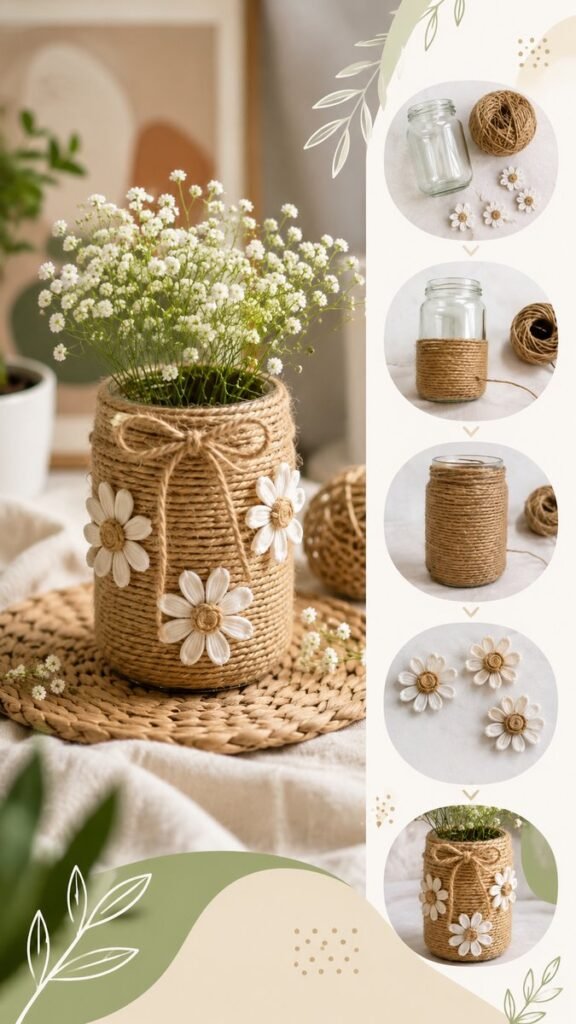
Give an ordinary glass jar a beautiful new purpose with this easy DIY jute vase idea. Wrapped in natural jute twine, finished with a simple bow, and decorated with delicate handmade flowers, this rustic vase brings warmth and texture to any room. It is a lovely way to turn a basic container into a charming piece of DIY home decor without needing complicated tools or advanced crafting skills.
The finished design works especially well with natural, farmhouse, cottage, boho, and cozy neutral interiors. Filled with airy white flowers, it creates a soft centerpiece that feels handmade, relaxed, and inviting. Whether you place it on a dining table, shelf, entryway console, bedroom dresser, or coffee table, this DIY vase can add an understated decorative touch.
Key Takeaways
- A simple glass jar can become an attractive rustic vase with jute twine.
- Natural materials create warmth, texture, and a relaxed handmade appearance.
- White flowers pair beautifully with the neutral tones of jute and wood.
- Small floral embellishments can give the vase a personalized finishing touch.
- The project is flexible enough to suit farmhouse, boho, cottage, and rustic decor.
Why a DIY Jute Vase Works So Well
One of the most appealing things about a DIY jute vase is its combination of simplicity and visual texture. A clear glass jar normally has a very plain appearance, but covering part of it with natural jute instantly gives the container a warmer, more decorative character. The rough texture of the twine contrasts beautifully with soft petals and delicate greenery.
Jute also works naturally with neutral decorating schemes. Its earthy tan color blends easily with cream, beige, white, light wood, woven baskets, linen, and other natural-looking materials. That makes a jute-wrapped vase easy to incorporate into an existing room instead of requiring a complete change of decor.
Important: The beauty of this craft comes from the contrast between rustic texture and delicate flowers. Keep the overall palette simple so the natural jute, floral details, and greenery remain the main visual features.
Materials for a Rustic DIY Vase
You do not need a long shopping list to recreate the basic concept. The main structure is a glass jar covered with jute twine. Decorative elements can then be added according to the style you want.
- Glass jar: Choose a clean jar with a shape and height you like.
- Natural jute twine: This creates the textured outer covering.
- Craft adhesive: Use an adhesive suitable for the materials you are working with.
- Decorative flowers: Small handmade flowers add personality and visual interest.
- Additional twine: A little extra can be used to make a bow around the finished vase.
- Fresh or dried flowers: Light, airy flowers complement the rustic design beautifully.
- Scissors: Useful for cutting twine neatly and trimming loose ends.
For the decorative flowers, the inspiration is a simple daisy-like design with pale petals and natural-looking centers. You can recreate that appearance with craft materials you already have or choose another floral shape that fits your personal style.
How to Make a DIY Jute Flower Vase
1. Prepare the Glass Jar
Start with a clean, dry glass jar. Remove any labels and adhesive residue so the surface is smooth and ready for the jute. A straight-sided jar is particularly convenient because the twine can be wrapped in even rows without needing to work around complicated curves.
Before applying anything, decide how much of the jar you want to cover. The pictured style leaves the upper opening available for flowers while creating a substantial textured section around the body. You can cover the entire exterior or leave a small area of glass visible if you prefer a lighter appearance.
2. Begin Wrapping the Jute
Secure the beginning of the jute near the lower edge of the area you plan to cover. Apply a small amount of adhesive and begin wrapping the twine around the jar. Keep each row close to the previous one so the glass does not show through between the strands.
Work slowly rather than trying to cover a large section at once. Maintaining consistent tension helps the finished vase look neat. If the jute becomes loose, gently adjust the previous rows before continuing.
- Secure the starting end of the jute.
- Wrap the twine around the jar in even rows.
- Keep the strands close together.
- Pause occasionally to check that the rows remain level.
- Finish the wrapping cleanly and secure the final end.
3. Build a Full Textured Surface
Continue wrapping until the desired portion of the jar is covered. The repeated horizontal lines create the main decorative effect. Do not worry if the texture looks slightly handmade. That small amount of variation can actually make a rustic craft feel more authentic and interesting.
If you want a particularly polished result, pay attention to the top and bottom edges. A neat finishing line will make the vase look intentional. You can also add a thicker strand near an edge to create a subtle border.
Expert Insight
Texture does much of the decorating work in this project. Rather than adding many colors or accessories, combine a few tactile materials such as jute, twine, wood, woven fibers, and soft flowers. This keeps the finished vase visually interesting without making it feel cluttered.
4. Add Handmade Floral Decorations
Once the jute covering is complete, it is time to add the decorative flowers. The daisy-inspired embellishments shown in this design create a cheerful contrast against the warm brown tone of the twine. Their pale petals also connect visually with the white flowers placed inside the vase.
Arrange the decorations before attaching them so you can experiment with spacing. You might place several flowers toward the front, create a small cluster on one side, or use a single larger flower as a focal point. There is no need for perfect symmetry. A slightly organic arrangement often feels more natural.
5. Finish With a Twine Bow
A simple twine bow adds an extra handmade detail. Wrap a separate piece of jute around the upper or middle section of the vase and tie a soft bow. The loose ends can be trimmed to the length you prefer.
The bow also helps connect the different elements of the project. It repeats the natural fiber used across the vase while adding a small focal point that makes the finished craft look more complete.
Pro Tip: Before permanently attaching the flowers, take a quick step back and look at the vase from several angles. This makes it easier to spot crowded areas and create a balanced arrangement.
Choosing Flowers for Your Rustic Vase
The right flowers can completely change the personality of a handmade vase. The soft white flowers shown here have a light, airy quality that works particularly well with rustic jute. Their tiny blooms create a gentle contrast against the chunky texture of the container.
For a similar neutral look, consider flowers in white, cream, soft beige, or pale green. Dried flowers can also complement the natural craft aesthetic, while fresh flowers bring a brighter and more delicate feeling.
When choosing stems, think about proportion. A small vase can look overwhelmed by very large blooms, while a taller arrangement may need enough height and volume to balance the container. Airy stems can be especially effective because they allow the texture of the jute vase to remain visible.
Easy Ways to Customize the Design
The basic DIY vase is only a starting point. Once you have the jute-wrapped container, there are many ways to adapt it to your home.
Try Different Natural Textures
Combine jute with wooden beads, woven fibers, linen ribbon, raffia, or other simple craft materials. Keeping the materials within a natural palette will preserve the relaxed look while giving the vase additional dimension.
Change the Floral Accent
Instead of daisy-inspired flowers, try small leaves, simple fabric flowers, dried botanicals, or another decorative motif. A seasonal accent can make the same vase feel appropriate throughout the year.
Experiment With the Jute Pattern
You can cover the jar completely, create a band around the center, or leave portions of glass visible. A partial wrap gives the project a lighter appearance, while a full wrap creates a stronger rustic statement.
Where to Display a DIY Jute Vase
This handmade vase is versatile enough for many areas around the home. Place it on a wooden tray with other natural accents for a relaxed centerpiece. It can also look lovely on an open shelf alongside books, woven baskets, small plants, or neutral accessories.
For a dining table, use several small jars at different heights to create an informal floral arrangement. On an entryway table, a single vase can add warmth without taking up too much visual space. In a bedroom, it can bring a subtle natural accent to a dresser or bedside surface.
A small group of handmade vases can also create a cohesive display. Use jars with slightly different shapes but keep the materials and color palette similar. This gives the arrangement character while maintaining a coordinated look.
Simple Tips for a More Polished Finish
- Clean the jar thoroughly before beginning the project.
- Keep jute rows close together for a fuller, more finished texture.
- Use small amounts of adhesive to avoid visible buildup.
- Trim loose fibers carefully once the wrapping is complete.
- Arrange decorative flowers before attaching them.
- Choose a floral color that complements the neutral jute.
- Keep the bow relaxed rather than pulling it excessively tight.
- Place the completed vase on a stable surface away from areas where it can easily be knocked over.
A Budget-Friendly Upcycling Project
One of the best qualities of this DIY vase is the opportunity to give an everyday container a decorative second life. Instead of immediately discarding a suitable glass jar, consider whether it could become a useful home accent. With some jute and a few decorative details, a plain container can take on an entirely different character.
This approach also makes the craft easy to personalize. You can use materials you already have, change the arrangement to suit your room, and create several versions without needing every vase to look identical. The result feels much more personal than a mass-produced decorative piece.
At a Glance
- Start with a clean glass jar.
- Wrap the chosen area with natural jute twine.
- Add handmade floral embellishments.
- Finish with a simple twine bow.
- Fill with delicate flowers and display with other natural decor.
Final Thoughts on This DIY Vase
A DIY jute vase is proof that beautiful home decor does not have to be complicated. A basic glass jar, natural twine, a few decorative flowers, and a little creativity can create a piece with plenty of warmth and personality. The combination of rustic texture, soft floral details, and neutral colors makes this project especially appealing for anyone who enjoys cozy handmade decorating.
Whether you are refreshing a shelf, creating a simple centerpiece, or looking for an easy craft for your next decorating project, this vase offers plenty of room for creativity. Change the flowers, adjust the jute pattern, experiment with embellishments, or make a collection of different sizes. Most importantly, enjoy the process of turning simple materials into something beautiful and useful.
Save this idea for your next craft session: a simple jute-wrapped vase is an easy way to bring natural texture, handmade charm, and fresh floral beauty into your home.