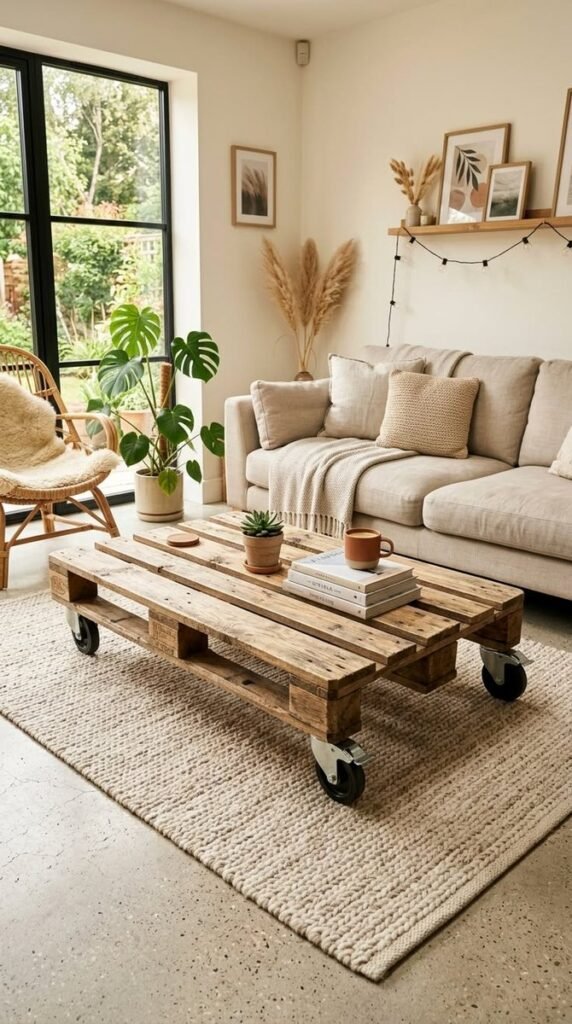
A rustic DIY coffee table can completely change the feel of a living room without requiring an elaborate design or expensive materials. The warm wood tones, chunky construction, and industrial caster wheels shown here create a relaxed centerpiece that feels both practical and inviting. It is the kind of furniture project that brings together reclaimed-style wood, simple construction, and thoughtful styling to create a coffee table with genuine character.
This pallet-inspired coffee table is especially appealing if you love cozy interiors, natural materials, farmhouse accents, or modern rustic decor. Its generous surface provides plenty of room for coffee, books, plants, and everyday essentials, while the wheels make the table surprisingly flexible. Whether you are planning a weekend woodworking project or simply looking for inspiration for your next living room makeover, this DIY coffee table offers plenty of ideas to borrow.
Key Takeaways
- A reclaimed-wood or pallet-inspired design adds warmth and rustic character.
- Heavy-duty caster wheels make the coffee table easy to reposition.
- A layered wood construction can create a substantial, furniture-style appearance.
- Neutral textiles and greenery complement the natural wood beautifully.
- Simple styling keeps the coffee table practical rather than overcrowded.
Why a DIY Coffee Table Is Worth Making
Buying a coffee table is easy, but building one gives you much more control over the final result. A DIY design can be adjusted to suit the size of your room, the height of your sofa, and the amount of storage or surface space you actually need. It also allows you to choose materials and finishes that coordinate with the rest of your home.
The design pictured here works particularly well because it does not try to be overly polished. The visible character of the wood becomes part of the aesthetic. Slight variations in tone, texture, and grain give the table a relaxed, lived-in appearance that pairs naturally with soft furniture and neutral decor.
Important: The most successful rustic furniture projects often embrace natural imperfections instead of trying to make every surface look perfectly uniform. Variation in wood tone and texture can make a handmade coffee table feel more authentic and visually interesting.
Understanding the Rustic Pallet Coffee Table Design
The coffee table has a low, broad profile that works naturally in front of a large sofa. Its tabletop appears to be built from multiple wooden boards arranged side by side, creating visible lines and texture across the surface. Supporting pieces underneath give the table a sturdy, substantial appearance.
One of the most noticeable features is the set of large caster wheels. Instead of sitting permanently in one location, the table can be moved when you want to clean underneath it, rearrange the room, or create additional space. The combination of rustic timber and industrial-style wheels also creates an appealing contrast between cozy and utilitarian design.
This balance is what makes the concept so versatile. The wood introduces warmth, while the casters add a slightly industrial edge. Together, they create a piece that can work with farmhouse, modern rustic, Scandinavian-inspired, industrial, or casual contemporary interiors.
The Importance of Proportion
Before building a DIY coffee table, consider how its dimensions relate to your seating area. A table that is too small can look disconnected from a large sofa, while one that is too large can make the room feel cramped. The design shown here demonstrates the appeal of a generously proportioned rectangular table that visually anchors the seating area.
A useful starting point is to measure the available floor space around your sofa and chairs. Leave enough room for comfortable movement and consider where people will walk through the room. The table should feel substantial without becoming an obstacle.
Materials for a DIY Rustic Coffee Table
You do not need an enormous list of materials to recreate the general look. The exact quantities will depend on the dimensions you choose, but the project can be approached with a straightforward collection of woodworking supplies.
- Wood boards or suitable reclaimed pallet-style lumber
- Structural pieces for the lower supports
- Heavy-duty caster wheels
- Wood screws appropriate for the thickness of your boards
- Wood glue if desired for additional stability
- Sandpaper or a sanding tool
- Wood stain, clear finish, or another protective treatment
- Measuring tape, square, drill, and basic woodworking tools
If you use reclaimed pallets, inspect every piece carefully before bringing it into your living space. Choose boards that are clean, structurally sound, and appropriate for indoor furniture. Remove loose nails, staples, and damaged sections, and sand the wood thoroughly.
Choosing the Right Wood
The character of the wood has a major influence on the finished coffee table. New boards can be stained to create a weathered appearance, while reclaimed boards naturally provide more variation. If you prefer a cleaner look, choose boards with similar tones and a relatively consistent surface.
For a more rustic appearance, variations in color can be left visible. A combination of light and medium wood tones can produce the layered look that makes reclaimed furniture so appealing.
How to Build a Pallet-Style Coffee Table
The construction process can be broken into several manageable stages. Taking time with each step is more important than rushing to finish the table quickly.
1. Plan the Dimensions
Start by deciding how long, wide, and tall you want the coffee table to be. Measure your seating area and mark the footprint on the floor if necessary. This simple planning step helps you visualize whether the finished table will fit comfortably.
Remember to account for the height of the caster wheels when determining the overall table height. Large wheels can raise the tabletop more than expected, so include them in your measurements from the beginning.
2. Prepare the Wood
Cut the boards to the required lengths and inspect every piece before assembly. Sand rough edges and remove splinters. You can keep some natural surface character, but the areas that people may touch should be smooth enough for comfortable everyday use.
If you want a more weathered appearance, avoid sanding every board until it looks completely new. The goal is to remove hazards while retaining attractive grain, texture, and character.
3. Assemble the Tabletop
Arrange the boards side by side and check their alignment before securing them. Depending on your construction method, supporting pieces can be positioned underneath the tabletop to hold the boards together and create the layered structure seen in rustic pallet furniture.
Use a square to check that the structure remains aligned during assembly. Predrilling screw holes can also help reduce the chance of splitting, especially when working with dry or reclaimed wood.
4. Build a Strong Base
The base needs to support not only the weight of the tabletop but also books, trays, decorative objects, and anything else that may be placed on it. A sturdy lower structure also gives the coffee table its chunky visual character.
Check that the supporting pieces sit evenly before attaching them. A level base will make the finished table much more stable and comfortable to use.
5. Attach the Caster Wheels
Caster wheels are one of the defining details of this coffee table style. Position them securely underneath the supporting structure and make sure the mounting hardware is appropriate for the load.
Once installed, test each wheel and check that the table sits evenly. Locking casters can be especially useful because they allow the table to move when needed while keeping it stationary during normal use.
Expert Insight
Large caster wheels are more than a decorative feature. They change how the table interacts with the room. A movable coffee table can make cleaning easier and give you more flexibility when rearranging seating, but the wheels should always be securely mounted and properly rated for the finished table.
Finishing the Wood for a Warm, Natural Look
The neutral wood tones in this style of coffee table work because they feel warm without overpowering the room. You can achieve a similar effect with several finishing approaches.
- Clear finish: Keeps the natural wood appearance while adding protection.
- Light stain: Enhances the grain while maintaining a pale, relaxed aesthetic.
- Medium wood stain: Creates a richer rustic appearance.
- Distressed finish: Adds additional character for a farmhouse-inspired room.
Always follow the instructions for your chosen finish and allow adequate drying and curing time before bringing the table into regular use. Since this is a living room piece, a durable surface is especially useful for handling cups, books, plants, and everyday spills.
Styling Your DIY Coffee Table
A beautiful coffee table does not need to be covered with decorations. The styling shown here demonstrates how a few carefully selected objects can create a cozy focal point while leaving plenty of usable surface area.
Add Books for Height and Interest
A small stack of neutral-colored books adds height and creates a natural platform for another decorative object. Books also bring a relaxed, lived-in feeling to the coffee table and work especially well with rustic and contemporary interiors.
Bring in a Small Plant
Greenery adds a fresh contrast to warm wood. A small potted succulent or another compact houseplant is enough to introduce organic color without making the table feel crowded.
Keep Everyday Items Within Reach
A coffee cup, small tray, coaster, or candle can make the space feel functional rather than staged. Try grouping a few objects together instead of scattering small decorations across the entire tabletop.
Pro Tip: Style a rustic coffee table in layers. Start with one larger anchor, such as a stack of books or tray, then add a smaller plant or decorative object. Leave open space around the arrangement so the beautiful wood remains visible.
Create a Cozy Living Room Around the Table
The coffee table works particularly well when surrounded by soft, neutral textures. A beige sofa, woven throw, textured cushions, natural rug, and warm wood accents can create a cohesive palette without requiring identical colors throughout the room.
Natural materials also help reinforce the rustic theme. Woven baskets, linen textiles, ceramic planters, wooden accessories, and dried botanical arrangements can all complement the table without competing with it.
Large windows and indoor plants can further enhance this atmosphere by bringing a connection to nature into the living room. The result is a space that feels bright, calm, comfortable, and intentionally casual.
Ways to Customize the DIY Coffee Table
One of the biggest advantages of making your own furniture is the ability to personalize the design. The basic concept can be adapted to suit different homes and decorating styles.
- Use shorter or taller caster wheels to change the overall height.
- Choose a darker stain for a dramatic industrial appearance.
- Use lighter unfinished wood for a Scandinavian-inspired look.
- Add a lower shelf for baskets, magazines, or decorative storage.
- Adjust the tabletop dimensions to suit a smaller apartment or larger family room.
- Replace industrial casters with more subtle wheels for a softer appearance.
Common DIY Coffee Table Mistakes to Avoid
Even a relatively simple furniture project benefits from careful preparation. One common mistake is choosing wood without considering its condition. Reclaimed boards may have hidden nails, cracks, rough sections, or other problems that need attention before construction.
Another mistake is overlooking stability. A coffee table should feel solid when someone places an object on it or leans against it lightly. Take time to reinforce the base and check every connection.
It is also easy to make the tabletop too busy. If the wood already has a strong grain or rustic texture, excessive decorations can hide the very feature that makes the table attractive. Keep styling simple and functional.
Safety and Practical Considerations
Furniture intended for everyday indoor use should be built with stability and safe surfaces in mind. Sand exposed edges thoroughly, secure all hardware, and make sure the wheels are firmly attached. If children or pets regularly use the room, pay particular attention to sharp corners and moving components.
When working with reclaimed wood, inspect and prepare every board carefully. Wear suitable protective equipment while cutting and sanding, work in a well-ventilated area when applying finishes, and follow the manufacturer’s instructions for adhesives, stains, and protective coatings.
At a Glance
- Rustic wood creates warmth and visual texture.
- Caster wheels add mobility and an industrial accent.
- Neutral decor helps the wood remain the centerpiece.
- Simple styling keeps the table useful for everyday living.
- Custom dimensions make the design adaptable to different rooms.
Conclusion: Build a Coffee Table With Character
A DIY rustic coffee table is a great example of how practical furniture can also become a defining feature of a room. The combination of warm wood, visible texture, sturdy construction, and large caster wheels creates a piece that feels relaxed while remaining highly functional.
You can follow the overall concept closely or use it as inspiration for your own variation. Change the dimensions, experiment with wood finishes, add a lower shelf, or choose different casters to create a design that fits your space perfectly. The beauty of DIY furniture is that the finished piece can reflect your preferences rather than the limitations of a store-bought design.
Pair the finished coffee table with soft neutral textiles, greenery, natural materials, and a few meaningful accessories for a welcoming living room centerpiece. With thoughtful construction and simple styling, a pallet-inspired coffee table can add warmth, flexibility, and personality to your home for years to come.
Tags
DIY Coffee Table Pallet Furniture Rustic Furniture DIY Furniture Living Room Decor Woodworking Projects Rustic Home Decor