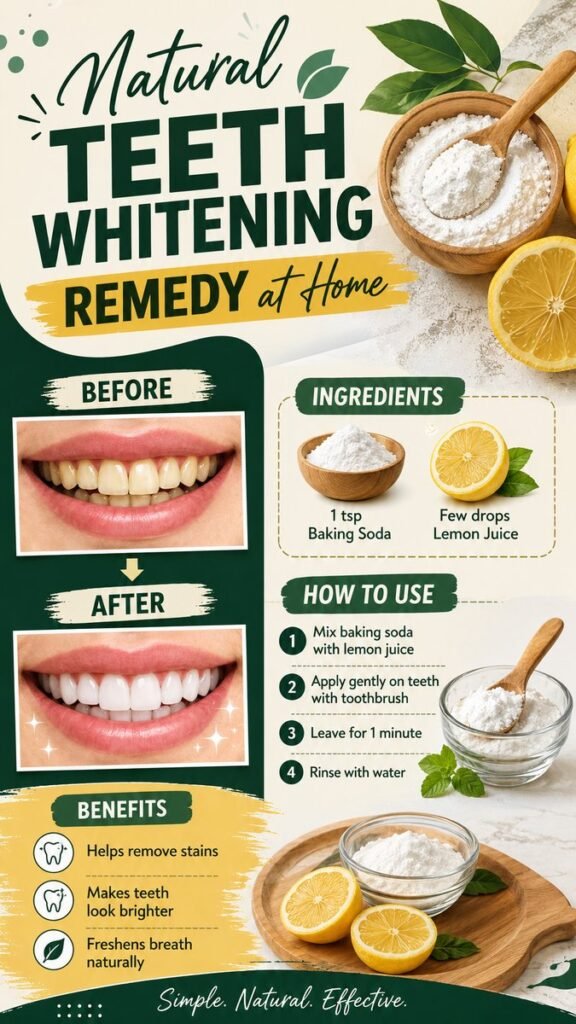
A brighter smile is one of those simple beauty goals that can make you feel instantly more confident. Natural teeth whitening DIY ideas are especially appealing because they often use familiar kitchen ingredients and promise an easy at-home routine. One popular approach combines baking soda with lemon juice, as shown in this style of whitening guide. However, getting a brighter-looking smile is about more than following a quick recipe. Understanding what actually helps remove surface stains, what can damage enamel, and how to build safer oral-care habits can make your routine much more effective in the long run.
Key Takeaways
- Baking soda can help clean away some surface discoloration because it is mildly abrasive.
- Lemon juice is acidic and can weaken or erode tooth enamel, so it is not a good DIY whitening ingredient.
- A brighter smile starts with consistent brushing, flossing, and regular dental care.
- Surface stains from coffee, tea, tobacco, and strongly colored foods may respond differently from deeper tooth discoloration.
- Professional advice is worthwhile when teeth are persistently yellow, sensitive, painful, or unevenly colored.
What Is a Natural Teeth Whitening DIY?
Natural teeth whitening DIY generally refers to simple home routines that use household ingredients or basic oral-care products rather than an in-office whitening treatment. These ideas are popular because they are inexpensive, accessible, and easy to fit into a busy routine.
The visual guide associated with this topic highlights two familiar ingredients: baking soda and lemon juice. It also presents a before-and-after smile concept, a short application routine, and benefits such as removing stains and making teeth appear brighter.
The important distinction is between removing surface stains and actually changing the natural color of the tooth. A homemade mixture may make a tooth look cleaner if it removes material sitting on the surface, but that does not necessarily mean it has safely bleached the tooth itself.
Important: A DIY whitening recipe should never be judged only by how quickly it appears to brighten teeth. Enamel is a valuable protective layer, and repeated exposure to acidic ingredients or aggressive scrubbing can do more harm than good.
Baking Soda for Teeth: What It Can and Cannot Do
Baking soda, also known as sodium bicarbonate, appears in many homemade oral-care suggestions. Its appeal is easy to understand. It is a fine powder with mild abrasive properties, and baking-soda-based toothpastes are commonly used to help clean teeth and reduce surface staining.
When discoloration is caused by material sitting on the outer surface of a tooth, gentle cleaning can make the smile look fresher. This is different from bleaching the internal structure of the tooth. Baking soda should therefore be viewed primarily as a cleaning ingredient rather than a powerful bleaching agent.
Why Surface Stains Matter
Everyday habits can gradually contribute to visible staining. Coffee, tea, certain foods, and tobacco products are common sources of surface discoloration. Plaque buildup can also make teeth look dull or less clean.
Improving brushing and cleaning habits can help keep these stains under control. For people interested in natural oral care, this is often a more useful starting point than experimenting with increasingly strong homemade mixtures.
Why More Scrubbing Is Not Better
It can be tempting to think that harder brushing or frequent use of abrasive powders will produce a whiter smile faster. In reality, aggressive brushing can irritate the gums and contribute to enamel wear. A gentle technique with an appropriate toothbrush is a better long-term approach.
Why Lemon Juice Is Not Recommended for DIY Whitening
Lemon juice is often included in homemade beauty and cleaning recipes because it is acidic. That same acidity is the reason it deserves caution when it comes to teeth. Tooth enamel can be damaged by repeated exposure to acids, and lemon juice is highly acidic.
Using lemon juice directly on teeth can therefore create a significant downside. Even if teeth temporarily appear cleaner or brighter, repeated acid exposure may contribute to enamel erosion. Once enamel is lost, the body cannot simply grow it back.
Pro Tip: When choosing between a viral natural teeth whitening DIY and a gentler oral-care habit, protect your enamel first. A routine that takes longer but preserves your teeth is far more valuable than a quick whitening trick.
Acid and Enamel
Enamel is the hard outer covering of each tooth. Acid can soften and gradually wear away this protective surface. The risk becomes more concerning when acidic substances are applied repeatedly or held against the teeth for extended periods.
For this reason, lemon juice should not be treated as a harmless whitening booster. The fact that an ingredient is natural does not automatically make it safe for repeated use on teeth.
A Safer At-Home Approach to a Brighter Smile
If your goal is a naturally brighter-looking smile, focus on habits that support clean teeth and healthy gums. You do not need a complicated routine. Consistency matters much more than having a long list of DIY ingredients.
1. Brush Gently and Consistently
Brush your teeth regularly with a soft-bristled toothbrush and fluoride toothpaste. Use gentle, controlled movements rather than vigorous scrubbing. Pay attention to the gumline and areas where plaque tends to accumulate.
2. Clean Between Your Teeth
Flossing or using another suitable interdental cleaning method helps remove plaque and food particles from spaces a toothbrush cannot reach. Keeping these areas clean can contribute to a fresher and cleaner-looking smile.
3. Pay Attention to Staining Habits
If you regularly drink coffee, tea, or other strongly colored beverages, staining may gradually become more noticeable. You do not necessarily need to eliminate foods and drinks you enjoy. Instead, maintaining good oral hygiene and discussing persistent staining with a dental professional can help you choose an appropriate approach.
4. Keep Up With Dental Checkups
Professional cleanings can remove buildup that ordinary brushing may not fully eliminate. A dentist can also determine whether discoloration is simply a surface stain or whether another issue is contributing to the appearance of your teeth.
Why This Matters
- Whitening and cleaning are not the same thing.
- Removing surface stains is different from changing the natural color of a tooth.
- Protecting enamel should always be part of a whitening routine.
Understanding the Before-and-After Whitening Effect
Before-and-after smile images are eye-catching because they make the promised result easy to understand at a glance. However, photographs can vary because of lighting, camera settings, makeup, lip color, image editing, and the natural differences between individual teeth.
A dramatic visual change should therefore not be interpreted as a guaranteed result from a particular homemade recipe. Tooth color varies naturally from person to person, and some types of discoloration respond differently to whitening treatments.
Surface Versus Deeper Discoloration
Surface stains can sometimes be reduced through good oral hygiene and appropriate whitening products. Deeper discoloration may require a different approach. Age, natural tooth color, dental restorations, certain medications, and previous dental treatments can all affect how teeth look.
That is why a one-size-fits-all natural teeth whitening DIY should be approached carefully. If you are unsure why your teeth have changed color, professional guidance can help identify the cause before you try whitening.
Common DIY Teeth Whitening Mistakes to Avoid
The internet is full of quick whitening formulas, but several common mistakes can turn a simple beauty experiment into an oral-health problem.
- Using acidic ingredients directly on teeth: Lemon and other acidic substances can contribute to enamel erosion.
- Scrubbing too aggressively: More pressure does not automatically mean cleaner or whiter teeth.
- Whitening too frequently: Repeated exposure to abrasive or whitening substances can increase sensitivity or irritation.
- Ignoring tooth sensitivity: Pain or increased sensitivity is a reason to pause and seek professional advice.
- Expecting instant permanent results: Whitening effects vary, and everyday staining habits can gradually return.
- Assuming natural means risk-free: Natural ingredients can still be acidic, abrasive, irritating, or otherwise unsuitable for teeth.
Natural Ways to Support a Healthy-Looking Smile
There is a difference between natural-looking results and using untested natural ingredients. A healthy-looking smile is supported by simple fundamentals: clean teeth, healthy gums, regular dental care, and sensible everyday habits.
Drinking water, maintaining good brushing habits, cleaning between teeth, and limiting frequent exposure to staining or acidic foods and beverages can all fit into a practical oral-care routine. These habits may sound less exciting than a two-ingredient whitening recipe, but they are much easier to maintain consistently.
If whitening is your main goal, consider products specifically designed and tested for dental use rather than creating increasingly concentrated mixtures at home. A dental professional can also recommend options based on your teeth, gums, sensitivity, and existing dental work.
When to Talk to a Dentist
A consultation is particularly useful if discoloration appears suddenly, affects only one tooth, is accompanied by pain, or does not improve with normal oral hygiene. The same applies if you have significant sensitivity, damaged enamel, gum problems, crowns, veneers, fillings, or other dental restorations and are considering whitening.
A dentist can help distinguish cosmetic staining from conditions that need attention. They can also explain which whitening methods are appropriate for your particular smile.
How to Think About Baking Soda and Lemon DIY Trends
The appeal of the baking soda and lemon combination is understandable. The ingredients are inexpensive, familiar, and visually associated with freshness and cleanliness. Pinterest-style graphics also make the process look quick and approachable.
But a good oral-care routine should be based on more than an attractive ingredient list. Baking soda may have a role in gentle cleaning when used in an appropriate dental product, while lemon juice presents an avoidable acid exposure. Combining the two does not make lemon safe for enamel.
Important: If you are saving natural teeth whitening DIY ideas for inspiration, treat the ingredient list as a starting point for research rather than a guarantee of safety. Avoid applying lemon juice directly to your teeth, and choose enamel-friendly oral-care practices instead.
At a Glance
- Focus on healthy, clean teeth rather than instant whitening claims.
- Use gentle brushing techniques to protect enamel and gums.
- Avoid lemon juice and other acidic DIY whitening applications.
- Consider professionally formulated whitening products when appropriate.
- Ask a dentist about persistent discoloration or tooth sensitivity.
Conclusion: Choose a Brighter Smile Without Compromising Enamel
Natural teeth whitening DIY ideas can be a fun source of inspiration, especially when they promise a simple route to a brighter-looking smile. The key is knowing where a useful oral-care habit ends and a potentially damaging home experiment begins.
Baking soda can help with surface cleaning when incorporated into suitable oral-care products, but lemon juice should not be applied directly to teeth because its acidity can contribute to enamel erosion. Instead of chasing dramatic overnight results, build a routine around gentle brushing, interdental cleaning, regular dental visits, and sensible stain prevention.
A healthy smile is worth protecting. If you want noticeable whitening beyond what everyday cleaning can provide, choosing a dental professional or an appropriately formulated whitening product is a safer and more predictable path. The best whitening routine is not necessarily the fastest one. It is the one that helps you feel confident while keeping your teeth and gums healthy for years to come.