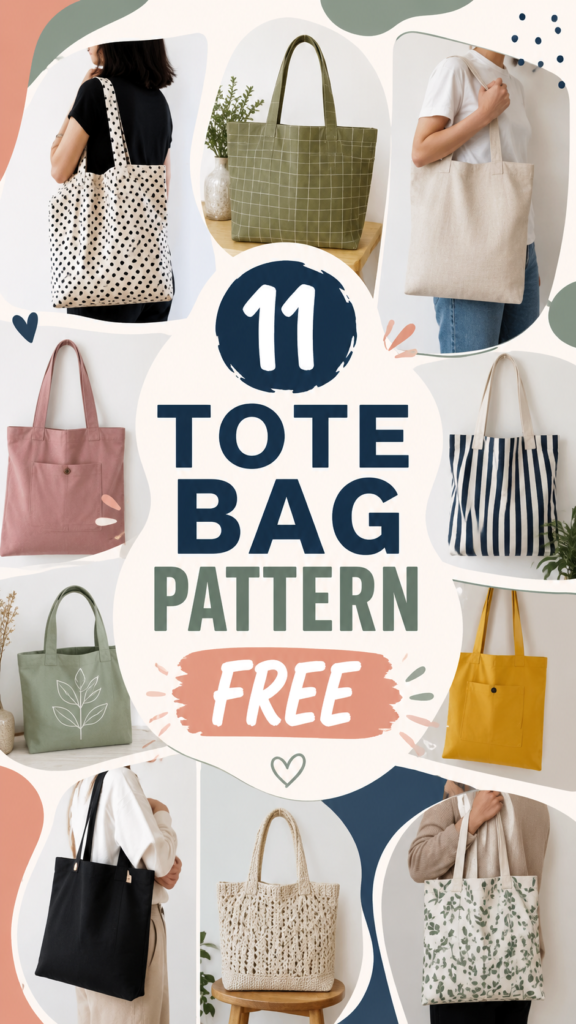
There is something wonderfully satisfying about carrying a bag you made yourself. A tote bag DIY pattern gives you the freedom to choose the fabric, color, size, handles, pockets, and finishing details while creating something genuinely useful. The collection of tote bag styles shown here highlights just how versatile a simple tote can be, from clean minimalist canvas designs to colorful printed bags, woven textures, roomy everyday shoppers, and structured styles with practical pockets.
Whether you are new to sewing or simply looking for your next handmade project, tote bags are an excellent place to start. They use relatively simple shapes, offer plenty of opportunities for customization, and can be adapted to suit almost any personal style. With the right tote bag sewing pattern, even a basic project can become a stylish accessory you will want to use every day.
Key Takeaways
- A tote bag DIY pattern can be adapted for beginners, everyday use, gifts, and creative sewing projects.
- Cotton and canvas fabrics are practical choices for many reusable tote bag designs.
- Changing the fabric can completely transform the personality of the finished bag.
- Pockets, lining, reinforced handles, and closures can make a simple tote more functional.
- Simple tote shapes provide an easy foundation for experimenting with prints, colors, and textures.
Why Tote Bags Make Great DIY Sewing Projects
Tote bags are popular sewing projects for a good reason. Their basic construction is approachable, but the finished result can look polished and highly personalized. Unlike projects that require complicated shaping, a traditional tote often relies on straightforward fabric panels, handles, and simple seams.
That simplicity makes a tote bag DIY pattern especially useful for developing sewing confidence. You can practice measuring, cutting, pinning, straight stitching, pressing, turning corners, and finishing seams without committing to an extremely complicated project.
At the same time, experienced makers can use the same basic concept as a blank canvas. A familiar tote pattern can be enlarged, reduced, lined, divided into sections, decorated with appliqué, or made with contrasting fabrics.
Important: The most successful tote bags balance appearance with practicality. Before choosing decorative details, think about how the bag will be carried, what it needs to hold, and how much weight the handles and fabric should comfortably support.
Explore Different Tote Bag Styles
The visual variety of tote bags makes this type of DIY project particularly inspiring. A simple silhouette can look completely different when you change the fabric, proportions, handles, or finishing details.
Classic Canvas Tote
A classic canvas tote is one of the most useful options for an everyday sewing project. Its uncomplicated shape works well with neutral fabrics, bold colors, simple prints, and personalized embellishments. A canvas tote can be kept minimal for a clean look or upgraded with an exterior pocket and contrasting handles.
For a timeless result, consider neutral shades such as natural, cream, black, gray, or muted green. These colors pair easily with casual outfits and make the bag suitable for many different occasions.
Printed Tote Bags
Printed fabric is an easy way to make a tote feel more distinctive. The collection includes patterns such as dots, grids, stripes, and botanical-inspired motifs. These designs demonstrate how much personality can come from fabric selection alone.
If your pattern is visually busy, keep the tote construction relatively simple. Let the fabric become the main feature. For smaller prints, you can also introduce contrast through the handles, pocket, lining, or trim.
Woven and Textured Totes
Texture creates another dimension in a handmade bag. Woven or openwork styles can produce a relaxed, handcrafted appearance that feels especially suited to casual outfits and warm-weather accessories.
Because textured materials can behave differently from tightly woven cotton, consider the structure and durability of the finished bag before using them for heavy loads. A lining or supportive inner layer may help create a more stable shape when appropriate.
Colorful Everyday Totes
Bright colors can turn a basic tote into a statement accessory. The yellow, pink, green, and other colorful examples show how a single-color fabric can look just as appealing as a complex print.
If you want a bag that stands out without adding complicated sewing details, choosing an unexpected color is one of the easiest design decisions you can make.
Choosing the Right Fabric for a Tote Bag
Fabric choice has a major influence on the appearance, strength, and feel of a DIY tote bag. Before cutting your material, consider whether the finished bag will be used for lightweight items, daily essentials, shopping, books, or other heavier contents.
Cotton is a popular choice because it comes in an enormous range of colors and patterns. Canvas offers additional structure and is well suited to sturdy everyday bags. Lightweight fabrics can create softer totes, while heavier materials can produce a more structured silhouette.
When selecting fabric, also think about the visual effect you want. A small geometric print can create a playful modern look, while solid neutral fabric can produce a minimalist accessory. Botanical patterns can bring a softer natural feeling, and bold colors can make the bag more noticeable.
- For everyday totes: Consider sturdy cotton or canvas.
- For lightweight bags: Choose a fabric that folds easily and remains comfortable to carry.
- For structured designs: Look for materials with enough body to hold their shape.
- For decorative projects: Let the print or texture become the focal point.
Essential Features to Consider in a Tote Bag Pattern
A basic tote bag pattern can be customized in many useful ways. The best features depend on how you intend to use the finished bag.
Pockets
An exterior or interior pocket can make a simple tote much more convenient. A pocket provides a dedicated place for smaller essentials that might otherwise disappear into the bottom of a roomy bag.
For an exterior pocket, consider placing it where it is easy to access without interfering with the handles. For an interior pocket, keep the opening comfortable enough for quick access.
Lining
A lining can give a tote a cleaner interior appearance and can also change the feel of the finished project. Choose a lining that complements the exterior fabric rather than competing with it.
A contrasting lining can be a fun surprise, while a coordinating neutral keeps the design understated.
Handle Length
The length of the handles affects how the tote is carried. Shorter handles are convenient for carrying the bag by hand, while longer straps can make shoulder carrying easier.
Think about your intended use before cutting the handles. If the tote is meant to become an everyday carryall, comfortable shoulder straps may be more practical than very short handles.
Closures
A traditional open tote is quick to sew and easy to access. If you prefer additional security, a simple closure can be added depending on the pattern and your sewing experience. Options can include a button, snap, tie, or other suitable fastening.
Expert Insight
A great beginner tote does not need lots of complicated details. Start with a clean shape, focus on accurate cutting and strong seams, then add one or two features that genuinely improve the bag.
- Press fabric carefully as you sew for cleaner results.
- Reinforce areas where the handles attach because they receive repeated stress.
- Test your preferred dimensions before cutting expensive or favorite fabric.
How to Approach a Tote Bag DIY Pattern
Once you have selected a pattern and fabric, preparation is one of the most important parts of the project. A little planning can make the sewing process smoother and help prevent avoidable mistakes.
- Choose your style. Decide whether you want a simple open tote, a pocketed design, a lined bag, or a more decorative version.
- Select your fabric. Match the material to the intended use and choose a print or color that reflects your style.
- Check the measurements. Review the finished dimensions and make sure they suit what you want to carry.
- Prepare your materials. Gather fabric, thread, scissors or a rotary cutter, pins or clips, a measuring tool, and your sewing machine if using one.
- Cut carefully. Accurate cutting helps the panels align properly and gives the finished tote a more professional appearance.
- Construct the bag. Follow the pattern order, paying particular attention to seams, corners, handles, and any lining.
- Finish and inspect. Trim loose threads, press the finished bag, and check the stress points before using it.
One of the biggest advantages of a straightforward tote bag pattern is that you can repeat the project once you understand the construction. Your first version can be a learning project, while the next can incorporate everything you discovered along the way.
Easy Ways to Personalize Your DIY Tote
Personalization is where a basic sewing pattern becomes truly yours. You do not need advanced techniques to create a distinctive result.
- Choose a favorite solid color for a minimalist appearance.
- Combine two coordinating fabrics for contrast.
- Add a practical front pocket.
- Use a contrasting fabric for the handles.
- Experiment with geometric, floral, striped, or dotted prints.
- Adjust the size to create a smaller or roomier everyday bag.
- Add simple decorative stitching for subtle visual interest.
Pro Tip: If you love a fabric but are unsure whether it will work for a complete tote, use it as a pocket, accent panel, or lining. This lets you enjoy a bold print without making the entire bag visually overwhelming.
Tote Bags as Handmade Gifts
A handmade tote can also make a thoughtful gift because it combines creativity with everyday usefulness. Instead of creating something that may sit unused, you can make a practical accessory in a color or pattern suited to the recipient.
For a gift, consider choosing a versatile shape and a fabric that matches the person’s style. A neutral tote may appeal to someone who prefers minimalist accessories, while a colorful botanical or geometric print can suit someone who enjoys expressive designs.
You can also create a small collection of totes using the same pattern but different fabrics. This is a great way to experiment with your sewing skills while producing several useful handmade accessories.
Common Tote Bag Sewing Mistakes to Avoid
Even simple projects can become frustrating when small details are overlooked. Taking a few extra minutes during preparation can make a noticeable difference.
Skipping the Measurement Check
Always consider the finished size before cutting. A tote that looks attractive may not be useful if it is too small for your everyday needs or unnecessarily large for what you intend to carry.
Using Inconsistent Seam Allowances
Consistent sewing helps the panels fit together properly. Take your time, especially around corners and handle attachment points.
Forgetting to Reinforce Handles
The handles are among the most stressed parts of a tote. A beautiful bag will not be practical if the attachment points are weak, so give those areas extra attention during construction.
Choosing Style Over Function
A striking print is exciting, but think about how the finished tote will be used. The best DIY bags combine attractive fabrics with dimensions, handles, and construction that make sense for everyday life.
At a Glance
- Best starting point: A simple tote bag sewing pattern with a straightforward shape.
- Versatile fabric: Cotton or canvas can work well for many tote styles.
- Useful upgrade: Add a pocket or lining for extra practicality.
- Style trick: Let a distinctive print or bold color create the visual impact.
- Best habit: Measure carefully, press as you sew, and reinforce high-stress areas.
Start Your Next Tote Bag DIY Project
A tote bag DIY pattern is one of those projects that can be as simple or creative as you want it to be. The examples of neutral canvas, playful prints, bold colors, stripes, grids, botanical designs, and textured materials show how much personality can come from one basic concept.
If you are learning to sew, begin with a straightforward tote and focus on accurate cutting, clean seams, comfortable handles, and a practical size. Once you are comfortable with the construction, experiment with pockets, linings, contrasting fabrics, different proportions, and decorative details.
The beauty of making your own tote is that every decision is yours. You can create a bag that matches your wardrobe, solves a practical storage need, uses fabric you already love, or becomes a thoughtful handmade gift. Keep the first version simple, learn from the process, and let each new tote become an opportunity to try something different.
With a good pattern, suitable fabric, and a little patience, sewing a reusable tote can become a rewarding project you return to again and again. Choose your favorite style, gather your supplies, and turn a simple piece of fabric into a useful accessory that feels completely your own.
Conclusion
Tote bags are proof that a practical sewing project does not have to be complicated to be beautiful. From minimalist canvas shoppers to colorful printed bags and textured handmade designs, a well-planned tote bag DIY pattern provides a flexible starting point for endless creativity.
Focus first on function, choose materials that suit the project, and then have fun with color, pattern, pockets, handles, and personal details. Whether you are making your first sewing project or adding another handmade accessory to your collection, a DIY tote is a rewarding way to combine creativity and everyday usefulness. Pick a design that inspires you, make it your own, and enjoy carrying something you created with your own hands.