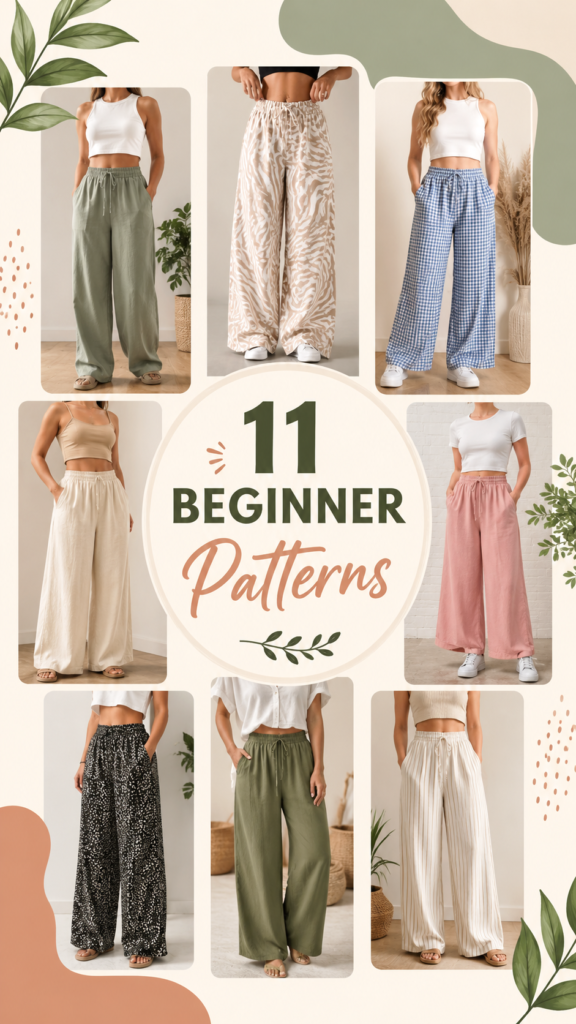
If you have ever wanted to make your own clothes but felt intimidated by complicated sewing projects, beginner-friendly DIY clothes patterns are a great place to start. Simple garments such as relaxed wide-leg pants can help you build confidence while creating pieces that are comfortable, practical, and easy to personalize. The featured style collection highlights several variations of loose, flowy pants in solid colors, checks, prints, and stripes, showing just how much personality a straightforward sewing pattern can have.
Wide-leg pants are especially appealing for DIY sewing because their relaxed silhouette offers plenty of room for creativity. You can experiment with fabric, color, print, waistband details, and finishing touches while keeping the overall garment uncomplicated. Whether you are new to sewing or simply looking for an enjoyable weekend project, these DIY clothes patterns can inspire a handmade wardrobe that feels distinctly your own.
Key Takeaways
- Start with simple silhouettes such as relaxed wide-leg pants.
- Elastic or drawstring waistbands are practical choices for beginner sewing.
- Solid fabrics, gingham, animal-inspired prints, and stripes can create very different looks.
- Choose comfortable, easy-to-handle fabrics when learning a new pattern.
- Small adjustments can make a basic DIY garment feel personal and unique.
Why Wide-Leg Pants Are Ideal DIY Clothes Patterns
Wide-leg pants combine an easygoing shape with plenty of styling possibilities. Unlike highly fitted garments, they do not require an extremely precise silhouette to look intentional. The roomy legs create a soft, flowing appearance, while a simple waistband keeps construction approachable for beginners.
The examples shown feature several versions of the same general idea. Some are made in calm neutrals, while others use green, blue, pink, black-and-white patterns, and vertical stripes. This variety demonstrates an important lesson for anyone exploring sewing patterns: one basic garment concept can produce many completely different results.
The most useful beginner pattern is not necessarily the most elaborate one. A simple shape that you can sew confidently, adjust comfortably, and wear often can teach more than a complicated project that stays unfinished.
The Appeal of a Relaxed Silhouette
A relaxed silhouette is forgiving and versatile. Wide legs create visual movement and can make lightweight fabrics look especially graceful. They also work well for casual outfits, home sewing projects, warm-weather wardrobes, and comfortable everyday clothing.
For beginners, the simplicity of the shape can make the sewing process easier to understand. Instead of focusing on numerous fitted seams or complicated construction details, you can concentrate on accurate cutting, consistent stitching, waistband construction, hemming, and finishing.
11 DIY Clothes Pattern Ideas to Inspire Your Next Project
The visual collection provides a useful starting point for exploring different interpretations of beginner-friendly pants patterns. Rather than treating each look as a completely separate project, think of them as variations on a flexible foundation.
1. Classic Solid Blue Wide-Leg Pants
A soft blue pair is an excellent example of how a simple solid fabric can make a handmade garment feel fresh and effortless. Blue works naturally with white, cream, gray, denim, and many neutral shades, making this type of project easy to incorporate into an existing wardrobe.
For a beginner project, a solid fabric also makes it easier to focus on construction because there is no complicated print matching to worry about. Clean seams and a neat waistband become the visual focus.
2. Playful Animal-Inspired Print Pants
The patterned version adds a completely different personality to the same relaxed silhouette. An animal-inspired print can turn a basic pair of wide-leg pants into a statement piece without changing the underlying construction.
If you are comfortable sewing a basic pair, experimenting with a bold print is a fun way to make the project feel more creative. Let the fabric provide most of the visual impact and keep additional details simple.
3. Gingham Wide-Leg Pants
Gingham brings a playful, casual quality to handmade clothing. The checked pattern shown in the collection creates a visually structured contrast with the loose shape of the pants.
When working with checks, take extra care when cutting and sewing so the pattern remains visually balanced. Even simple pattern matching can make a handmade garment look considerably more polished.
4. Soft Cream Pants
Cream and ivory fabrics give wide-leg pants a relaxed, understated appearance. They can also make the shape of the garment particularly easy to appreciate because the focus remains on the cut rather than a busy pattern.
This is a useful direction if your goal is to sew versatile basics. A neutral pair can become part of countless outfits and can be styled with both colorful and minimalist tops.
5. Olive Green Everyday Pants
Olive green adds earthy character while remaining surprisingly easy to coordinate. The image shows how a muted green can work beautifully with a relaxed wide-leg shape.
For a handmade wardrobe, colors inspired by nature can be especially useful because they pair well with cream, white, tan, black, denim, and other understated shades.
6. Lightweight White Wide-Leg Pants
White or off-white wide-leg pants create an airy, minimal look. They are particularly appealing for warm-weather outfits and can be dressed up or down depending on the top, shoes, and accessories.
If you choose a light-colored fabric, consider the fabric’s opacity before beginning. A fabric that looks substantial on the bolt may appear different in natural light, so checking it before cutting can prevent surprises later.
7. Soft Pink Pants
Pastel pink gives the relaxed silhouette a softer and more playful feel. It is a good example of how changing only the fabric color can transform the mood of a basic sewing pattern.
Pairing a handmade pink garment with a simple neutral top keeps the outfit balanced and allows the color to stand out without becoming overwhelming.
8. Black-and-White Printed Pants
A darker print offers a bolder alternative while maintaining the comfortable shape. Black-and-white patterns can be especially versatile because they work with many different colors of tops and accessories.
When selecting a patterned fabric, think about the scale of the print. Larger patterns can create a dramatic look, while smaller patterns tend to feel more subtle from a distance.
9. Striped Wide-Leg Pants
Vertical stripes can emphasize the long, flowing lines of wide-leg pants. The striped example in the collection demonstrates how fabric direction can become part of the design itself.
Stripes require attention during cutting, particularly around seams and hems. Take your time when laying out the pattern pieces and check that the fabric design is running in the intended direction.
10. Drawstring or Elastic-Waist Pants
A comfortable waistband is one of the most practical features for a beginner-friendly clothing project. Elastic and drawstring styles can create an adjustable fit while keeping the garment relaxed.
These waistbands are also useful when making casual clothes that prioritize comfort. Once you understand the basic construction, you can reuse the same approach across different fabrics and garment variations.
11. Your Own Fabric Variation
The final idea is less about a particular color or print and more about making the pattern yours. Start with a simple wide-leg pants design and experiment with a fabric that reflects your personal style.
You could choose a neutral linen-look fabric, a cheerful check, a subtle stripe, a botanical-inspired print, or a favorite solid color. The beauty of DIY sewing is that the same basic pattern can become completely different garments through fabric choices alone.
How to Choose a Beginner Sewing Pattern
When searching for DIY clothes patterns, look beyond the finished photograph. A beautiful garment may look simple while still requiring advanced construction techniques. Beginners will generally benefit from patterns with straightforward shapes, clear instructions, manageable pieces, and fewer complicated details.
Look for Simple Construction
Patterns based around uncomplicated shapes are usually easier to understand. Wide-leg pants can be a strong starting point because the main silhouette is straightforward and the relaxed fit reduces some of the challenges associated with close-fitting garments.
Consider the Waistband
The waistband can determine how approachable a sewing project feels. An elastic or drawstring waist is a practical choice when you want to avoid more complex closures. It also creates a comfortable finished garment that can become a wardrobe staple.
Choose Fabric Carefully
Fabric choice matters just as much as the pattern. Look for a material that matches the intended drape and comfort of the garment. Lightweight woven fabrics can create a soft, flowing effect, while slightly more structured materials may produce a defined silhouette.
Expert Insight
- Your fabric can completely change the personality of one sewing pattern.
- Test unfamiliar techniques on a fabric scrap before working on the finished garment.
- A careful fit check before hemming can save time and make the final result more comfortable.
Beginner Sewing Tips for Better Results
Starting with a simple pattern does not mean rushing through the project. Small habits can make a noticeable difference in the quality of handmade clothing.
- Read the instructions first. Understanding the sequence before cutting fabric can help you avoid unnecessary mistakes.
- Measure before choosing your size. Do not rely only on the size you normally buy in ready-to-wear clothing.
- Prepare your fabric. Follow appropriate care instructions before cutting so the finished garment is less likely to change unexpectedly.
- Mark important points. Clear markings can make matching pieces and positioning details much easier.
- Press as you sew. Neat pressing can help seams lie flatter and can give a homemade project a more polished appearance.
- Take your time with the waistband and hem. These areas are highly visible and deserve careful finishing.
Pro Tip: Before committing to a new pattern, think about whether you would genuinely wear the finished garment. A simple pattern that fits your lifestyle is often a better learning project than an impressive design that will rarely leave the closet.
Ways to Personalize DIY Clothes Patterns
One of the biggest advantages of sewing your own clothes is the freedom to customize details. Once you understand the basic pattern, you can begin exploring small changes that make each garment feel more personal.
Experiment With Color
Color is one of the easiest ways to create variety. A single pants pattern could become a neutral everyday staple in cream, an earthy statement in olive, a playful piece in pink, or a bold project in a darker print.
Try Different Prints
Checks, stripes, small motifs, and larger statement prints can all produce different visual effects. If you are new to patterned fabric, starting with a small or forgiving print can make cutting and construction feel less intimidating.
Adjust the Styling Details
Simple changes such as the waistband finish, pocket treatment, hem length, or fabric choice can create a noticeably different garment. Keep a record of adjustments you like so you can repeat successful ideas in future sewing projects.
Building a Handmade Wardrobe One Pattern at a Time
You do not need dozens of complicated patterns to create a useful handmade wardrobe. A few versatile DIY clothes patterns can provide a foundation for many outfits. Once you become comfortable with one garment type, you can explore variations rather than starting from scratch every time.
Wide-leg pants are a particularly useful example because their styling can change dramatically with the fabric. A neutral pair can become an everyday basic, while a colorful or printed version can act as the focal point of an outfit.
Over time, repeating familiar construction techniques can also improve your sewing confidence. Each project gives you another opportunity to practice cutting accurately, maintaining consistent seams, finishing edges, creating waistbands, and achieving clean hems.
What Makes a DIY Sewing Project Worth Saving?
When collecting sewing inspiration, focus on projects that combine visual appeal with realistic construction. A good beginner idea should make you excited to sew while still feeling achievable.
Look for silhouettes you would actually wear, fabrics you enjoy working with, and patterns that can be adapted for different occasions. Saving several variations of the same basic garment can also help you see how color, texture, and print influence the final result.
Most importantly, do not feel pressured to reproduce a particular look exactly. Use inspiration as a starting point, then choose the details that fit your own wardrobe, sewing ability, and personal taste.
At a Glance
- Wide-leg pants are a versatile starting point for beginner sewing.
- Elastic and drawstring waistbands can keep construction approachable.
- Fabric color and print can transform the look of one basic pattern.
- Careful measuring, pressing, and finishing improve the final result.
- Choose projects that are both achievable and genuinely wearable.
Conclusion: Start Simple, Sew Often, and Make It Yours
DIY clothes patterns do not have to be complicated to be rewarding. The collection of relaxed wide-leg pants shows how one approachable garment concept can become an entire range of styles through thoughtful fabric and color choices. From soft neutrals and earthy greens to gingham, stripes, pink, and expressive prints, there are countless ways to turn a simple sewing pattern into something personal.
If you are beginning your sewing journey, choose a project that feels achievable and useful. Pay attention to measurements, select a fabric that suits the pattern, and give yourself time to learn each construction step. Once you finish your first pair, you may find that making another variation feels much easier.
Save your favorite DIY clothes patterns, gather your fabric, and start with one comfortable project. A simple handmade garment can be the first step toward a wardrobe filled with pieces designed around your own style and creativity.
Tags
DIY Clothes Patterns Beginner Sewing Sewing Patterns Wide Leg Pants DIY Fashion Easy Sewing Projects Handmade Clothes Sewing Inspiration