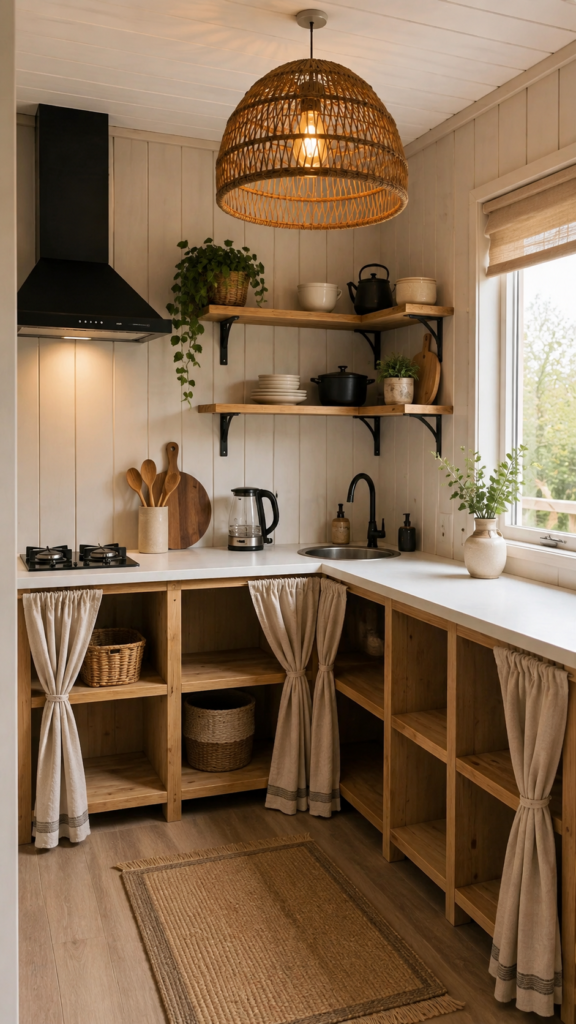
A beautiful kitchen does not have to be large, expensive, or filled with complicated features. A thoughtful DIY kitchen can combine practical storage, warm natural materials, and a relaxed cottage-inspired atmosphere to create a space that feels both useful and inviting. This style works especially well in compact kitchens where every shelf, cabinet, and countertop needs to earn its place.
The look here is built around a simple combination of light wood, soft neutral tones, open shelving, fabric curtains, woven textures, and warm lighting. Instead of hiding everything behind traditional cabinet doors, the design makes everyday kitchen items part of the decor. The result is a cozy rustic kitchen that feels personal without becoming cluttered.
Key Takeaways
- Use open wood shelves to add storage without making a small kitchen feel heavy.
- Choose neutral fabrics and natural textures for an inviting cottage-inspired finish.
- Turn open cabinet spaces into attractive storage with simple curtains and baskets.
- Warm pendant lighting can become a major decorative feature in a compact kitchen.
- Keep countertops functional by displaying only useful and visually appealing items.
Create a Cozy DIY Kitchen With Simple Materials
The foundation of this kitchen style is simplicity. Light wood cabinetry provides warmth against pale wall paneling, while the bright countertop keeps the room feeling fresh and spacious. This combination is especially effective in a small kitchen because lighter surfaces reflect natural light and prevent the room from feeling boxed in.
You do not need to replace every element to recreate the atmosphere. A DIY kitchen makeover can begin with one or two noticeable changes. Installing a wooden shelf, replacing cabinet curtains, adding a woven light fixture, or introducing a few natural storage baskets can dramatically change the personality of the room.
Important: The most successful small kitchen makeovers focus on visual consistency. When wood, linen, woven materials, and neutral colors repeat throughout the room, even simple DIY additions can look intentional and professionally designed.
Choose a Warm, Neutral Color Palette
A neutral palette makes this type of kitchen feel calm and timeless. Soft white or creamy wall colors provide a clean backdrop, while natural wood introduces depth and warmth. Beige, oatmeal, taupe, and muted brown accents work naturally with these materials.
For a DIY project, resist the temptation to introduce too many colors at once. Instead, select a small group of complementary shades and repeat them through curtains, baskets, dishes, rugs, and decorative accessories. This makes the room feel cohesive without requiring expensive finishes.
Let Natural Wood Become the Main Accent
Wood is one of the easiest ways to add character to a kitchen. In this design, the open cabinetry and shelves provide a strong natural element that balances the cooler appearance of the pale walls and countertop.
If you are building a DIY kitchen on a budget, unfinished or lightly finished wood can work beautifully. Simple boards can become floating shelves, storage dividers, or cabinet components. Keeping the finish relatively natural helps preserve the relaxed rustic character.
Make Open Shelving Work in a Small Kitchen
Open shelves are a practical feature when floor and cabinet space are limited. They provide easy access to frequently used dishes, cookware, mugs, and containers while also giving the kitchen a decorative focal point.
The key is to avoid treating open shelves like a storage dumping ground. Arrange objects with a little breathing room. Stack plates together, group similar mugs, and combine useful kitchenware with one or two natural decorative elements such as a small plant, wooden cutting board, or ceramic vessel.
- Place frequently used items on the lower shelf.
- Keep heavier cookware toward the center or supported areas.
- Group dishes by type instead of spreading them randomly.
- Add small decorative touches without filling every inch.
Style Shelves Without Making Them Look Cluttered
A useful rule for small kitchen decor is to combine function and decoration. A wooden cutting board can lean against the wall while remaining ready to use. A ceramic bowl can hold fruit or kitchen essentials. A basket can conceal less attractive supplies while contributing to the overall texture.
Vary the height of objects to create a more natural arrangement. A stack of plates, a small pot, and a taller pitcher will usually look more interesting than several objects of exactly the same height.
Expert Insight
Open shelving looks best when it supports the way you actually use the kitchen. Keep everyday essentials within reach and use baskets or closed storage for items that create visual noise. This approach gives you the decorative appeal of open shelving without sacrificing organization.
Add Character With Fabric Cabinet Curtains
One of the most charming details in this kitchen is the use of fabric curtains across open lower storage. This is an inexpensive DIY kitchen idea that can completely change the appearance of basic shelving.
Instead of installing complicated cabinet doors, simple gathered fabric can hide baskets, cookware, cleaning supplies, or other practical items. The curtains also soften the hard edges of wood cabinetry and countertops.
Select Linen or Cotton in a Soft Neutral Tone
For a cottage kitchen aesthetic, look for fabrics in cream, beige, oatmeal, or subtle checks. A small pattern can add personality, while a solid neutral fabric creates a quieter appearance.
Measure each cabinet opening carefully before cutting fabric. Allow enough extra material for gathering and hems. You can use a simple tension rod or another removable hanging method where appropriate, making the project easy to change later.
Use Fabric to Balance Wood
Wood can sometimes make a compact kitchen feel visually dense. Fabric introduces softness and movement, helping balance the strong lines of shelving and cabinetry. This is particularly useful when using several wooden surfaces throughout the room.
Make Lighting a Feature
The oversized woven pendant light is one of the strongest visual elements in this kitchen. Its natural texture adds warmth while the open weave allows the light to spread through the room with a soft glow.
Lighting is an excellent area for a DIY kitchen refresh because changing one fixture can have a larger visual impact than adding numerous small accessories. A rattan, wicker, or woven pendant can complement wooden shelves and other natural materials while creating a cozy focal point.
When choosing a statement light, consider the size of the kitchen carefully. The goal is to create a focal point without interfering with movement or making the room feel crowded. In a compact space, one distinctive fixture can often do more than several competing decorations.
Bring Natural Textures Into Kitchen Decor
Natural textures give rustic kitchens their welcoming personality. Woven baskets, wooden boards, linen curtains, rattan lighting, ceramic dishes, and simple greenery all contribute to the same relaxed visual language.
You can introduce these materials gradually. Start with one basket or wooden accessory and build from there. The goal is not to fill the kitchen with rustic objects, but to create a balanced mix of textures.
- Use woven baskets to organize open shelves.
- Display wooden cutting boards as functional decor.
- Choose ceramic pieces with understated shapes.
- Add a small amount of greenery for freshness.
- Use linen or cotton textiles to soften the space.
Keep Countertops Calm and Functional
A bright countertop can make a small kitchen feel larger, but it can quickly become crowded. Keep only the appliances and accessories you use regularly within easy reach.
In a compact kitchen, a kettle, coffee maker, soap dispenser, or small vase can remain on the counter if each item has a clear purpose. Grouping similar objects together creates a cleaner appearance than scattering them across the entire work surface.
Pro Tip: Think of your countertop as a working zone first and a decorating zone second. Leave generous areas clear for food preparation, then use a few carefully selected objects to add personality around the edges.
Use the Window Area to Enhance a Small Kitchen
A window can become one of the most valuable features in a small kitchen because it brings natural light and a visual connection to the outdoors. Keep the area around it relatively open so daylight can reach the countertop and cabinetry.
Lightweight curtains can provide softness without completely blocking the view. Neutral fabric works particularly well with pale walls and natural wood. A small vase or simple branch arrangement can add an organic accent while keeping the window area uncluttered.
DIY Kitchen Storage Ideas on a Budget
You can recreate many of the most appealing elements of this style without undertaking a complete renovation. Focus on storage solutions that are inexpensive, useful, and visually consistent.
Simple Projects to Try
- Install open shelves: Use sturdy wooden boards and suitable brackets to create practical wall storage.
- Make cabinet curtains: Sew or hem neutral fabric and use it to cover open shelving.
- Organize with baskets: Choose woven containers for pantry items, linens, and less attractive supplies.
- Refresh small accessories: Replace mismatched containers with coordinated ceramic, wood, or neutral pieces.
- Upgrade the lighting: Consider a woven pendant for an instant rustic focal point.
Prioritize Storage Before Decoration
One of the biggest mistakes in a small kitchen is adding decorative objects before solving storage problems. Begin by deciding what needs to be stored and how often you use it. Then choose shelves, baskets, curtains, and containers that support those needs.
Once the practical organization is working, add decorative details sparingly. This creates a kitchen that looks attractive while remaining easy to use every day.
How to Create a Rustic Kitchen Without Making It Feel Old-Fashioned
Rustic style does not have to mean dark wood, heavy furniture, or an overly traditional appearance. The kitchen shown here feels current because it combines rustic materials with clean lines, simple cabinetry, a bright countertop, and uncluttered styling.
To achieve a similar balance, pair natural materials with contemporary shapes. Choose straightforward shelving brackets, simple hardware, streamlined appliances, and uncomplicated textiles. The contrast keeps the kitchen feeling fresh.
Modern rustic design is ultimately about balance. Too many distressed finishes can make the room feel dated, while too many sleek surfaces can remove the warmth. Mixing clean and natural elements creates a more comfortable middle ground.
At a Glance
- Light wood creates warmth without overwhelming a compact room.
- Open shelving combines accessible storage with rustic character.
- Fabric curtains soften exposed cabinetry and hide everyday clutter.
- Woven lighting and baskets reinforce the natural aesthetic.
- Neutral colors help the entire kitchen feel bright and cohesive.
Build Your Own Cozy DIY Kitchen Step by Step
If you are planning a kitchen makeover, start with the elements that will have the greatest impact. You do not need to complete everything in one weekend. A gradual approach allows you to test the style and make practical decisions as you go.
- Clear and organize: Remove items you rarely use and identify where storage is lacking.
- Choose your palette: Select a few neutral colors and natural materials to guide the makeover.
- Improve storage: Add shelves, baskets, or curtains where they will make the biggest difference.
- Refresh textiles: Introduce linen, cotton, or simple patterned fabric.
- Add lighting: Use a warm statement fixture to establish the mood.
- Style carefully: Display useful objects and a few decorative accents while keeping work surfaces clear.
This approach keeps a DIY kitchen project manageable and prevents unnecessary spending. It also gives you the flexibility to adjust the design as you discover what works best for your space.
Conclusion: Make Your Kitchen Feel Like Home
A cozy DIY kitchen is less about having a perfect renovation and more about creating a space that feels practical, warm, and personal. Light wood, open shelves, neutral fabrics, woven accents, and thoughtful organization can transform even a compact kitchen into an inviting everyday space.
The best part is that many of these ideas can be adapted to different budgets and layouts. Start with one improvement that solves a real problem, then build your design around it. Add texture through fabric and baskets, bring warmth through wood and lighting, and leave enough open space for the kitchen to remain functional.
Important: A successful small kitchen should work beautifully before it is styled beautifully. When organization and design support each other, even simple DIY changes can create a space that feels intentional, comfortable, and uniquely yours.
Whether you are planning a complete kitchen makeover or simply looking for a few affordable upgrades, this cozy rustic approach offers plenty of inspiration. Keep the palette simple, choose natural materials, and let useful objects become part of the decor. The result can be a welcoming kitchen that feels timeless without losing its modern practicality.
Tags
DIY Kitchen Small Kitchen Ideas Rustic Kitchen Farmhouse Kitchen Kitchen Makeover Kitchen Storage Cottage Kitchen Decor Budget Kitchen Ideas