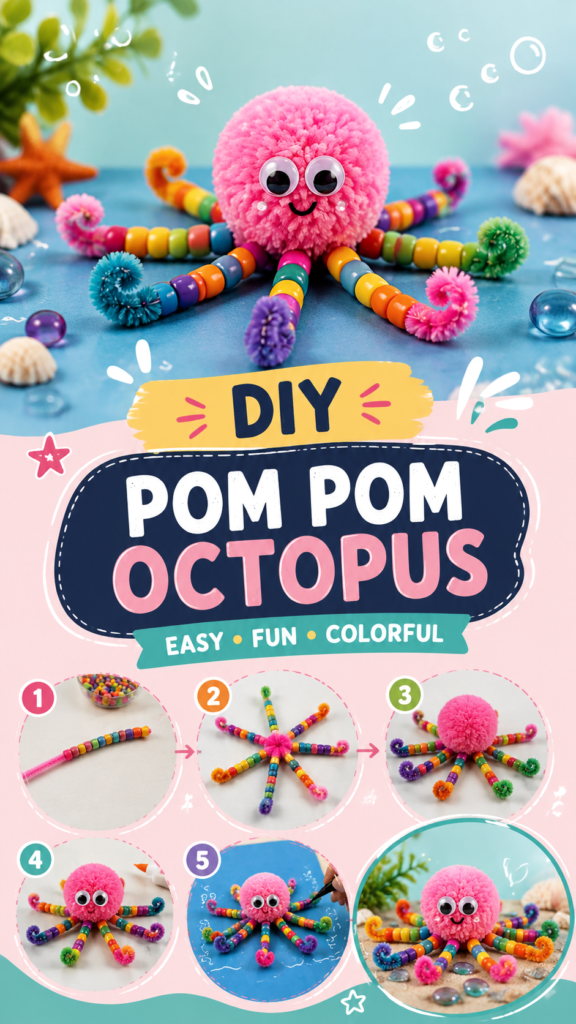
Looking for a colorful project that keeps kids busy while giving them something adorable to show off? This DIY pom pom octopus craft is a fun choice for craft afternoons, classroom activities, rainy-day entertainment, and ocean-themed projects. With a fluffy pom pom, colorful beads, flexible pipe cleaners, and googly eyes, children can create a cheerful little octopus using simple craft materials. The finished project is bright, playful, and full of personality, making it an easy DIY for kids that encourages creativity from start to finish.
Key Takeaways
- This pom pom octopus is a colorful and approachable DIY for kids.
- Beads and pipe cleaners create bright, flexible tentacles.
- Pom poms and googly eyes give the finished octopus a cute character.
- The activity encourages hands-on creativity and imaginative play.
- Kids can experiment with different colors and decorations to personalize each octopus.
- The finished craft works well as a playful ocean-themed decoration or activity project.
Why This DIY for Kids Is So Much Fun
The best kids crafts often combine simple materials with a result that feels special. This project does exactly that. Instead of requiring complicated construction, it uses a few colorful supplies to build an octopus that looks expressive, tactile, and cheerful.
The bright beads immediately make the project visually appealing. Each tentacle can have its own color combination, so children are not limited to making an identical craft. One child might choose a rainbow pattern, while another might prefer two or three favorite colors. That freedom is part of what makes DIY crafts for kids so enjoyable.
Important: The charm of this craft comes from allowing children to make choices. Encourage them to select their own bead colors, tentacle combinations, and facial expressions rather than focusing on making every finished octopus look exactly the same.
Materials for a Colorful Pom Pom Octopus
You do not need a long shopping list to get started. The image shows a straightforward collection of colorful craft supplies that can be arranged into a friendly octopus.
- One large fluffy pom pom: This forms the rounded body of the octopus.
- Colorful pony beads: Use several colors to create vibrant tentacles.
- Pipe cleaners: These provide the flexible structure for the eight arms.
- Googly eyes: Add an instantly recognizable and playful face.
- Craft glue: Useful for securing pieces that need additional support.
- Paper or a craft mat: A blue surface can create a fun underwater-inspired presentation.
- Optional decorative materials: Markers, small craft embellishments, or simple ocean-themed doodles can add extra personality.
Choosing the Right Colors
Color is one of the easiest ways to personalize this DIY for kids. The example uses a lively mix of pink, orange, yellow, green, blue, and purple. You can follow a rainbow-inspired palette or let children build completely random combinations.
For a classroom project, placing bowls of assorted beads on the table can turn color selection into part of the activity. Children can sort the beads, make repeating patterns, or simply pick colors that make them smile.
How to Make a DIY Pom Pom Octopus
The process is simple enough to follow visually and flexible enough to adapt to different ages. Adults can handle any step that requires extra precision, while children can participate in choosing colors, arranging beads, shaping the tentacles, and decorating the finished character.
Step 1: Prepare the Beaded Tentacles
Begin by preparing flexible pipe cleaners for the octopus arms. Thread colorful beads onto each piece, leaving enough room at the ends to shape and secure the tentacles. Mixing bead colors creates the playful striped appearance seen in the finished craft.
There is no need for every arm to follow the same pattern. In fact, different combinations can make the finished octopus even more interesting. Try alternating warm and cool colors, creating rainbow sequences, or repeating a favorite color throughout all eight tentacles.
Step 2: Arrange the Eight Arms
Lay the beaded pipe cleaners on a flat surface and arrange them around a central point. The goal is to create eight arms extending outward like the legs of an octopus.
Take a moment to spread them evenly before attaching the pom pom body. This is also a great opportunity for kids to count the tentacles, making the craft a playful way to incorporate simple counting into an art activity.
Step 3: Add the Fluffy Pom Pom Body
Place a large fluffy pom pom over the center where the tentacles meet. The pom pom creates the rounded head and body while hiding the central joining point of the pipe cleaners.
A bright pink pom pom gives the project the cheerful appearance shown in the example, but other colors can work just as well. Blue, purple, yellow, orange, or even a multicolored pom pom can create a completely different personality.
Step 4: Give the Octopus a Face
Add two googly eyes to the front of the pom pom. They instantly transform the fluffy shape into a recognizable character.
If you want to add even more expression, a small drawn smile or tiny cheek details can make the octopus look extra friendly. Let kids decide whether their octopus should look happy, surprised, silly, or curious.
Step 5: Curl and Shape the Tentacles
Once the body and face are in place, gently bend the ends of the pipe cleaners into curls or playful shapes. The image shows several colorful curled ends that give the octopus a lively appearance.
Because pipe cleaners are flexible, children can experiment with different poses. Some arms can curl inward, while others can stretch outward. This makes every finished octopus slightly different.
Pro Tip: Shape the tentacles after arranging the beads and attaching the body. It is easier to create balanced curls when the octopus is already assembled, and children can adjust the pose until they like the way it looks.
Why This Matters
Hands-on crafts can be more engaging when children have meaningful choices throughout the process.
- Let children choose their own color combinations.
- Encourage different tentacle patterns and poses.
- Use the finished character as a starting point for imaginative play.
Easy Ways to Make the Craft Your Own
One of the biggest advantages of this DIY for kids is how easy it is to customize. The basic structure provides a starting point, but there are countless ways to make each octopus unique.
Try Different Bead Patterns
Instead of randomly adding beads, challenge children to create patterns. They might alternate two colors, repeat a three-color sequence, or make each tentacle different. Pattern-making adds an extra creative element without making the craft complicated.
Create an Underwater Scene
The finished octopus looks especially charming on a blue background. Turn the craft into a miniature ocean scene by adding simple waves, bubbles, shells, stones, seaweed drawings, or other child-friendly decorations.
A sheet of blue paper can become the base for an entire ocean-themed craft activity. Children can make several sea creatures and arrange them together, creating a colorful underwater display.
Make a Family of Octopuses
Why stop at one? Making several pom pom octopuses gives kids an opportunity to compare different color combinations and personalities. Create a tiny octopus, a large octopus, a rainbow octopus, or a collection where every character has a different face.
Benefits of This Creative Kids Craft
Beyond the cute finished result, this activity provides several reasons to include it in a collection of easy kids crafts. Threading beads onto pipe cleaners encourages careful hand movements, while arranging colors gives children an opportunity to make creative decisions.
The project also leaves plenty of room for imagination. Once the octopus is finished, children can give it a name, invent a personality, create a story, or build an underwater environment around it.
- Creative expression: Children can choose colors, patterns, faces, and poses.
- Hands-on engagement: The tactile materials make the activity interactive and enjoyable.
- Pattern exploration: Beads can be arranged into repeating sequences and color combinations.
- Imaginative play: The completed octopus can become a character in a simple story.
- Decorative appeal: Bright finished pieces can be displayed as cheerful craft projects.
Tips for a Smooth Craft Session
A little preparation can make DIY projects much more enjoyable. Before starting, organize the beads by color or place them in small containers. This keeps the workspace manageable and lets children focus on designing rather than searching for supplies.
A craft mat or sheet of paper underneath the project can also make cleanup easier. Since small beads can be difficult to pick up from the floor, keep them contained and supervise younger children closely.
Important: Because this project uses small beads and googly eyes, younger children should have close adult supervision. Keep small craft components away from children who may put them in their mouths.
Keep the Focus on Creativity
It can be tempting to aim for a perfect finished craft, especially when following a picture for inspiration. For kids, however, the creative process is just as valuable as the final result. A slightly uneven tentacle or unusual color combination simply means the octopus has its own character.
Ask open-ended questions such as, “What colors should your octopus have?” or “Where does your octopus live?” These small prompts can turn a short craft session into a much richer creative experience.
When to Try This DIY for Kids
This colorful craft can fit into many different occasions. It works beautifully as a rainy-day activity when children need something entertaining to do indoors. It can also be included in an ocean-themed learning session, a classroom art period, a summer craft afternoon, or a relaxed weekend project.
Because the supplies are colorful and the finished project is easy to display, it can also be part of a larger collection of homemade decorations. Make several octopuses and place them together on a blue paper background for a cheerful underwater-inspired display.
Turn One Craft Into a Creative Activity
The finished pom pom octopus does not have to be the end of the activity. Use it as a prompt for storytelling, drawing, or pretend play. Children can imagine what the octopus eats, where it swims, who its friends are, and what adventures it might have.
You can also challenge kids to create a matching ocean scene. Draw waves and bubbles on blue paper, add simple sea creatures, or make several colorful octopuses with different personalities. A single DIY project can quickly become an entire creative afternoon.
At a Glance
- Craft: Colorful pom pom octopus
- Best for: Kids craft time, classrooms, rainy days, and ocean themes
- Main supplies: Pom pom, beads, pipe cleaners, and googly eyes
- Creative focus: Colors, patterns, shaping, and imaginative play
- Finishing touch: Create a blue underwater-inspired display
Conclusion: A Simple Craft With Lots of Personality
This DIY pom pom octopus proves that a memorable kids craft does not need complicated materials or an elaborate process. A fluffy pom pom, colorful beads, flexible pipe cleaners, and a pair of googly eyes are enough to create a bright little character that feels playful and completely unique.
The real fun comes from personalization. Let children choose their colors, experiment with bead patterns, curl the tentacles into different poses, and give their octopus a personality. Whether it becomes part of an ocean-themed display or simply sits proudly on a craft table, the finished project is a cheerful reminder of what kids can create with a few simple supplies and plenty of imagination.
If you are building a collection of easy DIY for kids ideas, this colorful octopus is an excellent project to keep handy. It is bright, tactile, playful, and flexible enough for many creative variations. Gather the supplies, invite the kids to choose their favorite colors, and enjoy an afternoon of making something wonderfully fun together.
Tags
DIY for Kids Kids Crafts Pom Pom Crafts Ocean Crafts Pipe Cleaner Crafts Easy Kids Crafts Preschool Crafts Creative Kids Activities