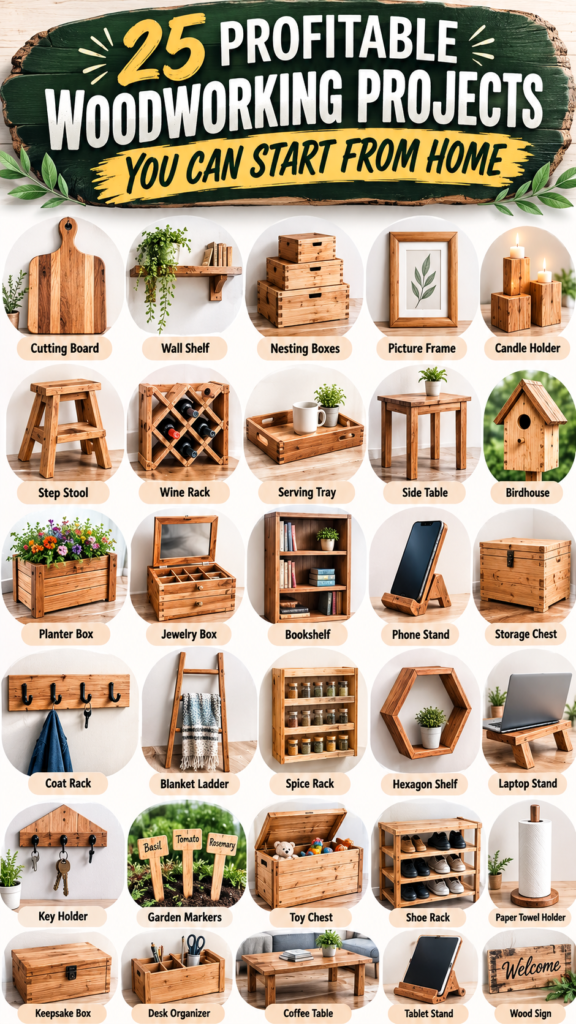
Wood DIY projects are a fantastic way to turn simple materials into practical, attractive pieces for your home. Whether you are completely new to woodworking or already enjoy spending weekends in the workshop, small wooden projects can offer a satisfying balance of creativity, usefulness, and skill building. From cutting boards and wall shelves to storage chests, plant boxes, phone stands, and shoe racks, there are plenty of ideas that can be adapted to your space, tools, and experience level.
The best part about these projects is their versatility. A simple piece of wood can become something decorative, something useful, or even a handmade item that people would be happy to buy. The collection of ideas featured here focuses on approachable woodworking projects that are practical enough for everyday use while still giving you plenty of room to add your own style.
Key Takeaways
- Start with simple wood DIY projects that match your current skill level.
- Practical items such as shelves, trays, boxes, and stands are excellent beginner projects.
- Choose designs that use straightforward shapes and repeatable construction techniques.
- Good sanding, careful measuring, and a clean finish can make a basic project look professional.
- Many useful woodworking projects can be customized for different rooms, styles, and purposes.
Why Wood DIY Projects Are So Popular
Woodworking has a special appeal because it combines creativity with a tangible result. Instead of simply buying another item for your home, you can create something with your own hands. Even a small project can teach useful skills such as measuring, cutting, joining, sanding, drilling, and finishing.
Small wood DIY projects are particularly approachable because they generally require less material and less working space than large furniture builds. You can experiment with a new technique without committing to a complicated project. Once you become comfortable with the basics, those same skills can be applied to larger builds.
Important: A successful woodworking project is not necessarily the most complicated one. Simple designs often produce the most useful results because they are easier to build accurately, customize, repeat, and finish well.
25 Wood DIY Ideas to Try at Home
The ideas below cover a wide range of practical woodworking projects. Some are ideal for beginners, while others provide a natural next step once you have gained confidence with basic tools. You can build them as shown or use the concepts as starting points for your own designs.
1. Cutting Board
A wooden cutting board is one of the classic wood DIY projects for a reason. Its basic shape is easy to understand, yet there are countless ways to personalize it. You can experiment with different board shapes, handle designs, edge details, and finishes suitable for food-contact surfaces. A well-sanded cutting board can also make a thoughtful handmade gift.
2. Wall Shelf
A wall shelf combines simple construction with immediate usefulness. It can provide a convenient place for books, plants, small decorations, or everyday items. Because shelves can be made in many sizes, this is an easy project to adapt to a bedroom, kitchen, entryway, or living area.
3. Nesting Boxes
Nesting boxes are useful for organizing small belongings while also teaching basic box construction. Different-sized boxes can be designed to fit inside one another, making them convenient when storage space is limited. Try varying the proportions or adding simple handles to give the set a distinctive look.
4. Picture Frame
A handmade wooden picture frame can turn a basic woodworking exercise into a personalized home accessory. Frames offer opportunities to practice accurate measuring, clean corners, sanding, and finishing. A natural wood finish can highlight the character of the material, while paint or stain can coordinate the frame with an existing room.
5. Candle Holder
A wooden candle holder is a compact project that can add warmth to a table or shelf. Simple geometric designs work especially well because the natural texture of wood becomes part of the decoration. If you build candle holders, pay careful attention to stability and appropriate heat-safe construction.
6. Step Stool
A step stool introduces slightly more structural thinking than a small decorative project. It requires stable legs, secure joints, and a surface that feels dependable under normal use. This makes it a useful project for developing confidence with measuring, assembly, and reinforcement.
7. Wine Rack
A wooden wine rack can combine storage with decorative appeal. Simple horizontal shelves, angled supports, or individual bottle compartments can create different looks. Even if you do not need a wine rack, the underlying idea can inspire storage solutions for bottles, jars, or other similarly shaped items.
8. Serving Tray
Serving trays are practical, relatively compact, and highly customizable. Add handles to make carrying easier, or keep the design minimal with clean edges and a shallow frame. A tray can also double as an organizer for a coffee table, kitchen counter, or bedside area.
9. Side Table
A small side table is a rewarding project because it creates a useful piece of furniture without the complexity of a full-size table. Focus on strong connections between the legs and tabletop and make sure the finished structure sits level. A simple design can look surprisingly polished with careful sanding and finishing.
10. Birdhouse
A wooden birdhouse is a fun project that brings woodworking outdoors. The design can remain simple, with a small entrance, sloped roof, and sheltered interior. You can keep the natural wood appearance or add exterior decoration that complements your garden.
11. Planter Box
Planter boxes are ideal for combining woodworking with gardening. A rectangular wooden planter can be sized for herbs, flowers, or decorative plants. Pay attention to drainage and use materials and finishes appropriate for outdoor exposure when the box will be placed outside.
12. Jewelry Box
A jewelry box gives you an opportunity to work on smaller details. Compartments, a hinged lid, and a carefully finished exterior can transform a basic box into something special. This is also a useful project for practicing precision because small construction errors are more noticeable on compact pieces.
13. Bookshelf
A compact bookshelf is another practical way to develop basic furniture-building skills. Keep the design straightforward with vertical sides and horizontal shelves. You can create a narrow shelf for a small corner or a wider unit for books, plants, and decorative objects.
14. Phone Stand
A wooden phone stand is small enough to make from limited material and useful enough to keep on a desk or nightstand. A simple angled support can hold a phone at a comfortable viewing position. You can also add a slot for a charging cable to make the design more functional.
15. Storage Chest
A storage chest offers more room for creativity while solving a common household problem. Use it for blankets, toys, accessories, or other belongings that need a dedicated place. A hinged or removable lid can provide convenient access while a simple rectangular design keeps construction approachable.
16. Coat Rack
A wooden coat rack is a practical entryway project that does not require much floor space. A simple backboard with several hooks can hold coats, bags, keys, or hats. You can customize the length and number of hooks according to the available wall space.
17. Blanket Ladder
A blanket ladder adds a decorative storage solution to a living room or bedroom. Its open design makes blankets easy to display and access. The project is also a good opportunity to practice creating evenly spaced rungs and keeping the finished structure stable.
18. Spice Rack
A wooden spice rack can make a kitchen more organized while giving you a manageable woodworking challenge. Multiple shelves or compartments can hold jars neatly. Consider the depth carefully so containers remain visible and easy to reach.
19. Hexagon Shelf
A hexagon shelf brings a geometric element to a traditional wall-storage concept. Its distinctive shape can make a small display area feel more decorative. This project is especially useful for practicing angled cuts and careful assembly.
20. Laptop Stand
A wooden laptop stand can raise a laptop to a more convenient position while creating a clean, handmade addition to a desk. Keep the base stable and make sure the support surface is broad enough for the device. A simple design with angled supports can look modern without requiring complicated construction.
21. Key Holder
A key holder is a quick project that can make an excellent entryway organizer. A small wooden board with hooks provides a dedicated place for keys and other lightweight items. Because the project is compact, it is also a convenient way to use leftover pieces of wood.
22. Garden Markers
Wooden garden markers are simple, useful, and easy to personalize. You can create pointed stakes and label them with the names of herbs, flowers, or vegetables. They are a great choice when you want a small project that can be completed without a large workshop setup.
23. Toy Chest
A toy chest gives you a practical storage solution while offering more room to experiment with woodworking techniques. A basic box with a lid can keep toys contained and make cleanup easier. Smooth edges and a sturdy construction are especially important for pieces intended for family spaces.
24. Shoe Rack
A wooden shoe rack can help keep an entryway organized without taking up unnecessary space. Several horizontal levels provide room for different pairs of shoes, while a simple open design keeps everything visible. Adjust the dimensions to suit the space where the rack will be used.
25. Paper Towel Holder
A wooden paper towel holder is a small project that combines function and style. A sturdy base and vertical dowel or post are enough for a straightforward design. This is an excellent project for practicing clean shaping and finishing while creating something useful for the kitchen.
Expert Insight
If your goal is to make woodworking projects that people genuinely want, prioritize usefulness, clean construction, and an attractive finish. A simple shelf or organizer can be more appealing than a complicated design if it solves an everyday problem and looks well made.
- Choose repeatable designs that can be made in different sizes.
- Use consistent dimensions and clean edges to create a professional appearance.
- Let the natural character of the wood become part of the design.
How to Choose the Right Wood DIY Project
Choosing a project should begin with your current skill level, available tools, workspace, and intended result. If you are new to woodworking, start with a project involving straight cuts and basic assembly. Cutting boards, simple shelves, trays, garden markers, key holders, and small stands can provide valuable practice without overwhelming you.
Once you become comfortable measuring and assembling pieces, move toward projects with multiple components. Boxes, racks, stools, shelves, and small tables introduce additional opportunities to practice alignment, support, and structural stability.
Consider the Tools You Already Have
You do not need an enormous workshop to begin. The right tools depend on the project, but basic measuring, cutting, drilling, clamping, and sanding equipment can cover many simple builds. Start with projects that fit the tools you already understand rather than buying a large collection of equipment immediately.
Think About the Finished Purpose
Ask yourself where the finished item will go and what problem it should solve. A wall shelf might reduce clutter, a phone stand might improve desk organization, and a planter box might make a small outdoor area more attractive. Purpose-driven projects are often easier to design because you have a clear target from the beginning.
Simple Ways to Make Handmade Wood Projects Look Better
Good woodworking is about more than cutting pieces to size. The finishing stage can have a major impact on how polished a project looks. Take time to smooth rough edges, soften sharp corners where appropriate, and remove visible sanding marks before applying a finish.
Proportions matter too. A project can look more refined when shelves are evenly spaced, handles are centered, legs are aligned, and decorative details are balanced. Even a very simple box can look impressive when every edge and joint has been carefully considered.
Pro Tip: Do not rush the sanding and finishing stage. Clean surfaces, consistent edges, and a suitable finish can make an inexpensive DIY project feel significantly more refined and intentional.
Tips for Building Wood DIY Projects Successfully
- Measure carefully. Take measurements more than once before making permanent cuts.
- Plan the assembly. Think through how each piece will connect before applying glue, screws, or other fasteners.
- Test your fit. Dry-fit components whenever possible to catch alignment problems early.
- Sand progressively. Work toward a smooth, consistent surface rather than trying to remove every imperfection at the end.
- Keep the design practical. A project should look good, but it should also perform its intended function.
- Work safely. Use appropriate protective equipment and follow safe operating practices for every tool.
Can Woodworking Projects Become Handmade Products?
Many of the projects in this collection have qualities that can make them interesting as handmade products. Items such as cutting boards, shelves, trays, organizers, planter boxes, stands, racks, and small storage pieces are practical and easy to understand. Their usefulness can make them appealing to people looking for functional handmade goods.
If you want to explore the selling potential of a project, focus first on consistency. A design that looks attractive when made once is even more valuable if you can reproduce it efficiently. Consider material usage, build time, finishing time, packaging, and the amount of customization you can realistically offer.
You can also create variations from one basic design. For example, a simple shelf could be produced in several lengths, while a phone stand could be offered in different wood styles or finishes. This approach lets you develop a recognizable project while still giving customers choices.
Making Your Wood DIY Ideas More Personal
One of the biggest advantages of DIY woodworking is the ability to customize nearly every detail. Change the dimensions to fit a particular room, adjust the shape to match your decorating style, or combine several functions into one piece.
Natural wood can provide a warm, timeless appearance, while paint or stain can create a completely different mood. You can also experiment with rounded corners, contrasting wood tones, simple engraved details, decorative handles, or minimalist hardware. The goal is not to add decoration for its own sake. Instead, choose details that improve the appearance or function of the finished piece.
At a Glance
- Start small and build confidence with straightforward designs.
- Prioritize useful projects such as shelves, boxes, trays, racks, and stands.
- Measure carefully and test-fit components before final assembly.
- Spend time on sanding and finishing for a cleaner final appearance.
- Customize dimensions and details to make each project your own.
Conclusion: Start Building Your Next Wood DIY Project
Wood DIY projects offer an enjoyable way to create useful items while developing practical skills. You do not need to begin with an ambitious furniture build. A cutting board, wall shelf, phone stand, key holder, planter box, or small tray can be enough to get started and learn the fundamentals of working with wood.
As your confidence grows, you can move into more involved projects such as bookshelves, storage chests, shoe racks, side tables, and toy chests. Each build gives you another chance to improve your measuring, cutting, assembly, sanding, and finishing skills.
The most rewarding woodworking projects are often the ones that solve a real problem while reflecting your personal style. Choose an idea that fits your space and abilities, plan your cuts carefully, take your time with the details, and enjoy the process of turning raw material into something useful. With 25 ideas to choose from, there is plenty of inspiration for your next weekend build.
Tags
Wood DIY Woodworking Projects DIY Wood Projects Beginner Woodworking Woodworking Ideas Wood Crafts DIY Home Projects Handmade Wood Projects