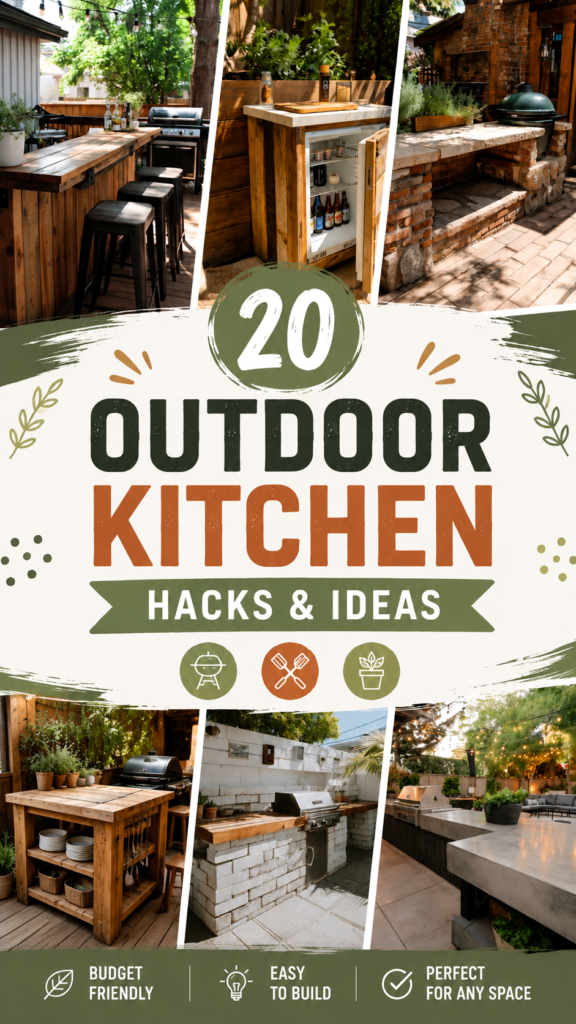
Creating a DIY outdoor kitchen can completely change the way you use your backyard. Instead of keeping the grill tucked away in a corner, you can build a dedicated cooking and entertaining area with a practical counter, useful storage, comfortable seating, and a layout that makes outdoor meals feel effortless. The inspiration here combines rustic wood, brick, concrete, greenery, and modern grills to show just how many directions an outdoor kitchen can take.
You do not need a huge patio or an elaborate construction project to create an inviting outdoor cooking space. A simple grill counter, a compact prep station, or a small outdoor bar can provide many of the benefits of a full kitchen while keeping the project manageable. The key is to focus on how you cook, entertain, store supplies, and move around the space.
Key Takeaways
- Start with the grill and build the layout around your cooking routine.
- Use durable, weather-conscious materials for counters and storage.
- Add shelves and cabinets to keep cooking essentials close at hand.
- Mix wood, brick, concrete, and plants for a warm outdoor aesthetic.
- Design for both food preparation and comfortable entertaining.
What Makes a Great DIY Outdoor Kitchen?
A successful outdoor kitchen is more than a grill placed on a patio. It is a small outdoor workspace designed around convenience. The examples featured here demonstrate several useful approaches, including long wooden counters, masonry bases, freestanding prep tables, built-in grill areas, and compact storage solutions.
Think about the tasks you regularly perform when cooking outside. You may need a surface for preparing ingredients, somewhere to place serving dishes, storage for utensils, and a convenient location for plates and condiments. If friends and family frequently gather around the grill, you may also want a counter or bar where people can sit nearby without getting in the way.
The best DIY outdoor kitchen ideas solve these practical problems while also fitting naturally into the surrounding backyard. Rustic wood works beautifully in garden settings, while brick and concrete can create a more permanent architectural appearance. A combination of materials can give the space character without making every element look identical.
1. Start With the Grill as Your Focal Point
The grill is often the heart of an outdoor kitchen, so it makes sense to establish its position first. Several layouts in the inspiration show grills integrated into or positioned beside substantial counters. This approach creates a dedicated cooking zone instead of treating the grill as a standalone appliance.
Once you decide where the grill will go, consider what you want immediately beside it. A prep counter on one side can provide a convenient place for ingredients, while a landing surface on the other side gives you somewhere to set cooked food. Keeping these functions close together makes outdoor cooking much easier.
If your space is small, resist the temptation to fill every available area. A compact grill with a useful counter can be more practical than a large installation that leaves little room to move. Leave enough open space for doors, drawers, chairs, and normal foot traffic.
2. Build a Rustic Outdoor Kitchen With Wood
Wood is one of the most visually appealing materials for a backyard kitchen because it immediately creates a warm, relaxed atmosphere. The image inspiration uses substantial timber counters, reclaimed-looking boards, and wooden cabinet structures to give several spaces a handcrafted character.
A wooden outdoor kitchen can be as simple as a sturdy freestanding prep table with an integrated lower shelf. This design provides counter space while creating room underneath for baskets, dishes, tools, or other outdoor cooking essentials.
For a more substantial project, consider a long wooden counter that combines grilling, food preparation, and casual seating. Adding stools turns the counter into a social zone where guests can chat while food is being prepared.
Important: Outdoor wood needs to be selected and maintained with the environment in mind. Choose appropriate materials and finishes for exterior use, and keep surfaces protected from prolonged moisture whenever possible.
3. Use Brick for a Built-In Look
Brick is another strong option for DIY outdoor kitchen construction. The brick examples shown in the inspiration create a sturdy, built-in appearance while blending naturally with surrounding patios and garden areas.
A masonry base can support a countertop and create open storage underneath. This approach is particularly attractive when you want the kitchen to feel like a permanent part of the backyard rather than a collection of freestanding furniture.
Brick also pairs beautifully with wood. A brick base topped with a warm wooden counter can balance durability and visual softness. Add plants, wooden shelving, and simple outdoor accessories to make the cooking area feel connected to the garden.
4. Create a Compact Outdoor Prep Station
You do not have to build a complete outdoor kitchen to make outdoor cooking more convenient. A compact prep station can provide a surprisingly useful upgrade. The inspiration includes smaller cabinet-style stations with counters and enclosed storage, demonstrating how much functionality can fit into a modest footprint.
A narrow station can hold plates, cooking tools, seasonings, drinks, and serving supplies. Position it near the grill so you can prepare and serve food without repeatedly walking back into the house.
Make Small Spaces Work Harder
For a small patio, prioritize vertical and concealed storage. Open shelves can hold frequently used items, while a cabinet can hide less attractive supplies. A countertop with storage underneath provides two functions without requiring a large footprint.
- Use a narrow counter along a fence or exterior wall.
- Add shelves underneath for dishes and cookware.
- Keep frequently used tools close to the grill.
- Choose movable pieces when flexibility matters.
Expert Insight
The most useful outdoor kitchen is not necessarily the biggest one. A well-planned compact setup with a grill, prep surface, storage, and comfortable circulation can feel more functional than a larger space without a clear workflow.
5. Add Smart Outdoor Kitchen Storage
Storage is easy to overlook when planning a backyard kitchen, but it can make the difference between a tidy cooking area and a cluttered one. The inspiration shows several creative storage solutions, including lower shelves, enclosed cabinets, and open compartments.
Think about what you actually want to keep outside. Plates, serving trays, grilling tools, cutting boards, napkins, and outdoor cookware may all need convenient homes. Items that are used frequently should be within easy reach, while occasional supplies can be stored farther away.
Open Shelves vs. Closed Cabinets
Open shelving creates an attractive casual look and makes frequently used items easy to access. Stacks of plates, baskets, bowls, and cooking accessories can become part of the design.
Closed cabinets provide a cleaner appearance and offer more protection from dust and outdoor conditions. A combination of both can work especially well. Use open shelves for attractive everyday items and enclosed storage for supplies you would rather keep hidden.
6. Make the Countertop the Workhorse
A generous countertop can transform a basic grill area into a true outdoor kitchen. It gives you room to prepare ingredients, arrange serving dishes, place utensils, and organize food before it goes onto the grill.
The examples use several countertop styles, from warm wood to substantial masonry and contemporary surfaces. Your choice should complement the rest of the backyard while being practical for outdoor use.
When planning the counter, consider where you will stand while preparing food. A comfortable working height and enough usable surface are more important than decorative details. If you frequently entertain, include enough space for serving food without blocking the main preparation area.
7. Blend Your Kitchen With the Backyard
An outdoor kitchen looks most inviting when it feels like part of the landscape. The inspiration combines cooking areas with trees, planters, greenery, timber fences, brick walls, and warm patio surfaces.
Plants are an especially easy way to soften a hard cooking area. Place containers around the perimeter rather than directly beside hot cooking equipment. Herbs can also be a practical addition if the location provides suitable growing conditions.
Lighting can make the space feel just as welcoming after sunset. Simple overhead string lights, as shown in one of the inspiration scenes, create a relaxed atmosphere while helping define the entertaining area.
8. Add Comfortable Seating
If you enjoy hosting, seating should be considered part of the outdoor kitchen rather than an afterthought. A counter with stools is an efficient solution because it combines food preparation and socializing without requiring a separate dining arrangement.
For larger patios, a kitchen counter can face an outdoor dining or lounge area. This keeps the cook connected to everyone else instead of isolating the cooking zone at the edge of the yard.
Keep the main walking route clear. Seating should feel close enough for conversation while leaving comfortable space around the grill and preparation surfaces.
9. Choose a Style That Matches Your Home
The beauty of DIY outdoor kitchen design is that there is no single correct aesthetic. A rustic backyard may look best with reclaimed-style wood, brick, natural textures, and greenery. A contemporary patio can work beautifully with clean-lined cabinetry, concrete surfaces, and streamlined grilling equipment.
You can also combine styles. For example, a modern grill can sit within a rustic timber counter, or a simple concrete countertop can be paired with warm wood storage. Repeating two or three materials throughout the space helps the design feel intentional.
Keep the Color Palette Cohesive
Natural outdoor materials already provide a strong palette. Wood tones, muted greens, warm brick, stone, and neutral countertops work together easily. Instead of introducing many competing colors, use plants, cushions, tableware, and accessories for small accents.
10. Plan the Kitchen Around How You Entertain
Before building anything, imagine a typical afternoon or evening in your backyard. Where will guests sit? Where will you prepare food? Where will dirty dishes go? Where will drinks be placed? Which items need to be within arm’s reach?
Answering these questions can help you decide whether you need a long counter, a compact station, an island, additional shelves, or a simple grill surround. The goal is to create a space that supports the way you naturally use your backyard.
Pro Tip: Sketch your outdoor kitchen layout before purchasing materials. Mark the grill, counters, storage, seating, and main walking paths. Even a simple drawing can reveal spacing problems before construction begins.
DIY Outdoor Kitchen Ideas for Different Budgets
You can approach an outdoor kitchen at several levels. A lower-cost setup might begin with a sturdy prep table, a standalone grill, a few shelves, and container plants. This provides the essential functions without committing to permanent construction.
A mid-range project can add a larger counter, dedicated storage, upgraded finishes, and integrated seating. If you want a more permanent appearance, masonry construction can create a substantial built-in base around the cooking area.
Whatever your budget, prioritize the elements that improve everyday use. A beautiful counter is helpful, but it becomes much more valuable when it also provides storage and a convenient place to prepare food.
How to Make Your Outdoor Kitchen Feel Finished
The finishing touches are what turn a functional cooking station into an inviting backyard destination. Add a few carefully selected accessories rather than filling every surface.
- Use planters to soften hard edges.
- Add stools or outdoor chairs for casual gatherings.
- Keep serving pieces organized in one dedicated area.
- Use outdoor lighting to extend evening enjoyment.
- Repeat natural materials throughout the design for visual consistency.
At a Glance
- Center the design around your grill and cooking habits.
- Combine prep space with practical storage.
- Choose durable materials suited to outdoor conditions.
- Use wood, brick, concrete, and greenery to create personality.
- Leave enough room for cooking, walking, and entertaining comfortably.
Bring Your DIY Outdoor Kitchen Vision to Life
A DIY outdoor kitchen can be as simple or ambitious as your backyard, budget, and cooking style allow. The most inspiring designs are not necessarily the most complicated. They are the ones that combine a useful grill area with thoughtful prep space, accessible storage, comfortable seating, and materials that make the backyard feel warm and inviting.
Start with the essentials and build outward. A well-positioned grill and countertop may be all you need initially. From there, you can add shelves, cabinets, seating, plants, lighting, and decorative details as your outdoor space evolves.
The rustic wood counters, brick structures, compact storage stations, and modern patio kitchens featured in this collection demonstrate how flexible the concept can be. Whether you have a narrow deck, a small patio, or a spacious backyard, thoughtful planning can turn an ordinary outdoor area into a practical place for cooking and gathering.
Most importantly, design the kitchen for real life. Give yourself enough room to work, keep frequently used items close, make storage easy to access, and create a layout that keeps guests comfortable without interfering with cooking. With those fundamentals in place, your DIY outdoor kitchen can become one of the most useful and enjoyable features of your backyard.